The Echo Makers 25 by Sara Wright

Sunrise Crane Day. Nov 1, 2025

When I first heard the ‘trumpeting’ and ‘brrring’ it was less than an hour before dawn, but one aggregation was already on the wing headed west, away from the fields. Because their direction led away from the fields, I feared we would not see the Sandhills at all. It was All Saints Day, a time to give thanks to those creatures and people who have helped us along the way. (Sandhills have been been a beacon of Light in my own life). A bloody red sky turned deep rose as the sun shattered the charcoal outline of distant mountains, turning them carmen red. The wind was fierce as I walked up and down the sides of the open agricultural fields listening intently. Gunshots rang out and I wondered where these might be coming from. In Maine it is illegal to shoot migrating cranes. The sunrise was spectacular. Clouds spun themselves out of ruby, slate, and violet hues. Indescribable.

 Although snow buntings, red winged blackbirds and two harriers were scrying the skies around the fields after dawn I only had eyes for sandhill sightings!

Continue reading “The Echo Makers 25 by Sara Wright”

Legacy of Carol Christ: Can You Kill the Spirit? What Happened to Female Imagery for God in Christian Worship? by Carol P. Christ

When I first began to think about female language and images for God I imagined that changing God-He to God-She and speaking of God as Mother some of the time would be a widespread practice in churches and synagogues by now. I was more worried about whether or not images of God as a dominating Other would remain intact. Would God-She be imaged as a Queen or a Woman of War who at Her whim or will could wreak havoc on Her own people?

Forty years later, very little progress has been made on the question of female imagery for God. I suspect that most people in the pews today have never even had to confront prayers to Sophia, God the Mother, or God-She. Most people consider the issue of female language in the churches to have been resolved with inclusive language liturgies and translations of the Bible that use gender neutral rather than female inclusive language.

In her new book, Women, Ritual, and Power: Placing Female Imagery of God in Christian Worship, Elizabeth Ursic states that one of the reasons that the issue of female language seems less pressing than it once did is because those for whom the issue was important have for the most part left the church. But the question is why.

Continue reading “Legacy of Carol Christ: Can You Kill the Spirit? What Happened to Female Imagery for God in Christian Worship? by Carol P. Christ”

From the Archives: The Daughter, the Alliance-Maker (Women in the Book of Daniel, part 2) by Liz Cooledge Jenkins

Note: This is the second in a two-part series reflecting on women in the biblical book of Daniel. This was originally posted on May 21, 2023

The second female character I noticed while taking a deep dive into the book of Daniel appears even more briefly. Daniel 11:6-7 includes her story: “The daughter of the king of the South will go to the king of the North to make an alliance, but she will not retain her power, and he and his power will not last. In those days she will be betrayed, together with her royal escort and her father and the one who supported her. One from her family line will arise to take her place” (NIV). It is a brief story—and not a happy one, in the end. But I think it’s worth reflecting on.

In this chapter of Daniel, an unnamed supernatural messenger gives Daniel a detailed account of a long series of violent power struggles between various kings. Empires accumulate and then are broken up (vv. 3-4). One king is strong, but his commander proves stronger and overtakes him (v. 5). Attacks are victorious, and valuables are seized and carried off (vv. 7-8). Retreats are made (v. 9). Great armies are assembled (v. 10). Kings “march out in a rage” toward battle (v. 11). Armies are carried off, and thousands are slaughtered (v. 12). You get the idea. Everything is violent. Everything is bloody. Everything is one brutal war after another, one brutal kingdom after another, one brutal ruler after another. It all starts to blur together.

Continue reading “From the Archives: The Daughter, the Alliance-Maker (Women in the Book of Daniel, part 2) by Liz Cooledge Jenkins”

From the Archives: The Queen, the Memory-Keeper (Women in the Book of Daniel, part 1) by Liz Cooledge Jenkins

Note: This is the first in a two-part series reflecting on women in the biblical book of Daniel. This was originally posted on May 20, 2023

I recently had the chance to take a deep dive into the biblical book of Daniel. I think it’s the first time I’ve read the whole book of Daniel since I’ve started intentionally attending to the questions of feminist biblical interpretation: Where are women present? Where are women absent? What are they doing or not doing—perhaps prohibited from doing? How does this passage move its readers toward—or away from—gender equity and women’s empowerment? How does it speak to—or deny—women’s full humanity?

            The absence of women in most of the book of Daniel feels glaringly obvious to me.[1] The main characters include the Hebrew exile Daniel, Daniel’s three (male) friends, King Nebuchadnezzar, King Belshazzar, and King Darius. The angels look like men. The divinely appointed eschatological authority figure is described as being like a “son of man.” The particularly oppressive king who desecrates the temple, abolishes the ritual sacrifices, and sets up an “abomination that causes desolation”[2] is definitely male.

Where are the women?

Continue reading “From the Archives: The Queen, the Memory-Keeper (Women in the Book of Daniel, part 1) by Liz Cooledge Jenkins”

Water Dance by Janet Maika’i Rudolph

A woman’s water breaks before she gives birth. Holy water confers blessings. Water is the purifying agent of baptism. When we’re “in the flow,” we’re being creative. Water is often depicted with qualities that signify life and healing. But water is also violent and destructive.

Think of what Hurricane Katrina did to New Orleans in 2005, and Superstorm Sandy to the Northeast in 2012. The movement of the Earth shapes these violent tempests. Earth is in perpetual orbit and rotation thereby continuously invigorating the air and waters.

There is a mythological vision of a defined space where the mixing of elements occurs. It is a cauldron. Magical cauldrons contain the raw materials that are necessary for the creation and sustenance of life. Our precious Earth can be considered The Grand Cauldron of Creation, a vessel encircling all these elements. Add in motion, or agitation, or rotation and you not only get storms, but the recipe for genesis.

Continue reading “Water Dance by Janet Maika’i Rudolph”

Lessons in Community at the Lily Pond by Carolyn Lee Boyd

Turtle family on a log
Frog on a lily pad

On a recent tranquil Sunday afternoon I was wandering around a lily pond in a nearby botanical garden, fully immersed in that liminal time between summer’s outbursts of nature’s abundance and the peaceful contentment of fall. The late goldenrod and delicate white wood asters danced a hued duet in the wind among the turtleheads and cardinal flowers, while hydrangeas shifted from white to the vibrancy of their last red passion. The lilies in the pond poked their heads above the water while frogs lay in repose on the pads. They were joined on nearby logs by a family of turtles, parents on one side and two babies on the other, close enough for security but far enough to enjoy some independence. A long dark brown watersnake was curled up unmoving on a boulder. All seemed to be basking in the sun, napping now and then. Around the pond were wanderers like me and human caretakers, silently tending to wildflowers and trees and occasionally stopping to watch if one of the beyond-human inhabitants plopped into the water for a little late afternoon swim. 

watersnake on a rock

Of course, I also knew that the peacefulness of this snapshot moment would not last forever because what do watersnakes eat? Frogs, fish and other beings that live around ponds. And what do frogs and fish eat? Insects, snails, and other beings, and so on up and down the food chain. But even this is part of the wholeness of the pond, as each being fulfills its place in the cycle of birth, life, death, and rebirth so that all of us can, in our own time, enjoy these short times of contentment living on the face of our magnificent planet.

Continue reading “Lessons in Community at the Lily Pond by Carolyn Lee Boyd”

tough shit – a few words by Arianne MacBean

Cover Design by Kathleen Henrion

Before I knew what form my self-reflection and somatic journal for women would take, I knew what its title had to be. Through my work as a somatic psychotherapist, I understand how repressed anger, fear, sadness and hurt affects the psyche and the body. At best, suppressed emotional pain can show up as sensations that limit pleasure in daily life. At worst, unprocessed trauma can lead to chronic and debilitating illness. I wanted to create a journal that was not only anti-oppressive but also subverted the misnomer that divisive feelings are negative and should be stifled. Mostly, I wanted to expose how emotional censorship has its roots in its chief proponent: patriarchy.

Tough Shit. – the angry woman’s guide to embodying change is a journal that supports consciously tracing difficult feelings to understand one’s true self and make positive change. The title isn’t about being provocative or crass. I chose it because the phrase “tough shit” has a long history related to gender stereotyping and dominance—all of which my journal actively challenges. But the phrase is not just cultural; it’s personal. An iteration of this phrase was used against me growing up. As the concept of the journal became clearer, I felt my body insist on throwing “tough shit” back out, not as a degrading echo, but as a reclamation—a fierce refusal to silence valid emotional pain.

Continue reading “tough shit – a few words by Arianne MacBean”

Witch Hazel, a Tree that Belongs to Women! part 2 by Sara Wright

Part 1 was posted last Tuesday. You can read it here.

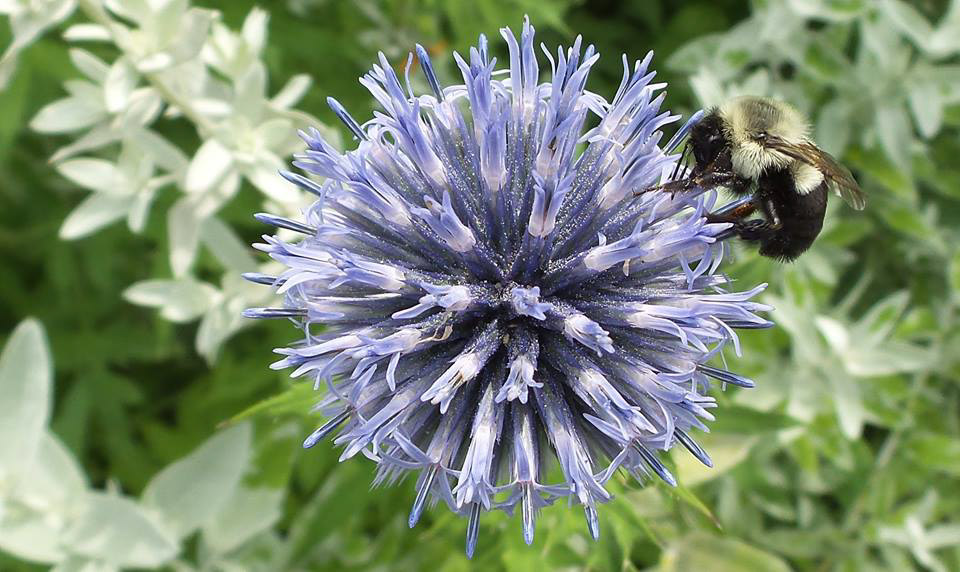
Like all flowering plants, witch hazel must be pollinated to produce fruit and seeds, and for this, it relies on insects. These include late-flying gnats and flies as well as forest-dwelling owlet moths, all drawn to the scented flowers and sweet nectar. On warm days like the few we have had this week while surrounded by an annoying cloud, I hoped these flying gnats were also busy pollinating lemony witch hazel ribbons.

 The owlet moth is a nocturnal pollinator. These moths remain active after most other pollinators have died or are missing in action. Biologist and naturalist Bernd Heinrich first documented the relationship between witch hazel and owlet moths in 1987 in an article published in Scientific American.

Continue reading “Witch Hazel, a Tree that Belongs to Women! part 2 by Sara Wright”

Legacy of Carol P. Christ: Was Ariadne the Most Graceful Bull-leaper of All? Deconstructing and Re-visioning Greek Mythology

carol-christ

This post was originally published on March 3rd, 2014.

Sometimes we think of Greek myth as a pre-patriarchal or less patriarchal alternative to the stories of the Bible. After all, Goddesses appear in Greek myths while they are nearly absent from the Bible. Right?

So far so good, but when we look more closely we can see that Greek myth enshrines patriarchal ideology just as surely as the Bible does.  We are so dazzled by the stories told by the Greeks that we designate them “the origin” of culture. We also have been taught that Greek myths contain “eternal archetypes” of the psyche. I hope the brief “deconstruction” of the myth of Ariadne which follows will begin to “deconstruct” these views as well.

bull leaping ring before 2000 bc phourniAriadne is a pre-Greek word. The “ne” ending is not found in Greek. As the name is attributed to a princess in Greek myth, we might speculate that Ariadne could have been one of the names of the Goddess in ancient Crete. But in Greek myth Ariadne is cast in a drama in which she is a decidedly unattractive heroine.

In the story told by the Greeks, Ariadne falls in love with Theseus, a handsome young man who was sent with 11 other Greek young people to be fed to a monster (who is half man, half bull) known as the Minotuar. The Minotuar is Ariadne’s half brother (see below). Because of her “love” for Theseus, Ariadne helps him to murder her brother.  She then flees with Theseus on his boat.

However, this “love story” does not have a “happy ending” as Theseus abandons Ariadne on a nearby island–long before he arrives home in Athens. Theseus is ever after celebrated as a hero who killed a monster, while Ariadne is just another cast-off female.  Whose story is this? Continue reading “Legacy of Carol P. Christ: Was Ariadne the Most Graceful Bull-leaper of All? Deconstructing and Re-visioning Greek Mythology”

On the Term Gender Order: Ignoring Feminist Insights.

A few months ago at a Gender Studies M.A. Program’s state exam, my colleagues and I had an intriguing discussion about the term gender order.  The sociologist within our examining group was adamant that it was a better term than patriarchy as it was more neutral and could describe various gender orders in addition to patriarchal ones.  They also said that it is, more or less, the term now used instead of patriarchy in their discipline and in Gender Studies, as it is considered to be a more accurate description of the gender situation.  Another colleague and I countered that they were incorrect.  Gender order was not a term used throughout all of Gender Studies to replace patriarchy.  We both agreed that in our fields (literary analysis and religious studies), gender order is not used.  At least, I have never encountered it.  

Continue reading “On the Term Gender Order: Ignoring Feminist Insights.”