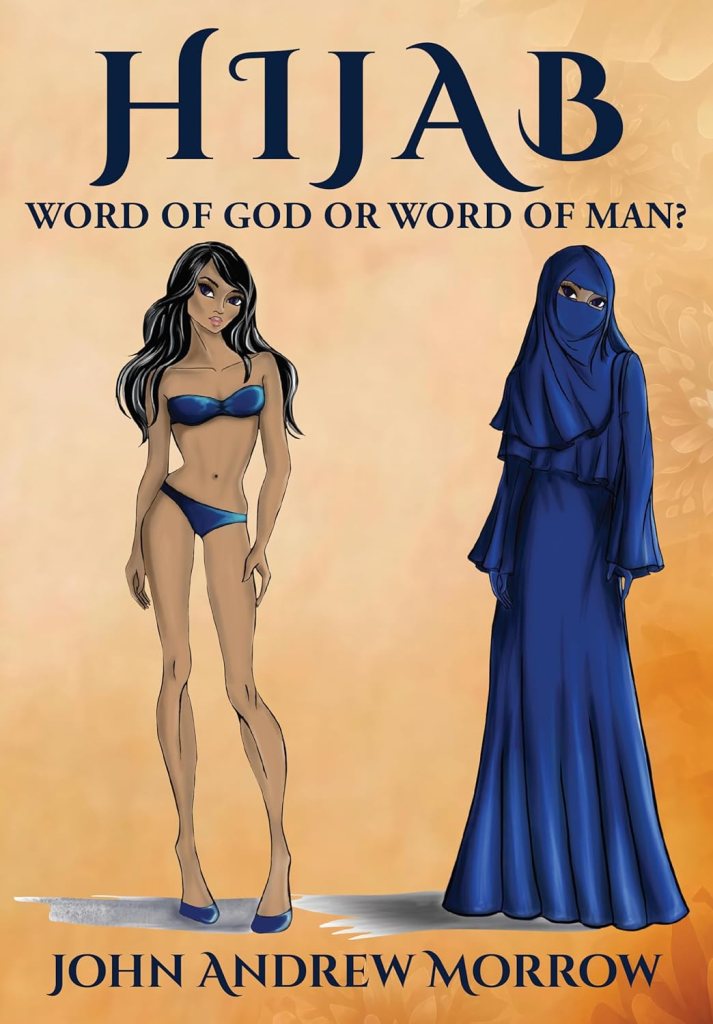
Hijab: Word of God or Word of Man? By John Andrew Morrow: BOOK REVIEW by Esther Nelson

Dr. Morrow’s book is a treasure chest of facts that also includes a wide variety of scholarly opinions regarding hijab.  His meticulous scholarship, laser-like vision, and accessible writing style clearly differentiate between what the Qur’an requires of women’s dress and what the jurists (overwhelmingly male) have enforced.  Morrow’s book would be an invaluable addition to Islamic Studies curricula in the academy, yet it’s comprehensible enough to a lay person interested in learning about hijab.

I thoroughly enjoyed reading this substantial volume.  I got a fuller picture of the meaning of hijab over time.  Dr. Morrow is clear—women ought not to be forced (legally or socially) to wear hijab.  Muslims are fond of saying: There is no priesthood in Islam.  There is no mediator between an individual and Allah.  Yet, many Muslim clergy enforce a patriarchal bent (that social system absorbed from their culture and society) to their juristic rulings that constrict women from making a free choice.

Continue reading “Hijab: Word of God or Word of Man? By John Andrew Morrow: BOOK REVIEW by Esther Nelson”

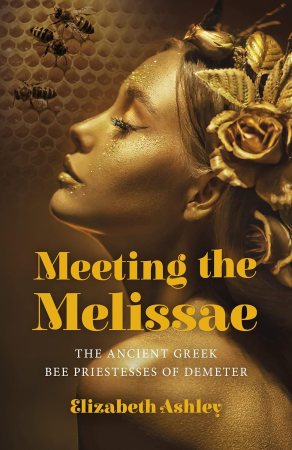
Meeting the Melissae: The Ancient Greek Bee Priestesses of Demeter by Elizabeth Ashley, Book Review by Carolyn Lee Boyd

The Mysteries at Eleusis, a nine-day festival in ancient Greece based on the myth of Demeter and Persephone, has fascinated and baffled us for millennia. Here thousands of people from all over Greece and beyond came to understand, in the words of Plutarch, “an undoubted truth our soul is incorruptible and immortal” (277). Producing this festival was the task of the Melissae, the bee priestesses of Demeter, powerful and honored women in a society in which women had few rights, famous in their own time but almost unknown in ours.

In Meeting the Melissae: The Ancient Greek Bee Priestesses of Demeter, Elizabeth Ashley offers us not only facts about the Melissae and other ancient Greek priestesses gleaned from archaeology, art and literature from the period, and modern academic research but her own glimmerings of their deepest spiritual life. She explores what is known about the priestesses and their everyday lives, the goddesses whose temples they presided over, and bees themselves. An aromatherapy researcher, she began her journey to discovering the secrets of the Melissae when she kept reading references to them in ancient botanicals about the herb lemon balm (Melissa officinalis) but nothing more. (The connection between lemon balm and bee priestesses? Pheromones. That’s all I’m going to say).

Continue reading “Meeting the Melissae: The Ancient Greek Bee Priestesses of Demeter by Elizabeth Ashley, Book Review by Carolyn Lee Boyd”

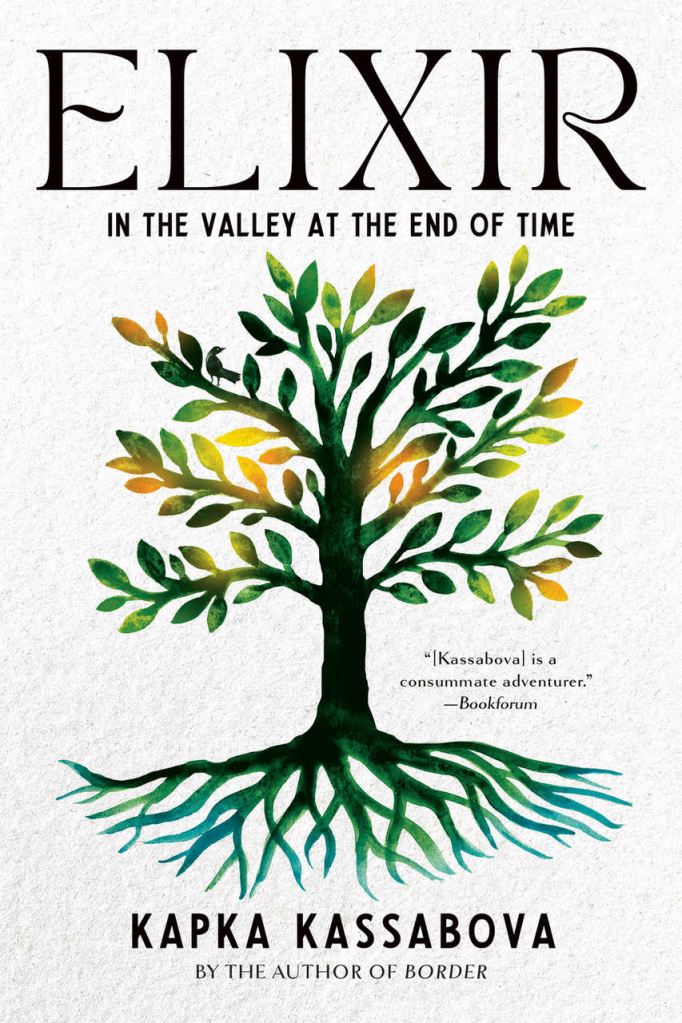
Elixir: In the Valley at the End of Time by Kapka Kassabova, Book review by Laura Shannon

Kapka Kassabova is an award-winning author of poetry, fiction and nonfiction, born in Bulgaria and now living in the Scottish Highlands. Her newest work of narrative nonfiction, Elixir, soars with the luminous prose and unflinching honesty we have come to expect from this brilliantly gifted writer.

Elixir is an extraordinary, profoundly moving book. The moment I finished reading it, I began again from the beginning, pausing only to order multiple copies for friends. Like Robin Wall Kimmerer in Braiding Sweetgrass, Kassabova effortlessly integrates science and the sacred, addressing historical, ecological, and personal trauma with clarity, compassion, and hope. Elixir combines memoir, travel, history, ethnography, botany, philosophy, spirituality, eco-psychology, traditional Chinese medicine, and even alchemy, in a subtle, sophisticated exploration which defies categorisation.

Continue reading “Elixir: In the Valley at the End of Time by Kapka Kassabova, Book review by Laura Shannon”

Archives from FAR Founders: Rosemary Radford Ruether’s Quests for Hope and Meaning by Gina Messina-Dysert

This was originally posted on December 18, 2013. This is part of a project to highlight the work of the four women who founded FAR: Xochitl Alivizo, Caroline Kline, Gina Messina, and Cynthia Garrity-Bond

Rosemary Radford Ruether is one of the most brilliant theologians of our time and her newly released autobiography, My Quest for Hope and Meaning, is a gift to those of us who have been so touched by her work.  In this intimate and beautiful piece, Ruether shares her personal journey in feminist scholarship and activism.  The autobiography opens with a profound forward by Renny Golden (that is also shared here on Feminism and Religion) and continues with an introduction and six chapters where Ruether guides us through an exploration of the influence of the matriarchs in her life, her interactions with Catholicism, her continued exploration of interfaith relations, her family’s struggle with mental illness, and her commitment to ecofeminist responses to the ecological crisis.

Ruether states that “Humans are hope and meaning creators” (xii), and her autobiography details her own quests for hope and meaning.  She reflects on the incredible impact made by the female-centered patterns in family and community in her life.  According to Ruether, these “matricentric enclaves” grounded and shaped her interest in feminist theory and women’s history.  She also describes the spiritually and intellectually serious Catholicism that she received from her mother and articulates her continued frustration with Vatican leadership that has undermined the efforts of Vatican II.  For Ruether, her ongoing affiliation with feminist theological circles is crucial as she continues to work toward shaping an ecumenical and interfaith Catholicism.

Continue reading “Archives from FAR Founders: Rosemary Radford Ruether’s Quests for Hope and Meaning by Gina Messina-Dysert”

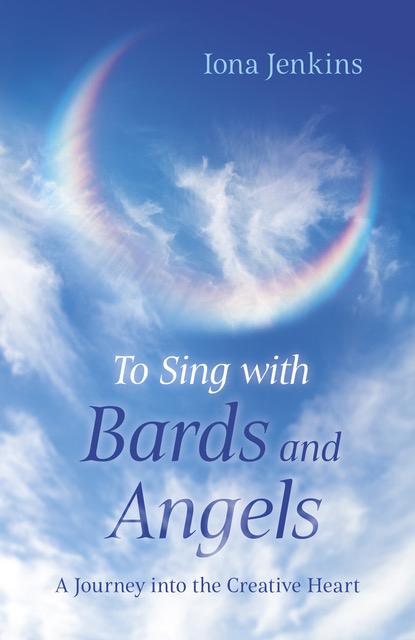
TO SING WITH BARDS AND ANGELS by Iona Jenkins, Book Review by Janet Maika’i Rudolph

There are some books which you just want to sit with, underline, read leisurely, and let sink deeply into your soul. This is one of those books.

Iona Jenkins has led a fascinating life as a Labyrinth Keeper, artist, spiritual seeker (among many other things). In To Sing with Bards and Angels, she delves into her Celtic ancestry as a poet to captivating result. I can deeply connect with her journey as I imagine many others will as well.

This book is filled with Jenkin’s stories of the experiences she has had while walking the spirit pathway. Most notable and the major theme of her book describes her encounters with an ethereal light being she identifies as an angel. Her guide appears in moonlight and its form and words fit within her cultural beliefs as to what an angel is. I love that she notes that she views her guide in this manner because of her own expectations. Her openness in allowing for other interpretations provides a permission structure for anyone reading and/or on their own spirit journey to understand such experiences in their own way whether it be angelic, otherworldly, imaginative, dreamlike, mythic or manifest in this reality.

Continue reading “TO SING WITH BARDS AND ANGELS by Iona Jenkins, Book Review by Janet Maika’i Rudolph”

Marketing in the New World and Karen Tate’s New Book on Normalizing Abuse by Caryn MacGrandle

Marketing was my thing in college.  And my first professional job out of college was in Marketing at the Regional Headquarters of Canon in Dallas.  And then my life took me out into the weeds: a marriage to an Airforce pilot following him to the snow filled tundra of North Dakota, the swamps of Mississippi, two divorces, four children, twists and turns and ups and downs all landing smack dab to where I sit in front of my computer at the moment outside of Huntsville, Alabama at 53 finally feeling like I’ve got somewhat of a handle on this crazy ride called Life or at least a better idea of how to buckle in and enjoy the ups and get through the downs.

Continue reading “Marketing in the New World and Karen Tate’s New Book on Normalizing Abuse by Caryn MacGrandle”

Leonora Carrington’s THE HEARING TRUMPET – Book Review by Sally Abbott

Sally Abbott

Long a fan of Surrealist artist Leonora Carrington, I was initially hesitant when the New York Review of Books reissued her 1974 novel, The Hearing Trumpet.  I didn’t know what to expect when this extraordinary painter picked up a pen.

To my delight and surprise, Carrington shows the same artistry and whimsy in her writing that she does in her painting.  She also reveals herself to be an astute feminist and aficionado of the Goddess, well-versed in arcane lore, with which she accents her fantastical world.  The Hearing Trumpet is full of British humor and eccentricity, set in a finely spun, other-worldly landscape.

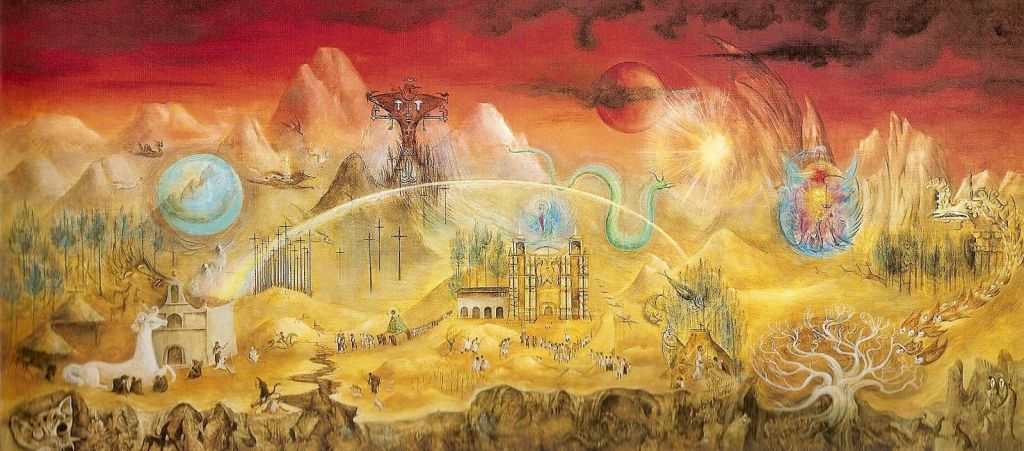
The World of the Maya

Her heroine Marian Leatherby is a 92-year-old, who lacks teeth, is hard of hearing, and sports a beard–a whimsical, endearing character who loves cats.  She has been given a hearing trumpet by her great friend Carmella, and thereby learns that her son and his wife plan to send her away to an old folks’ home run by a Dr. Gambit and the Well of Light Brotherhood.

Continue reading “Leonora Carrington’s THE HEARING TRUMPET – Book Review by Sally Abbott”

All We Have is Our Heart by Esther Nelson

One of my former students recommended UNFOLLOW to me, a memoir written by Megan Phelps-Roper, granddaughter of Fred Phelps (1929 – 2014), the (in)famous pastor of Westboro Baptist Church, Topeka, Kansas.

Some people may not be aware that Fred Phelps began his career as a civil rights attorney—someone who, in the 1960s, took on racial discrimination cases no other lawyer would touch.  Today, he is best remembered as a preacher who vociferously opposed homosexuality, spreading his message “God Hates Fags” both in the pulpit and while picketing in public spaces.  He and his followers also picketed the funerals of fallen soldiers with signs that read “Thank God for Dead Soldiers.” Phelps believed soldiers’ deaths (as well as natural disasters) to be God’s punishment for the country’s “bankrupt values,” especially the “sin” of homosexuality.  Hence, God unleashes calamity and catastrophe on the United States, a nation in dire need of repentance.

Continue reading “All We Have is Our Heart by Esther Nelson”

The Gathering: A Womanist Church BOOK REVIEW by Mary Ann Beavis

Book title: The Gathering: A Womanist Church—Origins, Stories, Sermons, and Litanies

Authors: Irie Lynne Session, Kamilah Hall Sharp and Jann Aldredge-Clanton

Publisher: Wipf & Stock, 2020

Womanist theology is a form of theological reflection that centers on Black women’s experience, sensitive to issues of race, class and gender. It originated in the United States in the mid-1980s and has grown in scope, sophistication and influence, but until recently there has been no expressly womanist church. This book charts the founding and development of a womanist church from the perspectives not only of its pastors (Irie Lynne Session and Kamilah Hall Sharp) but also of its ministry partners (Jann Aldredge-Clanton and others). Continue reading “The Gathering: A Womanist Church BOOK REVIEW by Mary Ann Beavis”

Writing Women Back into Jewish History: Interview with Michelle Cameron by Mary Sharratt


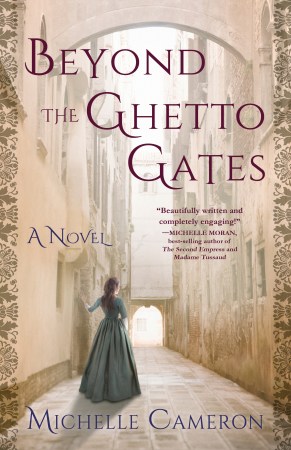
My friend Michelle Cameron’s powerful new novel, Beyond the Ghetto Gates, is a deep dive into women’s history that I thoroughly enjoyed.

This is a passionately compelling saga of an ancient way of life on the threshold of radical change. Young Mirelle longs to dedicate her life to running her aging father’s workshop, but her rabbi forbids her on account of her sex. Chafing against the constraints of both her gender and the suffocating strictures of the Ancona Ghetto, Mirelle sees no way forward but dutiful arranged marriage. Yet Napoleon’s armies, sweeping across Europe, threaten to change her way of life forever.
I learned so much from reading Michelle’s novel and from my conversation with her below. I hope my readers are likewise compelled! Reading is our great solace in this time of lockdown.


Mary Sharratt:  Michelle, tell us about your new novel, Beyond the Ghetto Gates.

Michelle Cameron: Beyond the Ghetto Gates is a historical novel set during Napoleon Bonaparte’s Italian campaign (1796-97). When French troops occupy the port city of Ancona, freeing the city’s Jews from their repressive ghetto, two very different cultures collide. Mirelle, a young Jewish maiden, must choose between her duty – an arranged marriage to a wealthy Jewish merchant – and her love for a dashing French Catholic soldier. In the meantime, Francesca, a devout Catholic, must decide if she will honor her marriage vows to an abusive and murderous husband. Beyond the Ghetto Gates depicts how the Jews and Catholics of Ancona wrestle with ancient traditions, prejudices, and the challenges of a rapidly changing world.


MS.: How does your faith inspire your fiction?

MC: People often ask if I’m religious, because my historical novels focus on Jewish characters, issues of antisemitism, and the deep conflict between religious tradition and assimilation. I believe it’s precisely because I am a non-observant Jew with deep roots in my ancestral traditions and culture that I can wrestle with these issues in ways that a more religious writer could not. I’ve felt the attraction of being part of “the norm,” much as my characters do, that tug-of-war between religious identity versus being accepted in a secularized society, which is a constant theme in my fiction.


MS: What is the most surprising fact you’ve gleaned from your research into women in Jewish history?

MC: That Jewish women could divorce if their husbands fail in their marital duties. These are spelled out in the marriage contracts (ketubot) that Mirelle’s father creates:

Be my wife according to the law of Moses and Israel. I will work, honor, feed, and support you in the custom of Jewish men, who work, honor, feed, and support their wives faithfully. I will give you the settlement of ______ as well as your food, clothing, necessities of life, and conjugal needs, according to the universal custom.

The shocker here is “and conjugal needs.” Once, when speaking about my previous novel, The Fruit of Her Hands, I was questioned on the pleasure that Shira’s rabbi husband gave her in bed. There’s a common misconception that intercourse is a duty whose sole purpose is procreation. Luckily for me, the group included the rabbi’s wife, who explained that men are actually taught in the Talmud how to satisfy their wives sexually.

But since observant women are discouraged from studying Talmud, men who aren’t adequate to the task aren’t always condemned for their failures. But the fact remains that men are supposed to make the act pleasurable for both parties – and that they can be divorced if they don’t do so.

MS: How do you hope your work might inspire your readers to gain new insights about history and faith?

MC: I hope that, by learning about the cultural underpinnings and the historical struggles of my Jewish characters, my novels might promote greater understanding between all faiths.

MS: What is the one question you never get asked in interviews, but wish you did?

MC: Did you always want to write Jewish historical fiction?

In fact, I did not. My first book, In the Shadow of the Globe, a verse novel about William Shakespeare’s life and loves, was actually the type of book I thought I’d be writing. But then I discovered that I could trace my roots back to my 13th Century rabbi ancestor – Meir of Rothenberg – and realized his life story was the stuff of a novel. Writing that book set me on this path. It helps that I had a much more thorough grounding in Jewish history than most, because I lived in Israel during my high school years.


MS: What are you working on now? Will you continue to explore themes of women and Jewish history?

MC: I’m working on the second book in the series – which takes Napoleon and his troops on a bizarre expedition to Egypt and Israel. Many of the same characters from Beyond the Ghetto Gates will be part of this novel. So yes, I’ll be continuing to explore these themes.


MS: How would you like readers to connect with you?

MC: Via my website. This includes my various social media links, as well as a contact page, allowing readers to write me directly.
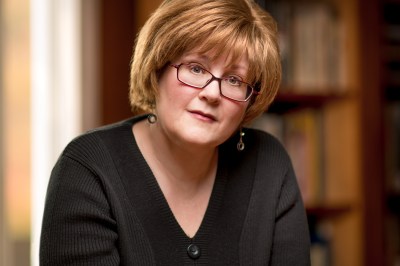


Author, Michelle Cameron


Mary Sharratt is on a mission to write women back into history. Her most recent novel Ecstasy is about the composer Alma Schindler Mahler. If you enjoyed this article, sign up for Mary’s newsletter or visit her website.