Writing Women Back into Jewish History: Interview with Michelle Cameron by Mary Sharratt


My friend Michelle Cameron’s powerful new novel, Beyond the Ghetto Gates, is a deep dive into women’s history that I thoroughly enjoyed.

This is a passionately compelling saga of an ancient way of life on the threshold of radical change. Young Mirelle longs to dedicate her life to running her aging father’s workshop, but her rabbi forbids her on account of her sex. Chafing against the constraints of both her gender and the suffocating strictures of the Ancona Ghetto, Mirelle sees no way forward but dutiful arranged marriage. Yet Napoleon’s armies, sweeping across Europe, threaten to change her way of life forever.
I learned so much from reading Michelle’s novel and from my conversation with her below. I hope my readers are likewise compelled! Reading is our great solace in this time of lockdown.


Mary Sharratt:  Michelle, tell us about your new novel, Beyond the Ghetto Gates.

Michelle Cameron: Beyond the Ghetto Gates is a historical novel set during Napoleon Bonaparte’s Italian campaign (1796-97). When French troops occupy the port city of Ancona, freeing the city’s Jews from their repressive ghetto, two very different cultures collide. Mirelle, a young Jewish maiden, must choose between her duty – an arranged marriage to a wealthy Jewish merchant – and her love for a dashing French Catholic soldier. In the meantime, Francesca, a devout Catholic, must decide if she will honor her marriage vows to an abusive and murderous husband. Beyond the Ghetto Gates depicts how the Jews and Catholics of Ancona wrestle with ancient traditions, prejudices, and the challenges of a rapidly changing world.


MS.: How does your faith inspire your fiction?

MC: People often ask if I’m religious, because my historical novels focus on Jewish characters, issues of antisemitism, and the deep conflict between religious tradition and assimilation. I believe it’s precisely because I am a non-observant Jew with deep roots in my ancestral traditions and culture that I can wrestle with these issues in ways that a more religious writer could not. I’ve felt the attraction of being part of “the norm,” much as my characters do, that tug-of-war between religious identity versus being accepted in a secularized society, which is a constant theme in my fiction.


MS: What is the most surprising fact you’ve gleaned from your research into women in Jewish history?

MC: That Jewish women could divorce if their husbands fail in their marital duties. These are spelled out in the marriage contracts (ketubot) that Mirelle’s father creates:

Be my wife according to the law of Moses and Israel. I will work, honor, feed, and support you in the custom of Jewish men, who work, honor, feed, and support their wives faithfully. I will give you the settlement of ______ as well as your food, clothing, necessities of life, and conjugal needs, according to the universal custom.

The shocker here is “and conjugal needs.” Once, when speaking about my previous novel, The Fruit of Her Hands, I was questioned on the pleasure that Shira’s rabbi husband gave her in bed. There’s a common misconception that intercourse is a duty whose sole purpose is procreation. Luckily for me, the group included the rabbi’s wife, who explained that men are actually taught in the Talmud how to satisfy their wives sexually.

But since observant women are discouraged from studying Talmud, men who aren’t adequate to the task aren’t always condemned for their failures. But the fact remains that men are supposed to make the act pleasurable for both parties – and that they can be divorced if they don’t do so.

MS: How do you hope your work might inspire your readers to gain new insights about history and faith?

MC: I hope that, by learning about the cultural underpinnings and the historical struggles of my Jewish characters, my novels might promote greater understanding between all faiths.

MS: What is the one question you never get asked in interviews, but wish you did?

MC: Did you always want to write Jewish historical fiction?

In fact, I did not. My first book, In the Shadow of the Globe, a verse novel about William Shakespeare’s life and loves, was actually the type of book I thought I’d be writing. But then I discovered that I could trace my roots back to my 13th Century rabbi ancestor – Meir of Rothenberg – and realized his life story was the stuff of a novel. Writing that book set me on this path. It helps that I had a much more thorough grounding in Jewish history than most, because I lived in Israel during my high school years.


MS: What are you working on now? Will you continue to explore themes of women and Jewish history?

MC: I’m working on the second book in the series – which takes Napoleon and his troops on a bizarre expedition to Egypt and Israel. Many of the same characters from Beyond the Ghetto Gates will be part of this novel. So yes, I’ll be continuing to explore these themes.


MS: How would you like readers to connect with you?

MC: Via my website. This includes my various social media links, as well as a contact page, allowing readers to write me directly.
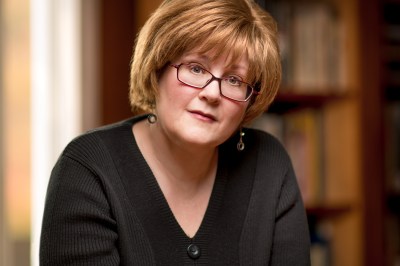


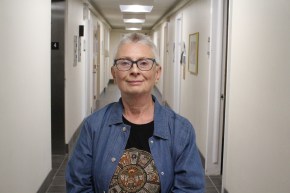
Author, Michelle Cameron


Mary Sharratt is on a mission to write women back into history. Her most recent novel Ecstasy is about the composer Alma Schindler Mahler. If you enjoyed this article, sign up for Mary’s newsletter or visit her website.

 

You Can Make Your Own Rose BOOK REVIEW by Lila Moore

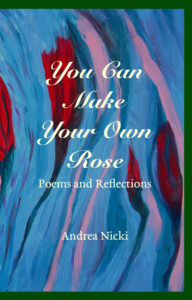
You Can Make Your Own Rose by Andrea Nicki is a collection of poems infused with the spirit of feminist sensibility, social justice and activism. The poems offer more than mere therapeutic comfort while depicting shamanic-inspired healing rituals and magical encounters. They are trauma-free in the sense that Nicki doesn’t ask for our sympathy nor does Nicki simply wish to share traumatic memories. On the contrary, she utilizes somewhat analytical and educational language, interlaced with subtle picturesque and lyrical details alongside a severe social critique, to depict the emotional, intellectual, and social landscape of her reflections on incest and other gender-related forms of abuse.

Continue reading “You Can Make Your Own Rose BOOK REVIEW by Lila Moore”

Review: In Search of Pure Lust, author Lise Weil by Sara Wright

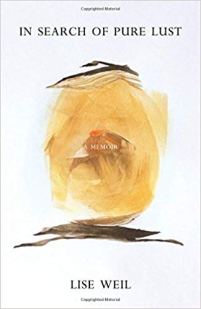
In this remarkable memoir one woman’s life is set in the collective context of the women’s movement as a whole, and through Lise Weil’s eyes we get to see the “both and” quality of her struggle to understand the wound caused by what went wrong not only in her personal relationships with women, but between the powerful women who inspired the women’s movement in the first place. We can only heal this wound personally and collectively if we are willing to self-reflect, ask difficult and painful questions, and take responsibility for our actions, something that the author is willing to do. By addressing our own mother-daughter and woman to woman betrayals, choosing to respect one another’s differences regardless of sexual orientation, color, race, religion etc. we can finally unite with one purpose – to save ourselves and the planet.

What Lise proposes – namely, that Lesbian Visionary Thinking opened the door to women re–imagining women as powerful agents in their own lives even as they became women who acted upon these visions – is, I believe, truth. Lesbian visionaries envisaged a woman centered culture and created one. Many of us realize today that without a feminist standpoint, the ravages of patriarchy are going to destroy us all.  We have much to learn from reading this story. Continue reading “Review: In Search of Pure Lust, author Lise Weil by Sara Wright”

Book Review: FLORENCE IN ECSTASY by Jessie Chaffee

FlorenceInEcstasy3DBook


Jessie Chaffee‘s Florence in Ecstasy is the most luminous debut novel I have read in a very long time. Imagine, if you will, a darker and more literary version of Elizabeth Gilbert’s popular spiritual seeker’s memoir, Eat Pray Love. This is not to diminish Gilbert’s memoir, which I loved, but Chaffee offers a much deeper dive into the dark night of a woman’s soul.

Hannah, a young American from Boston, goes to Florence, Italy to heal herself after her professional and personal life back home has disintegrated due to her anorexia. Surely, in life-loving Italy, where every meal is a celebration, Hannah can heal her disturbed relationship with food and her own body. Similarly, Eat Pray Love, with its luscious descriptions of Italian cuisine and Gilbert’s rejection of dieting in favor of buying a bigger pair of jeans, deals with body image issues and is often recommended reading for women and girls recovering from eating disorders.

But Chaffee’s novel, unlike Gilbert’s memoir, is no easy-going, feel-good read. Continue reading “Book Review: FLORENCE IN ECSTASY by Jessie Chaffee”

Murder at the Rummage Sale: Book Review by Judith Shaw

Judith Shaw photoMurder at the Rummage Sale (Albany, NY: Imagination Fury Arts, 2016) by Elizabeth Cunningham is a mystery novel with a style and depth of thought that offers not only the fun of figuring out “Who Dun It”  but also gorgeous prose and poetic phrasing which is not so commonly found in the mystery genre.
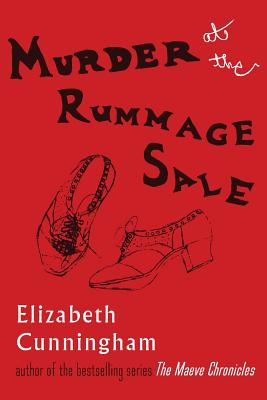
Set in 1960 small town America, the book transports us back to that era with a fine eye to detail. It 9781944190019takes place over a few days in the life of the Church of the Regeneration as the women prepare for their annual rummage sale. Charlotte Crowley, an over bearing kleptomaniac who wraps men around her little finger while antagonizing most of the women, has always led the effort. But with only a few days to go before the sale begins, Charlotte is found dead in the basement, smothered by a plastic dry cleaning bag full of coats.
Though the police declared the death to be accidental, Lucy Way, an older woman with a bit of faery blood and white curls she is very proud of, has her suspicions. Lucy sets out to solve the crime with the help of a cast of characters associated with the church: the Reverend Gerald Bradley, the church minister with a love of drink; Anne Bradley, his wife who doubts the existence of God; Katherine Bradley, their fanciful seven year old daughter; and Katherine’s sworn blood brother, Frankie Lomangino Jr., son of Frankie Lomangino an ex-con who becomes the prime suspect. Continue reading “Murder at the Rummage Sale: Book Review by Judith Shaw”

Interreligious Friends after Nostra Aetate (Book Review) by Janice Poss

JaniceBook Title: Interreligious Friendship after Nostra Aetate
Editors: J. Fredericks and T. Tiemeier
Series Title: Interreligious Studies in Theory and Practice
Publisher: Palgrave Macmillan US, 2015

“… the Jew prayed words of blessing … over his Roman Catholic friend. …Willebrands could not find … words to say to Tanenbaum at that moment. Of course, as is usually the case in friendships, words are not really necessary to express one’s deepest emotions.” – James L. Fredericks, p. 5

Friendship

In 1965, at fifteen, I strategized to become a top women’s fashion designer.  I felt it accessible to me!  The Second Vatican Council’s documents had been published. Nostra Aetate was among them, I was clueless, I could have cared less about anything coming out of the Vatican –especially with a Latin title having no meaning for me — except a bejeweled embroidery that might have inspired a contemporary dress or jacket.  Nothing theological or churchy was in my purview as I exerted my independence from parental authority and had one foot out the door from being a practicing Catholic.  I had had enough of the disciplinary, androcentric, ‘Father’ God who was mean, hypercritical and presupposed that anyone practicing any religion other than Roman Catholicism was doomed forever to hell.  Salvation was not for everyone. Continue reading “Interreligious Friends after Nostra Aetate (Book Review) by Janice Poss”

Book Review: Hild & The Patron Saint of Ugly by Mary Sharratt

OLYMPUS DIGITAL CAMERA

Literature touches our spirit in a way that film, television, and even art cannot. Instead of presenting the passive viewer with a visual image, good writing demands our participation and co-creation. The words become the springboard for our own imagined vision of other worlds and other lives. In this imagined space, we can experience profound insights and revelations–soul-growing experiences we carry with us forever.

Books that try too hard to be spiritual can have the opposite effect. Discerning women demand books that respect us instead of preaching to us. Too often religion has been interpreted by and for men, but when women writers reveal their spiritual truths, a whole other landscape emerges, one we haven’t seen enough of.

Marie Manilla’s The Patron Saint of Ugly (Houghton Mifflin Harcourt, June 17, 2014) and Nicola Griffith’s Hild (Farrar, Straus and Giroux 2013) are two such transporting novels. They both draw on the lives of female saints in fresh and evocative ways.

Continue reading “Book Review: Hild & The Patron Saint of Ugly by Mary Sharratt”

BOOK REVIEW: Amy Wright Glenn’s Birth, Breath, & Death by Natalie Weaver

Natalie WeaverAmy Wright Glenn’s Birth, Breath, & Death: Meditations on Motherhood, Chaplaincy, and Life as a Doula is a mid-life memoir of the author’s personal encounters and professional insights drawn from her work in the spaces of birth and death.  Glenn gleans from her formative experiences as a daughter and sister, her trained experiences as a teacher and doula, and her wisdom experiences as a mother, chaplain, and friend.  In an accessible voice, Glenn reflects compassionately on her early life in a Mormon family.  She considers critically the nature of religious worldviews that are doctrinally dualistic and apocalyptic.  Glenn further describes the therapeutic and illuminating value she found in the scholarly study of religions as an anthropological phenomenon.  Glenn explores how religious discourse both expresses human joy and grief and also aids us in our encounters with life and death.  Glenn intertwines her academic study with personal narrative and achieves a professionally-informed and experientially-based “thinking out loud” about the bookends of human life.   Her writing is tender, and her vision is thought-provoking.
Continue reading “BOOK REVIEW: Amy Wright Glenn’s Birth, Breath, & Death by Natalie Weaver”

Rosemary Radford Ruether’s Quests for Hope and Meaning by Gina Messina-Dysert

Gina Messina-Dysert profileRosemary Radford Ruether is one of the most brilliant theologians of our time and her newly released autobiography, My Quest for Hope and Meaning, is a gift to those of us who have been so touched by her work.  In this intimate and beautiful piece, Ruether shares her personal journey in feminist scholarship and activism.  The autobiography opens with a profound forward by Renny Golden (that is also shared here on Feminism and Religion) and continues with an introduction and six chapters where Ruether guides us through an exploration of the influence of the matriarchs in her life, her interactions with Catholicism, her continued exploration of interfaith relations, her family’s struggle with mental illness, and her commitment to ecofeminist responses to the ecological crisis.

Ruether states that “Humans are hope and meaning creators” (xii), and her autobiography details her own quests for hope and meaning.  She reflects on the incredible impact made by the female-centered patterns in family and community in her life.  According to Ruether, these “matricentric enclaves” grounded and shaped her interest in feminist theory and women’s history.  She also describes the spiritually and intellectually serious Catholicism that she received from her mother and articulates her continued frustration with Vatican leadership that has undermined the efforts of Vatican II.   For Ruether, her ongoing affiliation with feminist theological circles is crucial as she continues to work toward shaping an ecumenical and interfaith Catholicism.

Continue reading “Rosemary Radford Ruether’s Quests for Hope and Meaning by Gina Messina-Dysert”