Kassiani: Placing a Woman at the Center of the Easter Drama by Carol P. Christ

Carol in Crete croppedFor many years I been told of the beautiful Hymn of Kassiani, sung only on Easter Tuesday night, but I had never heard it until this week. For many this song is the high point of Easter week.

Kassiani, also known as St. Kassia, was a Greek woman born into a wealthy family in Constantinople (now Istanbul) about 805 to 810 AD. According to three historians of the time, she was intelligent and beautiful and selected as a potential bride for the Emperor Theophilos. The chroniclers state that the Theophilos approached her and said: “Through woman, the worst,” referring to the sin of Eve. Clever Kassiani responded, “Through woman, the best,” referring to the birth of the Savior through Mary.

Apparently unable to accept being put in his place by a woman, Theophilos chose another bride. Kassiani founded a monastery in Constantinople becoming its first abbess. She was an outspoken theological advocate of icons during the iconoclastic crisis (for which she was flogged). One of only two women to publish under her own name during the Byzantine Middle Ages, Kassiani wrote both poetry and hymns. Up to 50 of her hymns are known today, with 23 of them being part of the Greek Orthodox liturgy. Continue reading “Kassiani: Placing a Woman at the Center of the Easter Drama by Carol P. Christ”

Spring in the Era of Pesticides, Global Climate Change, and War by Carol P. Christ

Carol in Crete croppedThis was not a normal winter. It rained and rained and rained. It was grey, grey, grey. Gale force winds blew in from the ocean, not once but many times. Several of my shutters were shattered. An olive tree fell in my garden. I pruned the dead leaves from its branches and had it hauled away. I am still in the process of pulling out a large number of plants that did not survive an unusual number of very cold days.

The soil is so saturated that streams are running where they have never been seen before, the land gives way, and boulders come crashing down the mountainsides. I have decided to remove all of my traditional shutters rather than repair them–as it is becoming clear that no shutters will survive the winds that will blow over our island in the coming years.

They say that we used to have strong gale winds of about 50 miles per hour once a year. Now we have hurricane force winds of 70 miles per hour several times each winter. I once read that Lesbos has the largest number of sunny days of all the Greek islands. We often sit out of doors wearing light jackets in the middle of winter. This year we did not.

My response to the long winter that has only just begun to give way was to stay inside. Though I said I was mildly depressed, I think deep down I was sad and angry.

Changes in the weather are normal and natural phenomena. But it is becoming increasingly evident that the changes we now experiencing are not. Climate experts tell us that because of the carbon we have released into the atmosphere of our planet, we will experience more and more extreme weather conditions.

I have noticed a decline in bees and butterflies in my garden in recent years. So far this spring there are almost none. This is not the result of global climate change, but of our failure to heed the warnings of Rachel Carson to stop poisoning the environment with pesticides.

house martin in flightThe house martins have returned. I hear their liquid chatter as they fly above me. Freesias and irises are about to come into bloom. Pale pink, almost white petaled flowers are opening on the quince tree. Red leaves are budding on the pomegranate trees. The Judas tree burst into deep pink blossom overnight. Spring is a time of rebirth and renewal. This year is no exception.

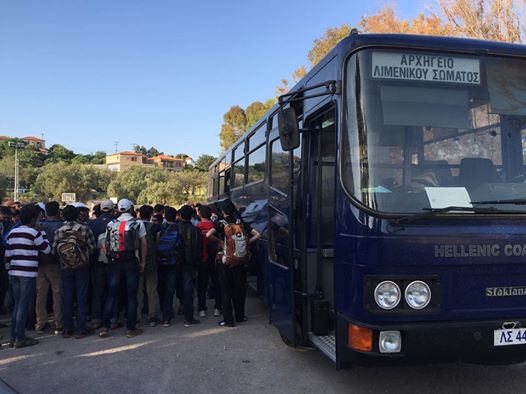
Spring has also brought an increase in the arrival of refugees fleeing war in Syria and Afghanistan to our island. People discuss what will happen to them, but no one is talking about ending war.

Although spring is coming, it is hard for me to rejoice today. Human beings seem to be hell bent on destroying life. Right now I am holding back tears and screams because I fear that if I let them out, they will not stop.

Postscript: I will find the strength to rejoice in the regeneration of life and to redouble my commitment to save what can be saved–because we must.

Carol leads the life-transforming Goddess Pilgrimage to Crete (facebook and twitter)–space available on the spring and fall 2015 tours.  Carol’s books include She Who Changes and and Rebirth of the Goddess; with Judith Plaskow, the widely-used anthologies Womanspirit Rising and Weaving the Visions; and forthcoming next year, Goddess and God in the World: Conversations in Embodied Theology. Photo of Carol by Maureen Murdock.

The Inalienable Right to Life, Liberty, and the Pursuit of Happiness vs. the Right to Religious Freedom by Carol P. Christ

carol p. christ photo michael bakasIn his speech announcing that he signed the Religious Freedom Restoration Act, Governor Mike Pence of Indiana did not mention the issue of the so-called “right” to refuse service to gays, lesbians, and transgendered individuals as one of the reasons this bill came to his desk. However, the idea that bakers could be “coerced” into baking cakes for gay weddings, photographers “required” to photograph them, and venue owners “forced” to provide space for them was frequently mentioned in discussions of this and similar bills. Governor Pence’s evident defensiveness during his press conference, and his repeated assertion that “this is not about discrimination” made it clear that an elephant was very much in the room.

Instead of defending the alleged “right” of religious individuals to discriminate against gay, lesbians, and transgendered individuals, Governor Pence invoked the right of employers to refuse to provide contraception to women as part of employee insurance plans, mentioning the Hobby Lobby and University of Notre Dame cases. If anyone has forgotten, in the Hobby Lobby case the Supreme Court decided that employers with a deeply held conviction that birth control is wrong do not have to offer it to their employees as required by federal law if “less restrictive” ways of providing it can be found.

Governor Pence apparently thought that openly defending the so-called “right” to discriminate against women is less controversial in his state than openly defending the so-called “right” to discriminate against lesbians, gays, and transgendered individuals. In fact, these two issues are linked in the minds of the people like Governor Pence. Continue reading “The Inalienable Right to Life, Liberty, and the Pursuit of Happiness vs. the Right to Religious Freedom by Carol P. Christ”

Genderqueering by John Erickson

We find our versions of home in these communities and it is within these spaces where our home not only begins to define who we are but we, as a reflection of that space, begin to outwardly redefine the spaces we exist in. If we slowly begin, through our experiences to shape our homes based on privilege and power without self-reflection and acknowledgment of others, then we are no better than those oppressive forces we say we’re against.

Leelah Alcorn, Ash Haffner, Aniya Knee Parker, Yaz'min Shancez
Leelah Alcorn, Ash Haffner, Aniya Knee Parker, Yaz’min Shancez

This post is a response to a recent blog entry titled “Who is Gender Queer?” on this site from Carol Christ.  The post can be read by clicking here.  I want to thank my friend, advocate, and upcoming scholar Martha Ovadia for reasons only she knows!  Stay brave, speak up, be heard!
_________________________________________

It is terrifying to know that something is wrong but not be able to speak truth to power.

It is even more terrifying to know something is wrong, be able to speak to it, and then silence those voices that do not have that same privilege, power, or position.

The struggle that many of us in positions of privilege and power face is not just that of being ostracizing and essentializing forces—it is that we, as allies, members of communities, or even those dedicated to a cause, can ourselves participate in the oppression we are fighting against and can do harm.

It’s taken me a long time to not only be comfortable with who I identify as, but also how I go about fighting and defining my life based on said identity and experience. However, the one thing that I have the ability to do is choose that identity more freely than others. Unlike Leelah Alcorn, Ash Haffner, Aniya Knee Parker, or Yaz’min Shancez pictured above, I did not have to face the types of oppressions they did, to which they sadly lost their lives, as a result of the fact that we exist in a society that can’t deal with the inability to leave things undefined or to allow people to define who they are on their own terms.

It is vital that although my lived experiences could never meet nor match the same types of oppression that these brave individuals had to face, I, as a white, cisgendered gay male, do not become part of their oppression through my own position and privilege.

As a man who exists in the world of feminism and within various women’s communities, I walk a daily tightrope of privilege and power to insure that I do not silence those that I consider allies, friends, mentors, or colleagues. As a man who exists in the world of the LGBTQ community, I walk an additional tightrope to additionally not take away from or diminish the experiences of those members of our community that do not have the same type of lived experiences as myself.   Even within minority communities, there are positions of hierarchy and within these hierarchies of knowledge, identity, or power, comes a responsibility to insure that the oppressed do not become the oppressors.

We find our versions of home in these communities and it is within these spaces where our home not only begins to define who we are but we, as a reflection of that space, begin to outwardly redefine the spaces we exist in. If we slowly begin to shape our homes based on privilege and power without self-reflection and acknowledgment of others, then we are no better than those oppressive forces we say we’re against.

I can’t speak for what identity feels like –I can only speak for what essentializing does, and what it does is reflected in the deaths of Lelah, Ash, and the many others who die nameless.   It is our responsibility, as allies, members of communities, and those fighting to end sexist, patriarchal, and, even now, homonormative oppression, to make sure that no more deaths occur on our watch or that truth is spoken to power even when power is masquerading around as truth.

John Erickson is a Ph.D. Candidate in American Religious History at Claremont Graduate University. He holds a MA in Women’s Studies in Religion; an MA in Applied Women’s Studies; and a BA in Women’s Literature and Women’s Studies.  He is a Non-Fiction Reviewer for Lambda Literary, the leader in LGBT reviews, author interviews, opinions and news since 1989 and the Co-Chair of the Queer Studies in Religion section of the American Academy of Religion’s Western Region, the only regional section of the American Academy of Religion that is dedicated to the exploration of queer studies in religion and other relevant fields in the nation and the President of the University of Wisconsin Oshkosh’s LGBTQA+ Alumni Association.  When he is not working on his dissertation, he can be found at West Hollywood City Hall where he is the Community Events Technician and works on policies and special events relating to women, gender, sexuality, and human rights issues that are sponsored or co-sponsored by the City of West Hollywood. He is the author of the blog From Wisconsin, with Love and can be followed on Twitter @JErickson85

The Power of Female Friendship: Remembering Karen McCarthy Brown by Carol P. Christ

Karen Brown 1985

News of Karen Brown’s recent death came via email from a mutual friend of ours, Christine Downing.

There are many things that can be said about Karen’s life and career, including that she won prizes for her life’s work Mama Lola in scholarly associations in the fields of religion and anthropology, that her work has been influential in bringing the study of Vodou into the scholarly mainstream, and that it has been inspiring to women of color.

Here I will focus on the years when our friendship provided crucial support for our audacious scholarly work. I first met Karen through the New York Feminist Scholars in Religion, a group Anne Barstow and I organized in 1974 that nurtured work on women and religion for many of us, including besides me and Karen, Judith Plaskow, Naomi Goldenberg, Ellen Umansky, Lynn Gottlieb, Beverly Harrison, Nelle Morton, Elisabeth Schussler Fiorenza.

My friendship with Karen was sparked by the explosion that occurred in the New York feminist scholars group when Anne Barstow and I spoke in the fall of 1976 about our attractions to the Goddess. Our presentations evoked a great conflagration, which I remember as coalescing around Beverly Harrison’s authoritative and authoritarian statement that there can be no ethics in Goddess religion because ethics comes from a transcendent source—not from nature. Karen was among those who responded tentatively that she was not so sure Beverly was right.

In the discussions that continued over the academic year, Karen and I exchanged meaningful glances, supported each others’ comments, and finally met for a few longer conversations shortly before I left New York to take up a new teaching position in California. Karen was then in the process of leaving her husband and moving into the magnificently quirky loft apartment that she would decorate with Haitian art in Tribeca on the lower west side of New York City.

I offered to do a house blessing for Karen’s new apartment, and she agreed. We blessed the thresholds and the corners of each room with salt and water and incense, and Karen spoke of the new life she hoped to begin in her new home. Later Karen told me that Alourdres (Mama Lola) insisted on blessing the house again and that the rituals were nearly the same.

During the years Karen lived in the Lower West Side from 1977 to 2001 or 2002, I stayed with her several times a year when conferences and lectures brought me to and through New York and on my way back and forth from teaching in Greece in the summers. During that time we had many long and intimate conversations in which the details of our lives were interwoven with the details of our work.

Carol Christ & Karen Brown 1985

Our friendship was important to both of us, not only because we were pioneers in the study of women and religion, but also because within it we were becoming a minority within a minority as our work took us outside an  increasingly Christian-dominated field. Our conversations ranged fluidly around many subjects including: leaving Christianity; the importance of female symbolism for divinity; whether we need male Gods of war or not; religions that focus on the divine and human connection to nature; similarities and differences between Goddess and Vodou rituals and altars; healing; female leadership styles; the experience of living between cultures; and our common struggles to find a voice in which to write about what we were discovering.

Karen and I were in the process of rejecting the dispassionate voice of scholarly objectivity and searching for a way to write that combined scholarly research with the passion to know the world more deeply and to think about it clearly that inspired our work. Our conversations with each other were a lifeline, as we had no role models for the personal paths we were exploring or for the new ways of writing our scholarship with which we were experimenting. We quite literally “heard each other into speech” to quote the phrase Nelle Morton used to name the importance of our female conversations.

I happened to visit Karen shortly after she underwent her initiation into Vodou, which was at about the same time that I experienced what felt to me like revelation at the temple of Aphrodite in Lesbos. We both felt that we must incorporate these moments into our writings, but we also were afraid to do so because we feared that others would call us heretics and dismiss our writing as unscholarly. Karen and I spoke publicly of these experiences on a panel organized by Rita Gross at the American Academy of Religion in 1985 that was published in Journal of Feminist Studies in Religion 3/1 (1987).

Karen received more scholarly recognition for her transgressions than I have. This is in part due to a greater interest in difference among anthropologists than among theologians. However, Karen often told me that scholarly recognition is not the only way to judge the importance of feminist contributions and reminded me that my work has had a major impact within and outside the academy.

One day Karen and I were discussing whether she could fully embrace Haitian culture and whether I would become Greek. Invoking the Vodou concept of living “between the worlds” of the spirit and ordinary reality, she said that this was how she understood herself: she could never be nor would she want to be Haitian, but neither would she ever be fully American or Christian again. She added that one of the reasons she felt comfortable living between worlds was that she had never felt comfortable in her own culture.

In the intervening years, I have thought about this conversation many times. While there was once a time when I wanted to become Greek and leave my American culture behind, I have come to realize that this is not possible. Like Karen, I live between worlds and find my greatest comfort in belonging to two worlds and to neither. This insight is only one of the many gifts I gained though my friendship with Karen McCarthy Brown.

Remembering Karen, let us bless the Source of Life, and the cycles of birth, death, and regeneration.

Carol leads the life-transforming Goddess Pilgrimage to Crete (facebook and twitter)–space available on the spring and fall 2015 tours.  Carol’s books include She Who Changes and and Rebirth of the Goddess; with Judith Plaskow, the widely-used anthologies Womanspirit Rising and Weaving the Visions; and forthcoming next year, Goddess and God in the World: Conversations in Embodied Theology. Photos by Martha Ackelsberg.

Can You Kill the Spirit? What Happened to Female Imagery for God in Christian Worship? by Carol P. Christ

carol at green party 2014 croppedWhen I first began to think about female language and images for God I imagined that changing God-He to God-She and speaking of God as Mother some of the time would be a widespread practice in churches and synagogues by now. I was more worried about whether or not images of God as a dominating Other would remain intact. Would God-She be imaged as a Queen or a Woman of War who at Her whim or will could wreak havoc on Her own people?

Forty years later, very little progress has been made on the question of female imagery for God. I suspect that most people in the pews today have never even had to confront prayers to Sophia, God the Mother, or God-She. Most people consider the issue of female language in the churches to have been resolved with inclusive language liturgies and translations of the Bible that use gender neutral rather than female inclusive language.

In her new book, Women, Ritual, and Power: Placing Female Imagery of God in Christian Worship, Elizabeth Ursic states that one of the reasons that the issue of female language seems less pressing than it once did is because those for whom the issue was important have for the most part left the church. But the question is why. Continue reading “Can You Kill the Spirit? What Happened to Female Imagery for God in Christian Worship? by Carol P. Christ”

Ancestor Connection and DNA Testing by Carol P. Christ

carol p. christ photo michael bakasIf like me, you view ancestry research as a spiritual quest, you may be wondering if it is worthwhile to have your DNA tested. I found out about The Seven Daughters of Eve, the female ancestors of most Europeans, some years ago. Through my mtDNA (passed from mothers to children) and my father’s YDNA (passed from fathers to sons) tests, I discovered my connection to a woman who lived in Old Europe about 18,000 years ago and to a man who was among the Indo-European invaders thousands of years later.

I became aware of atDNA (autosomal) tests for ethnicity while watching the PBS American ancestry programs created by Harvard historian Henry Louis Gates. In considering ethnicity, it is important to remember that 99.9% of human DNA is shared. AtDNA testing focuses on the .1% that is not. This type of DNA testing can locate African DNA geographically, and it also can reveal Native American and Jewish ancestry. When the test recently became less expensive, I decided to try it. I was particularly interested to see if my 3x great-grandmother Gertrud Zimmerman might have been Jewish. Continue reading “Ancestor Connection and DNA Testing by Carol P. Christ”

Who Is Gender Queer? by Carol P. Christ

carol p. christ photo michael bakas“It seems to me that calling oneself queer can be a way of affirming the parts (or all) of oneself that do not fit into the heteronormative paradigm. In my case, though I am white and straight, I am too tall, too smart, too assertive, too strong, too bold, too flashy, too unwilling to be controlled by men to fit the heteronormative paradigm of woman as in every way a little less than man–not as tall, not as smart, not disagreeing too much, not putting herself forward too much, not taking too many risks, not standing out in a crowd, and at least letting men think they are in charge. From this perspective, a whole lot of women are queer.”*

I wrote the above statement in response to a question posed to Vanessa de la Fuente after she called herself a gender queer Muslim feminist. Ivy Hellman asked if it is appropriation for a woman who does not herself identify as LGBTI to identify herself as queer: “where have you left room for queer individuals in their specificity and with their concerns? As a queer person (who happens to be Jewish and not Muslim), I have a problem with this because you end up losing what is particular about a certain group of people and their contributions as well as their particular gifts, struggles and perspectives within Islam (in your case) and Judaism (in mine).”

Vanessa responded that she claimed the term gender queer to describe herself as a feminist Muslim convert with dark skin who along with the “the women who participated in the mosque of women project” was about to “march along with feminist collectives, women theologians, trans women, lesbians, immigrant women, rural women, sex workers women, indigenous women, housemaids unions, all together to call for the early adoption and passing of the bill that legalizing abortion and ask on behalf of all women of Chile that our government hears each of our particular demands .”

I agree with Ivy that it is wrong for others to claim lesbian, gay, Jewish, or Muslim identities as a way of supporting struggles to end discrimination against particular groups. But am not so sure about the term “gender queer.” Though queer theory originally called attention to the ways in which butch lesbians and drag queens challenge gender stereotypes, the word “queer” has broader connotations, including “strange” or “different.”

*

Not long ago my friend Cristina called me “eccentric,” and I cringed. When I was very young, very tall, and very thin, my mother used to say to me, “You should be careful never to  gain weight because then you will not only be taller than the other girls, you will be bigger too.” While recognizing that in many ways I do not fit the “norms” that define the ideal female, I have spent a lifetime trying to pretend that I am “normal.” The idea I might be able to affirm that I am not normal but that I am nonetheless fine just as I am was an idea that my mother and I simply were not able to consider.

When I asked Cristina please not to call me “eccentric,” she responded that for her eccentric is a positive term because the last thing she would want to be is normal. Cristina’s embrace of her eccentricity caused me to wonder why I was still expending so much energy trying to claim my normality.

These questions were in my mind when in a ritual at the Skoteino Cave on the recent Goddess Pilgrimage to Crete, I dropped a stone down a deep hole affirming my desire to let go of my fear of being different. While sitting in meditation in darkness of the cave, I was surprised to hear the words from a Sesame Street song my little brother used to sing form in my mind: “One of these things is not like the others. One of these things just isn’t the same. If you can tell me which thing is not like the others, then we’ll finish our game.”**

As the words from the song swirled in my mind, I found myself physically raising my hand like a school child and while answering silently, “I am. I am the one who is not like the others.” This meditation was powerful because being taunted, excluded, or categorized because of my difference had caused me to spend a life time wanting to be like the others.

*

Before I posted my response to Ivy and Vanessa, I asked my theological pal Judith Plaskow (who like Ivy identifies as lesbian) if she would categorize me as gender queer because I am so much taller than women are supposed to be. She said yes. She went on to say that she gets tired of insisting that a woman can be as smart as she is and still be a woman. Sometimes, she mused, it is easier just to acknowledge that she is gender queer.

I was reminded that identity theories and politics name the experiences of excluded groups in order to call attention to injustice and to offer more inclusive theories. My work on women’s experiences is situated in this framework. While it can be exhausting to explain that women are, can be, and have been different than gender norms have dictated, I (along with Judith) continue to insist that our theories and our politics take account of and value all of women’s multifaceted and intersectional experiences.

Queer theory challenges identity theory by asking whether there are any fixed identities at all. Vanessa speaks to this point when she writes, “I think the beauty of being human is being able to flow, to mutate, to be free of categories and asserting oneself to embrace our quirks and our dark areas and our sorrows and doubts, without wanting to be anyone but myself and without wishing to be anywhere else than in the present moment . . . I am a queer person for many reasons . . . I surrender to the possibilities of life, of my body, of my mind, of my soul.”

As Vanessa states so eloquently, identifying as queer means no longer having to try to fit in, to be like the others, to be normal. Identifying as queer means that it is fine to be different, eccentric, not like the others. It means telling the gender police to “go jump in a lake and swallow a snake and come out with a belly ache.”***

*

Before beginning to write this piece, I watched the most recent episode of Grey’s Anatomy. I was delighted to see the camera focus on the way the character played by Geena Davis (who is six feet tall) “towered over” Arizona, Amelia, and Bailey. I hope Davis’s character will survive her brain surgery because it is such a rare treat for me to see a woman who is different in the way I am different have a part on television program. Thanks to Shonda Rhimes for creating a series where women who are not like the others are celebrated in their difference.

*The quote is edited slightly from the way it appears in the responses to Vanessa’s post.

**The Sesame Street game taught children to identify difference: for example, colors or apples and oranges.

***A children’s rhyme used to respond to being taunted.

Carol leads the life-transforming Goddess Pilgrimage to Crete (facebook and twitter)–space available on the spring and fall 2015 tours.  Carol’s books include She Who Changes and and Rebirth of the Goddess; with Judith Plaskow, the widely-used anthologies Womanspirit Rising and Weaving the Visions; and forthcoming next year, Goddess and God in the World: Conversations in Embodied Theology. Photo of Carol by Michael Bakas.

Patriotism and Religion: Speaking Complexly about Complex Issues by Carol P. Christ

carol p. christ photo michael bakasFormer Mayor of New York Rudy Giulaini recently questioned the American President’s patriotism when he asked if Obama had been “brought up the way you were brought up and I was brought up, through love of this country.” When Chris Hayes discussed the furor surrounding Guiliani’s statement on MSNBC with James Peterson of Lehigh University, I would say that they both missed the point. Their defense of the President was to insist that he is a dyed in the wool patriot. Should anyone be a dyed in the wool patriot these days? What does and should patriotism mean? These were questions not asked.

Asked to clarify his comments, Giulani opined that Obama speaks from the perspective of “socialism” and “perhaps anti-colonialism” rather than good old American patriotism. Again Hayes and Peterson dropped the ball. They were quick to agree that the American Colonialists should be considered anti-colonialist given that they rebelled against the colonial power of England. What they failed to say was that the American Colonialists were colonialists too. Though they threw England out, they had no compunction in asserting their right to take the land, the resources, and the very lives of earlier inhabitants of what became the American land.

I heard Giuliani’s statement in a different way. When Giuliani spoke of being brought up to love his country, I heard echoes of my own childhood. Like many Americans, Giuliani included, I was taught to love my country right or wrong. Indeed I was taught that my country was never wrong. From the perspective of my current understanding of the world, I now feel that the way I was brought up to love my country was itself wrong.

The American nation has been wrong on many things. First we must consider the idea our forebears held that the American land was theirs for the taking. No matter what degree of relation immigrant Americans had to the Native Americans, they all were taught that the Indians were barbarians who had no right to the land being claimed by civilized Europeans. Next we can ask why slavery was not outlawed and women were denied the vote at the time of the founding of the American nation. If we look at the truth of the matter, there are many reasons not to feel as proud of our country as “we” were taught to do.

And then of course there are the many wars—from the Pequot War to the Iraq and Afghanistan wars. How many, if any of them were just wars? And how many of them should rightly give us reason to temper any patriotism we have with the double eye that sees both the good and the bad that our nation has done?

If Chris Hayes had been interviewing me, I would not have been so quick to defend patriotism and the American nation. Rather I would have asked what patriotism means and whether anyone should defend any nation right or wrong. This would not have extricated Obama from Giuliani’s criticism, but it might have instigated deeper and more complex questioning of Giuliani’s premise.

In recent programs on MSNBC Lawrence O’Donnell opened a complex discussion of religion in general and Islam in particular, following Obama’s (now controversial) assertion that the terrorism of the Islamic State is not “the real” Islam and his statement that Christians were also guilty of atrocities during the crusades.

It was clear to me that the context of Obama’s statements is the feeling of many Americans that “Islam” is to blame for the terrorist activities of jihadists acting in its name, along with the conclusion they draw from this that “Islam” is a violent religion while “Christianity” is not. Obama was trying to make two related points: not all Muslims are violent jihadists; and Christianity is not all good and Islam is not all bad. Obama was immediately attacked for comparing Christianity and Islam for both having violent histories.

O’Donnell (unlike Hayes) resisted any knee-jerk temptation he might have had to defend Obama in any simple way from his critics. Rather O’Donnell (revealing the power of Roman Catholic theological education), began a more complex conversation about what constitutes “the real” Islam and “the real” Christianity.

Not one to mince words, O’Donnell asserted that Catholicism “was once the most murderous force on the face of the earth.” I was more interested in the statement of Asra Q. Nomani, the author of Standing Alone: An American Woman’s Struggle for the Soul of Islam, that the President was wrong to say that Islamic State is beyond the pale of Islam. Rather, she asserted, Islamic State represents, “a very serious interpretation of Islam in the world that is wreaking havoc on all of us.” Though Normani does not agree with Islamic State’s interpretation of Islam, she argues that well-meaning scholars, journalists, and politicans, along with progressive Muslims, are simply burying their heads in the sand if they refuse to recognize that the Islamic State’s understanding of Islam is rooted in Islamic texts and in Islamic history.

This discussion of what is or is not “the real “Islam” and “the real” Christianity reminds me of debates feminists were having a few decades ago about whether or not “the real” Christianity or Judaism are sexist or not. Along with Mary Daly, Rosemary Radford Ruether, Judith Plaskow, and others, I engaged in this debate for a period of time.

In the end, I came to see that the question of what constitutes “the real” Judaism or Christianity is a moot point. Whatever good or bad exists in the past of any group is subject to interpretation by actors and groups of actors in the present: they are the ones who will determine which texts and which history they will consider normative and which parts they will transform or discard. From this perspective we can see that both jihadists and progressive Muslims are engaged in interpretation of Islam in the present, and that they are struggling with each other about which interpretation of Islam will be brought into the future.

It is not easy to initiate complex discussions of complex issues, but these are the very discussions we most need to have—about patriotism and about religion. It is clear that these discussions are related. Guiliani criticized Obama’s patriotism in part because Obama dared to criticize Christianity. Many people on both sides of the discussions about religion and politics are are convinced that their country is right because their God is on their country’s side.

I commend Lawrence O’Donnell and Asra Normani for showing us that complex discussions of religion are possible in public spaces, even when the political stakes are high. I hope this discussion will continue, and that a more complex discussion of patriotism and love of country can be initiated as well. No religion and no country is all good nor is any religion or country all bad. Blind faith in religion or country, on the other hand, is never a good thing.

Carol leads the life-transforming Goddess Pilgrimage to Crete (facebook and twitter)–space available on the spring and fall 2015 tours.  Carol’s books include She Who Changes and and Rebirth of the Goddess; with Judith Plaskow, the widely-used anthologies Womanspirit Rising and Weaving the Visions; and forthcoming next year, Goddess and God in the World: Conversations in Embodied Theology. Photo of Carol by Michael Bakas.


What If There Are Sex Differences But Biology Is Not Destiny? by Carol P. Christ

carol p. christ photo michael bakasTheories about sex differences have been used to keep women in the home and to justify male domination. Because of this, many feminists run as fast as they can from any discussion of them. Last week while thinking again about this question, I realized that the debate about essentialism often turns a flawed syllogism that goes like this:

• If there are sex differences,

• then, biology is destiny.

In fact the conclusion does not follow from the premise. The syllogism assumes that there if there are sex differences they must inevitably determine behavior.

What if there are sex differences, but we have a choice as individuals and societies as to how to negotiate them? This suggests another possible syllogism:

• If there are sex differences,

• we can choose how to respond to them as individuals and societies,

• because biology is not destiny. Continue reading “What If There Are Sex Differences But Biology Is Not Destiny? by Carol P. Christ”