When I first returned from my ancestor quest in Germany, I fell ill with a bad cold and cough and had little physical energy. For two weeks I lived in the dreamtime, communicating with the ancestors and trying to make sense of the information about their lives I had discovered. After I got better, I had difficulty returning to daily life. The ancestors wanted to speak through me. Their stories, based on facts, come to me in waking trance.
Feeding the ducks
Agnes Lattauer Sweitzer : I was born in Ober-Floerscheim (Hessen Darmstadt) on July 9, 1812. I was the first in a family of five children. Four years after me came Jakob, named after Father, and three years later, Rudolph. It was nice to have brothers, but my dream of a sister came true when Catherina was born a month and a day after my tenth birthday. My mother was busy with Jakob and Rudolph, so I became a second mother to Catherina. I could not nurse her, but I could sing to her and rock her to sleep. I changed her diapers and gave her a bath. It was so wonderful to have a baby to take care of. Three years later little Johanetta was born two days after my thirteenth birthday. Another baby for me and Mother bring up together. I was in heaven. I was both mother and sister to the little girls. When they got older, I took my little sisters to play by the stream, where they giggled and cooed as we fed the ducks and the geese. In the summer, Mother and I brought them with us to the fields where we hoed and planted, weeded and harvested. They tried to pull weeds with their little fingers. It was my job to keep them from pulling up the plants too. Continue reading “A Tale of Two Sisters by Carol P. Christ”
Reading the recently released papal letter “The Joy of Love,” I was surprised to see that it opens a “new” discussion of marriage and the family with a very old patriarchal trope from Psalm 128:
Blessed is every one who fears the Lord,
who walks in his ways!
You shall eat the fruit of the labour of your hands;
you shall be happy, and it shall go well with you.
Your wife will be like a fruitful vine
within your house . . . (see ch. 1, pp. 7-8)
Notwithstanding the “inclusive language” translating the male generic in Hebrew as “one,” there is no way around the fact that this psalm is addressed by a male God to men. It compares women to property owned and tended by men. Nor does it provide any opening to consider the blessings of same sex marriage. Continue reading “The Pope Punts and Catholics Vote with Their Feet by Carol P. Christ”
I am Carol Patrice Christ, born in Pasadena, California, daughter of Janet Claire Bergman, born in El Paso, Texas in 1919, daughter of Lena Marie Searing, born in Lyons, Michigan in 1891, daughter of Dora Sophia Bahlke, born in Lyons, Michigan in 1858, daughter of Maria Sophia Catherina Hundt, born in Parum, Mecklenburg in 1827, daughter of Catherina Sophia Elisabeth Schoppenhauer, born in Pogress, Mecklenburg in 1798, daughter of Anna Sophia Seehasse, born in Zulow, Mecklenburg in 1756 in the clan of Tara. I come from a long line of women, known and unknown, stretching back to Africa.
In our ritual on the Goddess Pilgrimage to Crete this May, I will have two new names to add to my mother line. The name Sophia was passed down through the maternal line for at least four generations. I am sorry it was not handed down to my grandmother, my mother, and me.
When I left for Germany a little over a month ago, I knew that Dora Sophia Bahlke was the mother of my grandmother Lena Marie Searing and that Dora Sophia’s parents were Anton Bahlke and Maria Hundt, immigrants from the small towns of Parum and Dummerhutte, in Mecklenburg, Germany. I did not have their parents’ correct names, and I had very little information about their lives in Germany. I have now put some flesh on the bones. Continue reading “An Illegitimate Child in Mecklenburg, 1850 by Carol P. Christ”
In the past month I have been on a spiritual journey seeking my German ancestors. Six of my 2x great-grandparents were born in Germany, which means I am 37 ½ percent German. Growing up, I was subjected to a form of patriarchal family disciple I came to identify as German, but I was told very little, positive or negative, about my German heritage.
Though I had been researching my family tree for five years when I began my trip to Germany, I had no clue about where in Bavaria the Thomas Christ-Anna Maria Hemmerlein branch of my family originated. While making final preparations before the trip, I learned that German church records are no longer kept in individual churches, but are grouped together in church archives. Some areas also have family records in state archives. Contrary to popular belief, the majority of German records were not destroyed in the two World Wars. However, many of the German records are not online. Continue reading “Finding Bavarian Ancestors by Carol P. Christ”
Last week I watched Spotlight, the film about the Boston Globe‘s exposure of priests’ sexual abuse of children, and then I watched it again. There are many reasons for my fascination with this film. I almost always root for the underdog, and in this story the underdog wins. Moreover as a former Catholic (for a period of time) and as part-Irish, I relish an inside glimpse of the machinations of the all-male Church hierarchy and the all-male Irish power structure that supported it in Boston.
Like you, I am no longer a young woman. Like you, I am a lifelong feminist activist. But, unlike you, I am not supporting Hillary Clinton. I am supporting Bernie Sanders because of–not in spite of–my feminist principles. I came into the feminist movement through the antiwar, antipoverty, and civil rights movements. My feminism cannot be reduced to the single issue of women’s rights. I believe that feminism can and must be intersectional and inclusive of issues of class and race. For me it must also include an analysis of the relationship between patriarchy and war, which I have discussed in a series of blogs on Feminism and Religion that I hope you will read.
I believe the future of the United States (and the world) requires us to dismantle the system in which the 1% owns more of the world’s resources than the rest of us combined. As you and I both know, poor women of color are at the bottom of this system, both in the United States and worldwide. As you and I both know, there are reasons to seriously doubt if democracy can function in a political system in which the 1% can buy candidates and fund voter suppression. Continue reading “Dear Gloria: The Feminist Candidate I Can Believe In Must Be Unbossed and Unbought by Carol P. Christ”
“Light and Darkness” is a song written and arranged to one of the oldest known European melodies by Ariadne Institute founding Co-Director Jana Ruble, following her first Goddess Pilgrimage to Crete. Every year since then, we have sung it in the caves of Crete during our rituals. A pilgrim told us that she learned it at the (Christian) Re-Imagining Conference. Last spring another pilgrim said that she knew it because her choral group sings it. You can listen to “Light and Darkness” and see pictures of an altar in a cave on a new video created by Goddess pilgrim PJ Livingstone after the 2015 spring tour.
“The pictures that line the halls speak volumes about the history of racism and sexism and they shape the future in powerful ways.”–Simon Timm
The author of these words recently posted a short video on Youtube entitled “Mirror Mirror on the Wall: The Legacies of Sexism and White Supremacy at Yale Divinity School.”* The video begins with a catchy little ditty with the words, “God is not a man, God is not a white man.” It tracks paintings and photographs of professors and other luminaries in the field of theology on the walls of the Yale Divinity School. By Timm’s count: 99 white males, 6 women, and 3 blacks. The single black woman is counted in both categories.
In recent years “the Sacred Feminine” has become interchangeable with (for some) and preferable to (for others) “Goddess” and “Goddess feminism.” The terms Goddess and feminism, it is sometimes argued, raise hackles: Is Goddess to replace God? And if so why? Does feminism imply an aggressive stance? And if so, against whom or what?
In contrast, the term “sacred feminine” (with or without caps) feels warm and fuzzy, implying love, care, and concern without invoking the G word or even the M(other) word–about which some people have mixed feelings. Advocates of the sacred feminine stand against no one, for men have their “sacred feminine” sides, while women have their “sacred masculine” sides as well.
Nothing lost, and much to be gained. Right? Wrong.
Perseus with the Head of Medusa: Sacred Masculine and Sacred Feminine?
When Goddess feminism emerged onto the scene early in the feminist movement, it had a political edge. It was about women affirming, as Meg Christian crooned in “Ode to a Gym Teacher,” that “being female means you still can be strong.” Goddess feminism arose in clear opposition to patriarchy and patriarchal religions. It was born of an explicit critique of societies organized around male domination, violence, and war; and of the male God or Gods of patriarchal religions as justifying domination, violence, and war. In this context, “the sacred masculine” was not understood to be a neutral or positive concept. To the contrary, the male Gods of patriarchy were understood to be at the center of symbol systems that justify domination.
The terms “the masculine” and “the feminine” were floating around and sometimes evoked in early feminist discussions, but when examined more closely, they were rejected by most feminists as mired in sex role stereotypes. The psychologist Carl Jung, for example, associated the masculine with the ego and rationality and the feminine with the unconscious. True, he argued that modern western society had developed too far in the direction of the masculine and needed a fresh infusion of the feminine in order to achieve “wholeness.” This sounded good, but when feminists looked further, they discovered that Jung and his followers harbored a fear of the uncontrolled feminine.
Jungians consider the unconscious to be the repository of undisciplined desires, fears, and aggressive feelings that require the rational control of the ego. Though strong and intelligent women were among Jung’s most important followers, Jung and his male companions retained a fear of independent women, speaking of women who developed their rational sides fully enough to argue with men and male authorities as “animus-ridden,” a term not meant as a compliment.
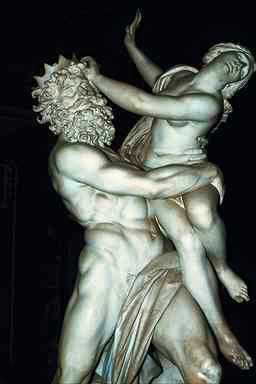
Hades Abducting Persephone: Marriage of Sacred Masculine and Sacred Feminine?
Jungians, following Erich Neumann, understand the progress of history through an evolutionary model in which humanity began in a matriarchal stage in which the unconscious reigned. This period of culture, which spawned the image of the Great and Terrible Mother, was primitive and irrational. Matriarchy was naturally superseded by patriarchy, in which the individual, the ego, and rationality emerged. In the patriarchal stage of culture, male Gods and heroes were the primary symbols, and rationality reigned supreme.
The patriarchal stage of culture had its limitations, which were revealed in the two World Wars of the twentieth century and the nuclear and environmental crises that followed. Rational man, Jungians argued, had come to the point where he needed to reconnect with his feminine side. The unconscious feminine was now understood to be a nurturing matrix that included the body, nature, and feeling, from which rational man should and could never fully separate himself.
The great archaeologist Marija Gimbutas also spoke of two cultures within Europe, an earlier matrifocal one she called Old Europe and a later patriarchal one. The Jungian Joseph Campbell endorsed Gimbutas’ work, leading some to assume that Gimbutas and Jungians hold similar theories of human history. In fact they do not: Gimbutas did not subscribe to an evolutionary theory of culture. She would never have said that the earlier matrifocal culture “had to be superseded” by the later patriarchal culture “in order for civilization to advance.” The clear conclusion to be drawn from Gimbutas’ work is that the patriarchal culture was in almost every way inferior to the one it replaced.
For Gimbutas, the agricultural societies of Neolithic Old Europe were peaceful, egalitarian, sedentary, highly artistic, matrifocal and probably matrilineal, worshiping the Goddess as the powers of birth, death, and regeneration. These societies did not evolve into a higher stage of culture, but were violently overthrown by Indo-European invaders. The culture the Indo-Europeans introduced into Europe was nomadic, patriarchal, patrilineal, warlike, horse-riding, not artistic, worshiping the shining Gods of the sun as reflected in their bronze weapons. Gimbutas did not look forward to a new “marriage” of matrifocal and patriarchal cultures. Rather she hoped for the re-emergence of the values of the earlier culture. Her theories had a critical edge: she did not approve of cultures organized around domination, violence, and war.
This critical edge is exactly what is lost when we begin to substitute the terms “sacred feminine” for “the Goddess” or “Goddess feminism” and “sacred masculine” for “patriarchy” and “patriarchal Gods.” When we allege that we all have our “masculine and feminine sides,” and that it is important “to reunite the masculine and the feminine,” it is easy to forget that in our history, the so-called sacred masculine has been associated with domination, violence, and war.
If we hope to create societies without domination, violence, and war, then we must transform the distorted images of masculinity and femininity that have been developed in patriarchy. We must insist that domination, violence, and war are no more part of masculinity or male nature than passivity and lack of consciousness are part of femininity or female nature. It may feel good to speak of reuniting the masculine and the feminine, but feeling good will not help us to transform cultures built on domination, violence, and war.
No matter how carefully developed they are, theories of female power in pre-patriarchal societies are dismissed in academic circles as “romantic fantasies” of a “golden age” based in “emotional longings” with “no basis in fact.” I was reminded of this while reviewing three books about the Goddess last week.
In one of the books, the co-authors, who define themselves as feminists, summarily dismiss theories about the origins of Goddess worship in pre-patriarchal prehistory. In another, the author traces the origin of certain Goddess stories and symbols found in recent folklore back to the beginnings of agriculture. Inexplicably, she stops there, not even mentioning the theory that women invented agriculture. Considering that possibility might have suggested that the symbols and stories the she was investigating were developed by women as part of rituals connected to the agricultural cycle. To ask these questions would have raised a further one: the question of female power in prehistory. And this it seems is a question that cannot be asked. This question was addressed in the third (very scholarly) book, which I fear will simply be ignored. Continue reading “Fear and Loathing in Discussions of Female Power in the Academy by Carol P. Christ”



 ntly released papal letter
 I am Carol Patrice Christ, born in Pasadena, California, daughter of Janet Claire Bergman, born in El Paso, Texas in 1919, daughter of Lena Marie Searing, born in Lyons, Michigan in 1891, daughter of Dora Sophia Bahlke, born in Lyons, Michigan in 1858, daughter of Maria Sophia Catherina Hundt, born in Parum, Mecklenburg in 1827, daughter of Catherina Sophia Elisabeth Schoppenhauer, born in Pogress, Mecklenburg in 1798, daughter of Anna Sophia Seehasse, born in Zulow, Mecklenburg in 1756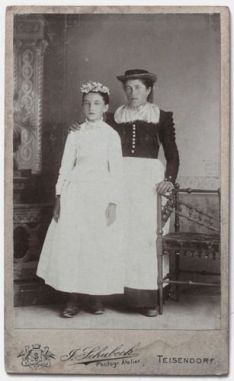
 Last week I watched
  In the past week, founder of Ms. Magazine Gloria Steinem, whom I have always greatly admired,
  “Light and Darkness” is a song written and arranged to one of the oldest known European melodies by Ariadne Institute founding Co-Director Jana Ruble, following her first Goddess Pilgrimage to Crete. Every year since then, we have sung it in the caves of Crete during our rituals. A pilgrim told us that she learned it at the (Christian)
  ears “the Sacred Feminine” has become interchangeable with (for some) and preferable to (for others) “Goddess” and “Goddess feminism.” The terms Goddess and feminism, it is sometimes argued, raise hackles: Is Goddess to replace God? And if so why? Does feminism imply an aggressive stance? And if so, against whom or what?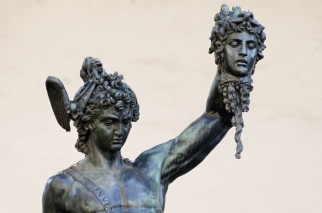
 A Serpentine Path: Mysteries of the Goddess
 No matter how carefully developed they are, theories of female power in pre-patriarchal societies are dismissed in academic circles as “romantic fantasies” of a “golden age” based in “emotional longings” with “no basis in fact.” I was reminded of this while reviewing
