Why Pro-Life Stops at Birth: Who Really Supports Life and Why by Winifred Nathan

The patriarchal Catholic Church claims to be pro-Life.  But is it pro-Life?  Or is it pro-Birth?  A Catholic Benedictine sister outed the pro-Life movement. Her position: the pro-life crowd shows little if any ongoing interest in life after birth.  They’re pro-birth, but not pro-life.  Legislators who enact laws to restrict a woman’s right to an abortion, but then stand firm against funding  programs that assist the mother and her baby once the child is born are not pro-life.   Too often the goal of anti-abortion advocates is for the fetus to make it to birth. Birth is the important value, life not so much.

I propose the starting point for deciphering this puzzle is to look at our desire as human beings for immortality.  We want to defy death believing that there is a spiritual continuation of who we are after our bodies shut down.  We want death to be a new beginning.

A great deal of effort goes into seeking  an answer to the question what comes next.  A question we presently lack the capacity to answer. We honestly do not know what if anything happens following death.

Continue reading “Why Pro-Life Stops at Birth: Who Really Supports Life and Why by Winifred Nathan”
What If…She’s Stronger than She Knows…by Molly Remer

“When I dare to be powerful–to use my strength in the service of my vision–then it becomes less and less important whether I am afraid.”

Audre Lorde

“The purpose of life is not to maintain personal comfort; it’s to grow the soul.”

–Christina Baldwin

When teaching childbirth classes, I would speak to my clients about shifting the common fear-based “what if” cultural dialog of birth to “positive” anticipation rather than fears, encouraging them to ask themselves questions like: “what if I give birth and it is one of the most powerful, thrilling moments of my life?” While I stand by this practice, I also think about the what ifs that crawl out of our dark places and lodge in our hearts. The what ifs that snake around the edges of our consciousness in the early hours of the morning. The what ifs we try to push down, down, down and away. The what ifs that stalk us. The what ifs so very awful that we fear in giving voice to them, we might give life to them as well.
We may feel guilty, ashamed, negative, and apologetic about our deepest “what ifs.” We worry that if we speak of them, they might come true. We worry that in voicing them, we might make ourselves, our families, our communities, our work, or philosophies, our faiths, or whatever look bad. We want to be positive. We want to be blissfully empowered, confident, and courageous. And, guess what? We are. Sometimes that courage comes from looking the “what ifs” right in the eye. Sometimes it comes from living through them. My most powerful gift from my pregnancy with my daughter, my pregnancy-after-loss baby, was to watch myself feel the fear and do it anyway. I was brave. And, it changed me to learn that.

What if we can learn more from our shadows than we ever thought possible? There is power in thinking what if I can’t do this and then discovering that you CAN.

Continue reading “What If…She’s Stronger than She Knows…by Molly Remer”

Turning One by Sara Frykenberg

14724657_10154061354658546_8918956387379465095_nThis month I turn one as a mother. My daughter, consequently, is also turning one—a first birthday I am excitedly planning. Specifically, I want to make Hazel a rainbow cake with lots of colored layers and white frosting. I’m not even sure she’ll be able to eat the cake (avoiding lots of sugar for a one-year-old and all), but among those family pictures I treasure, my mother held a cake for her little ones. I want to be like my mother. I am going to make a cake.
But planning my daughter’s party, I realized that I am also going to have a kind of birth-day anniversary. Other moms have told me that it takes a year to really process the experience of giving birth. While I did consider the significance of my “birthing community,” in a blog last fall, I realized a couple of weeks ago that I wasn’t done understanding what I, what mothers, and what life givers of all kinds go through to bring life into the world. Continue reading “Turning One by Sara Frykenberg”

Restoring Ourselves to Ceremony: Red Tent Circles, by Molly

April 2015 103
At a Red Tent Circle this spring.

I believe that these circles of women around us weave invisible nets of love that carry us when we’re weak and sing with us when we’re strong.”

–SARK, Succulent Wild Woman

Seven years ago, a small postcard at the local Unitarian Universalist church caught my eye. It was for a Cakes for the Queen of Heaven facilitator training at Eliot Chapel in St. Louis. I registered for the training and went, driving alone into an unknown neighborhood. There, I circled in ceremony and sisterhood with women I’d never met, exploring an area that was new for me, and yet that felt so right and so familiar.

I’d left my two young sons home for the day with my husband and it was the first time in what felt like a long time that I’d been on my own, as a woman and not someone’s mother. At the end of the day, each of us draped in beautiful fabric and sitting in a circle around a lovely altar covered with goddess art and symbols of personal empowerment, I looked around at the circle of women and I knew: THIS is what else there is for me. Continue reading “Restoring Ourselves to Ceremony: Red Tent Circles, by Molly”

Hidden Seeds in Laudato Si by Peg Conway

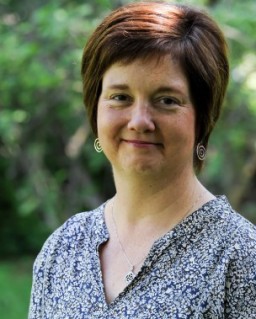
Peg Conway headshot2

The opening two paragraphs of the recent environment encyclical just might be saying even more than the pope intended. Beginning with a quote from the famous Canticle of the Creatures by St. Francis of Assisi, Laudato Si refers to “our sister, Mother Earth,” and compares the earth to “a sister with whom we share our life and a beautiful mother who opens her arms to embrace us”. Sister and mother are seen here as two separate images. But some translations of the Canticle read “Sister Mother Earth” without commas, consistent with the style of the rest of that text, which names Brother Sun and Sister Moon, etc.

Does a little punctuation difference matter? I think it does.

The single term Sister Mother Earth suggests a seamless linkage between all female bodies, whether our sisters, our mothers, our planet. We are brothers and sisters to one another as Christians (and members of the human family), every person has a biological mother, and the earth sustains us all. “Sister Mother Earth” means there are no distinctions among the three; they are one body. This interpretation lends even greater impact to the second paragraph, where the pope speaks of “this sister who now cries out to us” because of abusive treatment:

Continue reading “Hidden Seeds in Laudato Si by Peg Conway”

Birth Warrior by Molly

editMollyNov 083“In this culture…a woman can be made to feel foolish for emphasizing the centrality of giving birth to her identity or her personal religiousness, her ‘womanspirit…’” –Stephanie Demetrakopoulos (Listening to Our Bodies)

After the birth of my daughter in 2011, I received a small package from a Birthing from Within mentor friend. In it was a sweet little t-shirt imprinted with the words, My Mama is a Birth Warrior. The words on the shirt surrounded a labyrinth image, which I love as a metaphor for birth and life

Written on the enclosed card was the following:

Imagine a tribe in which a woman is prepared for childbirth in the same way warriors are prepared for battle. Imagine a Ceremony for this woman before she gives birth, a grand send-off with holy songs and fire. Imagine a feast, prepared just for her.

Her tribe tells her, they say to her “Go to your journey, you have prepared. We have prepared you. If you fall from your horse once or a hundred times, it does not matter. All that matters is that you come back to us, that you come home.

Throughout your journey–your labyrinth of Great Love, Great Determination, Great Faith and Great Doubt—you rode on!

The Great Tribe of Mothers welcomes you back from your birth journey with honor.

Modeling her little t-shirt.

Imagine, indeed. After I read this note I reflected that I did feel I embarked on a mighty journey during my last pregnancy, I did pass through those Gates, and I did ride on. I AM a birth warrior!  Continue reading “Birth Warrior by Molly”

Birth as a Shamanic Experience by Molly

editMollyNov 083Childbirth is a rite of passage so intense physically, psychologically, emotionally, spiritually, that most other events in a woman’s life pale next to it. In our modern lives, there are few remaining rituals of initiation, few events that challenge a person’s mettle down to the very core. Childbirth remains a primary initiatory rite for a woman.” –Maren Hansen (MotherMysteries)

When I was pregnant with my first baby, I read an article with the theme of “Birth as a Shamanic Experience.” I can no longer find the exact article (online or printed), but I distinctly remember my feeling upon reading it: I was entering into a mystery. Giving birth was big. Bigger than anything I’d ever done before and it went beyond the realm of a purely biological process and into something else. Like shamanic experiences, giving birth is often described as involving a sense of connection to the larger forces of the world as well as being in an altered state of consciousness or even a trance state. While shamanic experiences may involve “journeying” to other realms of reality, giving birth requires the most thoroughly embodied rootedness of being that I’ve ever experienced. It, too, is a journey, but it is a journey into one’s own deepest resources and strongest places. The sensation of being in a totally focused, state of trance and on a soul work mission is intense, defining, and pivotal.

Shamanic journeys may be embarked upon for the purpose of soul retrieval and I can’t help but think that this is the purpose of giving birth as well—the birthing woman travels into herself to bring forth the soul of her child.  Continue reading “Birth as a Shamanic Experience by Molly”

The “Curse of Eve”—Is Pain Our Punishment? Part 2 by Stacia Guzzo

In the first part, I posed the question about whether or not the so-called “Curse of Eve” could be interpreted alternatively from the traditional understanding of Genesis 3:16a (the result of Eve’s disobedience being the punishment of painful childbirth for all generations of women). I considered an alternate interpretation of “sorrow” rather than “pain” for the verse, a lens through which the punishment could then be seen as impacting the God-human relationship rather than as a condemnation of pain.

I would like to further examine the consequences of this consideration. What if we were bold enough to interpret both the punishments of Adam and Eve (toiling over the land and pain in childbirth, respectively) as symbolic for all of humankind—and, furthermore, as speaking specifically of the God-human relationship? After all, men certainly aren’t the only ones who have toiled in the fields to bring forth food (I say this specifically thinking of a female farmer who lives down the road from me, and remembering her 10-14 hour days laboring over her harvests). Nor are all women subject to painful childbirth; in fact, the documentary Orgasmic Birth specifically devotes its study to women who find the experience of birth both sensual and ecstatic.  If interpreting the Scriptural “curses” as literal and final, these not-so-exceptional exceptions would seem to contradict God’s decree.  Yet when interpreting the punishments as indicative of a schism in relationship between God and humankind, the implications can be more clearly understood. Continue reading “The “Curse of Eve”—Is Pain Our Punishment? Part 2 by Stacia Guzzo”

The “Curse of Eve”—Is Pain Our Punishment? Part I

I have been involved in several interesting discussions lately involving  friends asking me what I thought of the so-called “Curse of Eve.” This “curse,” which is generally used in reference to the pain of childbirth, is assumed from the text of Genesis 3:16a. On one side, I have had friends and colleagues argue that the pains of labor are a direct result of Eve’s sin, and thus all women who bear children will suffer them as a reminder of their inherent sinful nature. On the other hand, I have had friends question this interpretation: Why, they ask, would God use such an incredible event to punish us? And what about women who don’t experience any pain in childbirth at all? Or who do not have children? Is God’s punishment reserved for those who procreate? This doesn’t seem to make much sense in a larger spiritual framework. Continue reading “The “Curse of Eve”—Is Pain Our Punishment? Part I”