
Winged Iris flew over earth and sea.
Rainbows luminesced in her wake.
Messenger from the clouds,
she gathered up the rain,
Continue reading “Rainbow Goddess by Sara Wright”
Exploring the F-word in religion at the intersection of scholarship, activism, and community.

Winged Iris flew over earth and sea.
Rainbows luminesced in her wake.
Messenger from the clouds,
she gathered up the rain,
Continue reading “Rainbow Goddess by Sara Wright”
This post is dedicated to Carol P. Christ. I knew her first as my professor and then my friend for over 15 years. May her memory be a blessing.
This week’s Torah portion is Shofetim (also spelled Shoftim), or Deutoronomy 16:18-21:9. I have written about this parshah before. In that post from August of 2018, I reflect on how the patriarchal elements of the portion should not detract from its larger concern for justice, compassion, and peace. Yet, there is more to the parshah. In fact, I have recently begun exploring Judaism’s connection to all things magical, and interestingly enough, this parshah fits right into my recent inquiries. Let me share with you some of what I have learned as it relates to this parshah.
Where Shofetim and magic meet is idolatry. There are three instances in Shofetim where idolatry is condemned, punished by stoning to death. All three of these prohibitions involve polytheism, either directly worshiping other deities or participating in practices associated with the worship of those deities. What are they?
Continue reading “Shofetim: The Divine Feminine, Magic, and the Role of Gender by Ivy Helman.”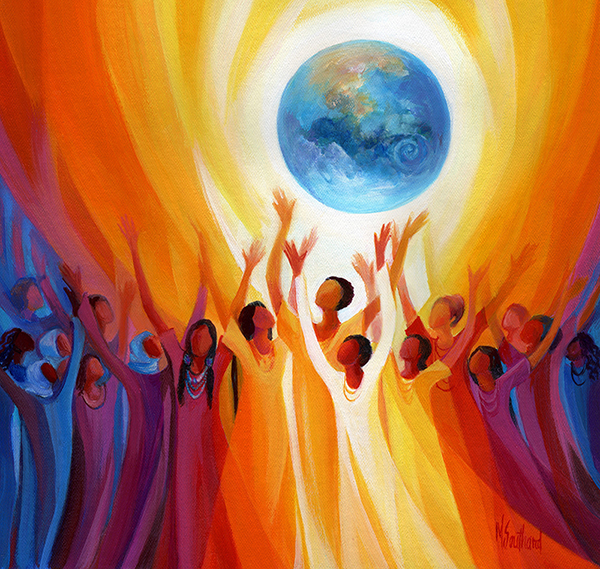
Women Singing Earth by Mary Southard
Here is a hymn of praise, a beautiful and intimate piece meant to be sung. Reader, I invite you to guess the author of this text and the sacred figure to whom this work is addressed.
Hail, O greenest branch,
sprung forth on the breeze of prayers.. . . . a beautiful flower sprang from you
which gave all parched perfumes
their aroma.
And they have flourished anew
in full abundance.The heavens bestowed dew upon the meadows,
and the entire earth rejoiced,
because her flesh
brought forth grain,
and because the birds of heaven
built their nests in her.Behold, a rich harvest for the people
and great rejoicing at the banquet.
O sweet Maiden,
no joy is lacking in you . . . .
Now again be praised in the highest.
An expert traveler knows that the best part of leaving is coming back. I am happy to open another year writing here again, after a necessary break, since writing is the way I maintain my strong ties with my critical spirit and this community that I cherish and has become through the years, my safe space.
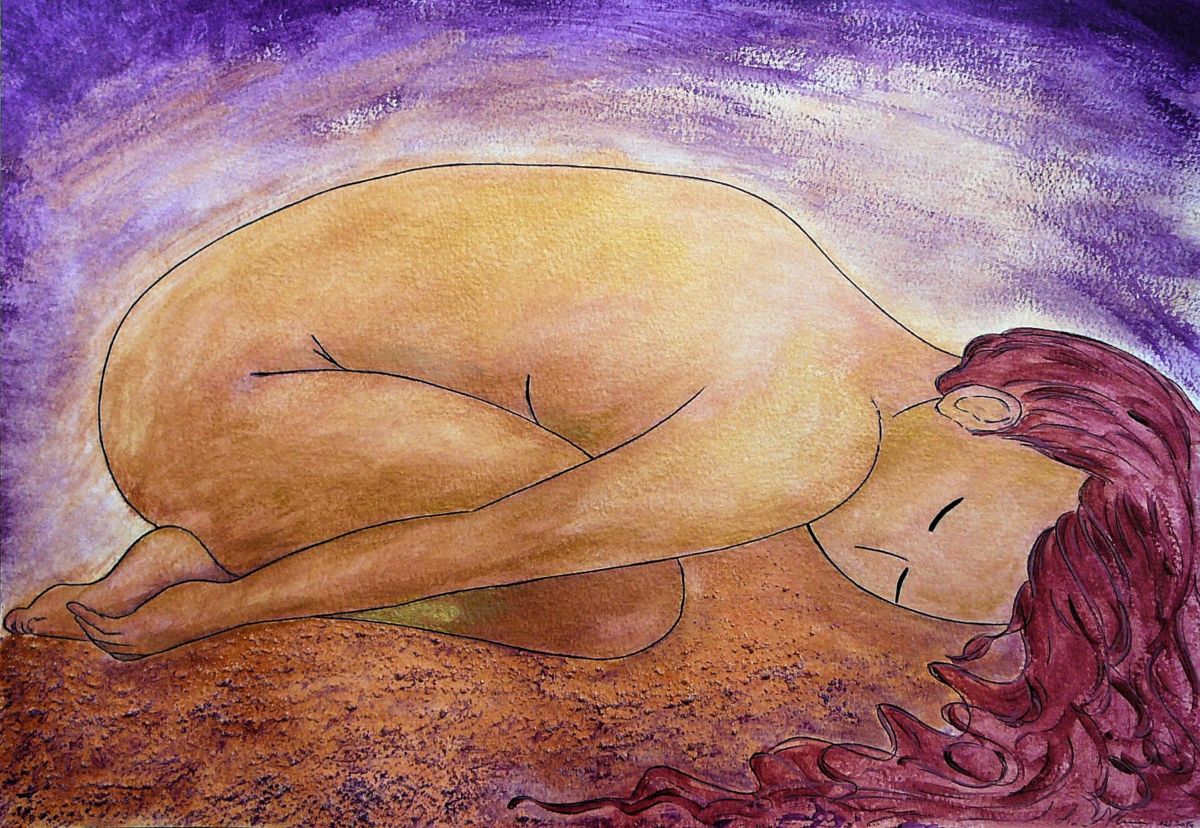
Let me start with this. At the end of last year I was teaching a course on Gender, Women and Islam for social science students at a College in Mexico. One of the question I was often asked was: Madam, Is God a She? Continue reading “The Feminine in God by Vanessa Rivera de la Fuente”
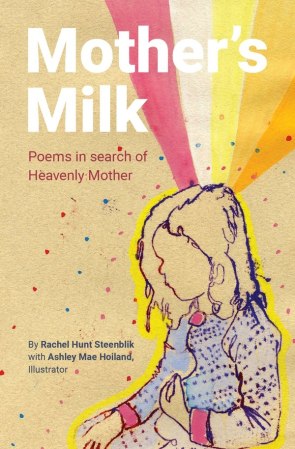
Feminist theologies are filled with queries and questions about the divine feminine. Whether women need the Goddess. If She really is. Where herchurch might flourish. I have my own complicated views about the subject, and continue to be enriched by those who seek and find. Rachel Hunt Steenblik is the newest voice calling to and from the divine feminine, singing in a distinctively Mormon key.
If you read Mother’s Milk: Poems in Search of Heavenly Mother from front to back, you encounter what seem like scratches of verse and fragments of wisdom from a young mother catching time to write in the midst of her graced obligation to feed and sustain tiny bodies. If you read it back to front, you encounter a wealth and depth of engagement with Christian sacraments, feminist theology, sacred texts, Mormon history, modern philosophy, and children’s books and movies. This cacophony of source material and influence is distilled into sparse poems whose brevity bely decades of the author’s feminist engagement with vast religious history, philosophy, and theology.
In my review of Mormon Feminism: Essential Writings, edited by Steenblik along with Joanna Brooks and Hannah Wheelwright, I noted that feminists in many religious traditions “have had to document their history, make their theological case, and engage their scriptures as robustly as any conservative traditionalist would.” In Mother’s Milk, Steenblik offers us her contribution to the reconstruction of religious tradition. The words of her introduction state plainly: “These are the poems that I could write with my questions, my hurt, my hope, and my reading. Others could write other poems with theirs. I hope they will. We need them all.”
Continue reading “Finding Heavenly Mother with Rachel Hunt Steenblik by Caryn D. Riswold”
 Like many other thousands of Americans, I watched the newest offering from the Star Wars legacy last autumn and was re-inspired to be an active part of the rebellion against oppression. Viewing the movie through my feminist lens I was cheered on by the choice of actors and actresses in lead roles and was reminded of Margaret Mead’s famous quote, “Never doubt that a small group of thoughtful, committed, citizens can change the world. Indeed, it is the only thing that ever has.”
It may be easy to compare the new president to Lord Vader because he is an easy target who encourages mockery and ridicule. However, tyranny, violence, and power trips have long been a part of world societies, for centuries. It is as evident as ever that we must continue to stand against such debilitating realities. We must stand together.
And, like millions of other people across the world, I had the privilege to participate in a Sister March to the Women’s March on Washington; shoulder to shoulder with passionate and caring people determined to make a difference. The experience generated feelings of elation, hope, and unity. I was most impressed by the kindness radiating from every person I came in contact with. Even though spaces were packed with people the overall atmosphere was conscientious, polite, and caring. Peaceful activism is critical to progress.
I also listened intently to the speeches made at the marches; especially by the women well known in popular culture. Gloria Steinem, a cornerstone of the modern feminist movement, spoke words that I believe reflect the change in values that I visualize in the form of a river current. “God may be in the details, but the Goddess is in connections. We are at one with each other, we are looking at each other, not up.” Women’s work is the creation of the web; the tapestry of connections between us all and the building of momentum in the stream bed. Continue reading “Join the Rebellion by Jessica Bowman”
Who is your Holy Woman Icon?
When I began the academic study of religion in 1999, I was struck by the pantheon of male saints, venerated, honored, painted, adored, perhaps even worshipped. From virtually every tradition, men reigned supreme—in leadership, iconography, decision-making, worship—which is one of the myriad reasons groups like Feminism and Religion must exist. To combat this oppressive supremacy.
In 2010, I decided to put my wonder and this patriarchal dis-ease on canvas. I painted a triptych of Sophia, the feminine Greek word for wisdom often understood as the feminine face of Jesus, for a group triptych exhibition. Inspired stylistically by the art of Shiloh Sophia McCloud and He Qi, I endeavored to give traditional iconography a folk twist in an attempt to make it more accessible, perhaps a bit less brooding and intimidating. Emboldened by the works of womanist and feminist scholars in religion, my icons aim to subvert traditional—and often patriarchal—depictions of a virtually all-male sainthood. Though there are surely some women depicted Catholic and Orthodox iconography, and a robust number of women and goddesses in Hindu iconography, I found myself at a loss when it came to positive, affirming, and empowering icons of women across the vast spectrum of religious and spiritual traditions. Continue reading “Nominating Holy Women Icons by Angela Yarber”
 (Spoiler alert: She’s already here)
The power of the divine feminine taps into the power of life. The power is accessible to everyone as the equal opportunity energy surrounding and connecting all living things. The power is ancient, and meditative practices such as yoga, which in Sanskrit means linking to the divine, can connect us to this power. When we make the connection, we find the balance we need to realize our highest selves, and through that balance we can realize the highest self of the larger society. To reclaim the divine feminine, we need only remember, and as more and more of us remember, we heal first ourselves, and ultimately the planet.
1. She is the route back to the self.
In her mother aspect the divine feminine offers a route back to the self and She is all-inclusive. She embraces all of creation, men, women and nature, and we find Her when we reach back far enough into history and our own consciousness. She was there from our very beginning, through the Paleolithic and the Neolithic, when we celebrated her in carved figurines. She was there when we made the shift to agriculture, clear as the full moon, the goddess with her circular all encompassing worldview, birth, life, death and birth again. The goddess as mother, the goddess whose body is the earth which nurtures us all. She is there now in your deepest consciousness, you need only remember, and when you do, She will guide you back to yourself.
 I wrote this piece in response to an e-mail from a friend that said: “Yes, women’s circles may help you with your headaches that you have every 3 to 7 days (or whatever else ails you.)”
I think women (and men as well, but I think women feel this more deeply in general) are missing a genuine connection to others, a safe place to be heard and accepted, a chance to step outside of their roles and responsibilities in life (if only to see how very similar our challenges are), and a chance to honor beauty whether that be by reading a poem, singing a song or listening to music.
When the minister at the church turned you off towards Christianity by his fear and misdirected anger, you were searching for Divinity within someone else. But Divinity resides within yourself. Continue reading “Gather the Women and Heal What Ails Us by Karen Moon”
 Yesterday, I went to a Women’s Circle, the description follows:
Our next circle will honor this journey of Venus or Innana as she was known by the ancient Sumerians. We will gather on Sunday, July 26th at 3 PM at my house. We will celebrate the divine feminine energy of Innana/Venus through meditation, song and dance. I encourage you to dress as your inner goddess, embracing your personal divine feminine energy. We will have our usual potluck munchies afterward.
I had spoken to the host on the phone previously and know her via Social Media. My husband gave his helpful advice to be sure that it was not a “cult,” and yes, I do think any time you find things via social media, a big dose of common sense is needed. Continue reading “The Wonder that is Being Born: How to Live Out Loud? Sacrilegious or Evolution? by Karen Moon”
 Feminism and Religion