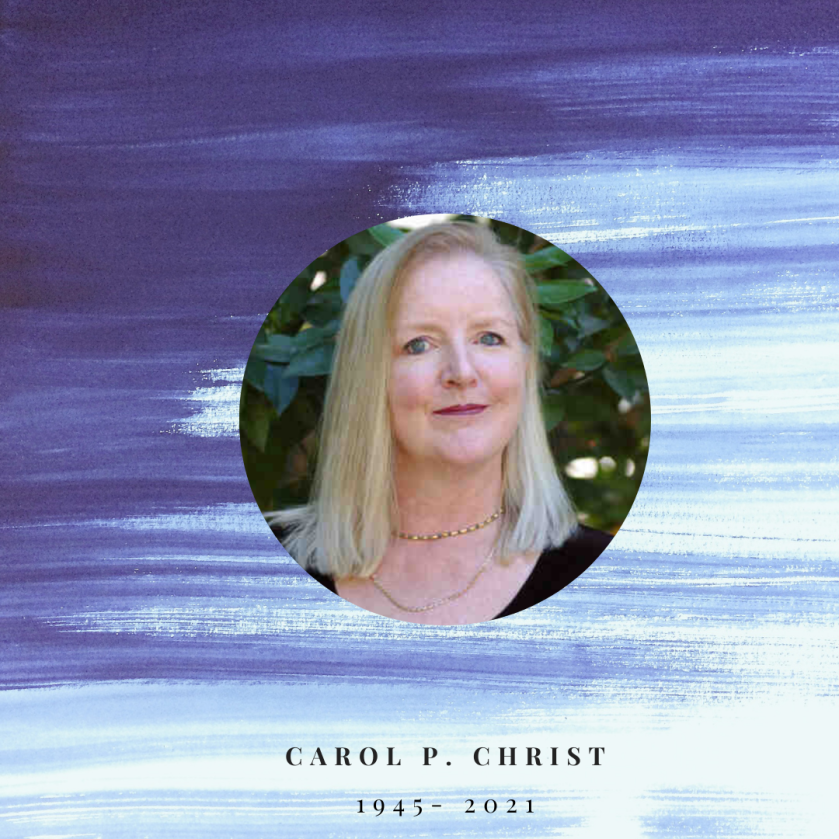
Legacy of Carol P. Christ: The Heraklion Museum: A Critique of the Neolithic Display

This was originally posted April 2, 2018

If I had been asked to write the words that introduce visitors to the Heraklion Archaeological Museum of Crete to its earliest inhabitants, I would have said something like this:

While there is evidence that human beings visited Crete as early as 150,000 years ago, the first permanent settlers arrived from Anatolia in the New Stone Age or Neolithic era, about 9000 years ago, bringing with them the secrets of agriculture and soon afterward learning the techniques of pottery and weaving. As the gatherers of fruits, nuts, and vegetables and as preparers of food in earlier Old Stone Age or Paleolithic cultures, women would have noticed that seeds dropped at a campsite might sprout into plants. Women most likely discovered the secrets of agriculture that enabled people to settle down in the first farming communities of the New Stone Age. As pottery is associated with women’s work of food storage and preparation, and as weaving is women’s work in most traditional cultures, women probably invented these new technologies as well. Each of these inventions was understood to be a mystery of transformation: seed to plant to harvested crop; clay to snake coil to fired pot; wool or flax to thread to spun cloth. The mysteries were passed on from mother to daughter through songs, stories, and rituals.

Continue reading “Legacy of Carol P. Christ: The Heraklion Museum: A Critique of the Neolithic Display”

Legacy of Carol P. Christ: The Ninth Touchstone: Repair the Web

This was originally posted on September 3, 2018

As I reflected on the Nine Touchstones again recently, I was pleased to discover that the first and the eighth touchstones are articulations of the central values of egalitarian matriarchal societies. Few of us live today in egalitarian matriarchies, and it would not be possible for all of us to return to cultivating the land. I offer the Nine Touchstones in the hope that they can help us to find a way to express and embody the values of egalitarian matriarchal cultures in the modern world. The touchstones are intended to inform all our relationships, personal, communal, social, and political.

Continue reading “Legacy of Carol P. Christ: The Ninth Touchstone: Repair the Web”

Patriarchy as a System of Male Dominance Created at the Intersection of the Control of Women, Private Property, and War by Carol P. Christ


Recently feminist scholar Vicki Noble said this is the best definition of patriarchy she has read–but she hadn’t known of it earlier! I am am republishing it now in hopes that all of you will share it on your social media so that it becomes more widely known. Thanks!

Patriarchy is often defined as a system of male dominance. This definition does not illuminate, but rather obscures, the complex set of factors that function together in the patriarchal system.  We need more complex definition if we are to understand and challenge the the patriarchal system in all of its aspects.

Patriarchy is a system of male dominance, rooted in the ethos of war which legitimates violence, sanctified by religious symbols, in which men dominate women through the control of female sexuality, with the intent of passing property to male heirs, and in which men who are heroes of war are told to kill men, and are permitted to rape women, to seize land and treasures, to exploit resources, and to own or otherwise dominate conquered people.* Continue reading “Patriarchy as a System of Male Dominance Created at the Intersection of the Control of Women, Private Property, and War by Carol P. Christ”

Masculine: Aggressive/Feminine: Passive: Can We Imagine Alternatives? by Carol P. Christ

Today a couple of friends and I were discussing egalitarian matriarchal values. I stated that in these societies there is no great difference in male and female personalities because both males and females are expected to be as kind and loving and generous as their own mothers. “Oh no I would not want that,” the other woman responded. “I want my man to be masculine–not wishy washy or namby pamby.” This woman soon acknowledged that she did not want her man to be dominant or aggressive. Yet her first reaction was to reject the idea that men might do well to emulate the values of their mothers.

This conversation illustrates the difficulty we have in conceiving alternatives to the way we assign gender roles. Masculine: assertive and aggressive. Feminine: weak and passive.

In fact. being as kind, loving, and generous as mothers in egalitarian matriarchies has nothing to do with these familiar gender binaries. Mothers in egalitarian matriarchies are assertive, but not aggressive, and there is nothing weak or passive about them. Love, kindness, and generosity are not about standing back and letting others walk over you. Instead they are active values that require intelligence, reflection, and strength. Continue reading “Masculine: Aggressive/Feminine: Passive: Can We Imagine Alternatives? by Carol P. Christ”

Ancient Mothers, I Hear You Calling Me to Crete by Carol P. Christ

On a cold and rainy morning in Lesbos, I ponder the advice of my intuitive friend Cristina to reflect on the spiritual dimensions of my decision to move to Crete. When asked why I am moving from Lesbos to Crete, I tend focus on the negative: I am lonely in my small village; and I am disheartened by my neighbors’ lack of compassion for the refugees who come to our island from Syria, Iraq, Iran, and Afghanistan.

As I begin to think again, I recall the many wonderful things I have experienced in Lesbos. This is the island where Sappho sang, and I too have been inspired by the muses who arise from the land. It is here that I first felt Greece calling me to leave my home. It is here that I learned to speak Greek. It is here that I listened to the stories of the old people who remembered a time when everyone lived closer to each other and the land. It is here that I learned to dance the traditional dances of Greece. It is here that I learned to identify over 300 species of birds that visit the wetlands on spring migration or are year-around or summer and winter residents. It is here that I dedicated a decade of my life to the effort to protect the wetland home of the birds I came to love. It is here that I was asked to run for regional and national office by the Green Party Greece. It is here that I met green friends I will always hold in my heart. It is here that I became an amateur geologist, learning the volcanic history of an island that has been declared a UNESCO Geopark. It is here that I imagined the time before 1922 when Turks, Armenians, and Greeks lived together in my village. It is here that I renovated a small Turkish house in a neighborhood that once had a mosque and later, a Neoclassical “mansion” (not particularly large by American standards) built by a Greek shipowner who transported goods brought by camels along the silk road from China. It is here that I learned to drink retsina and to relish food drenched in olive oil. I will carry all of this with me, for it is in my blood and in my bones.

But now, Crete is calling me. Continue reading “Ancient Mothers, I Hear You Calling Me to Crete by Carol P. Christ”

Matriarchies Are Not Just a Reversal of Patriarchies: A Structural Analysis by Heide Goettner-Abendroth

Matriarchies are not just a reversal of patriarchies, with women ruling over men – as the usual misinterpretation would have it. Matriarchies are mother-centered societies. They are based on maternal values: care-taking, nurturing, mothering. This holds for everybody: for mothers and those who are not mothers, for women and men alike.

Matriarchal societies are consciously built upon maternal values and motherly work, and this is why they are much more realistic than patriarchies. They are, on principle, need-oriented. They aim to meet everyone’s needs with the greatest benefit. So, in matriarchies, mothering – which originates as a biological fact – is transformed into a cultural model. This model is much more appropriate to the human condition than the patriarchal conception of motherhood which is used to make women, and especially mothers, into slaves.

Within matriarchal cultures, equality means more than just a levelling of differences. Natural differences between the genders and the generations are respected and honoured, but they never serve to create hierarchies, as is common in patriarchy. The different genders and generations each have their own dignity, and through complementary areas of activity, they function in concert one other. More precisely, matriarchies are societies with complementary equality, where great care is taken to provide a balance. This applies to the balance between genders, among generations, and between humans and nature. Maternal values as ethical principles pervade all areas of a matriarchal society. This creates an attitude of care-taking, nurturing, and peacemaking. Continue reading “Matriarchies Are Not Just a Reversal of Patriarchies: A Structural Analysis by Heide Goettner-Abendroth”

Do We Have to Hate Our Mothers? No, We Do Not! by Carol P. Christ

It is commonly accepted in American culture that children–boys especially–must go through a “phase” where they hate their mothers in order to grow up. We are told that the mother-child bond is so intense as to become suffocating. We are told that unless children – boys especially – reject their mothers, they will not individuate, become individuals. And nobody, we are told, wants a mama’s boy.*

Recently, I read an article written by a mother who, though she had prepared herself for rejection, had not prepared herself for the degree of hatred and contempt her teen-age son would express towards her over a several year period. I do not recall whether or not this particular story had a happy outcome or whether the mother was still living the story of rejection.

The idea that children—boys especially–must reject their mothers in order to grow up is one of the ways matricide is played out in our culture. In rejecting our mothers, we also reject the idea that nurturing life is the highest value. Continue reading “Do We Have to Hate Our Mothers? No, We Do Not! by Carol P. Christ”

Why Can’t a Man Be More Like a Woman? by Carol P. Christ (and Hannah Gadsby)

Women are loving, caring, and clever. Why do men say: “I will not be like that, never?”

In a recent article in Gentlemen’s Quarterly, my favorite comedian, Hannah Gadsby, said:

Hello, the men. My advice on modern masculinity would be to look at all those traits you believe are feminine and interrogate why you are so obsessed with being the opposite. Because this idea that to be a man you have to be the furthest away from being a woman that you possibly can is really weird.

A butch lesbian, Gadsby is not advocating traditional sex role stereotypes. She is questioning them. She continues:

Women are always being encouraged to stir masculine traits into their feminine recipe. We are told to “be bolder!” “Speak up in meetings.” “Exaggerate your skills.” All that Lean In sort of crap. So perhaps it’s time for you, the men, to be more ladylike.

Even as she recognizes that it is becoming OK for women to express so-called “masculine traits,” she understands that so-called masculinity is often based on a lie. It may be fine to “be bolder” (but not when you have nothing to say at the moment) and to “speak up” (but not to the exclusion of others), yet it should not be necessary to “exaggerate your skills” to make yourself look better than other people—and better than you are! No one should not have to be “the best” in order to be accepted or acceptable.

Gadsby feels for the men who are trying to live up to masculine stereotypes:

I can see how it is a tough spot. It is not your fault. You didn’t build this mess. You were born into it, like the rest of us. What I am saying is, I have empathy for you.

And then the comedian’s zinger:

And empathy, by the way, is one of the traits that women are most famous for. You might know it by its other name: “weakness.” But don’t be fooled—empathy is a superpower, and it’s the only one that any human has to offer.

*

Empathy is a superpower, and it’s the only one that any human has to offer.

*

All joking aside, this is a profound statement. Many feminists have been saying for a long time that qualities defined as “female” or “feminine” are in fact human qualities that should be embodied and emulated by all.

*

Gadsby takes this a step further. When she says that empathy is a super power and the only super power available to humans, she is saying that a quality often identified as “female” or “feminine” is in fact the highest value and the most important one for everyone, whether they identify as male, female, or something else, to express. This is a truly radical point of view and perhaps the only one that can save our species and our planet from destruction. Without empathy we and many other forms of life are doomed. And as long as empathy continues to be defined as the opposite of masculine strength, the men who rule the world will continue to turn against the only superpower that can save us.

*

In recent years I have been inspired by egalitarian matriarchal societies. What is most amazing to me about these cultures is not that women have power (though this is amazing) nor even that there is no rape (this too is amazing). What is most amazing to me is that these societies place values they associate with mothers and mothering at the center.

For the Minangkabau of Sumatra, nurturing the weak and the vulnerable is the highest value. Nurturing the weak and the vulnerable is what (good) mothers do. In Minankabau culture, not only women and girls, but also men and boys, are expected to nurture the weak and the vulnerable above all else. For men and boys, there is no shame in this. They are not considered weak or effeminate (a word that could not exist in their culture) for doing so. Rather they take pride in being able to express and embody the values that ensure the continuation of life.

In The Kingdom of Women, Choo WaiHong writes about an appointment she made to speak with an elder man about the egalitarian matriarchal Mosuo culture. She arrived on time, but before he could speak with her, he fed, bathed, and put a set of small twins to bed. For him, nurturing the weak and vulnerable came first. Speaking about his culture could wait, and so could his guest. In fact, he could not have chosen a better way to explain Mosuo values to the Han Chinese woman who waited while he, a respected elder man, cared for two little babies. In his culture, caring for the weak and the vulnerable is important. It is what people do. And it comes first!

*

When will we ever learn? Oh when will we ever learn?

*

Carol P. Christ is an internationally known feminist and ecofeminist writer, activist, and educator who will soon be moving permanently to Heraklion, Crete. Carol’s recent book written with Judith Plaskow, Goddess and God in the World: Conversations in Embodied Theology, is on Amazon. A Serpentine Path: Mysteries of the Goddess is on sale for $9.99 on Amazon. Carol has been leading Goddess Pilgrimage to Crete for over twenty years: join her in Crete. Carol’s photo by Michael Honneger.

Listen to Carol’s a-mazing interview with Mary Hynes on CBC’s Tapestry recorded in conjunction with her keynote address to the Parliament of World’s Religions.

Iroquoian Women: Power Held and Shared by Carol P. Christ

According to Barbara Alice Mann, author of Iroquoian Women, women were at the center of a matrilineal Iroquoian society that could be called (though she does not call it that) an “egalitarian matriarchy.” As in other egalitarian matriarchies, including those of the Mosuo and the Minangkabau, women both hold power and share it with men. According to Peggy Reeves Sanday who studied many societies in the anthropological records, female power does not mean female domination.

In attempting to reconstruct the role of women in Iroquois society, Mann first had to engage in a painstaking deconstruction of the scholarly consensus that men ruled among the Iroquois. Believing that male dominance is universal, scholars ignored or explained away a great deal of evidence that Iroquoian women were and are at the center of Iroquoian society. Those who believe that academic scholarship is objective or relatively objective may have to revise their opinions after reading the masses of evidence of witting and unwitting distortion of Iroquois society that Mann uncovers. In order to reconstruct the role of women in Iroquoian society, Mann also had to deal with the fact that the American government destroyed much of Iroquoian oral tradition through policies of forced assimilation that removed children to government schools and forbade the speaking of native languages. Continue reading “Iroquoian Women: Power Held and Shared by Carol P. Christ”

The Ninth Touchstone: Repair the Web by Carol P. Christ

As I reflected on the Nine Touchstones again recently, I was pleased to discover that the first and the eighth touchstones are articulations of the central values of egalitarian matriarchal societies. Few of us live today in egalitarian matriarchies, and it would not be possible for all of us to return to cultivating the land. I offer the Nine Touchstones in the hope that they can help us to find a way to express and embody the values of egalitarian matriarchal cultures in the modern world. The touchstones are intended to inform all our relationships, personal, communal, social, and political.

Nurture life.

Walk in love and beauty.

Trust the knowledge that comes through the body.

Speak the truth about conflict, pain, and suffering.

Take only what you need.

Think about the consequences of your actions for seven generations.

Approach the taking of life with great restraint.

Practice great generosity.

Repair the web

The ninth touchstone is based on the Jewish “commandment” to repair the world. It is derived from the mystical tradition in which prayers were directed towards reuniting the broken sherds that became the created world with their transcendent source. It was reinterpreted by liberal Jews in America as a commandment to create justice in this world through social and political action. I rephrase it as “Repair the web,” to underscore to the need to repair not only the human community, but also the web of life in which it is situated.

To nurture life is to protect the weak and the vulnerable and to create the conditions in which human beings and all beings can experience the joy of living.

To walk in love and beauty is to love yourself, other human beings, and all beings in the web of life, and to appreciate the beauty that is found in all of our diversity and difference.

To speak the truth about conflict, pain, and suffering is to recognize that everything is not love and light in the modern world: to speak the truth about that which is broken is the path to healing.

To take only what you need is to recognize the interdependence of life: when we take more than we need, we take from others without reason.

To think about the consequences of your actions for seven generations is to recognize that what we do today will affect the next generations and the planet as a whole, in good ways, and in bad.

To approach the taking of life with great restraint is to think about what we eat, never to kill unnecessarily, and not to react with violence when there are other ways to resolve conflict.

To practice great generosity is to recognize that none of us has the God-given right to own anything, and to learn to give and receive in the grace of life.

To repair the web is to always act to create a better life for ourselves, for the next generations, and for the species with which we share life this earth.

The Nine Touchstones help us to imagine the way to a better world. Can we join together to create it?


*Parts of this blog will be included in my keynote address at The Parliament of World Religions on November 5, 2018 in Toronto, Canada.

*Also see: Ethics of Goddess Religion: Healing the World , Nurture Life: Ethics of Goddess Spirituality,  Walk in Love and Beauty: A Touchstone for Healing,  Trust the Knowledge that Comes through the Body: Heal Yourself, Heal the World,  Speak the Truth About Conflict, Pain, and Suffering, Take Only What You Need, Think About the Consequences of Your Actions for Seven Generations, Approach the Taking of Life with Great Restraint,  Practice Great Generosity


Carol P. Christ is an internationally known feminist writer, activist, and educator currently living in Lasithi Prefecture, Crete. Carol’s recent book written with Judith Plaskow, Goddess and God in the World: Conversations in Embodied Theology, is on Amazon. A Serpentine Path: Mysteries of the Goddess is on sale for $9.99 on Amazon. Carol  has been leading Goddess Pilgrimage to Crete for over twenty years: join her in Crete. Carol’s photo by Michael Bakas. Carol will be speaking at the 25th Anniversary Celebration of the Re-Imagining Conference at Hamline College in St. Paul Minnesota on November 1 and 3 and at the Parliament of World Religions in Toronto, Canada on November 5.