The Norns, Spiritual Mystery and Me, Part 2 by Janet Maika’i Rudolph

Part 1 was posted yesterday. You can read it here. The Norns were explaining the mess they had made when they got drunk at a Valhalla party.
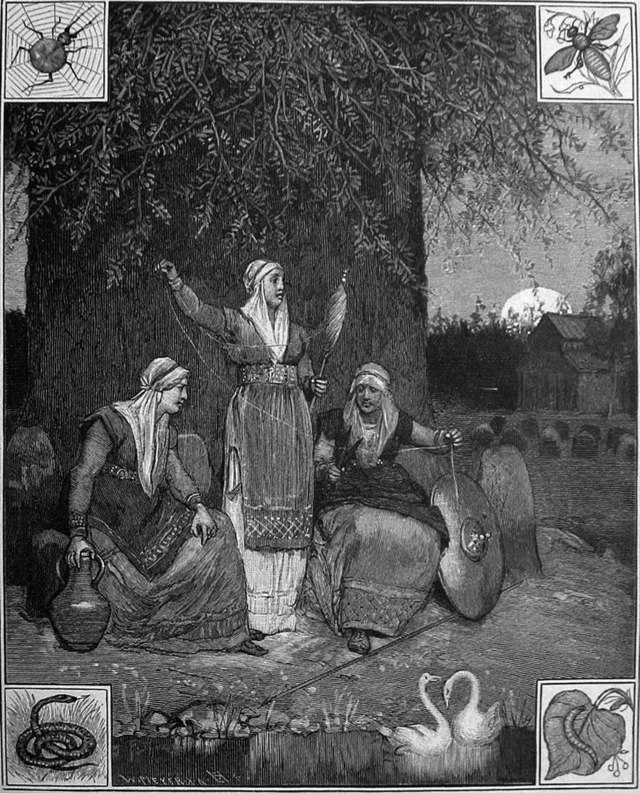
The Norns looked at me with sadness. “We knocked over one of our looms/templates/arrangements” 

Their tone changed, they looked at each other and I thought I could see emotion churning. They were arguing and then they stopped. They turned toward me and looked sheepish, that is if divinities can look sheepish. “It was a disaster/calamity/debacle.”

“Tell me then,” I was growing impatient.

Verdandi: “Well you see the loom we knocked over was . . .”

“What?” I almost shouted at them.

Urd: “It was the loom holding the pattern from Salim/Jerusalem.”

Continue reading “The Norns, Spiritual Mystery and Me, Part 2 by Janet Maika’i Rudolph”
The Norns, Spiritual Mystery and Me, Part 1 by Janet Maika’i Rudolph

In 2020, I began writing my biography because some weird things were happening in my life including some which were time-bending. To help make sense of it, I wrote up “conversations” with the mythical characters of Persephone, Inanna and the Norns of the Norse. Throughout my bio, I speak to the Norns as an out loud meditation on the nature of time, fate and energy.

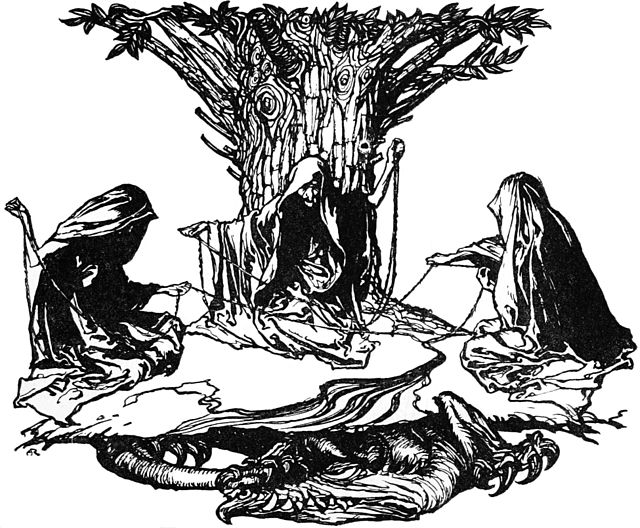
The three Norn sisters are Urd, Verdandi and Skuld. Their names come from Old Norse which is not a spoken language. The actual translation of their names is open to speculation. In general, here are their common meanings.

  • Urd – past
  • Verdandi – happening or present
  • Skuld – future or debt.

By mythological tradition, they show up at a child’s birth and then weave their “fateful” decisions about that child’s life into a tapestry. They are considered more powerful and fearsome than the gods because even the gods are ruled by the hands of fate (or Norns in this case). They were also treated as oracles where kings and warriors went to consult them much as was done in Delphi Greece.[1]

Continue reading “The Norns, Spiritual Mystery and Me, Part 1 by Janet Maika’i Rudolph”

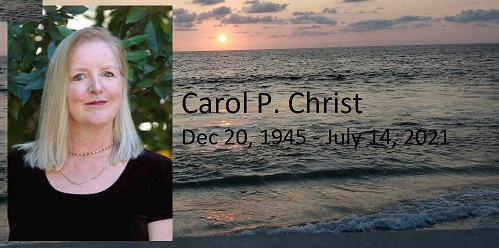
The Legacy of Carol P. Christ: “We Say the Silence Has Been Broken”

We treat the physical assault and the silencing after as two separate things, but they are the same, both bent on annihilation. Rebecca Solnit

When I was in my twenties and in therapy I had a recurrent dream in which a strange man was chasing me and caught up with me and started to strangle me and I could not scream. I was asked to act this dream out by my therapist, who told me that this time I would scream. I could not. She got up and came over and put her hands around my neck and started to squeeze. I still could not scream.

Two decades later I had a dream in which I was a baby and suffocating in my crib. I asked my current therapist if she thought someone had tried to suffocate me when I was an infant. Her answer was simple: “There is no need to think about this happening when you were an infant. You have been silenced all your life.”

When I was a child, my father used to punish us by taking off his belt, sitting down, asking us to pull down our pants and lie across his lap, and then lashing our bare bottoms with his belt. This was typical child-rearing practice in the 1950s and 1960s. Rita Nakashima Brock was the first to name it for me as child abuse. Nonetheless, when we got older, my brother and I preferred to be spanked, rather than to have our 25 cents a week allowance taken away from us. At least, we thought, being spanked was over in a minute, while losing your allowance was something you would suffer for a long time.

Continue reading “The Legacy of Carol P. Christ: “We Say the Silence Has Been Broken””

The Legacy of Carol P. Christ: Was Ariadne the Most Graceful Bull-leaper of All? Deconstructing and Re-visioning Greek Mythology

This was originally posted on March 3, 2014

Sometimes we think of Greek myth as a pre-patriarchal or less patriarchal alternative to the stories of the Bible. After all, Goddesses appear in Greek myths while they are nearly absent from the Bible. Right?

So far so good, but when we look more closely we can see that Greek myth enshrines patriarchal ideology just as surely as the Bible does. We are so dazzled by the stories told by the Greeks that we designate them “the origin” of culture. We also have been taught that Greek myths contain “eternal archetypes” of the psyche. I hope the brief “deconstruction” of the myth of Ariadne which follows will begin to “deconstruct” these views as well.

bull leaping ring before 2000 bc phourni

Ariadne is a pre-Greek word. The “ne” ending is not found in Greek. As the name is attributed to a princess in Greek myth, we might speculate that Ariadne could have been one of the names of the Goddess in ancient Crete. But in Greek myth Ariadne is cast in a drama in which she is a decidedly unattractive heroine.

Continue reading “The Legacy of Carol P. Christ: Was Ariadne the Most Graceful Bull-leaper of All? Deconstructing and Re-visioning Greek Mythology”

The Legacy of Carol P. Christ: What if Divine Feminine and Divine Masculine Are Not Oppositional Categories?

Moderator’s Note: The blog was originally posted May 18, 2015

A friend who is a spiritual teacher speaks often “bringing back the values associated with the Divine Feminine.” For her this has to do with helping women to understand the beauty of our bodies and the importance of ways of being such as giving and caring for others that have been associated with the undervalued so-called “feminine” side of the masculine-feminine polarity. Though she also speaks about the Goddess, I think she prefers the term “the Divine Feminine” because of the implication that men too have their “Divine Masculine.”

This friend has a wonderful husband who is a teacher in his own right and who often ends up spending a lot of his time among powerful women who enjoy talking about the Goddess. In these conversations he sometimes speaks of the need for men to “recover the Divine Masculine” if they are to become whole.

Continue reading “The Legacy of Carol P. Christ: What if Divine Feminine and Divine Masculine Are Not Oppositional Categories?”

The Legacy of Carol P. Christ: Who Is Jephthah’s Daughter? The Sacrifice of Women and Girls

Moderator’s Note: The was originally posted on January 20, 2014

Last week I reflected on Angela Yarber’s insightful essay and painting on Jephthah’s daughter. For those who did not read the earlier posts, the story of Jephthah’s daughter is found in the Hebrew Bible.  Jephthah’s daughter was sacrificed by her father after he swore in the heat of battle that if his side won, he would sacrifice the first person he would see on returning home.  Angela called us to reflect on who Jephthah’s daughter is in our time.

In my earlier midrash on the story, I invoked Daniel Cohen’s powerful retelling of the story of Iphigenia.  Cohen concludes that Artemis told Agamemnon that his ships would sail only if he sacrificed his daughter not because she wanted him to do it—but because she hoped this challenge would induce him to realize that the costs of war outweigh any possible gain.

Continue reading “The Legacy of Carol P. Christ: Who Is Jephthah’s Daughter? The Sacrifice of Women and Girls”

The Legacy of Carol P. Christ: “MERMAID, GODDESS OF THE SEA”

This was originally posted on November 4, 2013

On the recent Goddess Pilgrimage to Crete, I visited the Historical Museum in Heraklion where I saw a beautiful embroidered silk panel of a mermaid identified only as having come from Koustogerako, a village in western Crete. As it is unlikely that a man in a Cretan village would have been talented in embroidery, in this case “Anonymous” most definitely “was a woman.”

In this thread painting a mermaid surrounded by fish is holding the anchor of a ship in one hand and a fish in the other. In Greece the mermaid is the protectress of sailors. In a well-known legend, a mermaid said to be the sister of Alexander the Great, emerges from the sea in front of a ship during a storm and asks: “Is Alexander the Great still living?” If the sailors answer, “Yes, he lives and reigns,” the ship is saved.

Continue reading “The Legacy of Carol P. Christ: “MERMAID, GODDESS OF THE SEA””

Can I get an “Amen” up in here? by Laura Montoya 

I am a great evangelist. I used to evangelize in Pentecostal settings until I was 22. Then, I left my church to evangelize about feminist issues to every woman that crossed my path. Rhetoric is a gift I received when I was a kid and that I inherited from my grandpa and my dad. But during the COVID lockdowns, it was hard to socialize, and my evangelization skills turned toward making my friends and family join the privileged fan base of Ru Paul’s Drag Race. One by one, I convinced my sister, cousins, neighbors, and best friends to watch the reality show, and they did with astonishing devotion. Every week, two or three of us gather in someone’s living room wearing masks to watch episode after episode after episode. Our debates about the queens in the show could last all night long. Who had the best performance? Did you like their lip-synching? “That elimination was so fair/unfair!” 

Continue reading “Can I get an “Amen” up in here? by Laura Montoya “

The Legacy of Carol P. Christ: Our Mother Whose Body Is The Earth

This was originally posted on March 11, 2013

This prayer came to me recently in waking sleep:

Our Mother whose body is the Earth,

Blessed are you,

And blessed are all the fruits of your womb.

You give us this day our daily bread,

And we share it with others.

Our Mother whose body is the Earth,

We love you with all our hearts,

And our neighbors as ourselves.

“Our Mother Whose Body Is the Earth” is a creative synthesis of elements of the Hail Mary, the Lord’s Prayer, Jesus’ two great commandments via Charles Hartshorne, Hebrew blessings via Marcia Falk, process philosophy, and the central principles of earth-based religions, gratitude and sharing, that I discovered on Goddess Pilgrimages to Crete.

“Our Father who art in Heaven” becomes “Our Mother whose body is the Earth.”  Transcendence of the earth and the body are replaced with immanence, suggesting that the earth and the body are good.  Our mothers’ bodies are the source of our lives.  Our Mother’s body is the Source of all life on our planet. The earth as the body of the Mother is a very ancient conception.  Process philosopher Charles Hartshorne says that the earth as the divine body is the best rational model for understanding the intimate relationship of God to the world.

Continue reading “The Legacy of Carol P. Christ: Our Mother Whose Body Is The Earth”

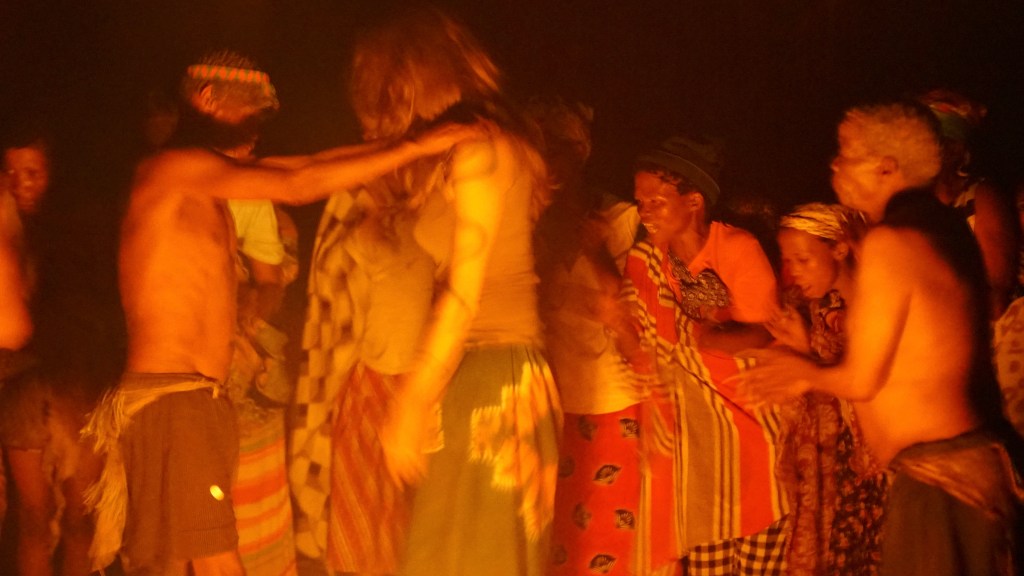
Exploring Dance as Spiritual Practice by Eline Kieft

Image Credit: Ben Cole

Nature and dance are my gateways to the mystery, where I can bring my worries, exhaustion, prayers, celebrations and gratitude. These gateways open to places deep within and far beyond my perception and imagination. They create an impromptu sacred space that emerges, flexes, stretches, and nurtures, and always ‘meets’ me regardless of my emotional state.

In this post I reflect on the possibilities of danced spirituality in relation to the overarching theme of Feminism and Religion. How does dance relate to our sense of personal expression, freedom and take on life as gender-aware people, and our experience of spiritual intimacy?

Dance is a versatile practice to move through life in an empowered way and to strengthen our connection with the numinous. I truly believe that everyone can dance, and one of my roles as a ceremonial dance facilitator is to help people re-connect with the dancer inside them.

Continue reading “Exploring Dance as Spiritual Practice by Eline Kieft”