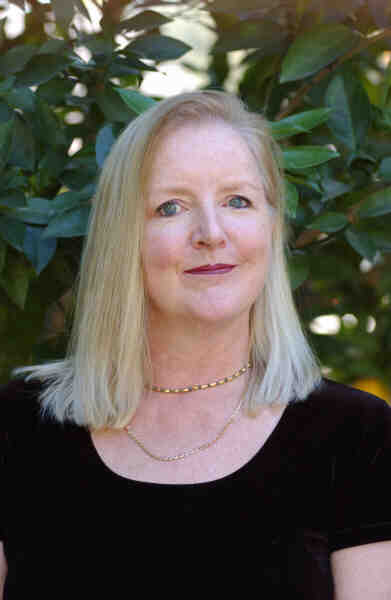
Showing Up, by Molly M. Remer

When we return home, I see a meme on social media that says: “Ten minutes online will show you everything that is wrong with the world. Ten minutes outside will show you everything that is right.” I think about the students and professors, each one alight with enthusiasm, with passion, for their work, their projects, their art, the contributions they are making. This is what we need. We need to see, spend time with, and BE people who are involved, connected, committed, and passionate. People who are creating instead of destroying. People who are connecting instead of controlling. People who are reaching out to offer what they can, who create and care, and who show up.

We may let connections thin
and interests slide,
forgetting that it takes work
to nurture and tend
to what we love,
that following what is easy
can be the wrong direction,
one that eventually leads
to the withering of what we value
and to the shrinking of our worlds.
We must evaluate the balance
between effort and ease,
yes,
but let us remember
that both are essential to thriving.
Let us lean into effort sometimes,
when there is meaning on the line,
put our backs into it,
feel sweat on our brows
and the satisfaction that comes
from choosing to immerse ourselves
in wholehearted living,
in presence,
in the work of reaching out
and holding on.

This past weekend, I went to my oldest son’s next college campus. The green spaces were filled with students working on art. The halls of the buildings were lined with art by high school students there for a visiting show. The art gallery was filled with diverse works of many mediums. The speakers for the day were filled with enthusiasm for their subjects, talking about study abroad trips to Paris and being part of the chorus or the band. We pass the student theater, abuzz with activity, and listen to a young man playing rippling tunes on the piano in the atrium of the library. This school is in a rural Missouri farming community, where we passed tractors laden with hay on the potholed road. Their mascot is a mule (“the only college with live mascot in Missouri!” they proudly report. The mule’s name is Molly, so I like her right away). Missouri is a “red state” and yet the students handed me the school paper with a front page story about protests at the capitol and a large color photo of someone holding an “Impeach Elon” sign. I happily picked up a library button proclaiming “libraries are for everyone” and another saying “what’s more punk than a library?” as well as snagging a “plant queer” sticker from the LGTBQ+ alliance table for my sister. The History table gives me a bookmark reading: “Don’t make me repeat myself.” –History

Continue reading “Showing Up, by Molly M. Remer”

Legacy of Carol P. Christ: WHAT DOES “GOD INTEND”?


This post was originally published on Oct. 29, 2012 

Indiana Republican candidate Richard Mourdock’s statement that pregnancies resulting from rape are “something God intended” not only shows an appalling lack of empathy and distain for the experiences of raped women, it also is bad theology.

The controversy ignited by Mourdock provides a good opportunity to discuss the theological mistake of “divine omnipotence” also known as the “zero fallacy.”  Mourdock’s belief that God intends the pregnancies of raped women is rooted in the notion that “whatever happens” is the will of God.

The theological category of “divine omnipotence” means that God is all-powerful.  It also means that God has all the power. From this it is said to follow that everything that happens must in some way be the will of God.  Such views are held not only by many devout believers, but also by everyone else who asserts that “there must be a reason” when bad things happen.

The notion that a good God is responsible for all the events that occur in the world is rendered questionable by every bad thing that happens–particularly by bad things that happen to good people. This was the question of Job, and there has never been a satisfactory answer to it. If God can intervene to stop the innocent from being harmed, why does he not do so?  God’s failure to stop rape suggests that either that God is not good, or that a good God chooses a really bad outcome, or that God is not the cause of everything that happens in the world.

Charles Hartshorne called the notion of divine omnipotence the “zero fallacy.” Continue reading “Legacy of Carol P. Christ: WHAT DOES “GOD INTEND”?”

Legacy of Carol P. Christ: Women For Peace–Take To The Streets

This post was originally published on Nov. 19th, 2012

Sometimes we are told that domination and violence and war are innate in human nature; therefore, it is futile to protest war.  But this is not true.

I oppose war because I oppose all forms of power-over, domination, and violence.  As a radical feminist and ecofeminist I believe that power can and should always be power-with, the power that nurtures the growth and development of self and others.  The power of Goddess/God is always and everywhere power-with and not ever power-over. 

Are violence and domination innate in human nature?  We have been told that we are the “naked ape” descended from “apes” who, like the chimpanzees with whom we share 98% of our DNA, were male dominant and violent. Do we, then, have any hope not to be violent and dominant?

Franz de Waal’s studies of the other “ape” species that shares 98% of our DNA, the bonobo, debunks this popular myth.  The bonobo live in peaceful matriarchal clans, and their response to conflict is to rub each others’ genitals until the desire to fight goes away.  They are living proof that species very much like us can choose to “make love not war.” De Waal says that the most we can conclude from studies of our ape relatives is that ancestors of human beings, chimpanzees, and bonobos had the capacity to evolve toward dominance enforced by violence, or toward more peaceful ways of resolving conflict.

Continue reading “Legacy of Carol P. Christ: Women For Peace–Take To The Streets”

Legacy of Carol P. Christ: Connection to Ancestors in Earth-based Theology

carol p. christ 2002 color

This post was originally published on Jan. 14th, 2013

“I am Carol Patrice Christ, daughter of Jane Claire Bergman, daughter of Lena Marie Searing, daughter of Dora Sofia Bahlke, daughter of Mary Hundt who came to Michigan from Mecklenburg, Germany in 1854.  I come from a long line of women, known and unknown, stretching back to Africa.”

Like many Americans, my ancestral history was lost and fragmented due to emigration, religious and ethnic intermarriage, and movement within the United States.  Though one of my grandmothers spoke proudly of her Irish Catholic heritage and one of my grandfathers acknowledged his Swedish ancestry, I was raised to think of myself simply as “American,” “Christian” and “middle class.”  Ethnic and religious differences were erased, and few stories were told.

Over the past two years, I have begun to discover details of my ancestral journey, which began in Africa, continued in the clan of Tara, and was marked by the Indo-European invasions.  In more recent times, my roots are in France, Holland, England, Germany, Ireland, Scotland, and Sweden.  In the United States, my family has lived in tenements in New York City and Brooklyn, in poverty in Kansas City, and on farms in Long Island, Connecticut, upstate New York, Michigan, and Pennsylvania.  My parents and grandparents settled in northern and southern California during the 1930s.  I have lived in southern and northern California, Italy, Connecticut, New York, Boston, and now Greece.

Learning details about family journeys has created a shift in my sense of who I am.  Continue reading “Legacy of Carol P. Christ: Connection to Ancestors in Earth-based Theology”

The Field of Belonging, by Molly Remer

May we be resilient
in the face of conflict and change.
May we lean in,
reach out,
root down,
and deepen into
the practices that nurture us
and sustain us.
May we cultivate wise discernment.
May we persist in reclaiming our power
and our attention.
May we embody our prayers.
May we dance bravely
on the bones of the coercive systems
that try to drag us down.
May we lift our heads
to meet the eyes of life.
May we persist in seeing,
in being,
in lifting our resilient and stubborn joys
up to soar.

I know we are weary, overwhelmed by how much damage can be done by sweeps of pen and distant deciding, callous disregard seeming to seep into all the edges and change how the world feels to live in. We may feel frozen with indecision, unsure of what to do or how to help or what to say. So much asks for our attention and our time, asks us to look and to not turn away. We wonder what there is to celebrate in the face of so much anger and so much need. It is hard to feel so small and human, hard to keep hoping, to trust in our own inherent magic and that goodness and beauty are still at work amid the pain. 

Continue reading “The Field of Belonging, by Molly Remer”

Legacy of Carol P. Christ: “The Divine Mystery”?

carol-christ

This post was originally published on Nov. 11th, 2013

“The mystery of God in feminist theological discourse” is the subtitle of Elizabeth Johnson’s widely read She Who Is. The notion that God is “a mystery” is rarely questioned in feminist theologies. But maybe it should be.

Although it is true that the finite cannot encompass the infinite, and that all knowledge is rooted in particular standpoints, I do not agree that the first and last thing to be said about the divine power is that it is “a mystery.” Indeed as I will argue here, speaking about God as “a mystery” obscures more than it “reveals.”

christina's loveThe notion that Goddess or God is “a mystery” is rooted in notions of “a God out there” that most spiritual feminists reject. Goddess or God “in” the world is, I suggest, not unknown, but known, not hidden, but revealed–in the beauty of the world and in ordinary acts of love and generosity.

The notion that God is “a mystery” is a well-worn trope in Roman Catholic theology. Protestants make similar claims when they speak of  the hiddenness of God Continue reading “Legacy of Carol P. Christ: “The Divine Mystery”?”

Legacy of Carol P. Christ: On Winning and Not Winning in the “Fight” for “Justice” in the Web of Life

This post was originally published on July 2nd, 2012

The reason for hope is not the rational calculation that we will be able to save the world. The reason for hope is that it is important for us to try.

A few days ago, the United States Supreme Court upheld the deeply flawed heath care law passed by Congress. (I will not call it “Obamacare” as I do not believe Obama “owns” the concept of universal health care any more than Lyndon Baines Johnson or even Martin Luther King “owned” the concept of civil rights.) As a progressive I view universal health care as the only truly just health care system.  Still, I consider the Supreme Court decision a “victory.”

The same day the Supreme Court decided, I received a copy of a letter from the Greek government accessing 81,950 Euros in fines against the road-building company that violated the highly protected Natura wetlands while constructing the 36th National Road in Lesbos. Another “victory.”

Two weeks ago the cause of “justice,” as I see it, was not served when the center-right party New Democracy Party gained the majority in the Greek elections and became the central player in a coalition government. With New Democracy in coalition with the center-left Pasok, it is unlikely that corrupt politicians and tax evaders will be made to repay the money they have stolen from the Greek people. At the same time, it is likely that the Greek people in the middle and lower classes will be made to pay even more than they already have for the failure of a corrupt system of government.  The Green Party missed gaining 8 seats in Parliament in the first election by 4000 votes. In the second election we lost ground, while the fascist Neo-Nazi party that calls itself The Golden Dawn, garnered 18 seats. Continue reading “Legacy of Carol P. Christ: On Winning and Not Winning in the “Fight” for “Justice” in the Web of Life”

Legacy of Carol P. Christ: The Kitten Who Came For The Holidays

carol p. christ 2002 color

This post was originally created on Dec. 24th, 2012

This holiday season I have something warm and fuzzy to be thankful for—Goldilocks, the kitten who came for the holidays. 

As I was preparing for Thanksgiving, I opened my front door to the sound of really loud really pitiful crying.  A tiny grey kitten with a large golden spot on nape of her neck was howling in the middle of the street just a few feet from my door.  Living as I do in a town where there are many homeless cats and kittens, I do not usually respond to such cries.  My dogs maintain “cat patrol” in my back garden and quickly chase strays away.

However, the cries of this little kitten were so insistent that I picked her up. She was smaller than my hand.  My neighbor who was sweeping his porch offered to take her in.  A few hours later he returned her.  She was still mewing loudly, and, he said, she had not stopped crying all day long.  I found a syringe and fed her some milk.  Soon the crying stopped and she began purring in my lap.  Continue reading “Legacy of Carol P. Christ: The Kitten Who Came For The Holidays”

From the Archives: I Sing Asherah Exalted! by Janet Maika’i Rudolph

This was originally posted Dec. 16th, 2021

With this season of the festivals of light upon us (Hanukkah, Christmas, Solstice, Kwanzaa), I wanted to focus on the more joyful aspects of our lives. For that, I have been diving into passages about joy and singing in the bible.

Sometimes when I write these posts, they take me in directions I never thought to go. This post is one of them. The surprise direction I found is in the Psalm below:

Sing unto him, sing psalms unto him: talk ye of all his wondrous works.
Glory ye in his holy name: let the heart of them rejoice that seek the LORD.
Psalm 105:2-3 KJV

Continue reading “From the Archives: I Sing Asherah Exalted! by Janet Maika’i Rudolph”

Legacy of Carol P. Christ: Is ‘Having To Have’ One Of The Roots Of Suffering?

Carol P. ChristThis post was originally published on Aug. 6th, 2012

There is a strong thread of fatalism in modern Greek culture that has been a powerfully healing antidote to my American upbringing in the culture of “I think I can, I can.”  When confronted with an obstacle, many Greeks throw up their hands, raise their eyebrows, and say, “What can we do?” This phrase is not an opening toward change, but a closing–an acknowledgment that there are many things in life that are not under our control.

In American culture we are taught that if we work hard enough, we can achieve our goals. This view can bring a light of possibility into fatalistic cultures. The truth, however, lies somewhere in the middle–between fatalism and belief in the power of individual or collective will.

In American culture the belief that we can “have it all” if only we work hard enough is the root of much personal suffering.  If things don’t turn out as we imagined they should have, we often blame ourselves. Continue reading “Legacy of Carol P. Christ: Is ‘Having To Have’ One Of The Roots Of Suffering?”