Coming Out as a Shaman at Your Presbyterian Memorial Service by Elizabeth Cunningham

One morning my husband comes to my office to give me an important phone message. “Jo wants you to come and talk to her about her funeral.”

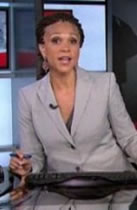
Johanne RenbeckMy friend Jo, an artist and poet, is dying of an aggressive form of cancer that is infiltrating her brain. At home in hospice care, she has already lost the use of her left side and has been told she may lose her mind and speech soon.  So I go right over to her house where she is enthroned (a tall, regal woman) in her hospital bed in the middle of her living room. All her visitors have the pleasure of being surrounded by her paintings, magical and alive, like all her work from sculpture to book arts (have you ever worn a book? Jo has!) to poetry–some of her most powerful work was composed in the hospital. Continue reading “Coming Out as a Shaman at Your Presbyterian Memorial Service by Elizabeth Cunningham”

Dancing with Kali Gets Us to the Other Side by Carolyn Lee Boyd

carolyn portrait

Deep in the New England woods, Kali leaps from behind a pine tree, skulls jangling from her waist and an upraised knife in her hand. A band of women halts and the goddess and mortals face one another.  “What must you do to pass?” Kali demands. After a few silent seconds, I step forward and take Kali’s hands, waltzing with her until I reach the other side where I continue on to the moon ceremony that was our destination that night.

 A decade ago I waltzed with a priestess dressed as Kali at a Goddess camp.  When I stared at the recreated wrathful goddess blocking my way, I knew that I could not run past or fight her, so dancing with all that She represented was my only option. I cannot say that I encountered Kali Herself that night but, since then, I have experienced over and over the transforming power of choosing to engage the wildness, mystery, beauty, truth, and chaos of our dynamic universe  and of expressing both creative and destructive aspects of this spirit in our everyday lives.

Breaking the Stained Glass Ceiling? Conflict in Religious Histories by Meagen Farrell

Meagen Farrell, women's ordination

In attempting to research and write about the process and arguments in the development of women’s ordination in the Anglican Church of Ireland (which I first wrote about here on Feminism and Religion), I am frustrated by the polarization of language. While “objectivity” is fruitless, I strive for what Warren Nord calls philosophical fairness: when teaching about contested religious territory, to characterize each position in the terms they would choose for themselves.

How do I fairly label an historical debate on whether or not to admit women to the diaconate and priesthood? Using the phrase “women’s ordination” in my current Kickstarter campaign already puts me in a particular camp. The constraints of the medium require brevity. I have to make a choice. Continue reading “Breaking the Stained Glass Ceiling? Conflict in Religious Histories by Meagen Farrell”

A Gift Economy: Could It Be Better To Give Than To Receive? by Carol P. Christ

carol p. christ 2002 colorIn a gift economy inequalities are balanced out by the cultural practice of gift-giving. If you have more, then you give more, if you have little, you still feel it is better to give than to receive.  A person who hoards wealth is not viewed positively.

The worldview of a gift-giving economy is so far from our own that we can barely comprehend it.

marika's rakiIn Skoteino, Crete, eighty-seven year old Marika awaits eagerly for the arrival of our group. She does not come empty-handed to join us after we have finished a meal lovingly prepared by Christina.  Marika brings a bottle of raki and urges us all to join her in downing a small glass of her homemade moonshine.  Often she offers us nuts she has cracked or raisins she has prepared as well .  She has almost nothing and lives without many modern conveniences, but she would not consider joining us without bringing a gift.

In Zaros, we arrive at our favorite hotel only to be told that the taverna that serves fresh trout is closed because the owner’s son will be getting married in the evening. When I complain that we have come to eat the special trout, our whole group is invited to the wedding.  Outside the taverna the grandmothers light fires under massive copper pots where they prepare the food. Over 600 people have been invited to the wedding. We are first served macaroni with virgin olive oil and goat cheese, then lamb, then goat, and salad. When the wine runs out, bottles of raki are brought to the tables. We dance all night long in a kind of a frenzy. Continue reading “A Gift Economy: Could It Be Better To Give Than To Receive? by Carol P. Christ”

Orientations: Body, Space, Authority by Linn Marie Tonstad

Linn Marie TonstadIn her book Queer Phenomenology, Sara Ahmed investigates how we orient ourselves in space with respect to tables – the tables around which we sit, at which we eat with friends and families of choice and birth, and at which we write. She describes moving into a new place and arranging the furniture. “After the kitchen, the room I hope to inhabit is always the study. Or the place that I have decided is the place where I will write. There, that will be my desk. Or it could just be the writing table. It is here that I will gather my thoughts. It is here that I will write, and even write about writing. … Making a place feel like home, or becoming at home in a space, is for me about being at my table. I think fondly of Virginia Woolf’s A Room of One’s Own. How important it is, especially for women, to claim that space, to take up that space through what one does with one’s body. And so when I am at my table, I am also claiming that space, I am becoming a writer by taking up that space.” (11) Ahmed goes on to discuss how certain possibilities are opened up, and others foreclosed, by the way we orient ourselves (or find ourselves oriented) to others and to objects. She describes the bodily postures that result from orienting oneself to the writing table – the way one might hunch over one’s computer, or find oneself with ink-stained fingers.

In a very different context, the queer theologian Marcella Althaus-Reid describes a scene from her childhood in Argentina. She kneels in front of a priest for confession. But instead of kneeling to the side, aslant, as she ‘ought’ to have done, being a girl, she kneels directly in front of the priest, as if she were a boy. Kneeling here too is a form of orientation, a form of direction, a bodily habit of becoming. “Kneeling is troublesome and it has a theological referent in the church’s also troubled waters of sexuality and power. A whole symbolic sexual order is obviously manifested in kneelings as positions of subordination and sites of possible homo- and hetero- seductions, because these are theologically distributed around the axis of the priesthood’s male genitalia. The priest’s penis carries the sacred connotations of the phallus as a transcendental signifier of the theological discourses to everyday Christianity, and kneeling is a liturgical positing designed to centralise and highlight this.” (The Queer God, 11) To kneel in the right (gendered) position in relation to the priest is also to kneel in the right relation to God. Continue reading “Orientations: Body, Space, Authority by Linn Marie Tonstad”

The Flesh Made Word: Colm Toibin’s “The Testament of Mary” on stage and in print By Joyce Zonana

Colm Toibin Fiona Shaw Testament of Mary Ephesus Artemis House of the VirginBefore the play begins, the audience is invited on stage; we walk around, not quite knowing what to do, gazing at the props, uncertain.  A few chairs, scattered jars of honey, jugs of water beside a free-standing waist-high faucet, a tall ladder, a long table, a stripped tree trunk with a wooden wheel at the top suspended from the rafters, a menacing roll of barbed wire, and a live turkey vulture occasionally spreading wide its iridescent blue-black wings: such is the set for Deborah Warner’s searing production of Colm Toibin’s The Testament of Mary, a one-woman show currently in previews at the Walter Kerr Theater in New York.  In a large open-sided box, stage left, the actress Fiona Shaw, draped in blue from head to toe, arranges herself, then sits perfectly still, holding a lily and an apple.  We know this woman.  The Virgin Mary.  The Icon.  Incarnate.

Fiona Shaw rehearses for her role as the Virgin Mary in The Testament of Mary. Irish novelist Colm Toibin's one-woman play opens April 22 at Broadway's Walter Kerr Theater.
Shaw in rehearsal. Photo by Hugo Glendinning

But when we are all back in our seats, Mary casts off her robe to stand before us in a simple black shift, flowing easily over narrow brown pants. Her hair is cropped, her face haunted; wearing short leather boots, she fumbles as she searches for a hand-rolled cigarette to steady herself.   “I remember everything.  Memory fills my body as much as blood and bones.”  No longer an icon, hardly a virgin, this Mary addresses us with the piercing directness of the passion she has suffered: to have seen her only son crucified despite her efforts to save him. Now, interrogated by two unnamed apostles (John and Luke?) who want to fix the story of her son’s life and death and resurrection, Mary insists on reporting only what she knows:  “I was there.  I fled before it was over but if you want witnesses then I am one and I can tell you now, when you say that he redeemed the world, I will say that it was not worth it.  It was not worth it.”

Continue reading “The Flesh Made Word: Colm Toibin’s “The Testament of Mary” on stage and in print By Joyce Zonana”

Gender in Kabbalah by Judith Laura

Judith LauraI first started delving into both Jewish Kabbalah and Hermetic Qabalah in the 1990s, after friends told me these forms of mysticism included both female and male representations of divinity and therefore were gender equitable. They were right about the first part: Kabbalah/Qabalah contain both divine masculine and feminine imaging and male and female images.  But as far as gender equity goes, to use today’s slang, not so much!

tree of life kabbalah

Though they are both transliterations of the same Hebrew word, as is common I use “Kabbalah” for the Jewish versions, and “Qabalah” for the Hermetic version, best known through its association with the British Hermetic Order of the Golden Dawn, which began in the 19th Century. The word means “that which is received,” with the understanding that it was “received” from ancient times. Though there is one tradition that says Adam was given Kabbalah in the Garden of Eden, the first written material for Kabbalah, Sefir Yetsirah (Book of Creation), is dated to between 200 and 500 C.E. Kabbalistic concepts changed over the centuries, with writings becoming more significant in the 13th century and even more popular in the 16th and 17th centuries.

Beginning with the Sefir Bahir (Bright Book) in late 12th century France, Kabbalah is represented by the Tree of Life, which has round areas transliterated sefirot (Heb. pl.; sing. sefirah) that I think of as fruit and others call “spheres,” but which in the Bahir, are more accurately translated “sapphires.”*  These “divine emanations,” as they are often called in English, are gendered. How equal is the gender representation? Continue reading “Gender in Kabbalah by Judith Laura”

“Am I Crazy?” Loving Laura Dern by Carol P. Christ

carol p. christ 2002 color“Am I crazy?”

“No, just full of hope. You got more hope than most people do. It’s a beautiful thing to have a little hope for the world, you know.”

This question was posed by Amy Jellicoe, played by Laura Dern, at the end of the HBO television series Enlightened.  Unemployed, single, and in debt after she was fired for “whistle-blowing” on the corrupt activities of the corporation where she worked, Amy wondered if she had done the right thing.  The answer of her ex-husband Levi  brought tears to my eyes.

In many ways, I am Amy.

Let’s begin with the obvious.  When I was young, I was slender and pretty and exceedingly tall, with long blonde hair—I imagine I looked like Amy.  I couldn’t take my eyes off Laura Dern. There just aren’t many women in the world as tall as I am. Because of that I don’t know what I look like to others.  In the series, Laura Dern is taller than just about everyone else, including the men, and she seems not to care, because she often wears high heels.  Continue reading ““Am I Crazy?” Loving Laura Dern by Carol P. Christ”

Where Were the Women? by Kat Robb

Kat Robb, BunniHoTep, goddess

Where were the women? I grew up in the Presbyterian Church, and it wasn’t until I was in my late teens that I ever saw a woman offer a prayer in church. That was when they hired a woman with a Masters of Divinity to be an Associate Pastor in charge of Christian Education, meaning they had hired another woman to be in charge of Sunday School and this one had a higher degree. I, very early on in my Sunday School career used to ask, why can’t women pray in front of the church? Why can’t women give the sermon? Why is the only place girls are allowed to be in the front of the church, the choir loft? Why do we only mention Mary at Christmas? Why was Eve bad and not Adam? Why is it all right for Mary to be an unwed mother but not me? My Sunday School teachers loved me.

The answer for prayer was that you can pray anywhere you are because it’s your conversation with God–but I would ask if that is true, then why aren’t  we allowed up front? No one ever had a good answer  for that.  Continue reading “Where Were the Women? by Kat Robb”

What Might It Be Like To Live In A Matriarchal Society Of Peace? Can You Imagine? by Carol P. Christ

carol p. christ 2002 colorThere are many reasons for women, slaves, and the poor to rebel against domination and unjust authorities in patriarchal societies. But we should not assume that there are any reasons to rebel against domination where no domination exists or to rebel against unjust authority in societies where there are no unjust authorities.

In response to my recent series of blogs on patriarchy as a system of male dominance created at the intersection of the control of female sexuality, private property, and war (Part 1, Part 2, Part 3), I was asked if there is an injustice inherent in matriarchal societies that caused men to rebel and create patriarchy.

The assumption behind this question is that if women are dominated by men in patriarchal societies, then men must have been dominated by women pre-patriarchal societies. Lurking behind the question is the further assumption that there must have been “a good reason” for the development of patriarchy. The idea that there is “no good reason” for patriarchy to exist–if “good” means fair and just–is just too painful for many of us to want to consider it.

The missing link is our inability to imagine societies without domination.

According to Heidi Goettner-Abendroth “matriarchal societies” are “societies of peace” in which neither sex dominates the other.

Continue reading “What Might It Be Like To Live In A Matriarchal Society Of Peace? Can You Imagine? by Carol P. Christ”