Sisterhood is . . . (Well) Complicated by Carol P. Christ

When I wasCarol Molivos by Andrea Sarris 2 a girl, the women in the neighborhood looked out for each other, and my mother had a wide circle of women friends. My grandmother lived nearby, and she and my mother spoke on the telephone nearly every day. My mother and I had a close relationship cemented by caring together for my baby brother.

In graduate school when I was one of a few women in a male-dominated field in a hostile environment, I discovered that “sisterhood is powerful” when I joined a group of women who came together to share experiences and change our lives. Having grown up in a community in which women supported each other, I found it relatively easy to support and seek support from women in a feminist environment.

At the same time, my newfound feminist identity deepened a rift that had opened in my relationship with my mother when I decided to go to graduate school. Continue reading “Sisterhood is . . . (Well) Complicated by Carol P. Christ”

The Denied Trans-Childhood of Medusczka by Vanessa Rivera de la Fuente

13162008_266379727041652_171093612_n

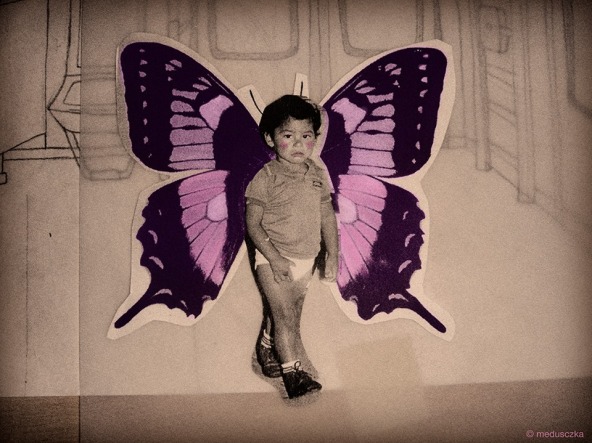
One of my articles in April featured one of the “Niñas Santas Trans”(1). I have been asked often where I came across her and if there are more liken her. Well, she is part of a colorful and provocative project of mexican trans-feminist artivist and illustrator Medusczka Gorgona, who developed a series of images that mix religion Mexican popular culture and trans identities to make visible the non-conforming childhood subjugated by heterosexual discipline.

I have known Meduscka for a while. I am personally fascinated with each one of those beautiful and cheeky “Niñas Santas Trans.” Now is your chance to meet her and her “Niñitas”(2), through this short interview she agreed to have for this site. Continue reading “The Denied Trans-Childhood of Medusczka by Vanessa Rivera de la Fuente”

The Power of Love by Marcia Mount Shoop

Love does not create powerful empires or concentrations of wealth or military might. Love is not what fuels the tanks of commerce or political clout or financial success. Many would say that love slows things down, mires us in complication. Love is not the way the successful and the effective move–it’s not fast enough, it’s not ruthless enough, it’s not excellent enough.

It’s no coincidence that women have often been seen as the carriers of love–the mothers of how we are loved and how we wish to be loved. The domain of women has been traditionally seen as “behind the scenes.” Women are the nurturers, the familiar narrative goes. Women are the ones who provide a soft landing after a hard day, an understanding ear for all the stresses of the world “out there.”

The extended narrative is that women will have to become masculinized to “play the game” of public life. Women will have to learn to be “like men” in order to compete, in order to win, in order to make an impact. Underneath these narratives of nurture and impact are the contours of power in patriarchy. Imprinting women with the responsibility to love in a context where love is secondary or even tertiary to things like aggression and competition, means women will often relegate themselves to the margins of public power. Not because we think we should be powerless, but because that’s where we often feel the most at home. And sometimes ceding public power can feel like the price women pay to truly love–to love ourselves, to love who we love, and to love the world around us. The contours of power in patriarchy can distort not just women’s lives, but everyone’s lives in ways that carry the weight of this distortion of love.

These gendered expectations of how and where love gets to live and move and breathe in this world distorts the power that love brings with it. After almost ten years of life working from the margins of institutions (church and academy) as an independent scholar and “freelance theologian” I have felt the push back about love as a respectable methodology and mode of operation enough to recognize it quickly.

Institutions often answer my invitation to a loving attentiveness to bodies, particularly to traumatized bodies, with legalities and anxieties: the language of “boundaries,” “reporting laws,” and “misconduct” can shut down work or conversation. The patriarchal hyper-sexualizing of love makes it a no-no or at least something to be feared as a slippery slope in institutional life. In ecclesial settings, where love is supposed to define our mode of operation, these conversations rapidly find their way to sin and human failure. Love is “in spite of” who people are, not because of who they are. Love is impossible without lots of grace and patience and overlooking the problematic things that people do. Love is, if we’re honest with ourselves in these contexts, a real chore in this iteration of its nature. And people default into feeling like a burden, not wanting to bother anyone with their problems, and feeling ashamed of who they really are.

Love is about trust: trusting a moment, trusting a space, trusting each other. And love struggles in contexts where spaces, moments, and people are not trustworthy. So many with whom I work in consulting, retreats, spiritual direction, and teaching struggle to trust and to love. They struggle to trust and love anything because they have encountered so many untrustworthy spaces along the way. The competitive intensity of doing good work can translate into a diminishing and demeaning cycle of “never enough” and the need to protect and defend.

It is amazing to witness what happens to people when they realize they can trust a space–even if it is just a temporary space, a pop-up beloved community where you can really be yourself and won’t be judged or scrutinized. The conventional standards of excellence might suggest such settings work from the lowest common denominator and the generated “product” will suffer from a lack of competition or lack of scrutiny. On the contrary, I see over and over again the beautiful things people can be and do and say and feel when they are loved and accepted. Art, poetry, unique insights, oratorical wisdom, powerful music, deep healing, a sense of freedom, clarity, creativity, peace, support, friendship, and good work all emerge in startling and potent ways when people encounter trustworthy love.

The academy and the church define themselves as places where people can learn and grow and find community. These institutions were formed by patriarchy, but are they doomed to reiterate the diminishing returns of patriarchy forever? Their aspiration is to help people find their way in the world in the most constructive ways they can. And in the world today, people need trustworthy love to truly find the music of their soul. The power of love can transform the spaces of enlightenment and ecclesia into truly collaborative, supportive, loving places of work. Far from screeching to a halt, these spaces might finally hit their stride.

Marcia Mount Shoop is an author, theologian, and minister. Her newest book, released MMS Headshot 2015from Cascade Books in October 2015, is A Body Broken, A Body Betrayed: Race, Memory, and Eucharist in White-Dominant Churches, co-authored with Mary McClintock Fulkerson. Marcia is also the author of Let the Bones Dance: Embodiment and the Body of Christ (WJKP, 2010) and Touchdowns for Jesus and Other Signs of Apocalypse: Lifting the Veil on Big-Time Sports (Cascade, 2014).  Find out more at www.marciamountshoop.com

Islamic Feminism and Heterosexual Dogma by Vanessa Rivera de la Fuente

12065675_170600583286234_3734458453482361154_n
Santa Niña Marica

Reza Aslan says in his book “No God But God” that religions are myths. He explains that “religion” is a set of stories fluctuating between truth and fantasy that serve to explain and answer questions about human fate. Taking this idea as base, I think “religion” is a historical product that enables other mythical stories and must be addressed critically about its truth and meanings.

Patriarchal religious discourses, currently mainstream, have a common element that often is left outside the reading of equality and is part of the myth: Heterosexual belief.

Feminisms in Religions aim at challenging patriarchal readings. However, questioning the nature of God is not enough if we don´t challenge heterosexual belief that may or may not include the idea of a God Father/Male. In Islam, Allah has no sex or gender, is not masculine nor feminine. However, the heterosexual belief exists in the Islamic religious narrative. Continue reading “Islamic Feminism and Heterosexual Dogma by Vanessa Rivera de la Fuente”

Feminism and “The Force:” Thinking Through “Star Wars: The Force Awakens” by Sara Frykenberg

Kylo Ren (Adam Driver), on the other hand, works to resist the call of the “light.” The Force Awakens puts emphasis on the villain’s perspective; and my question is, is this because many of us who are in the audience need to see how we are also like this villain?

Sara FrykenbergSci-fi fan that I am, I would feel remiss if I failed to discuss Star Wars: The Force Awakens here on feminismandreligion.com (warning, spoilers ahead). Yet, despite the fact that I have seen the movie two times since its release and the many, many discussions of this movie already out there, I have yet to form some conclusion as to the relationship between feminism or religion, and Star Wars.

Latest-The-Force-Awakens-Trailer-Description
Image sourced from here.

On the one hand, The Force Awakens is just like the other Star Wars movies. ‘Good guys’ fight the ‘bad guys,’ a hero/ine emerges and some characters are tragically lost, either by choosing the wrong side or when killed by emerging villains. Interesting iterations of “the Hero’s Journey,” these movies fulfill standard mythic tropes—mythic tropes that also tend reinforce our existent social structures and ideals… so, often kyriarchal ideals of power. Continue reading “Feminism and “The Force:” Thinking Through “Star Wars: The Force Awakens” by Sara Frykenberg”

Birth and Community by Sara Frykenberg

My daughter Hazel was born on a November afternoon. Just over two weeks old, my own individual role as mother is too young to comment on much here—I am thinking too much and too little about what it means, adjusting to my little one’s schedule, feeling like my boobs are going to fall off from my breastfeeding efforts, and loving in a new way. (It’s amazing how excited one can get about ‘poopy’ after baby has been struggling for days, isn’t it?)

But when I am lying in my bed, sometimes at night, I find myself amazed and grateful for the community it took to bring my daughter into being. I was pregnant but I also had a pregnant community. I labored with community; and what I am learning, is that my motherhood is also a function of community—something, for me, that would not have been possible without the many, many people who supported Hazel and me through the process of new birth. Continue reading “Birth and Community by Sara Frykenberg”

Was Mother Kalawati a Feminist? (Part 1) by Vibha Shetiya

VibahI recently assigned my students an article by Kathleen Erndl – “Is Shakti Empowering for Women? Reflections on Feminism and the Hindu Goddess.”[1] I’m sure, like Erndl, many have been fascinated by this question, especially within the Indian context. Does the presence of an abundance of goddesses necessarily translate to social empowerment for women? The answer is indeed complicated in that one cannot reify all goddess worshippers under one static rubric.

Having said that, however, I would like to posit that generally speaking, it would be fair to say Indian culture is a patriarchal one, and that the presence of a goddess tradition does not translate to independence for women. Firstly, the kind of goddesses worshipped by both men and women, are not necessarily the assertive, independent kind. They are often those such as Lakshmi and Saraswati who are maternal and nurturing, and important in their own right. All too often, however, these virtuous traits have been used to disempower women, to keep them in their “socially assigned places.”

There is evidence from early Hindu literature that the above goddesses may initially have been independent forces, but they soon came to be tamed as consorts of male gods; Lakshmi as Vishnu’s wife, and Saraswati as Brahma’s. Second, fierce and independent goddesses such as Kali and Durga may have a large following, but it is only in certain cases such as in Tantric theology specific to the goddess Shakti, identified with Kali, that ritual practices may do away with gender roles, that both male and female members have equal access to Kali. But the important question would be – outside of the ritual context, how do practitioners of Tantra regard women? In other words, do women have equal social – and not merely equal ritual – status? I am not an expert in Tantric discourse, but judging by various commentaries, I have reason to believe that this does not necessarily translate to gender equality in the social setting.

My quest here, however, is to provide an example of what a community with a strong, female leader may look like. I thought of this example because I have been intrigued with and fascinated by my own family experience regarding the cult of Kalawati Aai or Mother Kalawati (I do not use the term “cult” derogatorily as “a group with a powerful and controlling leader” but in the classical sense of “practices centering on an object of reverence”). My aim is to provide a picture of often conflicting ideals within the Hindu setting, to shed light on how this can play out on the ground. My information on Kalawati Aai – considered a saint by her devotees – comes from hearsay and hagiographical accounts for I never met her; she died almost forty years ago.[2]

Continue reading “Was Mother Kalawati a Feminist? (Part 1) by Vibha Shetiya”

Epic Drama and Epic Confusion, Courtesy of Bollywood by Vibha Shetiya

VibaI love Bollywood. The colors, the over-the-top drama, the singing and dancing, the suspension of reality for three hours…I see how it can provide a break from the challenges of everyday life for over 700 million Indians living below the poverty line (and then some). But Bollywood movies also have a frightening side to them. On one hand they transport the viewer to la-la land; on the other, this very fantasy world has the power to set social norms. And yes, it becomes confusing – no kissing, no nudity, yet vulgarity is on full display when camera angles capture the fully dressed heroine’s chest heaving to pulsating music, while she is soaked to the skin in pouring rain, dressed in white, mind you. Sometimes there is no need for the rains. Katrina Kaif’s Chikni Chameli “item” number will attest to this.

But let us move away from the “purely entertaining” angle and return to the idea that Bollywood not only reinforces cultural stereotypes but also has the potential to influence behavior that governs everyday attitudes.

I recently (re)watched Dilwale Dulhaniya Le Jayenge (And the Truelove Will Carry Away the Bride) with an American friend. DDLJ (1995) as it is fondly called is one of India’s all-time beloved movies. So much so that soon after taking office in 2014, the Indian Prime Minister, Narendra Modi declared it a show-case of Indian tradition. I can see how it touches a patriotic chord: the story centers on an Indian family living in Britain, but still “Indian at heart.” Well, the father decides that his daughters born and raised in London are Indian at heart. Of course things go terribly wrong when the older girl, Simran, falls in love with someone dad doesn’t approve of. Raj is Indian, but not a bona fide one in that he has adapted to “the shameless and derelict ways of Westerners.” The family packs their bags and moves back to India where Simran is to be immediately married off to the father’s jigri dost’s (dear friend’s) son, Kuljit. Now as one can imagine, when the film in question is a Bollywood one, this is not drama enough. There’s plenty more to come. But I’ll leave it to you to decide how much drama is drama enough… Continue reading “Epic Drama and Epic Confusion, Courtesy of Bollywood by Vibha Shetiya”

Embracing Fierceness by Mary Sharratt

maenad dancing with snake

Maenad dancing with snake, ancient Greece, ca 450 BCE

This post is in part inspired by Donna Henes’s brilliant post, I am Mad. Too often as spiritual women, we are told we have to be nice all the time. Accomodating. Compromise our boundaries and principles.

Mainstream religions tell us we must forgive those who mistreat us. Too many women in very abusive situations literally turn the other cheek–to their extreme detriment. As Sherrie Campbell points out in her essay The 5 Faults of Forgiveness, the obligation of forgiveness oppresses survivors of abuse because it makes it all about the perpetrator and not about the healing, dignity, or boundaries of the survivor.

In my own Catholic upbringing I learned to swallow my anger and rage until it erupted in depression and burning bladder infections. My background did not teach me to skillfully dance with anger and it’s been a difficult learning curve for me. But I learned the hard way that owning my anger was crucial if I wanted to stand in my power and speak my truth.

Continue reading “Embracing Fierceness by Mary Sharratt”

A Day of Peace: On the Anniversary of Michael Brown’s Death by Qumyka Rasheeda Howell

Q Howell

I remember when I heard of the death of Michael Brown who was shot by a Ferguson, Missouri Police Officer exactly one year ago today. His bloody body laid in the middle of the street for four hours before receiving help. I wondered if Michael Brown would still be alive today if he hadn’t been shot and left for dead. I remember looking at my beautiful black sons that night as they slept. I wept until my knees gave way. I do not think I have stopped weeping as I continue to be imbued with reports of black and brown bodies dying at the hands of police officers month after month.

One year later, I am still grieving and praying. I am still tired. I am now joined into a call with my sisters who work alongside me in the anti-violence movement. We held each other as we listened over the phone.  Then my friend Corine Reed gets our attention. She says it’s time for peace. That word, peace, was the divine pause I needed. I think it is what the world needs right now – PEACE. Continue reading “A Day of Peace: On the Anniversary of Michael Brown’s Death by Qumyka Rasheeda Howell”