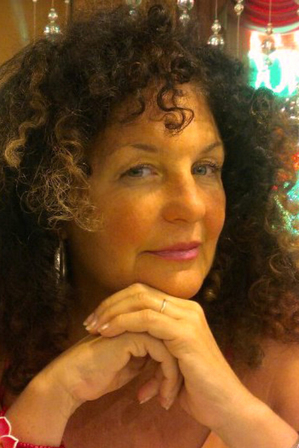
Announcing A Serpentine Path: Mysteries of the Goddess by Carol P. Christ

carol p. christ photo michael bakas“The serpentine path is the path of life, a snakelike, meandering path, winding in and out, up and down, with no beginning and no end, into the darkness and into the light.”

As the year draws to a close, I am putting the finishing touches on A Serpentine Path: Mysteries of the Goddess. In the spring of 2016 it will be published by the Far Press, founded by Gina Messina-Dysert.  A Serpentine Path is the original title of the memoir of my journey from despair to the joy of life on the first Goddess Pilgrimage to Crete. It was published in 1995 as Odyssey with the Goddess, a title chosen by the publisher.

A Serpentine Path marked a turning point in my life and in my career as a writer. During the time described in my memoir I had fallen into a deep despair, sparked by the end of a marriage, the end of a love affair, and disappointment in my career. Hoping to make a fresh start, I moved to Greece. Not surprisingly, my despair followed me there. Nonetheless, as I would learn, I made the right decision, for as my Greek therapist was to tell me, I needed to learn to live in my body, not my head, and Greece was the place to learn that.

I was at a crossroads in my spiritual quest. I left Christianity for Goddess feminism, yet I felt the Goddess had abandoned me. I had a contract to write the first Goddess thealogy, but as I said in a speech at I gave at Harvard Divinity School just before I made the decision to move to Greece, I was not sure of the meaning of the symbol of the Goddess. Is Goddess a personal being who cares about the world? Or the name we give to the cycles of birth, death, and regeneration in nature? My inability to answer this question led my editors to return draft of my Goddess thealogy with the comment that something was missing. Continue reading “Announcing A Serpentine Path: Mysteries of the Goddess by Carol P. Christ”

Birth and Community by Sara Frykenberg

My daughter Hazel was born on a November afternoon. Just over two weeks old, my own individual role as mother is too young to comment on much here—I am thinking too much and too little about what it means, adjusting to my little one’s schedule, feeling like my boobs are going to fall off from my breastfeeding efforts, and loving in a new way. (It’s amazing how excited one can get about ‘poopy’ after baby has been struggling for days, isn’t it?)

But when I am lying in my bed, sometimes at night, I find myself amazed and grateful for the community it took to bring my daughter into being. I was pregnant but I also had a pregnant community. I labored with community; and what I am learning, is that my motherhood is also a function of community—something, for me, that would not have been possible without the many, many people who supported Hazel and me through the process of new birth. Continue reading “Birth and Community by Sara Frykenberg”

Friendships That Save Lives: For Rita M. Gross 1943-2015, by Carol P. Christ

Carol Eftalou - Michael HonnegerWhen Rita Gross visited me in Lesbos two summers ago, we spent many long hours discussing our lives and work. Rita and I met at the Conference of Women Theologians at Alverno College in June, 1971 when we were young women. We did not know it then, but our lives would continue to be intertwined through our common interests, first in the Women and Religion section of the American Academy of Religion, and then through our work on Goddesses and feminist theology.

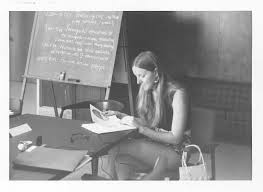
When we met, Rita was a convert to Judaism working on her dissertation on Australian Aboriginal women’s religious lives, and I was a Christian about to begin a dissertation on Elie Wiesel’s stories that would lead me to express my own anger at God. Continue reading “Friendships That Save Lives: For Rita M. Gross 1943-2015, by Carol P. Christ”

DO RELIGIONS HAVE AN “ESSENTIAL” “CENTRAL” CORE THAT IS–OR IS NOT–SEXIST? by Carol P. Christ

Carol Eftalou - Michael HonnegerThough often asked, this is the wrong question.  Every statement about the “essential” or “central” teaching of any religion is based on a prior interpretation rooted in a particular standpoint. Thus, the idea that there is a “central” or “essential” core in any religion is not a matter of fact, but rather a matter of interpretation.

In discussions of religions, we often make global statements about our own and other religious traditions, such as: “Christianity is patriarchal to its core,” or alternatively, “The core teaching of Christianity is to love God with all your heart and your neighbor as yourself.” Or: “The true Islam teaches that God is love,” or alternatively, “Islam always teaches the subordination of women.”

These sorts of claims are made from time to time here on Feminism and Religion too. Every global statement that a particular religion “is” or “ is not” oppressive, calls someone to assert the opposite in the comments. I believe that statements about the “true” nature of any religion should should always be qualified. Continue reading “DO RELIGIONS HAVE AN “ESSENTIAL” “CENTRAL” CORE THAT IS–OR IS NOT–SEXIST? by Carol P. Christ”

The Book Is Finished, Now On to Publicizing It by Carol P. Christ

Carol in Crete turquoiseGoddess and God in the World: Conversations in Embodied Theology by Carol P. Christ and Judith Plaskow, forthcoming from Fortress Press in 2016.

In Goddess and God in the World, two leading theologians model a new method of embodied theology, rooted in experience and tested in dialogue. Christ and Plaskow agree that the God who is dead in our time is the transcendent and omnipotent male God of traditional theology. They believe that we must create new understandings of divinity because theologies not only help us to make sense of the world, but also provide guidance as we face the urgent social, political, and environmental issues of our time. In contrast to traditional views, Plaskow and Christ situate divinity in the world and place responsibility for the fate of the world firmly in human hands. They argue for an inclusive monotheism that affirms the unity of being through a plurality of images celebrating diversity and difference. Carol believes Goddess is the intelligent embodied love that is in all being, a personal presence that can inspire us to love the world more deeply. Judith understands God as an impersonal power of creativity, the ground of being that includes both good and evil. Their intense questioning of each other’s views provides an exciting model for theological conversation across difference.
Continue reading “The Book Is Finished, Now On to Publicizing It by Carol P. Christ”

ALTERNATIVE IMAGES OF GOD BY CAROL CHRIST AND EMMA TROUT

Carol P. Christ at Alverno College 1
Carol Christ at the Conference of Women Theologians

Today I am publishing an early work on female language for God that I wrote with Emma Trout at the first Conference of Women Theologians in 1971. Highly contested at the conference, this essay is a foreshadowing of my subsequent work on the need for female imagery for divinity.

Rereading this essay more than four decades later, I am gratified to see that though we began our essay with the image of God giving birth (which I still view as an important image), Emma and I were aware of the danger that female imagery for God could reinforce “a false sexual polarity.” We insisted then that female imagery for God must not repeat sex role stereotypes, but rather must shatter them. Continue reading “ALTERNATIVE IMAGES OF GOD BY CAROL CHRIST AND EMMA TROUT”

Barth and Woman at Yale by Carol P. Christ

Carol P. Christ at Alverno College 1
Carol P. Christ at the Conference of Women Theologians, Alverno College, 1971

I recently located a copy of an essay on Karl Barth and women that I wrote as a graduate student at Yale University in the Alverno College archives. Rereading it decades later, I am a-mazed at the brilliance and tenacity of my younger self. Had I been a male graduate student, I imagine that I would have been encouraged to publish this paper. Instead, though distributed by Alverno College after the Conference of Women Theologians, it was never published. I am correcting that oversight here. Read  A Question for Investigation (Barth and Women)-Carol P. Christ (1971) and view the original typescript Barth’s Theology and the Man-Woman Relationship by Carol P. Christ (1970). Please note that the essay does not restrict itself to Barth’s view of women, but rather uses Barth’s view of women to raise questions about his theology and theological method. Continue reading “Barth and Woman at Yale by Carol P. Christ”

Experiencing Divinity in the World by Carol P. Christ

carol mitzi sarahAs I work on revisions of the new book, Goddess and God in the Worldthat Judith Plaskow and I are writing, I am thinking again about John Cobb’s notion of the “two ultimates” as two different ways of thinking about divinity. Cobb suggested that religions have defined the nature of ultimate reality as personal and as impersonal, as God and as the ground of being. The ground of being is the impersonal ultimate: the metaphysical principles that structure all of life, principles that he described as creativity or the creative process.

Judith describes God as the impersonal creative process and views personal language for divinity as metaphoric or symbolic. I define Goddess as personal, yet also view the impersonal ultimate, the creative process, as sacred. For me, this raises the question of the relationship between Goddess and the creative process.

In Cobb’s view, the two ultimates are co-eternal: the personal God did not “create” the creative process, nor was the personal God “created” by the creative process. Rather, for Cobb, God as the personal ultimate, like all other individuals, participates in the creative process. What then is the creative process? Although the term “creativity” has multiple meanings, in process philosophy it has a specific one.

Whitehead’s description of the creative process is rooted in the insight of modern science that the most basic components of our universe are particles of atoms that defy being categorized as either matter or energy, but seem to move and change, depending on their relationships. It is from the relationships of these tiny individuals that the evolutionary process of our universe began. This insight led Whitehead to recognize that the nature of reality (or being) is not fixed and static (as Western philosophers before him had concluded) but is always moving, changing, or “in process.” Whitehead’s understanding of the creative process is summed up in his much-quoted phrase, “the many become one, and are increased by one.”

The creative moment in the creative process (which is in fact every moment in the life of an individual) is the moment when the individual (whether particle of an atom, cell, animal, human, or divinity) in an act of creative freedom unifies the world (the many) into a new synthesis (the one): this new synthesis adds a new fact to the world (the many is increased by one). This is an abstract description of the creative process in its most basic form. In fact, however, we do not experience the world in the abstract, but in the concrete.

In this moment I (Carol) remember my past (many different Carols situated in many different worlds and some of the books I have read) as I shape this sentence (with my hands on my computer acting in concert with the feelings of my body and the thoughts that are flowing in my mind) and unite myself and my world in a new synthesis (which is this sentence). As I do so, I add a new fact to the world (the many are increased by one), a sentence that may be read by others in the future, therefore influencing their lives.

The reader who reads my words (you) reflects on them in relation to her or his memory (your memories of your past selves in your past) and asks if what I am saying makes sense: in the moment that she or he (you) decides if it does or it doesn’t, a new fact is added to the world (the many are increased by one), an opinion that in turn may be expressed to someone else (the many is again increased by one) who in turn responds to it (the many is increased by one more).

Though this description of the creative process focuses on mental actions, our mental processes are not divorced from our bodies and feelings, and the relations of mind, body and feeling are complex. In some creative moments, feelings are primary, while in others the body leads. This second richer description of the creative process is still an abstraction. We do not generally experience life as a series of moments but as a flow in which one moment is indistinguishable from the others; nonetheless, we can recognize that our lives are made up of a series of moments in which we along with others create the world anew.

Sometimes we take a longer and broader view of the creative process, recognizing patterns and cycles within the world that we share with other than human life. Traditional peoples, for example, often speak of or invoke the creative processes of birth, death, and regeneration that are the basis of life on this earth. This is also an important way of describing the ground of being because it situates human creativity within the creativity of the web of life. In our time we might also speak about the evolution of life. Taking a long view, we experience the sacrality of the web of life.

I experience—feel and sense—the personal ultimate, the presence of Goddess as intelligent love in my body, mind, and spirit and in all bodies, minds, and spirits, as I go about my everyday life. She is always there: feeling the love and joy I feel; supporting and understanding me when things are difficult; inspiring me to share the grace of life with everyone and everything. I also feel the power of the impersonal ultimate, the creative process that supports the creativity or freedom of all individuals who interact with each other in the web of life. For me the two ultimates—Goddess and the web of life—are both real.

Though the two ultimates are separate in the abstract, in the concrete experience of those of us who affirm a personal divinity, they are intertwined because the personal divinity is experienced through the creative process that is the basis of life. Thus, at one and the same time, I experience myself and divinity within me, other individuals and the divinity with in them, the creative process and the divinity within it.

I celebrate the creative process and its fruits, the powers of birth, death, and regeneration and the evolutionary process as a whole, as the ground of all being as well as the Goddess I experience as a personal, intelligent, loving, compassionate presence who cares about me, all other individuals in the world.

Carol leads the life-transforming Goddess Pilgrimage to Crete (facebook and twitter).  Carol’s books include She Who Changes and and Rebirth of the Goddess; with Judith Plaskow, the widely-used anthologies Womanspirit Rising and Weaving the Visions; and forthcoming in 2016, Goddess and God in the World: Conversations in Embodied Theology.

Gay Marriage: “Tell me why I shouldn’t hate you…?” asks the straight Christian to the lesbian by Marie Cartier

MarieCartierforKCETa-thumb-300x448-72405This is the third of a series exploring gay marriage as a game changer within religion and politics. I have explored the topic as political animus and earlier as almost fairy tale come to life. Today I am examining it from a very person view.

Consider a gay woman (myself) being asked by a straight attempting to understand the “right” for gay marriage, “What does it matter if I know you’re ‘gay’ if I’m not attracted to you?”[1]

Then consider that another right of “marriage” –or being known as “gay”—is the right to be admitted into the hospital room of a loved one, who is considered one’s primary partner, or “spouse.” Yes, one wants to say to the questioning woman in the above scenario, the rights for marriage include the crucial family relationships which allow one person to be able to take sick leave to care for a partner, or a partner’s child; being able to make critical medical decisions, and the right to be together in crisis situations (such as a hospital emergency room).[2]

Imagine the gay woman speaking to the straight woman and saying, “Because I am more than someone you might or might not be attracted to. I am my own person with my own life. I want to among other things, get into the hospital room of my partner, my loved one, the one I am actually attracted to.” Continue reading “Gay Marriage: “Tell me why I shouldn’t hate you…?” asks the straight Christian to the lesbian by Marie Cartier”

Gender, Friendship, Collaboration, and Unacknowledged Authorship by Carol P. Christ

Carol in Crete croppedIn recent weeks Judith Plaskow and I have been revising the manuscript of our new book Goddess and God in the World in preparation for sending it to the publisher. Yes, we have a publisher. We signed a contract with Fortress Press a short time ago. The book should be out in 2016.

We have been hard—and I mean very hard—at work revising the four chapters in the book that are jointly written. The versions have been going back and forth and forth and back as we revision what we want to say and revise each other’s revisions of the drafts we have. We both want the final manuscript to say things just right and it is very hard not to make one more set of (alleged) improvements.

In the process we have realized that while we often disagree on words and wording, we have come to think alike on a wide variety of issues to the point that it becomes hard to say who had the ideas first. In addition we have both become so familiar with each other’s positions that we can each easily articulate both sides of our dialogue on the issues on which we disagree.

All of this has gotten me to thinking again about authorship and co-authorship and original and shared ideas. This train of thought led me back to the subject of Judith’s and my first essay together originally titled “Against My Wife” but published as “For the Advancement of My Career: A Form Critical Study in the Art of Acknowledgement.”  We discussed 5 formulaic tropes used in acknowledgements to wives in academic books, ending with “the wife as unacknowledged co-author.” Continue reading “Gender, Friendship, Collaboration, and Unacknowledged Authorship by Carol P. Christ”