ALTERNATIVE IMAGES OF GOD BY CAROL CHRIST AND EMMA TROUT

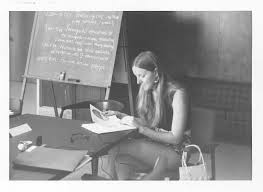
Carol P. Christ at Alverno College 1
Carol Christ at the Conference of Women Theologians

Today I am publishing an early work on female language for God that I wrote with Emma Trout at the first Conference of Women Theologians in 1971. Highly contested at the conference, this essay is a foreshadowing of my subsequent work on the need for female imagery for divinity.

Rereading this essay more than four decades later, I am gratified to see that though we began our essay with the image of God giving birth (which I still view as an important image), Emma and I were aware of the danger that female imagery for God could reinforce “a false sexual polarity.” We insisted then that female imagery for God must not repeat sex role stereotypes, but rather must shatter them. Continue reading “ALTERNATIVE IMAGES OF GOD BY CAROL CHRIST AND EMMA TROUT”

Barth and Woman at Yale by Carol P. Christ

Carol P. Christ at Alverno College 1
Carol P. Christ at the Conference of Women Theologians, Alverno College, 1971

I recently located a copy of an essay on Karl Barth and women that I wrote as a graduate student at Yale University in the Alverno College archives. Rereading it decades later, I am a-mazed at the brilliance and tenacity of my younger self. Had I been a male graduate student, I imagine that I would have been encouraged to publish this paper. Instead, though distributed by Alverno College after the Conference of Women Theologians, it was never published. I am correcting that oversight here. Read  A Question for Investigation (Barth and Women)-Carol P. Christ (1971) and view the original typescript Barth’s Theology and the Man-Woman Relationship by Carol P. Christ (1970). Please note that the essay does not restrict itself to Barth’s view of women, but rather uses Barth’s view of women to raise questions about his theology and theological method. Continue reading “Barth and Woman at Yale by Carol P. Christ”

Experiencing Divinity in the World by Carol P. Christ

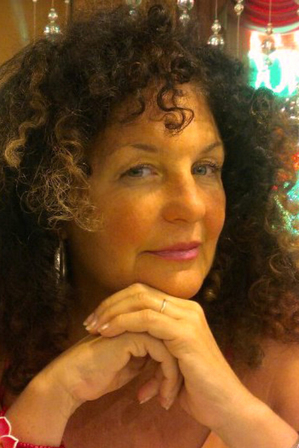
carol mitzi sarahAs I work on revisions of the new book, Goddess and God in the Worldthat Judith Plaskow and I are writing, I am thinking again about John Cobb’s notion of the “two ultimates” as two different ways of thinking about divinity. Cobb suggested that religions have defined the nature of ultimate reality as personal and as impersonal, as God and as the ground of being. The ground of being is the impersonal ultimate: the metaphysical principles that structure all of life, principles that he described as creativity or the creative process.

Judith describes God as the impersonal creative process and views personal language for divinity as metaphoric or symbolic. I define Goddess as personal, yet also view the impersonal ultimate, the creative process, as sacred. For me, this raises the question of the relationship between Goddess and the creative process.

In Cobb’s view, the two ultimates are co-eternal: the personal God did not “create” the creative process, nor was the personal God “created” by the creative process. Rather, for Cobb, God as the personal ultimate, like all other individuals, participates in the creative process. What then is the creative process? Although the term “creativity” has multiple meanings, in process philosophy it has a specific one.

Whitehead’s description of the creative process is rooted in the insight of modern science that the most basic components of our universe are particles of atoms that defy being categorized as either matter or energy, but seem to move and change, depending on their relationships. It is from the relationships of these tiny individuals that the evolutionary process of our universe began. This insight led Whitehead to recognize that the nature of reality (or being) is not fixed and static (as Western philosophers before him had concluded) but is always moving, changing, or “in process.” Whitehead’s understanding of the creative process is summed up in his much-quoted phrase, “the many become one, and are increased by one.”

The creative moment in the creative process (which is in fact every moment in the life of an individual) is the moment when the individual (whether particle of an atom, cell, animal, human, or divinity) in an act of creative freedom unifies the world (the many) into a new synthesis (the one): this new synthesis adds a new fact to the world (the many is increased by one). This is an abstract description of the creative process in its most basic form. In fact, however, we do not experience the world in the abstract, but in the concrete.

In this moment I (Carol) remember my past (many different Carols situated in many different worlds and some of the books I have read) as I shape this sentence (with my hands on my computer acting in concert with the feelings of my body and the thoughts that are flowing in my mind) and unite myself and my world in a new synthesis (which is this sentence). As I do so, I add a new fact to the world (the many are increased by one), a sentence that may be read by others in the future, therefore influencing their lives.

The reader who reads my words (you) reflects on them in relation to her or his memory (your memories of your past selves in your past) and asks if what I am saying makes sense: in the moment that she or he (you) decides if it does or it doesn’t, a new fact is added to the world (the many are increased by one), an opinion that in turn may be expressed to someone else (the many is again increased by one) who in turn responds to it (the many is increased by one more).

Though this description of the creative process focuses on mental actions, our mental processes are not divorced from our bodies and feelings, and the relations of mind, body and feeling are complex. In some creative moments, feelings are primary, while in others the body leads. This second richer description of the creative process is still an abstraction. We do not generally experience life as a series of moments but as a flow in which one moment is indistinguishable from the others; nonetheless, we can recognize that our lives are made up of a series of moments in which we along with others create the world anew.

Sometimes we take a longer and broader view of the creative process, recognizing patterns and cycles within the world that we share with other than human life. Traditional peoples, for example, often speak of or invoke the creative processes of birth, death, and regeneration that are the basis of life on this earth. This is also an important way of describing the ground of being because it situates human creativity within the creativity of the web of life. In our time we might also speak about the evolution of life. Taking a long view, we experience the sacrality of the web of life.

I experience—feel and sense—the personal ultimate, the presence of Goddess as intelligent love in my body, mind, and spirit and in all bodies, minds, and spirits, as I go about my everyday life. She is always there: feeling the love and joy I feel; supporting and understanding me when things are difficult; inspiring me to share the grace of life with everyone and everything. I also feel the power of the impersonal ultimate, the creative process that supports the creativity or freedom of all individuals who interact with each other in the web of life. For me the two ultimates—Goddess and the web of life—are both real.

Though the two ultimates are separate in the abstract, in the concrete experience of those of us who affirm a personal divinity, they are intertwined because the personal divinity is experienced through the creative process that is the basis of life. Thus, at one and the same time, I experience myself and divinity within me, other individuals and the divinity with in them, the creative process and the divinity within it.

I celebrate the creative process and its fruits, the powers of birth, death, and regeneration and the evolutionary process as a whole, as the ground of all being as well as the Goddess I experience as a personal, intelligent, loving, compassionate presence who cares about me, all other individuals in the world.

Carol leads the life-transforming Goddess Pilgrimage to Crete (facebook and twitter).  Carol’s books include She Who Changes and and Rebirth of the Goddess; with Judith Plaskow, the widely-used anthologies Womanspirit Rising and Weaving the Visions; and forthcoming in 2016, Goddess and God in the World: Conversations in Embodied Theology.

Gay Marriage: “Tell me why I shouldn’t hate you…?” asks the straight Christian to the lesbian by Marie Cartier

MarieCartierforKCETa-thumb-300x448-72405This is the third of a series exploring gay marriage as a game changer within religion and politics. I have explored the topic as political animus and earlier as almost fairy tale come to life. Today I am examining it from a very person view.

Consider a gay woman (myself) being asked by a straight attempting to understand the “right” for gay marriage, “What does it matter if I know you’re ‘gay’ if I’m not attracted to you?”[1]

Then consider that another right of “marriage” –or being known as “gay”—is the right to be admitted into the hospital room of a loved one, who is considered one’s primary partner, or “spouse.” Yes, one wants to say to the questioning woman in the above scenario, the rights for marriage include the crucial family relationships which allow one person to be able to take sick leave to care for a partner, or a partner’s child; being able to make critical medical decisions, and the right to be together in crisis situations (such as a hospital emergency room).[2]

Imagine the gay woman speaking to the straight woman and saying, “Because I am more than someone you might or might not be attracted to. I am my own person with my own life. I want to among other things, get into the hospital room of my partner, my loved one, the one I am actually attracted to.” Continue reading “Gay Marriage: “Tell me why I shouldn’t hate you…?” asks the straight Christian to the lesbian by Marie Cartier”

Gender, Friendship, Collaboration, and Unacknowledged Authorship by Carol P. Christ

Carol in Crete croppedIn recent weeks Judith Plaskow and I have been revising the manuscript of our new book Goddess and God in the World in preparation for sending it to the publisher. Yes, we have a publisher. We signed a contract with Fortress Press a short time ago. The book should be out in 2016.

We have been hard—and I mean very hard—at work revising the four chapters in the book that are jointly written. The versions have been going back and forth and forth and back as we revision what we want to say and revise each other’s revisions of the drafts we have. We both want the final manuscript to say things just right and it is very hard not to make one more set of (alleged) improvements.

In the process we have realized that while we often disagree on words and wording, we have come to think alike on a wide variety of issues to the point that it becomes hard to say who had the ideas first. In addition we have both become so familiar with each other’s positions that we can each easily articulate both sides of our dialogue on the issues on which we disagree.

All of this has gotten me to thinking again about authorship and co-authorship and original and shared ideas. This train of thought led me back to the subject of Judith’s and my first essay together originally titled “Against My Wife” but published as “For the Advancement of My Career: A Form Critical Study in the Art of Acknowledgement.”  We discussed 5 formulaic tropes used in acknowledgements to wives in academic books, ending with “the wife as unacknowledged co-author.” Continue reading “Gender, Friendship, Collaboration, and Unacknowledged Authorship by Carol P. Christ”

Enemy of (H)Islam by Vanessa Rivera de la Fuente

Vanessa Rivera de la Fuente. Misogyny in IslamSo, again, you, the most holy and enlightened man of the mosque have pointed your finger at me to declare, noisy and hysterical, that I am an “Enemy of Islam.” Then you, who preaches and recites best, have gone out there slandering me, “eating my flesh,” devotedly.

“Enemy of Islam.” Well, which Islam? Is there one unique Islam? Why is your Islam, THE Islam? There are so many ways to be Muslim, or, didn’t you know?

You seem to follow the principle “you believe like me or you believe against me,” especially when the discussion is about women. In your narrow view, I am an enemy of Islam because I’m a feminist, radical, progressive woman. I am engaged in interfaith dialogue and in political struggle against discrimination instead of “being at home serving [my] husband as a good Muslimah.” Continue reading “Enemy of (H)Islam by Vanessa Rivera de la Fuente”

Ashes, Sacrifice, and Abundance by Melissa Browning

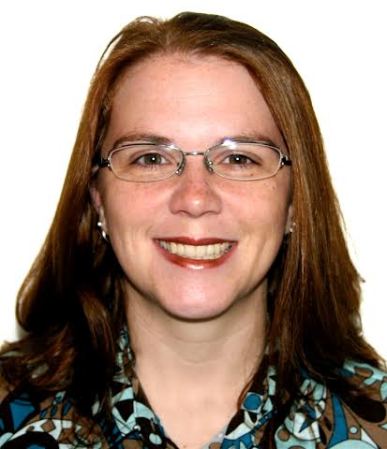
Melissa BrowningLast year I got my ashes at the airport. As I sat in that airport chapel, I halfheartedly listened to a (mostly terrible) litany that was proclaimed in between announcements for gate changes. I was leaving for another campus interview after having been home for only 24 hours since the previous one. The Christian season of Lent came during a time of stress and chaos in my life. That year, when I contemplated what I might give up for Lent, I could think of nothing. So much had been taken away that I had nothing left to give.
The season of Lent is often linked with the idea of sacrifice. Some people fast, others give up a favorite vice or a favorite food. As a feminist theologian, I spend a great deal of time thinking about the idea of sacrifice. I wonder how women who consider themselves part of Christian churches can be asked to sacrifice when we have already given away too much. Too often, our labor is welcomed but our voices are silenced. As a Baptist theologian and ordained minister who has sojourned in Catholic universities, I’ve felt this in my own tradition and in traditions that are not my own. Continue reading “Ashes, Sacrifice, and Abundance by Melissa Browning”

Relationship, Freedom, Change, and Interdependence in the Web of Life by Carol P. Christ

carol p. christ photo michael bakasMarjorie Suchocki says that feminist theology needs a metaphysics, a coherent world view that can hold together what we might otherwise be seen as a series of unrelated assertions made by feminists. Metaphysics is one of those terms that make most people cringe. If they have any idea at all what the word means, they might categorize metaphysics as the most abstract and out of touch with reality aspect of philosophy. In the Platonic tradition where ideas precede reality, metaphysical truths are revealed by rational contemplation of transcendent principles that precede the world. “I think, therefore, I am,” Descartes said. This notion of metaphysics makes me cringe too.

In process philosophy metaphysics refers to the fact that the world is governed by and expresses certain fundamental principles. This does not mean that ideas are more important than reality. Quite the opposite, metaphysical principles are conclusions reached through paying close attention to the world. Continue reading “Relationship, Freedom, Change, and Interdependence in the Web of Life by Carol P. Christ”

A Women’s Mosque: An Interfaith Space for Feminist Spirituality by Vanessa Rivera de la Fuente

Vanessa Rivera de la Fuente. A Women MosqueIf you thought that all I could do in regards to feminism and religion is challenge Patriarchy and tease around ladies and gentlemen of good temper and better reputation with my corrosive comments, this post may change your mind.

As I said in a previous article, this year I started, with a small group of people, a social project called Imaan, whose goal is centered on inter-faith dialogue and better visibility of the actions and contributions of women in Islam (and religion in general,) plus critical thinking on religion from a feminist and progressive perspective.

As part of the activities of Imaan, we are developing “A Women’s Mosque” project; an initiative that aims to create a meeting place for women and our spirituality. The idea came after a reunion to talk on Islam and inter-faith dialogue with women from different denominations. At one point in the discussion, they asked me about sex segregation in mosques, which led us to a broader reflection on the position of women in the religious space, both material and symbolic, and how uncomfortable we were with that.

We realized that, in a variety of ways, places of worship displace women. Whether they relegate us to separate rooms, or refuse to allow us to speak, limiting our participation to “strictly female” issues such as maternity, caregiving, the role of wife and – of course- clothing, these prohibitions are always from a patriarchal “canonical” perspective.

So we decided to join together to create our own space. Continue reading “A Women’s Mosque: An Interfaith Space for Feminist Spirituality by Vanessa Rivera de la Fuente”

Death with Dignity by Carol P. Christ

Carol Christ in LesbosIn the summer of 1960 when I was 14 years old my much loved grandmother Mae Inglis Christ died of a cancer that affected her brain. The last time I saw my Nannie was shortly after her diagnosis in the early spring. While we were visiting, the cancer affected her back, and she took to her bed. In those days children were not allowed in hospitals. I never saw my grandmother alive again, but my mother told us that our grandmother was hooked up to tubes much longer than she should have been. Mother vowed, “This will never happen to me.” I was driven to the funeral in a limousine with my grandmother’s girlfriends. They spoke about my grandmother’s last days, describing how (because her mind was affected by cancer) my little grandmother had screamed and screamed at them for not visiting–even though they were with her every day. They found my grandmother’s outbursts so traumatic that they said they were relieved to see her looking so peaceful in her coffin. Continue reading “Death with Dignity by Carol P. Christ”