
Queen of Pentacles: Sensual Materiality by Elisabeth Schilling

Most of us are trying to make it to a place of material comfort where we are living in a way that feels honorable. Some of us feel we could have made better decisions in the past so that we might have figured out how to do such before the age we are now. I recently did a tarot card reading that I interpreted as mainly positive or neutrally-revelatory. But one of the cards stood out from the rest, and I really didn’t understand it. I was feeling positive that day, and, even though I have often felt unsure and longing in my recent travels despite all I have accomplished materially and psychologically, I have to say it wasn’t a card I was expecting: the III of Swords, which symbolizes disappointment and heartache, especially due to mental happenings. What could I feel heartache at? Perhaps I am disappointed that creating that place of safety and material comfort seems a long way down the road.

Continue reading “Queen of Pentacles: Sensual Materiality by Elisabeth Schilling”
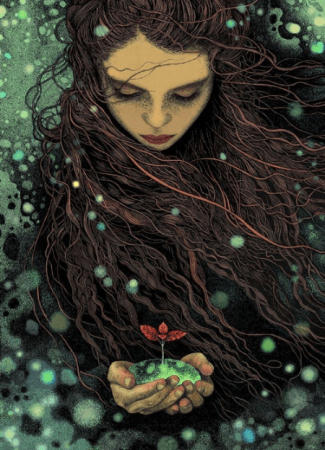
Death and Re-birth through a Project by Elisabeth Schilling

Art by Magdalena_Korzeniewska

For about a year and a half, I have been working on a collection of poetry that I feel is worth something. I have been writing poetry since I scribed pages hidden between my math textbook when I was 9, gone through poetry workshops in graduate school where I produced a creative thesis, and continued to write off-and-on after that. I have an extensive cornucopia of poetry, but it was around last October of 2016, perhaps, that I decided to write my experience.

As a pre-teen, I wrote about what I thought my life could be, fantasizing about being an older woman with mottled relationships, missing opportunities to discuss my fragile relationship with my parents as the only-child-golden-child, my passion and doubts as a religious, my shame at not being more experienced. Even when I was in graduate school for poetry in Ohio, I didn’t think my life was worth excavating. I wrote dreamy, dense poetry that was surreal and symbolic but largely incoherent. I could again have written about my evolving religious beliefs, my curiosities and risks I took living outside of my home state of Oklahoma as a young woman for the first time, my declining relationship with my mother, or my insecurities again, but this time as a lesser-prepared graduate student in comparison with my literary and theory-laden colleagues.

On one hand, some might say the culture I come from is narcissistic and navel-gazing. I would agree, but just like I feel women can sometimes be selfish in a quite necessary and liberating way (as opposed to those around her accusingly saying she is “so selfish” for abandoning them/following her own path/needing a room of her own), I feel the confessional and self-reflective can be the healing and helpful side of the coin. For me, at least in my experience, my “finished” collection feels exactly this way.

Continue reading “Death and Re-birth through a Project by Elisabeth Schilling”

The Personal Book of Shadows: Compendium of Sacred and Scientific Knowledge, Wisdom, and Evolving Experimentation by Elisabeth Schilling

I’m the type of insecure wallflower who has deleted social media accounts, blogs, photos, poems, and journals because 1. I am not good at commitment or planning, 2. I shame myself for being eclectic and lacking consistency, and 3. a sentiment I have either created or exists in some form externally prods me to brand myself, something I cannot do well (see no.1 and no.2). Oh, that doesn’t mean I don’t find the brand smart, and maybe calling it a “brand” condemns it to consumerism and commodities, when really it is being focused where I am distracted and a frivolous sensationalist.

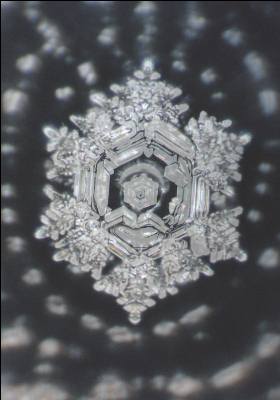
On the whole, currently, I suppose I’m experimenting with accepting this all-over-the place eclecticism that has seemed to follow me my entire non-linear life and trying to commit to embracing whatever mess I create, even if it feels disjointed and that I can never have a nice, clean, mono-personality. Who am I? About 8 different people. Can anyone relate? Okay, maybe I just need to grow up. I have a feeling it will just have to happen in my next life. Continue reading “The Personal Book of Shadows: Compendium of Sacred and Scientific Knowledge, Wisdom, and Evolving Experimentation by Elisabeth Schilling”

The Play of Emotional Insecurity and Pull by Elisabeth Schilling

It is not easy navigating the world with fragile boundaries, self-worth, and a potential history of manipulations. I often seek wisdom in spiritualities and unfamiliar religions because I need a substitute for the childhood traditions I have abandoned as a raft mid-stream. I am attracted to fashioning another raft, this one not pre-fabricated but gathered over some time by reaching for branches and tendrils. I am never confident about my assessments concerning relationships, and I mostly avoid going very deep with people anyhow or keep my head down so as to go unnoticed or divert the interest of others because I don’t yet know how to have healthy relationships that entail elements of balance or stay more-or-less in the middle way. It is awkward and fumbling to do life on one’s own, and I am hardly a victim. I completely admit that healing is within my purview and I simply have not tried hard enough, or that I just need to accept that no relationship is perfect and one cannot exactly have pleasure without pain, and so allow my body to sink into the underwater worlds and be taken by the sensory suctions of sea urchins and stings of jelly fish. Perhaps a relationship can also be one of peace and calm passions where those involved keep their attachments in check. I guess that is possible. 

Continue reading “The Play of Emotional Insecurity and Pull by Elisabeth Schilling”

A Nurturing Environment is Not a Luxury by Elisabeth Schilling

There are two tarot card decks that have accompanied me on my trip overseas this summer: Alana Fairchild’s Rumi Oracle and Lee Bursten’s Tarot of Dreams. In recent readings, I have been presented with messages of place, thus the topic of my post.

But first, Seneca, Stoic philosopher born around the time of Jesus, cautions that people traveling to escape their difficulties are sometimes no better when they have arrived to a distant land because they have not become rid of themselves. Likewise, zen philosophy suggests that it is not our circumstances that matter so much as the peace and calm we create in our inner landscape. Nhat Thich Hanh or Ram Dass or Pema Chödrön (maybe all 3) have a metaphor for the tumultuous ocean – that the sea is often rocky, but it is always calm in the deep beneath. Yet, I see all this as a reminder to be mindful about the added layers of suffering we can create and advice for difficult times when we can’t leave yet. Regardless, I think any wisdom cannot discount the need for a nurturing, healing space when at all possible.

Continue reading “A Nurturing Environment is Not a Luxury by Elisabeth Schilling”

Spiritual Ideas, Existential and Eastern, in Jonathan Livingston Seagull by Elisabeth Schilling

Peaceful Solitude

After my year of teaching high school students, I found a kinship with them in their frustrations, longing, apathy, hopelessness, and hope. Fortunately, we studied together Jean Paul Sartre, whom I want to get to know more intimately, but we, the teens and myself, could take the spiritual answer to our questions about the meaning of life (is there one? What is it?): The meaning of life is to give it meaning.

I am not sure about their generation, but adolescence for me, in mine, was about discovering, not necessarily creating. Of course, now I think it is a little of both.

Sometimes I wonder if there is also a lesson. Being an academic, perhaps I love learning and teaching. I demonstrate my love as Jonathan Livingston Seagull does, by offering to others, perhaps a specific community of others, those who have chosen or must be in a state of learning (easily found in institutions of high school and college), the truths I have gathered (59). Of course ‘truth’ is a word that tastes a bit tannic, for it needs to be rolled around by the tongue a bit to be cleansed; perhaps to mitigate its toxic potential, we can never consume it undigested, but must gestate it and transform it within our warm bodies, just at the cliff, before we allow it to permeate our organs in a chemical structure that serves us.

Continue reading “Spiritual Ideas, Existential and Eastern, in Jonathan Livingston Seagull by Elisabeth Schilling”

A Feminist Liturgy of Old and Age by Elisabeth Schilling

blue fleurHow the voices speak of what is and isn’t tastes of a superficial sauce I let drip from my lips. In the first dialectic of aging (harkening back to Marie Cartier’s helpful division of conversational foci), usually what is spoken about has little to do with our mental, spiritual, or emotional states. It is not a comment on perhaps what it should be: how evolved in consciousness or how mindful a soul is, how evolved in practices of discipline and surrender one is, how creative we have been in our attempt to ease the suffering of ourselves and others. It is not this because when people comment on age or how old someone might be, it is usually, in my recent experience, from one who knows not a person well enough to address any of these former possibilities nor in a situation where those in conversation have the luxury of mulling over such glittering, dazzling musings.

For indeed, let beings sit together on rocks or leather couches, playfully and perhaps seriously, discuss opinions on reincarnation, what has appeared in Tarot readings of current life stages and what the presence of what that Major Arcana card might represent as intuited by our subconscious. We might share stories of the messages we have lately received from trees, how they surrender so seemingly freely to their baldness as we might, with a few tufts of auburn leaves on a naked limb, how sometimes the bark is smooth and ghostly pale and how other times the trees that catch our communion are thick and rough like we are, tempting us to press our soft flesh into each other’s bark and feel how specks of wood and sap enter us, how we all bend and break and maybe rise up in another season with a flamboyant, hairy green bush, taking up all the space that we can, as we reach our arms in passionate ecstasy to the sun and moon, learning that sometimes we can best speak in silence and trembling. Continue reading “A Feminist Liturgy of Old and Age by Elisabeth Schilling”