Legacy of Carol P. Christ: Susan B. Anthony’s Bargain with the Devil

Moderator’s Note: Some of Carol’s pieces are so important that we are reposting them for a 2nd time. This was first posted in November 2019 and reposted in November 2021

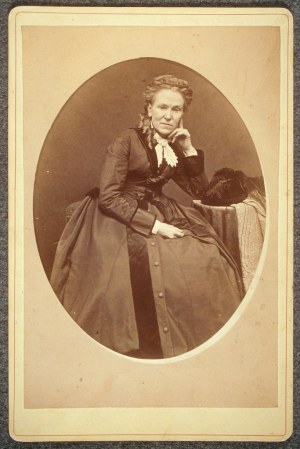
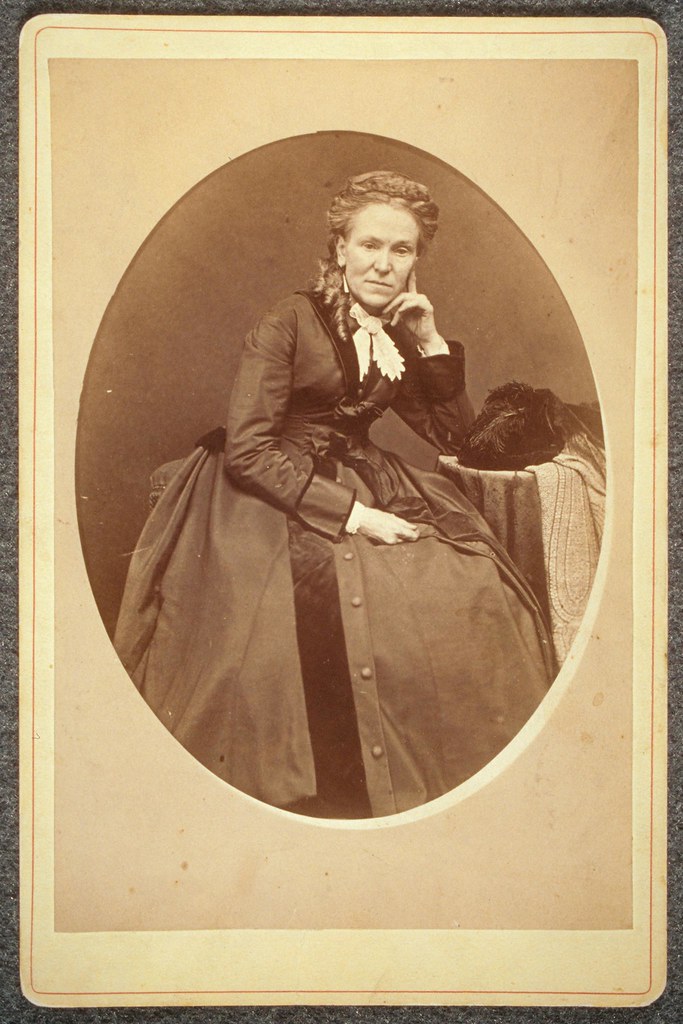
Matilda Joslyn Gage


[T]he most grievous wrong ever inflicted on woman has been in the Christian teaching that she was not created equal to man, and the consequent denial of her rightful place in Church and State. –Matilda Joslyn Gage, Woman, Church, and State, 1893, page 1

I do not approve of their [referring to Gage and Stanton] system of fighting the religious dogmas of people I am trying to convert to my doctrine of equal rights to women. –Susan B. Anthony to Olympia Brown, following the disputed merger of the radical National Women’s Suffrage Association with the conservative American Women’s Suffrage Association in 1889

Most readers of Feminism and Religion know that Susan B. Anthony and Elizabeth Cady Stanton were leaders in the nineteenth century struggle for women’s rights. Fewer will know that Matilda Joslyn Gage was widely understood to be Stanton’s equal as a theorist and Anthony’s equal as an organizer. The fact that Gage’s contributions have been lost to history can be attributed to Susan B. Anthony’s bargain with the devil.

If Anthony’s bargain had affected only the reputation of Matilda Joslyn Gage, that would be bad enough. But Anthony’s decision to merge the NWSA with the AWSA signaled that the women’s rights movement would cease and desist from its policy of naming and indicting Christian dogma as the source and cause of women’s subordination in the law in Christian countries. This decision meant that feminists would no longer have a clear understanding of the forces they were reckoning with. Continue reading “Legacy of Carol P. Christ: Susan B. Anthony’s Bargain with the Devil”

The Connection between Matilda Joslyn Gage’s Woman, Church and State and L. Frank Baum’s The Wonderful Wizard of Oz by Mark I. West

My introduction to Matilda Joslyn Gage (1826-1898) goes back to my long-standing interest in her son-in-law, L. Frank Baum. I regularly teach Baum’s The Wonderful Wizard of Oz in my children’s literature courses, and I always point out the book’s feminist qualities. I mention, for example, that Dorothy Gale, the central character in the novel, is one of the first female characters in American literature to go on a bona fide quest.  When I first started teaching this book, I wondered what caused Baum, a male writing in the late nineteenth century, to write such a feminist book. One day, while preparing for class, I came across a reference to Gage. This reference stated that Gage was a leading suffragette during the second half of the nineteenth century and that she lived with Baum and his family in Chicago when Baum was launching his career as a children’s author. After reading more about Baum’s life, I realized that Gage played a major role in shaping his nontraditional views on gender roles. However, I was still not sure what role she played in the development of women’s rights.

Continue reading “The Connection between Matilda Joslyn Gage’s Woman, Church and State and L. Frank Baum’s The Wonderful Wizard of Oz by Mark I. West”

MATILDA JOSLYN GAGE: IN HER NAME, AMERICAN WOMAN WRITER AND ACTIVIST (1826-1898), part 2 by Maria Dintino

part 1 appeared yesterday

Leila Brammer in her book Excluded from Suffrage History: Matilda Joslyn Gage, Nineteenth-Century American Feminist, explains the long-term impact of the dismissal of Gage:

“The loss of Matlida Joslyn Gage from the history of the woman suffrage movement and her ideas from the intellectual history of feminism speaks to the influence of exclusionary processes in social movements as well as their unfortunate consequences…we must remember that Joslyn Gage was intricately involved in the movement, wrote in newspapers and magazines, and published a book, but all these activities and her significant feminist thought had to be re-created and rediscovered nearly a century later”(120).

Continue reading “MATILDA JOSLYN GAGE: IN HER NAME, AMERICAN WOMAN WRITER AND ACTIVIST (1826-1898), part 2 by Maria Dintino”

MATILDA JOSLYN GAGE: IN HER NAME, AMERICAN WOMAN WRITER AND ACTIVIST (1826-1898), part 1 by Maria Dintino

Moderator’s Note: We are pleased to announce that we have formed a co-operation with The Nasty Women Writers Project, a site dedicated to highlighting and amplifying the voices and visions of powerful women. The site was founded by sisters Theresa and Maria Dintino. To quote Theresa, “by doing this work we are expanding our own writer’s web for nourishment and support.” This was originally posted on their site on January 5, 2021. You can see more of their posts here. 

A few weeks back, I came upon a term I had not heard before, the ‘Matilda Effect’. It’s defined as: a bias against acknowledging the achievements of those women scientists whose work is attributed to their male colleagues (Wikipedia). This term was coined by science historian Margaret W. Rossiter in 1993, in her essay The Matthew Matilda Effect in Science.

The Matthew Effect, labeled in 1948 and credited to Robert K Merton, and later to Harriet Zuckerman as well, refers to the way that: eminent scientists will often get more credit than a comparatively unknown researcher, even if their work is similar; it also means that credit will usually be given to researchers who are already famous (Wikipedia).

Continue reading “MATILDA JOSLYN GAGE: IN HER NAME, AMERICAN WOMAN WRITER AND ACTIVIST (1826-1898), part 1 by Maria Dintino”

Patriarchy as Primer of Cruelty by Janet Maika’i Rudolph

Matilda Joslyn Gage

This was a hard post to write. When I write about my personal trauma, it is not only healing for me but adds to the canon of stories of other women that help all of us navigate trauma. That makes it easier. When writing about the trauma of women in a whole culture, I feel a sense of helplessness, especially here in the United States. We are all experiencing a group trauma and it is digging in deep.

January 5, 2024, will live in the Patriarchal Hall of Infamy. On this date the Supremes agreed to allow the rapist, misogynist, trying-to-be-dictator former President an opportunity to have his rights heard. But this same date, the Supremes also told we women that our lives are insignificant. No that’s not right, less than insignificant, a mere distraction to what they consider to be more important issues. They allowed an Idaho abortion law to go into effect that doesn’t allow an abortion even in the case of a medical emergency when a pregnant woman in life-threatening distress has been rushed to the emergency room. The split screen exhibits patriarchy for what it is. I want to use the word, “culmination” but that means the height. I don’t think we’ve reached a culmination because there seems no end to the cruelty that patriarchy seeks to inflict.

Continue reading “Patriarchy as Primer of Cruelty by Janet Maika’i Rudolph”

Patriarchy and the Supreme Court by Janet Maika’i Rudolph

I am pissed! I wrote this blogpost the day after Beltane when the leaked draft of the Supreme Court majority opinion regarding Roe v. Wade was leaked to the public. I was up anyway feeling the effects of PTSD. Lessons that Carol P. Christ wrote about and brought to my own consciousness were rattling around my head. The first is her definition of patriarchy: “patriarchy is a system of male domination in which men dominate women through the control of female sexuality with the intent of passing property to male heirs.” This definition was part of a 3-part series she wrote (and we recently re-posed in her legacy posts) beginning here.

They are all well worth reading.

I was raped in 1977 when I was 22 years old. This after being abused by my father. I never got pregnant, but I was suicidal after the rape. Had I been pregnant without recourse to ending it, I would without a doubt have stabbed myself in the stomach or reached for that metal coat hanger. (I was too young to face pregnancy when my father abused me.) Had the result been my own death, that would have been warmly welcomed on my part. To this day, I still self-mutilate at times when stress becomes too much.    

Continue reading “Patriarchy and the Supreme Court by Janet Maika’i Rudolph”

Carol P. Christ’s Legacy: Susan B. Anthony’s Bargain with the Devil

Moderator’s Note: We at FAR have been so fortunate to work along side Carol Christ for many years. She died in July this year from cancer. To honor her legacy as well as allow as many people as possible to read her thought-provoking and important blogs we are pleased to offer this new column to highlight her work. We will be picking out special blogs for reposting. This blog was originally posted November 25, 2019. You can find the original post here to see the original comments along with her responses.

Matilda Joslyn Gage

[T]he most grievous wrong ever inflicted on woman has been in the Christian teaching that she was not created equal to man, and the consequent denial of her rightful place in Church and State. –Matilda Joslyn Gage, Woman, Church, and State, 1893, page 1

I do not approve of their [referring to Gage and Stanton] system of fighting the religious dogmas of people I am trying to convert to my doctrine of equal rights to women. –Susan B. Anthony to Olympia Brown, following the disputed merger of the radical National Women’s Suffrage Association with the conservative American Women’s Suffrage Association in 1889

Continue reading “Carol P. Christ’s Legacy: Susan B. Anthony’s Bargain with the Devil”

Celibacy Is the Lynch-Pin of Male Dominance according to Matilda Joslyn Gage by Carol P. Christ

Matilda Joslyn Gage

Matilda Joslyn Gage was an activist in the nineteenth century struggle for women’s rights equal to Susan B. Anthony, and a writer and theorist equal to Elizabeth Cady Stanton. That she is not remembered is due in large part to Susan B. Anthony’s efforts to write her out of history.

Matilda Joslyn Gage was also a scholar of women’s history unrivaled in her time. In Woman Church, and State, Gage argued that “the most grievous wrong ever inflicted upon women was in the Christian teaching that she was not created equal with man.” (page 1) From this it follows that feminists must never lose sight of the role Christian teachings have played and continue to play in the unequal treatment of women.

According to Gage, women’s position in church and state did not improve in the Christian era. To the contrary it declined! Gage proved this thesis in chapters titled: The Matriarchate, Celibacy, Canon Law, Marquette, Witchcraft, Wives, Polygamy, Woman and Work, and The Church of Today. Continue reading “Celibacy Is the Lynch-Pin of Male Dominance according to Matilda Joslyn Gage by Carol P. Christ”

Susan B. Anthony’s Bargain with the Devil by Carol P. Christ

Matilda Joslyn Gage


[T]he most grievous wrong ever inflicted on woman has been in the Christian teaching that she was not created equal to man, and the consequent denial of her rightful place in Church and State. –Matilda Joslyn Gage, Woman, Church, and State, 1893, page 1

I do not approve of their [referring to Gage and Stanton] system of fighting the religious dogmas of people I am trying to convert to my doctrine of equal rights to women. –Susan B. Anthony to Olympia Brown, following the disputed merger of the radical National Women’s Suffrage Association with the conservative American Women’s Suffrage Association in 1889

Most readers of Feminism and Religion know that Susan B. Anthony and Elizabeth Cady Stanton were leaders in the nineteenth century struggle for women’s rights. Fewer will know that Matilda Joslyn Gage was widely understood to be Stanton’s equal as a theorist and Anthony’s equal as an organizer. The fact that Gage’s contributions have been lost to history can be attributed to Susan B. Anthony’s bargain with the devil.

If Anthony’s bargain had affected only the reputation of Matilda Joslyn Gage, that would be bad enough. But Anthony’s decision to merge the NWSA with the AWSA signaled that the women’s rights movement would cease and desist from its policy of naming and indicting Christian dogma as the source and cause of women’s subordination in the law in Christian countries. This decision meant that feminists would no longer have a clear understanding of the forces they were reckoning with. Continue reading “Susan B. Anthony’s Bargain with the Devil by Carol P. Christ”