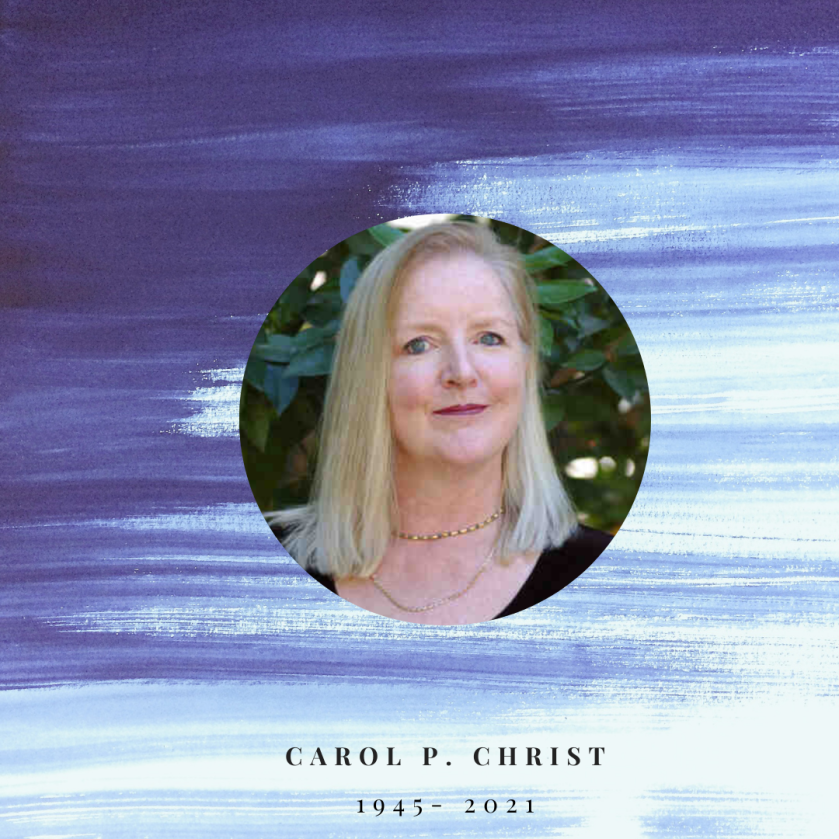
Legacy of Carol P. Christ: Solstice Comes But Once A Year, Now It’s Here!

This was originally posted on December 17, 2012

Actually it comes twice, once in midsummer, the longest day of the year, and once in midwinter, the longest night.  Winter Solstice is also known as the first day of winter.

ChristmasTrees20060001

For those of us attuned to the cycles of Mother Earth, Winter Solstice is a time to celebrate the dark and the transformations that come in the dark. Many of the customs associated with Christmas and Hannukah, including candles, Yule logs, and trees decorated with lights were originally associated with Winter Solstice.  The extra pounds put on during winter feasting were insulation against the cold winter nights.

Those who fear that many of the customs of the Christmas season might be pagan are right.  As we learn again to honor our place within the cycles of birth, death, and regeneration, we can return these customs to their roots in the circle of life.

Continue reading “Legacy of Carol P. Christ: Solstice Comes But Once A Year, Now It’s Here!”
Witches in the Weeds by Sara Wright

There she is in flight,

a shooting star on fire.

There she spirals eyeless

her blue wind births chaos.

There she moans bitterly

churning up dark waters.

There she plows fiercely

heaving up  mountains.

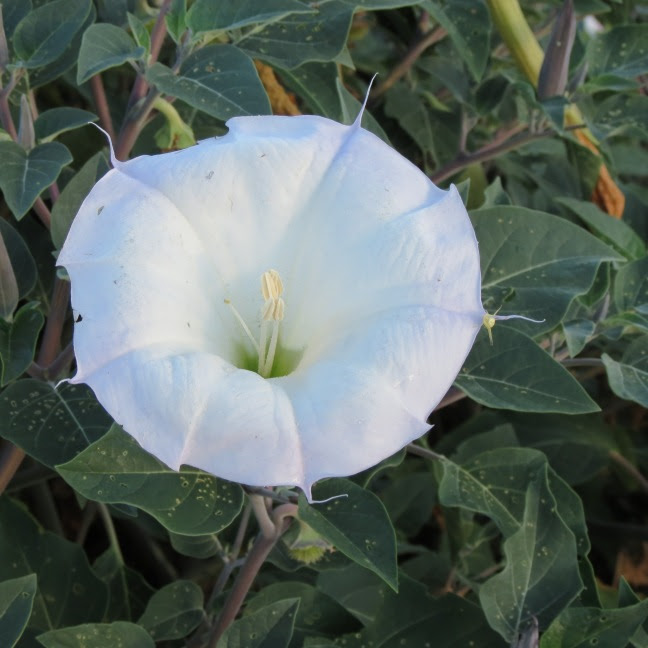
Her Datura pods explode,

broadcasting black seeds ..

Fire, Air, Earth and Water –

Old women stir the cauldron.

Shapeshifting into birds

they stalk fish in every marsh.

Black crowned night herons?

Owls with second sight?

Ah, these are the women with wings…

soaring through the night.

Listen to the reeds applauding.

Brown Cattails are humming.

Bitterns sing love songs to

Witches in the Weeds!

Continue reading “Witches in the Weeds by Sara Wright”

Legacy of Carol P. Christ: “AS WE BLESS THE SOURCE OF LIFE, SO WE ARE BLESSED”

This was originally post May 7, 2012

Blessing the Source of Life harks back to the time when shrines were built near springs, the very literal sources of life for plants, animals, and humans.

The prayer “As we bless the Source of Life, so we are blessed,” based on a Hebrew metaphor which refers to a water source and set to music in a Jewish feminist context by Faith Rogow, has become one of the bedrocks of my Goddess practice.

In Minoan Crete, seeds were blessed on the altars of the Goddess and the first fruits of every crop were returned to Her. The ancient Minoans piled their altars high with barley, fruits, nuts, and beans, and poured libations of milk and honey, water and wine, over the offerings they placed on altars. Evidence of these actions is found in the large number of pouring vessels stored near altars.

Continue reading “Legacy of Carol P. Christ: “AS WE BLESS THE SOURCE OF LIFE, SO WE ARE BLESSED””

Legacy of Carol P. Christ: Is It Essentialist To Speak Of Earth As Our Mother?

This was originally posted on November 25, 2013

The charge of “essentialism” has become equivalent to the “kiss of death” in recent feminist discussions. In this context it is taboo to speak of Mother Earth.  Yet, I would argue there are good reasons for speaking of Mother Earth that do not add up to essentialism. What if the values associated with motherhood are viewed as the highest values? What if the image of Mother Earth encourages all of us to recognize the gift of life and to share the gifts we have been given with others?

For those not familiar with the “essentialism” debate in feminist theory, it might be useful to define “essentialism.”  In philosophy, essentialism is the idea that every “thing” has an “essence” which defines it.  In its pure form, essentialism is a by-product of Platonic “idealism” which states, for example, that the “idea” of table is prior to every actual table and that every actual table is an embodiment of the idea of table.

Continue reading “Legacy of Carol P. Christ: Is It Essentialist To Speak Of Earth As Our Mother?”

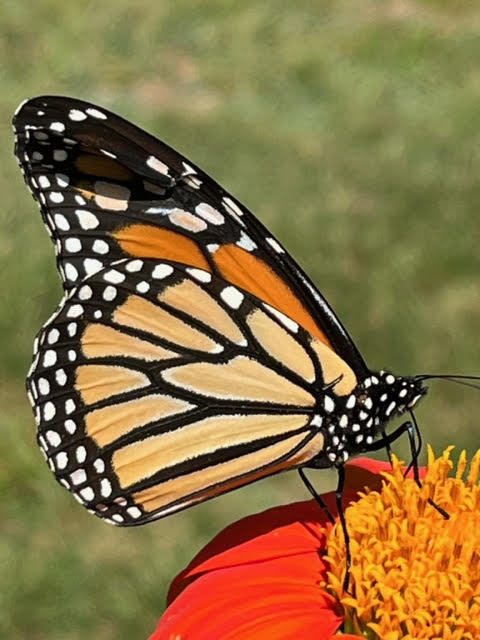
The Monarch That Didn’t Get Away –Butterfly Tagging, part 2 by Sara Wright

Part 1 was posted last week. You can read it here.

Today I learned that everyone is invited to witness butterfly tagging twice a week during the month of September. Efforts to publicize the value and ‘rightness’ of tagging are being stepped up.

Several people agreed with my assessment, namely that tagging creates trauma for the insect – and the idea that this practice may interfere with the butterfly’s ability to survive the 2000-mile journey, winter over successfully and then fly north to reproduce in the spring.

To my knowledge no one else had openly expressed their personal views to those in charge of the organization. However, some folks have come to talk with me. Most of us know that trauma weakens any organism’s immune system making it more vulnerable.

Continue reading “The Monarch That Didn’t Get Away –Butterfly Tagging, part 2 by Sara Wright”

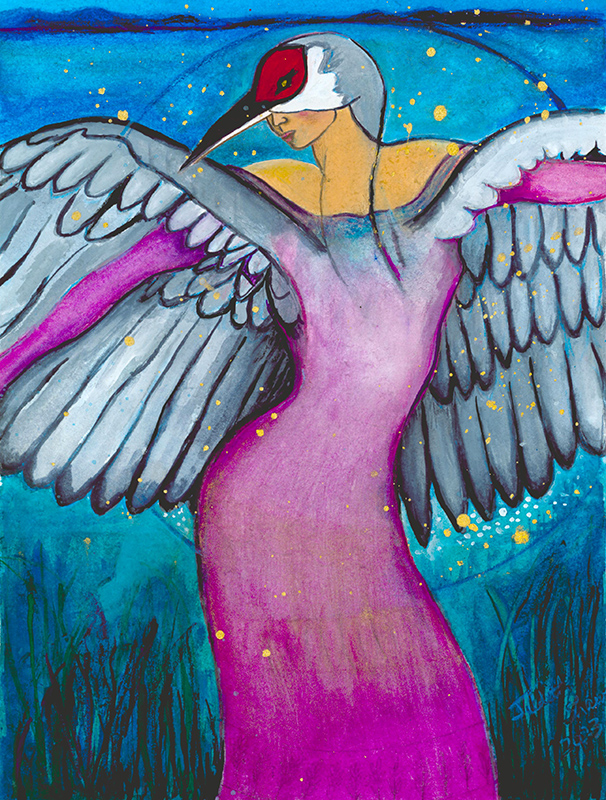
Aviana, 20th Century Crane Goddess by Judith Shaw

People think that goddesses only came into being long, long ago. People think goddesses are only found in ancient mythology. But people are wrong.  I know because I am Aviana, the Wetlands Crane Goddess who helped create the Bosque del Apache Wildlife Reserve of New Mexico. I first manifest on Earth as an Otherworldly force in the early 1900s. It was the migrating birds and waterfowl, in particular sandhill cranes, who called me into being.  

You see before Euro-Americans arrived in the land of the American Southwest, the Rio Grande was a mighty river which flooded every year bringing life and renewal to the land. These wetlands were a favorite wintering habitat of the Sandhill Cranes. They left their summer nesting grounds of Alaska, Canada and the northern United States and headed south for the winter.  Every year in November hundreds of thousand of cranes arrived in New Mexico. Here they fed on grasses and small animals throughout the short winter days. 

Continue reading “Aviana, 20th Century Crane Goddess by Judith Shaw”

Earth Day Remembrance by Sara Wright

“It is the Whole Earth You Are”

I was on my knees awash in the kind of grief that only people who have been torn from the same skin can begin to comprehend.

I sprinkled most of the ashes lovingly in the shallow depression that I dug into half frozen ground. I had never felt so alone. Unknown to me, once a beloved companion, my little brother’s ashes had spent 32 years stuffed into a cardboard box in my parents’ attic. Every year since his death my nightmares intensified… he was left wandering in the dark with no place to rest.

Continue reading “Earth Day Remembrance by Sara Wright”

From the Archives: Green Tara by Jassy Watson

This was originally posted on March 6, 2015

Goddess Tara is one of the oldest goddesses who is still worshipped extensively in modern times. Tara originated as a Hindu goddess, a Great Goddess or Mother Creator, she who represents the eternal life force that fuels all life. In Sanskrit, the name Tara means Star, but she was also called The Great Compassionate Mother and The Great Protectress.

A version of the Goddess Tara exists in most cultures. It is believed that she will assume as many forms on earth as she is needed by the people.

Adopted by Buddhism in the third century BCE, Tara came to be the most widely revered deity in the Tibetan pantheon. Not only is she a Tibetan Goddess, but she is considered a female Buddha; an enlightened one was has attained the highest wisdom, capability and compassion. One who is able to take  human form and remain at one with every living thing.

Continue reading “From the Archives: Green Tara by Jassy Watson”

Resurrection by Sara Wright

Experts quiped
you would
not rise
Too old
they said
Abandoned
Pink and Rose
No one
imagined
resilience,
pattern
birthing
form
to vine.
Gray green
veins
swell,
pulse,
pump
sugars
skyward,
powered
by a
single root.
Bowed blade
circles
round to
Beginning
Buried deep.
Spiral loosens,
ascends
seeking sun
star heat.

Continue reading “Resurrection by Sara Wright”

Legacy of Carol P. Christ: Maternal Gift Economy: Webinar Gifts

This was originally posted December 7, 2020

In the 1960s and 1970s, American-born Genevieve Vaughan was living in Rome with her husband, philosopher Ferruccio Rossi-Landi, and their three daughters. When Rossi-Landi, using Marxist models, began to write about language as a form of “exchange,” Vaughan was inspired to articulate her alternative theory based on the idea that language was developed and is learned through the gifts of the mother to the child. From that beginning, Vaughn developed an alternative theory of culture based on what she calls the “gift economy.”

Continue reading “Legacy of Carol P. Christ: Maternal Gift Economy: Webinar Gifts”