


The legend of La Llorona has been a part of Hispanic culture in the Southwest since the days of the conquistadores. Though the tales vary from source to source, the one common thread is that La Llorona is a woman named Maria who is always dressed in a white gown, the spirit of a young Mexican mother who drowned her children in the river in a moment of rage or abandonment by her lover and then took her own life in her deep shame and sorrow. La Llorona’s disembodied spirit is said to haunt the rivers at night – especially the Rio Grande – where she can be heard weeping in remorse for her dead children. Children are cautioned not to go out after dark because La Llorona might murder or drown them too. Because the tale of the Weeping Woman originated with the Patriarchal Spanish conquest I have always been suspicious of the various versions of this story believing that its meaning has been distorted.
Immediately what comes to mind is the Mater Dolorosa, Our Lady of Sorrows, or Mother of Sorrows. All refer to the Virgin Mary, the only goddess left in Christianity. Our Lady of the Seven Sorrows is another name used to refer to this goddess. The Mater Dolorosa is also a key subject for Marian art in the Catholic Church.
 It happened in the blink of an eye. So much of how we got here is blurry. I try to parse out the moments that came together to add up to this many years. I pause to absorb fragments, moments of the past.
 The past few weeks, I’ve been sitting with the many layers held by the concept, and the manifest reality, of mother, mothering, and motherhood. Mother is seen in the divine feminine, in the cosmos, and in the sea and the glow of the moon. She is held in our genes and our histories and the eyes of our children. She is found in archetypes of healing, nurturing, and comfort, as well as in stories of criticism, coldness, and abuse. She is the soft one who tends grief and holds hands and braids hair, and she is the unbreakable one whose labor and caregiving is taken for granted in most areas of her life. We carry our mothers with us in our DNA, in our stories, and in the way we navigate the impacts of intergenerational trauma.
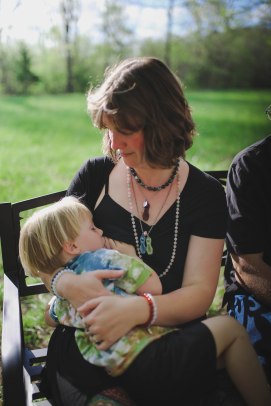 last night’s raindrops continuing to drip from the overfull gutters on the roof. The insistent stab of a single-note bird song in the air. His head nestles in the crook of my arm the way it has done every morning for three years. Blond hair against my nose, breathing in the slightly baby smell of him. “This is the last time,” I whisper softly. “We are all done after this. This is the last time we will have nonnies.”
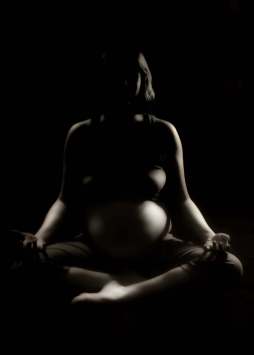 cultural dialog of birth to “positive” anticipation rather than fears, encouraging them to ask themselves questions like: “what if I give birth and it is one of the most powerful, thrilling moments of my life?” While I stand by this practice, I also think about the what ifs that crawl out of our dark places and lodge in our hearts. The what ifs that snake around the edges of our consciousness in the early hours of the morning. The what ifs we try to push down, down, down and away. The what ifs that stalk us. The what ifs so very awful that we fear in giving voice to them, we might give life to them as well.
 Recently I had a few experiences that brought home to me the meaning of a saying by the Buddha:
 This saying is one of those that sound a bit curious to a Western ear. It is almost as if the Buddha was against fun or humour. However, we all are familiar with the Buddha’s depictions where he smiles. The canonical texts also bear witness to the Buddha’s smiling.
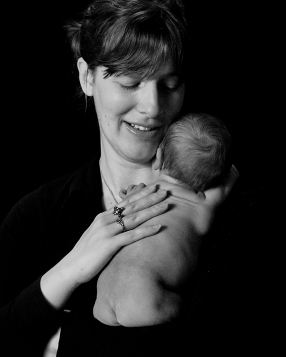 Goddess, explains:
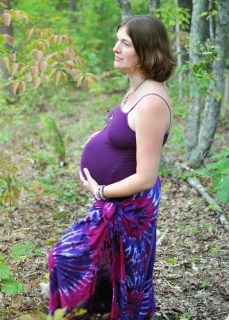 part of my second trimester and I give birth to him in my bathroom, on my own with only my husband as witness. The blood comes, welling up over my fingers and spilling from my body in clots the size of grapefruits. I feel myself losing consciousness and am unable to distinguish whether I am fainting or dying. As my mom drives me to the emergency room, I lie on the back seat, humming: “Woman am I. spirit am I. I am the infinite within my soul. I have no beginning and I have no end. All this I am,” so that my husband and mother will know I am still alive.
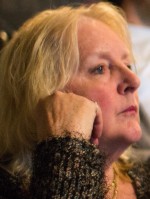 “All children are our children.” As I was posting my
 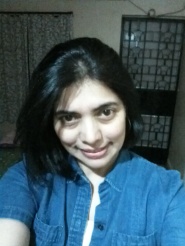 I often recall the time many years ago when a relative sympathized with the fact that my kittie had been spayed. Pigou was one of five girl cats we had and rather than face the difficult task of having to find homes for all of their offspring, or worse, put their lives in danger for lack of adequate care, we decided to get Mama Cat along with her four daughters fixed. My aunt’s words still resonate in my ears: “That is so sad. After all, every woman nurtures a desire to be a mother.” I remember feeling terrible. My parents and I had just committed the grave sin of severing Pigou (along with her sisters) from her identity – her natural role of mother. As I have gotten older, my views on Pigou and her lack of choice in the whole matter have changed, although I acknowledge that it may remain an ethical issue for some. Much as I empathize, however, Pigou and animal rights are not the center of this post, although a related topic is – that of motherhood.
 Feminism and Religion