You Can’t Debate Mutuality by Sara Frykenberg

I use words like “mutuality,” “listening,” and “love,” here as I discuss my understanding of feminist justice-making and eschew debate…I want to make it abundantly clear: I see these as powerful, often forceful and even angry tools. We listen to what oppressors say so that they cannot deceive with their “alternative facts.” We love forcefully…We counter violence—we do not debate it—with anger, humor, creativity and power, in order to redirect its energies into more mutual possibilities.

Sara FrykenbergParticipating in the Women’s March on Jan. 21st in Los Angeles fed my soul deeply. I didn’t realize how much I needed to protest in this way, how stuck I had been in grief and despair after the election, and the way that coming together as a community would help me to mourn. There’s nothing quite like standing together with hundreds of thousands of people who also care deeply with hope, humor, and real power. Marching helped me to find the energy to fight back. It refilled a reservoir, so depleted in 2016, much as the badly needed winter rain in my home state of California has helped to abate the severe drought. Continue reading “You Can’t Debate Mutuality by Sara Frykenberg”

The Dog and the Divine by Ivy Helman

20151004_161012When I was in high school, I once gave a speech summarizing what I had learned about G-d through my dog.  I still chuckle at the idea.  I cringe sometimes and wonder what others thought of the piece.  Oh, the seeming immaturity of such an idea and perhaps naiveté.  I’m still embarrassed by my high school self.

The connection, on which I drew, included some of the ways I had come to love my four-legged friend as well as the way I interpreted his actions as love for me.  I remember I had a list of ten things my dog had taught me about the divine.  There was definitely a mention of unconditional love, being happy to see me, probably something about not being angry or ever holding a grudge, sharing secrets, perhaps a lesson on patience, and, of course, many more which I can’t remember.  This is beginning to sound like my blog post about Hanukkah, isn’t it? What were the other two nights?  What were the other six comparisons?  Oh, never mind. Continue reading “The Dog and the Divine by Ivy Helman”

In the Beginning was . . . The Mother By Carol Flinders

The following is a guest post written by Carol Flinders, Ph.D.  Carol received her Ph.D. in Comparative Literature from the University of California at Berkeley and has authored multiple books including Enduring Grace: Living Portraits of Seven Women MysticsAt the Root of This Longing: Reconciling a Spiritual Hunger and a Feminist Thirst;  Rebalancing the World; and Enduring Lives. She has taught at UC, Berkeley, and at the Graduate Theological Union in Berkeley and gives workshops and lectures nationally and internationally. Carol is a Fellow of the Spirituality and Health Institute, Santa Clara University and is currently adjunct faculty at the Sophia Center in Culture and Spirituality, Holy Names University, Oakland, CA.

The word matrix  comes, of course, from the Latin root mater. Its literal meaning is “womb,” but it can also refer to the fine-grained portion of aggregate rock, the “glue” that holds the rest together.

It was probably this latter sense of the word that a resident of Littleton, Colorado, had in mind when she was interviewed after the Columbine shootings in 1999 and spoke about “the stunning erosion of our social matrix.”

When we get it right, she seemed to be saying, in the family, or community, or nation, an invisible container or force field comes into being that keeps everyone safe.  Something like this was implicit in the definition of matriarchy Peggy Sanday offered here a few weeks ago: “A balanced social system in which both sexes play key roles founded on maternal social principles.”  Continue reading “In the Beginning was . . . The Mother By Carol Flinders”

Hearing Each Other to Speech in the Academy By Xochitl Alvizo

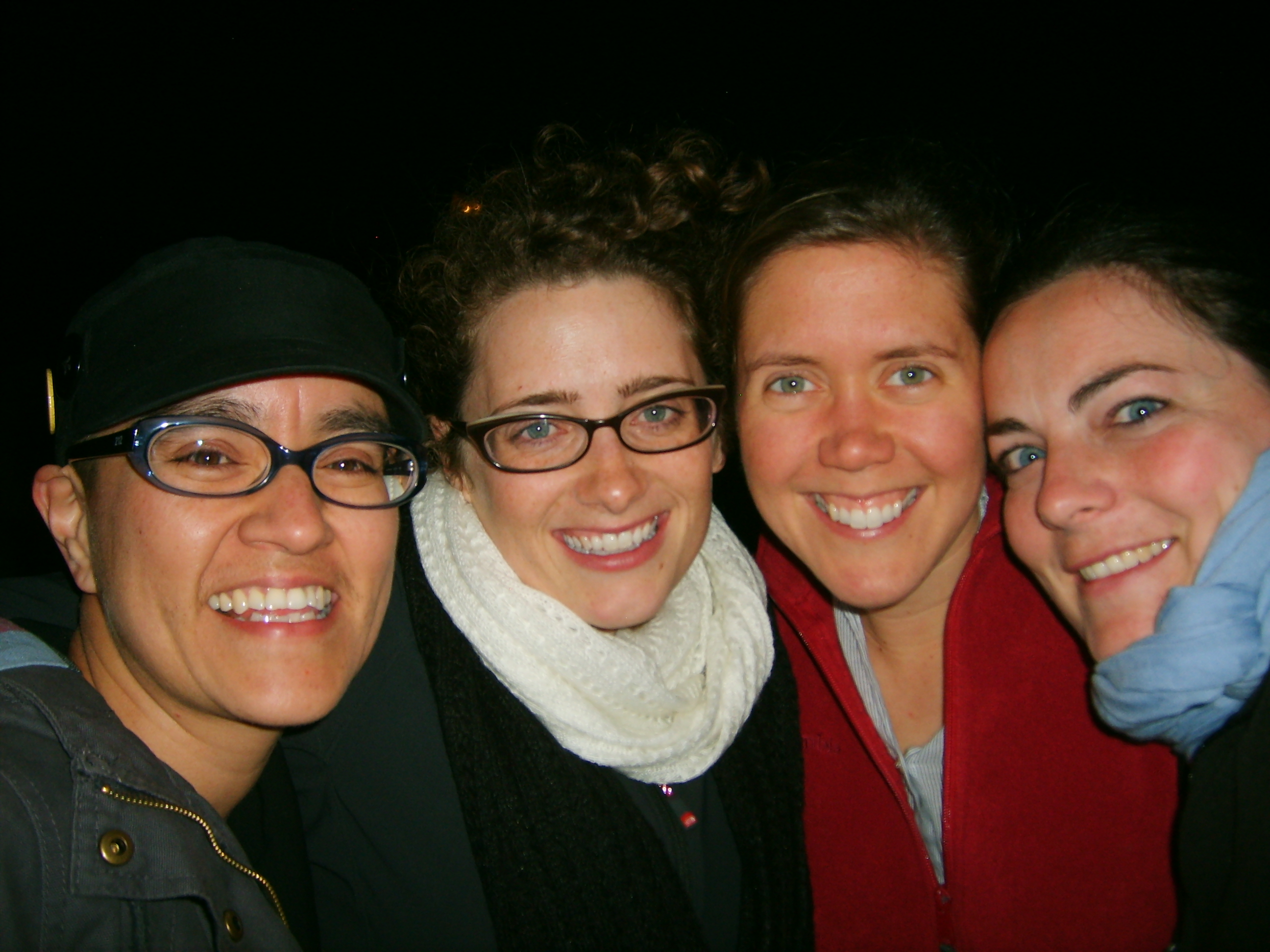
Sometimes when I write, especially when I am writing an academic paper but even when I am writing for this blog, I imagine that I am writing it to my feminist peer-group.  I am part of a group of four feminist women who have intentionally decided to stay involved in our religious traditions.  We are Unitarian Universalist, American Baptist, Presbyterian, and Disciples of Christ, and we started our peer-group in order to enCourage, support, and inspire each other as we participate in our churches with our full feminism selves. We get together regularly and we listen deeply to each other, we celebrate, we cry, we mourn, we rage, we laugh, and, of course, we eat together. On many occasions we have each expressed that we are better versions of ourselves because we are part of each others lives.

One of the reasons it is easier for me to write to my peer-group instead of my academic audience is because I know that my peer-group is invested in my empowerment, my liberation, and my continual be-coming – they understand that my well-being contributes to theirs, and vice versa. Thus, when I write for them, I do not fear; I trust that my peer-group will truly hear me and encourage me, and that when they raise questions and point out weaknesses in my writing, they do so not in an attempt to tear down my work but in order to strengthen it and build on it.

My peer-group

My peer-group, while being able to point out the blind spots and shortcomings on my work, never fail to recognize, honor, and express appreciation for my contribution as well. They hear me to speech and understand the importance of that for bringing out my academic best. Continue reading “Hearing Each Other to Speech in the Academy By Xochitl Alvizo”