This post was originally published on July 2nd, 2012…like many of Carol’s other posts, it is eerily poignant for today.
Watching the last episode of the Australian series Brides of Christ in which Catherine leaves the sisterhood of the convent because of her disagreement with Humanae Vitae brought me right back to the Yale Roman Catholic chapel and the folk mass I attended regularly. In 1968 just after the publication of Humanae Vitae, priest and co-graduate student Bob Imbelli preached a sermon on the doctrine of conscience, arguing that though it was incumbent on Catholics to think carefully about the papal encyclical on birth control, it was also the responsibility of every Catholic to follow her or his conscience on the matter. In the episode, Sister Catherine encourages a Roman Catholic mother of six who has already self-induced more than one abortion to take the pill, but the woman decides she cannot go against the church’s teachings. Catherine allows an editorial against Humanae Vitae to be published in the school newspaper even though she knows it will probably lead to the expulsion of one of her favorite students.
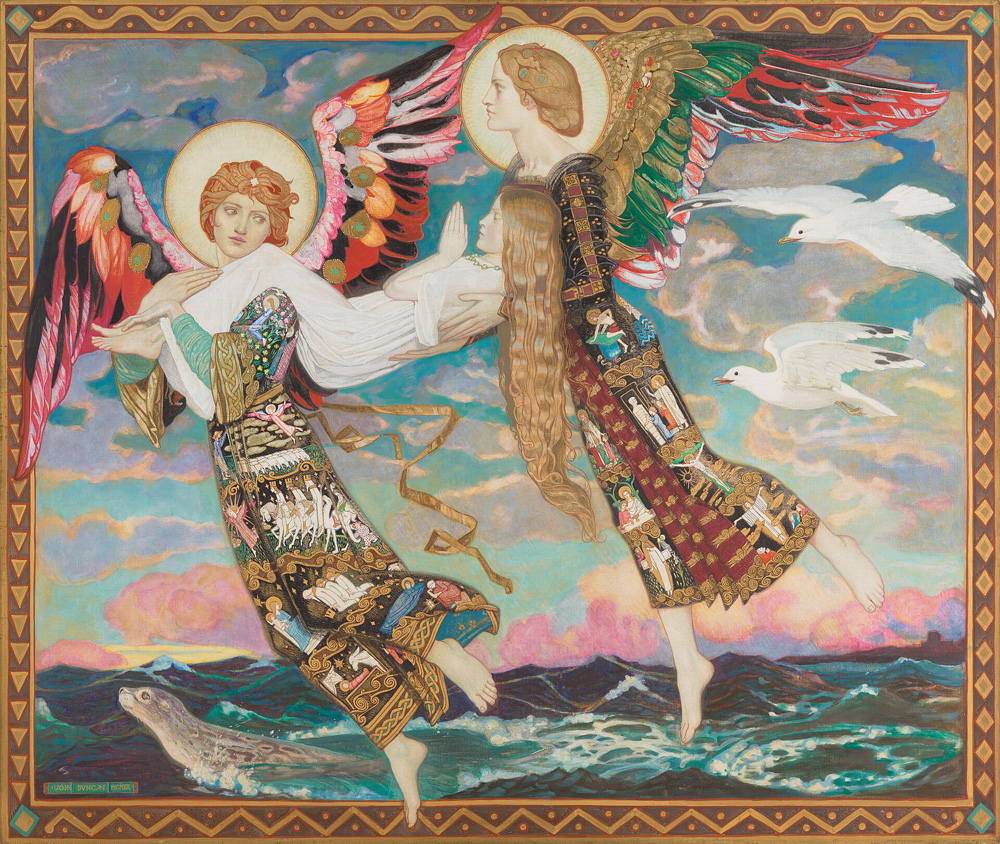
St Brigid being carried away by angels, in a painting by John Duncan (1913)
One of my favorite saints is St. Brigid of Kildare, the patroness of poetry, learning, healing and protection. She is frequently called upon during childbirth. Brigid’s hagiographies are noteworthy for her remarkable abilities to heal and perform miracles—including her ability to make pregnancies vanish, for those who ask. In Vita Prima and Vita Brigitae (Life of Saint Brigit) published around 650 C.E. by Cogitosus, an Irish monk from Kildare, it is claimed that “Saint Brigid, by the very powerful strength of her faith, blessed a woman who had fallen [pregnant]…and the conception in the woman’s womb decreased and she restored her to health…without childbirth and its pangs.” The pregnant people in Brigid’s tales turned to Brigid to help them reclaim and restore their dignity. Consequently, their abortions served as catalysts for change. “Abortion miracles” have narrative and theological functions: they expose constructs of sexuality, chastity, purity, and sin. In addition, they test our understandings of healing—physical and spiritual—by revealing the intersectionality between medicine, pregnant people, power, and personal agency. Scholars have theorized the presence of “abortion miracles” in hagiographies, and whether they are to be read as a kind of defiance towards early Christian morality, or as a demonstration of chastity’s role and value in early medieval Irish Christianity. Some Irish penitentials view medieval abortions as malefic acts or as a kind of malevolent magic; however, according to Arica Roberts (2020), it can be argued the abortion miracles found in Irish hagiography can instead be read as “medicines of penance” and as contributing to healing.
Elizabeth Cady Stanton wrote in the introduction to her book The Women’s Bible:
The Bible teaches that woman brought sin and death into the world, that she precipitated the fall of the race, that she was arraigned before the judgement seat of Heaven, tried, convicted and sentenced. Marriage for her was to be a condition of bondage, maternity, a period of suffering and anguish, and in silence and subjection, she was to play the role of a dependent on man’s bounty for all her material wants . .
We are facing the long-term results of these biblical writings. This upcoming election is so unsettling because it is showing patriarchy in all its ugliness. We see how this is being played out, especially regarding abortion, but in all areas of the functioning of women’s bodies. The reason abortion is at the foundation of it all is that the drive to police women’s bodies is the crux which justifies all sorts of cruelties. It is the same with racism. These are issues that span the pantheon of rights; human, economic, healthcare, bodily autonomy. It takes a police state to quell all of these.
Last week I participated in a panel discussion hosted by the Center for American Progress (CAP) on the intersections of faith and reproductive justice. These conversations are critically important, particularly in these political times when threats to our bodily autonomy and right of conscience are sanctioned by our current administration, Congress, and many state legislatures.
The framing of these public discussions is always interesting and somewhat troubling to me. Often progressive spaces like these do recognize that many people of faith support reproductive health care, but with that understanding is the assumption that supporting the full spectrum of reproductive healthcare, including access to safe abortion care, necessitates some kind of moral reckoning for religious people.
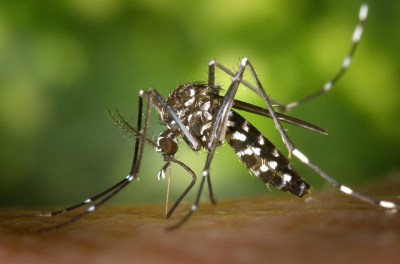
In the face of the Zika epidemic the World Health Organization (WHO) has issued new recommendations for individuals at risk of contracting the virus either through mosquito bites or through sexual contact with an infected person. If someone has traveled to an area where Zika is present, the WHO recommends abstinence or consistent condom use for at least eight weeks or up to six months if a partner shows symptoms. (Only 20% of people infected with the virus are symptomatic.) But for women of childbearing age living in areas affected by the virus, the WHO urges them to speak with their health providers about possibly delaying pregnancy, presumably indefinitely. The Zika virus has been linked to devastating birth defects including microcephaly.
After issuing the revised guidelines Nyka Alexander, spokesperson for the WHO, clarified that the purpose of them was not to discourage all at-risk couples from conceiving, but rather to ensure that they consider the Zika virus and its potential impacts on the timing of pregnancy. “Whether and when to become pregnant should be a personal choice made on the basis of information and access to affordable, quality health services,” said Alexander.
For pregnancy to be a personal choice, women and men must have access to the tools, information, and resources they need to prevent, delay, or plan it. Worldwide more than 220 million women want to avoid pregnancy but have an unmet need for reliable, safe contraceptive methods. The Zika virus has brought significant attention to what has been a public health crisis and an ethical tragedy for decades: that despite modern medical advances 85 million women experience unintended pregnancies each year. Continue reading “What Will the Faith Response to Zika Be? by Katey Zeh”
Kasich is cutting women from Ohio’s budget. In an attempt to prove himself a conservative and worthy of the title of POTUS, he has taken a step towards joining the ranks of Trump and Cruz using fear and misogyny as primary tactics.
Beginning with his defunding of Planned Parenthood in Ohio, Kasich is participating in the ongoing marginalization of women in the US based on supposed Christian values. His comment that “women are coming out of the kitchen to support me” demonstrates his inability to recognize the important role that women play in this nation. Likewise, it shows support for the ongoing notion that women belong in the home, and idea firmly entrenched in Christian dogma.
The former Catholic now Anglican presidential candidate continues to buy into the idea of complementarity, that men and women have distinct roles, a teaching Pope Francis calls “an anthropological fact.” And what does this mean? That women belong in the home, rearing children, and cooking for their husbands while men do the “important” work. Continue reading “Kasich Cuts Women by Gina Messina-Dysert”
A theology of complementarity, referred to by Pope Francis as an “anthropological fact,” has had a strong influence on American politics. According to the Vatican teaching, women and men have distinct but complementary roles, meaning that women’s value is found in the home as wife and mother and men are responsible for providing for the family. Such a teaching is highly problematic in that it demeans women’s value and places women on the underside of dualism.
As a woman with an ongoing struggle with infertility, I find it troubling that my church sees my value as less because my womb is barren. Likewise, do women have less value if they choose a career over motherhood? What if they choose not to marry? There are also clear implications for single parents, LGBTQ parents, and so on. In addition, societal norms make clear that women’s work in the home is not valued as the work of men in society. Likewise, it is damaging to men in that it refuses to acknowledge the critical role men play in the household, in the lives of their children, and their responsibilities to be partners and co-parents.
The idea of complementarity upheld by Pope Francis greatly contributes to economic injustice for women. The Vatican’s refusal to value women’s roles outside the home influences US social policy on women’s issues. The continued struggle to close the pay gap, implement paid parental leave, and create viable options for childcare and early childhood education are directly connected to complementarity. If women are supposed to remain in the home and be wives and mothers, then there is no need to address any of these issues. How can we possibly have women in leadership roles if they are supposed to be at home cooking dinner and caring for children? And so, when women do pursue careers the social attitude is that women do not belong. Such an idea is even more problematic for women of color who suffer a lower pay rate – $.64 on the dollar for African American women and $.54 for Latina women. Furthermore, many have have been forced to work outside of the home as a result of economic and racial injustice. In this secular nation, Christian values dominate our political debates and perpetuate the idea that women are subordinate to men. And to be frank, these are community issues that impact men as well as women; yet they have been deemed women’s issues as a result of the manifestation of theological teachings.
As republicans focus on defunding Planned Parenthood, ending marriage equality, protecting religious freedom, and claiming issues like parental leave are not federal issues, women continue to be relegated to second class status. In a time of turmoil and multiple threats to the progression of our nation, there is greater concern for regulating women’s bodies than guns.
Pope Francis has been praised for his commitment to the poor; yet he has been unable to make the connection between poverty and the women’s issues that exist as a result of complementarity. Likewise, the Church’s stance on reproductive justice continues to perpetuate the very issues that the pope seeks to address. As Sr. Joan Chittister points out:
I do not believe that just because you’re opposed to abortion, that that makes you pro-life. In fact, I think in many cases, your morality is deeply lacking if all you want is a child born but not a child fed, not a child educated, not a child housed. And why would I think that you don’t? Because you don’t want any tax money to go there. That’s not pro-life. That’s pro-birth. We need a much broader conversation on what the morality of pro-life is.
No doubt, his lack of relationships with women is a major contributing factor to his ignorance when it comes to such issues – by the way, which could be easily fixed by embracing women’s ordination. And so, as Pope Francis has become an international figure deemed a savior to the people, these disconnects fuel ongoing US political debates that keep women in a marginalized position and continue a cycle of poverty and oppression.
Pope Francis has called for a “Year of Mercy” in which he has stated that if a woman confesses having an abortion, she will be forgiven. Many have praised the pope for taking such a step towards healing; yet, I can’t help but think, “how judgmental and irresponsible.” Without knowing a woman’s circumstance, her decision making process, her doctor’s concerns, etc., why should one be told to repent? To deny women the right to reproductive justice is to deny women the ability to make decisions about their physical, emotional, and financial health – and we see this play out in the US as a result of the influence of complementarity in our political system. So, in this “Year of Mercy,” I wonder will the Vatican confess its sins against women, LGBTQ persons, and others it has marginalized?
Portions of this article are excerpts from If Jesus Ran for President coming from the Far Press in Spring, 2016.
Gina Messina-Dysert, Ph.D. is Assistant Professor of Religion and Gender Studies at Ursuline College and Co-founder of Feminism and Religion. She writes for The Huffington Post, has authored multiple publications and is the co-editor of the highly acclaimed Faithfully Feminist: Jewish, Christian, and Muslim Feminists on Why We Stay. Messina-Dysert is a widely sought after speaker and has presented across the US at universities, organizations, conferences and on national platforms including appearances on MSNBC, Tavis Smiley, NPR and the TEDx stage. She has also spoken at the Commission on the Status of Women at the United Nations to discuss matters impacting the lives women around the world. Messina-Dysert is active in movements to end violence against women and explores opportunities for spiritual healing. Connect with her on Twitter @FemTheologian, Facebook, and her websiteginamessinadysert.com.
Pope Francis offered many words of wisdom and discussed key issues in his address to US Bishops in Washington DC. He acknowledged the sex abuse scandal as a crime and called for bishops to be healers. He asked that bishops move beyond their own perspectives and be open to dialogue. And his personal call to act as pastors to immigrants in the US is one that we should all adhere to. However, I must ask, what about the women?
Noticeably absent from Pope Francis’ address are the many issues that are directly connected poverty and keep women suppressed in the Catholic Church. While he has addressed particular women’s issues on certain occasions, the pope’s comments have been brief and not followed with action. In addition, they do not honor the ongoing struggles women endure as a result of institutional violence that stems from Vatican teaching.
The far right is pitting God against women. Mike Huckabee’s support for the decision to deny a 10-year-old rape victim an abortion is just another example in a long history that continues this election season.
At Fox News’ Republican Presidential debate in Cleveland, Jeb Bush boasted that, informed by his faith, he “defunded planned parenthood and created a culture of life in my state.” When Megyn Kelly asked Scott Walker if he would “really let a mother die rather than have an abortion,” he refused to temper his position that there should be no exceptions to his “pro-life” position.
Ted Cruz professed “God speaks to me every day through the scriptures and this informs my position on religious liberty, life, and marriage.” And Marco Rubio argued that even in the case of rape, women should not have the ability to make choices about their pregnancies. Sadly, such proclamations ignore individual rights, freedom of religion, and the fact that faith as a guiding principle can be dangerous when the foundational teachings of social justice are ignored. Continue reading “The Politics of Being a Woman in a “Christian Nation” by Gina Messina-Dysert, Jennifer Zobair and Amy Levin”




 Kasich is cutting women from Ohio’s budget. In an attempt to prove himself a conservative and worthy of the title of POTUS, he has taken a step towards joining the ranks of Trump and Cruz using fear and misogyny as primary tactics.
 Portions of this article are excerpts from

 Feminism and Religion