Of Resistance and Risk, Community and Kin: A Thanksgiving Reflection by Beth Bartlett

Ricky DeFoe

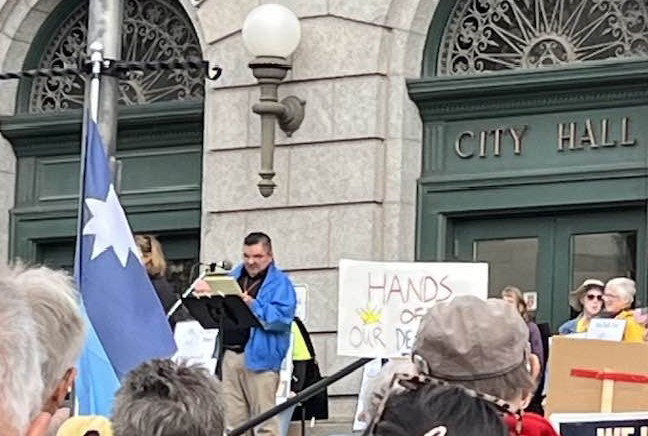
At the No Kings rally on October 18th, Anishinaabe elder Ricky DeFoe affirmed to the gathered crowd that “the natural response to oppression, ignorance, evil, and mystification is wide-awake resistance.” Such resistance, he claimed, calls for an “ethic of risk.”  I was immediately struck by his use of the term, paralleling feminist theologian Susan Welch’s A Feminist Ethic of Risk.[i]Returning home, I picked up my copy and found many of the same points DeFoe had articulated.[ii] Both asserted that an ethic of risk recognizes that “to stop resisting, even when success is unimaginable, is to die,” and by this they meant not only the threat of physical death, but also “the death of the imagination, the death of the ability to care.”[iii]

Continue reading “Of Resistance and Risk, Community and Kin: A Thanksgiving Reflection by Beth Bartlett”

Three Women by Beth Bartlett

In the first ten days of the Trump administration, when his sycophants are purring and praising, private corporate execs are rolling over and doing his bidding, and even many of his opponents in Congress have been somewhat muted in their response to his actions, three women – Phyllis Fong, Judge Loren AliKhan, and Bishop Mariann Edgar Budde — have been audacious in their visible and vocal resistance.

Phyllis Fong

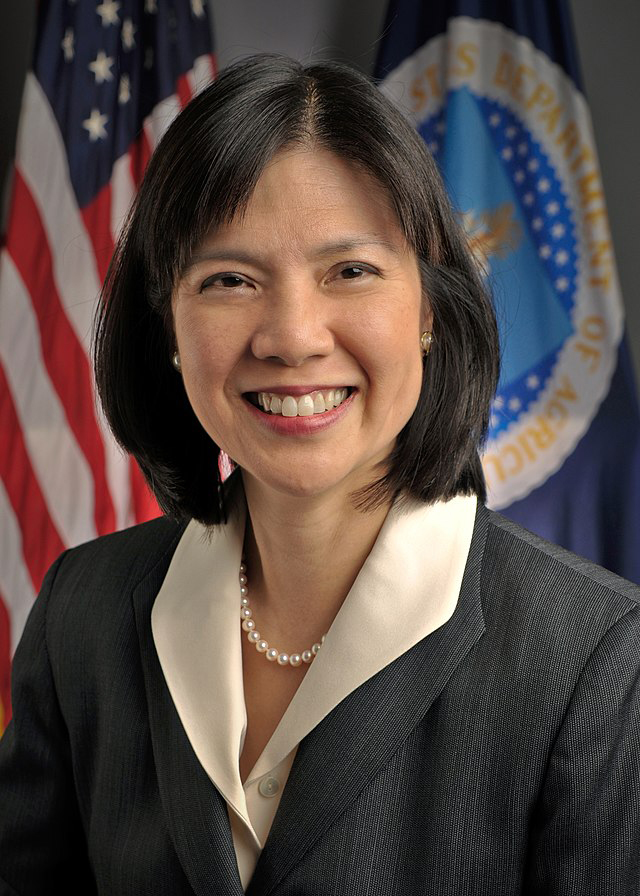
On Friday, January 24th, just four days after taking office, Trump fired seventeen Inspector Generals, the federal watchdogs over government agencies.  Among these was Phyllis Fong, the Inspector General of the US Department of Agriculture.  But Ms. Fong refused the firing, citing the position of the Council of the Inspectors General on Integrity and Efficiency that these firings “’did not comply with the requirements set out in law and therefore are ineffective at this time.’”[i]  Having served in the USDA for twenty-two years under four presidents, she returned defiantly to her office on Monday morning, only to be escorted out by federal security agents. 

Continue reading “Three Women by Beth Bartlett”

Resistance Checklist: Do It Loud. Do It Quiet by Karen Tate

Despite what you’re hearing out there, because it’s outdated information just being repeated in the echo chamber, Trump did not win by a landslide.  He has no legitimate mandate.  As of this writing one percentage point of the population separates how many votes each candidate got in this election and counting has not finished.

Many of us might still be recovering from the election disappointment and we’re trying to find our way forward.  Consider this:

“Many of us have been brought up on stories of praying to God the Father to save us, waiting for our prince to come, submitting to the greater wisdom of our husband or priest to guide us. We need to move from this way of being, into our own agency. But we must also recognise that we cannot do it all, nor do it alone, in the martyr mother myth so many of us have learned to embody.
This is not the time for being nice, biting our tongues or not rocking the boat. And yet these are also not times for making enemies or picking fights. Can we find other ways of engaging and challenging, visioning and contributing to transformation? What might these look like?” From Weaving Our Way Beyond Patriarchy – a compendium of over 80 women’s voices, launching today exclusively from Womancraft Publishing. com

Continue reading “Resistance Checklist: Do It Loud. Do It Quiet by Karen Tate”

Legacy of Carol P. Christ: Body, Nature, Ancestors

This was originally posted on January 23, 2012

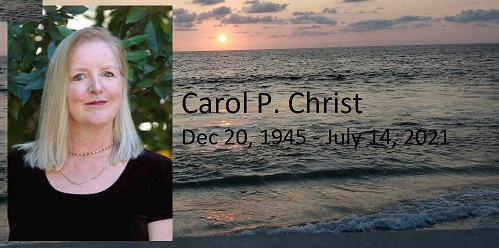
Some years ago, womanist theologian Karen Baker–Fletcher asked about ancestors following a lecture I gave on the body and nature.  I have since come to realize that ancestors are a missing link between the two:  we cannot speak adequately of embodiment and interdependence in the web of life without recognizing the ancestors whose lives made ours possible.  Our mothers quite literally gave us our bodies.  All of our ancestors gave us their genes.  Care and callousness with origins going back longer than conscious memory was imprinted on the psyches of our parents and grandparents and transmitted to us.  All of our ancestors give us connections to place.  While many black people in America can recite oral histories that begin with slavery in the United States, I come from a family where stories of origin for the most part were not valued or told.  Both of my father’s parents lost their fathers when they were very young, and my father, who was raised Catholic at a time when Catholics were discriminated against, preferred to think of our family as “American now.”  Like the hero of the film Lost in America, most members of my family dreamed of “melting right into that pot.” In the process we lost stories we need to help us to understand ourselves and the complex realities that “becoming American” involved.

Continue reading “Legacy of Carol P. Christ: Body, Nature, Ancestors”

From the Archives: Resistance and the Religious Left by Gina Messina

This was originally posted on June 21, 2017, you can read the original comments here.

For the last forty years, the Christian Right has influenced the conversation in American politics. Where is the Religious Left and how are they impacting our nation’s moral agenda? It is an important question, and now, more than ever, we need a progressive religious viewpoint in the conversation.

We are living in an era where the morality of our society is at stake and the soul of our nation is being bought by billionaires who have an insatiable appetite for money, power, and control. With an alt-right movement growing and nationalism becoming the Trump Administration theme, we are in danger of losing our humanity.

It is time for a serious response to the Christian Right. Why must we associate Christianity with bigoted policies? This ongoing movement has dominated our nation’s political agenda and led to the idea that you are either religious and conservative or liberal and atheist. Don’t get me wrong, every person’s belief system is their own and should not be judged.  However, studies well demonstrate that many Americans are walking away from religion all together because of the Christian Right’s political influence. It is time that Christianity be recognized as more than a conservative movement seeking to highjack policies and victimize the disenfranchised.

The true message of Jesus is founded on love, inclusion, liberation, and social justice. No Christian Right position resembles this. In fact, they are in direct conflict. Rather than focusing on condemning those who are deemed “the other,” why not focus on caring for the poor, welcoming the stranger, and healing the sick?

Likewise, conservative Christian stances have been historically anti-feminist and anti-woman. Those clinging to such beliefs would rather elect a president that has openly discussed grabbing women by the “pussy” than risk giving up privilege.

As the Women’s March has challenged Trump and his policies on gender, an anti-feminist backlash has strengthened with Evangelical women arguing that feminists have created their own oppression by whining rather than taking responsibilities for themselves.

The Christian Right would be surprised to find out that Jesus’ politics and teachings mirror the values of feminism – calling for an end to all oppression and creating a society that is just and fair for every person regardless of gender, race, ethnicity, age, religion, etc. Jesus welcomed women to his community and women played a critical role in his ministry.  Jesus not only had women disciplines; but also selected women as prominent recipients of his revelation. Most notably, Jesus chose women as the first witnesses of his resurrection. And while the apostles did not believe Mary Magdalene’s testimony, nevertheless, she persisted.

It is time not only for a resistance but a religious resistance where those who try to abide by the message of Jesus stand up to the Christian Right.  I acknowledge that no one is a perfect Christian; we all fail. But what is important is that we recognize the message of the Gospels and keep trying. Thus, we must reject the oppressive regime of the Trump Administration and the bigoted claims of the Christian Right. We must reclaim the Christian faith in its true form and live out its message the way it was intended.

We are living in a difficult time, but let us claim this moment to energize and unify the Religious Left. In the name of the Lord, let us challenge those who manipulate the Christian message as means to claim power and privilege while oppressing everyone else. It is time to make humanity great again.

Join the Resistance by Mary Sharratt

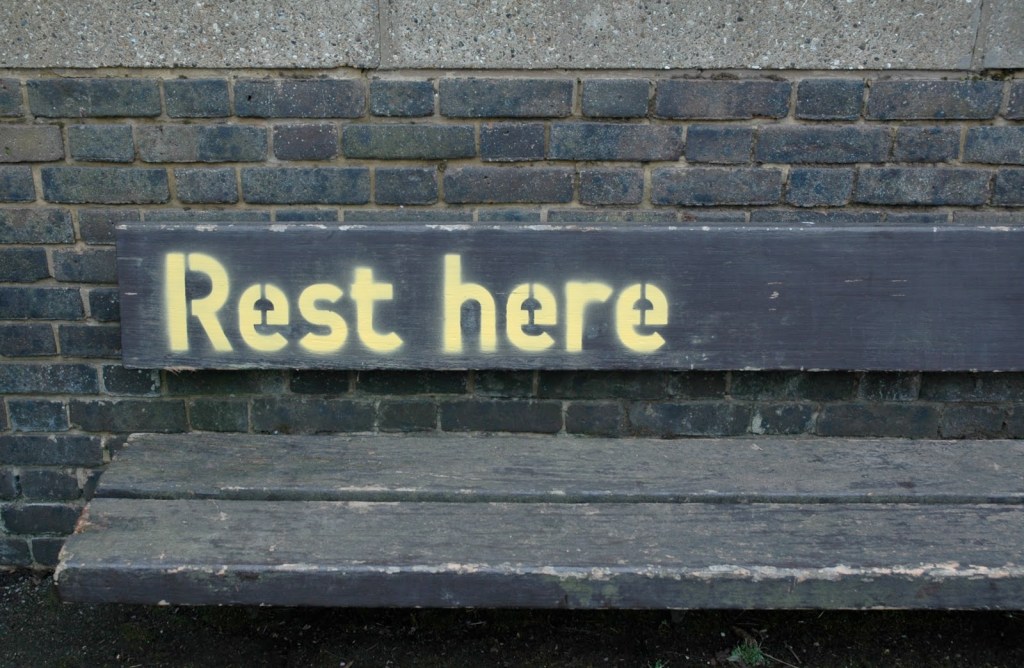
“Rest is resistance,” journalist Cassady Rosenblum wrote in her recent essay in the New York Times , entitled “Work is a False Idol.”

This statement completely undermines our American work ethic that elevates productivity to the highest altar. Rosenblum, a journalist who left a high stress job, wrote lyrically of the happiness she discovered just sitting on her parents’ porch in West Virginia. Some of her readers were up in arms—how dare she hang out on a porch when she could be working? Who does she think she is? Rosenblum received such a bashing in the comments section, you’d think she was Marie Antoinette torturing puppies.

Rest is a four-letter word, as un-American as Communists were in the 1950s. If you want to provoke the rage of strangers on the internet, publicly praise the joys of taking a sabbatical.

Continue reading “Join the Resistance by Mary Sharratt”

TikTok, the Pandemic platform for community, resistance, and activism by Anjeanette LeBoeuf

AnjeanetteIt’s July which means we have collectively endured 7 months of uncertainty, turmoil, darkness, and light. America, we are still battling all aspects of the virus: rising numbers of infected, those that deny its existence, those refusing to wear masks to help to stop the spread, and everyone else doing their duty by staying at home, washing their hands, and wearing masks. Yet, something else has added to the mix and the COVID19 pandemic; social media. Social media has taken on a whole new level for activism and resistance.
Continue reading “TikTok, the Pandemic platform for community, resistance, and activism by Anjeanette LeBoeuf”

Photo Essay–Long Beach, California by Marie Cartier

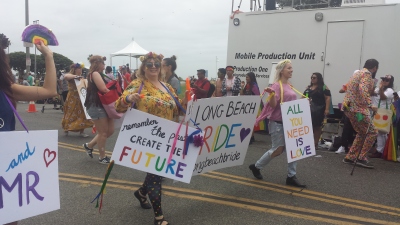
Long Beach Pride 2019
50 YEARS OF PRIDE CELEBRATING
THE STONEWALL REBELLION of 1969!
**All photos by: Marie Cartier**
See the photo essay from last year’s Pride week-end here.
And the photo essay from Pride 2017 here.

Continue reading “Photo Essay–Long Beach, California by Marie Cartier”

Long Beach, California – 2018 Pride! by Marie Cartier

Photos by the author unless otherwise indicated

Last year I published a photo essay with pictures of Long Beach, CA’s Pride week-end. You can see last year’s photo essay here. I also published a photo essay of the Los Angeles Resist March from last year here.

It feels more important than ever to re-member/ re-attach ourselves to the normality of resistance, freedom, solidarity, courage and joy. I hope the pictures here help you FAR family to re-member your activist selves and re-invigorate them if they are in need of it. I know mine was before the past week-end. Here are photos from the Long Beach Dyke March on Friday night, and the Long Beach Gay Pride parade on Sunday morning.

Continue reading “Long Beach, California – 2018 Pride! by Marie Cartier”

Freedom and Speech by Sara Frykenberg

Feminist theories and theo/alogies are often concerned with voice, naming and re-membering. Many feminists do this work, again and again, because of persistent silence and silencing, invisibility, erasure of stories, desires, religions and ways of being, because of missing histories, and a dominating culture’s inability and unwillingness to hear those they marginalize. We “hear each other into speech,” to counteract and recreate, to find power in ourselves and with those whom we share common cause.

We hear each other into ….speech.

Speech is treated as a sacred thing; and certainly, I hold the stories and voices of those with whom I’ve shared parts of my own feminist journey very sacred. I find the ability ‘to voice’ sacred. But I am also aware that as a citizen of the United States, “speech” or more specifically, “freedom of speech,” is sacralized as a part of my national mythology.

It is an implicit myth: all one needs to do is utter the word “speech” in the United States to conjure images of protest, civil rights, the free press, revolution, etc. There are many heroes in this mythology, most of whom “spoke truth to power,” rebuffing domination for the “common good.” The ‘free speaker,’ is often cast as the subjugated “everyman” (sic) whose autonomy and purpose drive society towards greater freedom. “He” and “his” subjugation, real or “alternative fact,” are then made to serve the larger myth of the American Dream. There is a major problem here: “the American Dream” is about freedom and independence for the white, Western male. So is it any wonder, then, that the myths surrounding “freedom of speech,” are so easily turned around to villianize those who might challenge this hegemonic power? Continue reading “Freedom and Speech by Sara Frykenberg”