Governor Cuomo and How Far We Have Not Come by Janet MaiKa’i Rudolph

Once again, I find myself writing about a man in power getting caught abusing women. It turns my stomach. The ink is barely dry on my blogpost about Bill Cosby. This time it’s Andrew Cuomo, the governor of my state, New York.

The title for this blogpost came from a comment made by news anchor, Nicolle Wallace as she was hosting a discussion of men behaving badly. The history of holding powerful men to account is a slim one at best. When I think about the Bill Cosby case, I realize that the laws are working as they were designed to – to protect men. We still have an ex-President who hasn’t been called to account for anything. We have two Supreme Court justices who are credibly accused of abuse. And they have achieved the pinnacles of power, for life. There are just too many instances of abusers rising to power for it be accidental.

And if by some happenstance, a powerful man is called to account, the work and the time involved are staggering. As I write this, New Yorkers are discussing how to remove Andrew Cuomo from the governorship. Whether he is impeached or resigns, that is just baseline accountability. There is also talk about criminal prosecution. Go Letitia James (the NY Attorney General)! Still, I will believe that when I see it. Cuomo has been our governor for over 10 years. Those of us living in New York, have long been aware that Cuomo isn’t just a bully but a long-time abuser. But then so were Bill Cosby and Harvey Weinstein. In fact, their crimes went on so long that statues of limitations ran out in many cases. 

Continue reading “Governor Cuomo and How Far We Have Not Come by Janet MaiKa’i Rudolph”

Why Men (and Women) Can’t Have It All by John Erickson

Can women have it all? Possibly. Can men ever have it all? Maybe. Regardless of however we put it, the are ills to every good deed in the world and we need to get back to understanding how and why we use each other in order to fully understand that behind every good man might be a good woman but also behind every good women there might also be a good man.

Growing up, my favorite movie was The Associate staring Whoopi Goldberg as a woman at a Wall Street firm attempting to climb her way up the corporate ladder through hard work and dedication.  Her character Laurel Ayres does all the work and comes up with the ideas that clients eventually invest in, her partner Frank takes all the credit and eventually surpasses her at work by getting the promotion she had been vying for.  In a prodigious scene that I still vividly remember from my childhood, Laurel quits her job and starts an investment firm on her own; betting every cent and piece of property she has on the eventual success of her new business adventure.

In an attempt to break through the proverbial glass ceiling and play with the big boys of Wall Street, Laurel eventually discovers that although she can be (and is) the genius behind many of the great ideas that would save companies millions, she still needs to have her ideas expelled by a man she creates in order to win over clients, which eventually leads her to become successful.  However, while Laurel is reaping in the benefits of having Mr. Cutty, her made up business partner, by her side, she eventually learns that no matter what she does she will always be secondary to her male business partner. Continue reading “Why Men (and Women) Can’t Have It All by John Erickson”

On Being a Gay Male Theologian During the War on Women by Dirk von der Horst

For some time, a prominent strand of gay and feminist theory and theology has taken it almost as axiomatic that gay men, lesbians, and straight women have a common stake in dismantling patriarchy.  While I have always understood my own work as a gay theologian in terms of that common struggle, recent developments point to a significant challenge to keeping that bond intact in the larger sphere of political activism.

At the end of last year, National Public Radio deemed 2011 an extraordinary year for gay rights.    Buzzfeed listed 40 reasons why it was the best year for gays ever, beginning with a Gallup poll showing that for the first time a majority of Americans supported same-sex marriage.  The list also included the repeal of Don’t Ask Don’t Tell and several firsts for openly gay elected officials.  Even the world of professional sports is becoming more accepting: in a recent tweet, Ravens’ linebacker Brendon Ayanbadejo equated support for same-sex marriage with playing in a Super Bowl when asked about his life’s greatest accomplishments.

Simultaneously, we saw a steady legislative assault on women’s reproductive freedom.   Continue reading “On Being a Gay Male Theologian During the War on Women by Dirk von der Horst”

A Next Wave of Scholarship By Kwok Pui Lan

I came to the United States in 1984 to begin my doctoral studies at Harvard Divinity School. It was an exciting time to do feminist theology and religious studies. Womanist ethics just began to emerge, as Dr. Katie Geneva Cannon has just completed a dissertation on the subject at Union Theological Seminary in 1983. I count it as a blessing that she was teaching at the Episcopal Divinity School, just on the other side of the Cambridge Common.

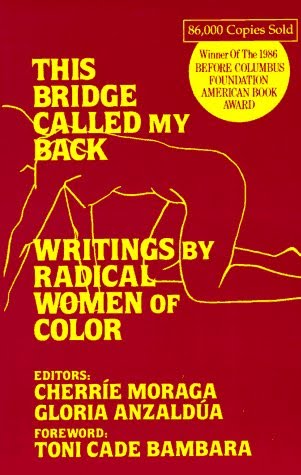
The mid-1980s saw the paradigm shifts in feminist studies in religion, as womanist, mujerista/Latina, Asian and Asian American women began to articulate their own theological understanding. If Womanspirit Rising (1979) was a reference text for our field, which contained essays by white women, we had the first reader by radical women of color, This Bridge Called Our Back(1981).

We began to discuss multiple oppressions and multiple identities, and the need to integrate race, class, and gender into our analyses. We challenged white women who have universalized their middle-class, white experience as if women were all the same. Continue reading “A Next Wave of Scholarship By Kwok Pui Lan”