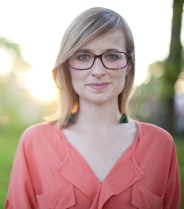
Sustaining Feminist Spiritualities in the Seeming Absence of Community by Elisabeth Schilling

LaChelle Schilling, Sustaining Feminist SpiritualitiesThe spirituality I cultivated during my teens through evangelistic Pentecostal Christianity was based on possession, hierarchy, and exclusivity, although I would not have said that at the time.

As I gradually moved away from that faith community in my mid-20s, no longer wanting to equate a rewarded closeness to God with being set apart from others, I began finding myself participating in quiet conversations with the readings of Thomas Merton, Elaine Pagels, and with poetry by writers such as Olga Broumas.  The words I was drawn to might not have been expressly or consistently religious, but they offered spiritual nourishment in their eroticism, earthiness, and sacred metaphor.

It was also around that time when I decided that feminist theologies were healing in their questions and re-visions of God and concepts of salvation and sin. To understand that being a spiritual and/or religious person could mean being aware of and pursuing my desires and connections to other people instead of being a gatekeeper was redemptive. Continue reading “Sustaining Feminist Spiritualities in the Seeming Absence of Community by Elisabeth Schilling”

This is Why I Don’t Pray by Erin Lane

Like most Americans, I hold the overblown belief that a book about my life would be worth reading.  And, like most Americans, I have had the gumption to title it before I’ve even lifted a finger. It’s called “Should I Be Praying Now?”

Erin LaneAs if you’re surprised, it has an obnoxious subtitle that helps marketers at Barnes & Noble know whether to put it on the Christian living shelf with the likes of Beth Moore or drop it behind the David Sedaris memoir with the naked barbie on the cover. It will read, “Moments of indecision during mealtime, bedtime, teeth-brushing, love-making, test-taking, baptisms, funerals, and the opening few minutes of small group.” It’ll be like Anne Lamott’s “doesn’t that make you feel better about  your own spiritual life” kind of writing but more pedestrian. Continue reading “This is Why I Don’t Pray by Erin Lane”

How a Woman Became a Goddess: Athena by Laura Loomis

A large part of my fascination with Goddesses has to do with images of female power in cultures that were (and are) overtly patriarchal.  Power has a tricky balance:  when it’s being abused, the struggle is to find a way to overcome the oppressor without becoming one yourself.  But to paraphrase Erica Jong, the best oppressors don’t beat you – they get you to beat yourself.  I have been thinking about this as I watch Democrats hand power over to Republicans ever since coming back into control of the government.

Which brings me to Athena.

Athena may have had her origins as a Cretan or North African mother Goddess.  But by classical times in Greece, she was firmly established as the virgin Goddess of wisdom, household crafts, and war and peace.  It’s said that Zeus, like his father and grandfather before him, feared that his child would be more powerful than himself.  So when Metis was pregnant with Athena, he challenged her to a shape-shifting contest.  She took the form of a fly, and Zeus swallowed her.  (I don’t know why he swallowed that fly…)   Continue reading “How a Woman Became a Goddess: Athena by Laura Loomis”

AN ALTAR WITHOUT GOD? A “PLACE” FOR THE SACRED by Sara Frykenberg

The altar was not for particular spirits, but honored all the ‘spirits’ we brought with us to share: the spirits of the women and men in our stories, the memories imbedded in the items we gathered together and the spirit of every person present in the class that day.

Last week my students and I created a non-religious altar to conclude our class, Women, Religion and Spirituality.  We read about different feminist spiritual traditions in which women created altars to honor their ancestors, spirits or deities; and I thought it might be fun to practice our own form of literal physical creation.  I asked students to bring in inspiring items, pictures of people who’d helped them to grow or anything that honored what they considered sacred in their lives.  I also asked them to bring food to share, as no altar seems complete without food of some kind.  However, asking my students to participate in a course ritual, I also felt it was important to respect their very different beliefs… which resultantly, left me wondering how we would create an altar without God.

My religious experience taught me that altars were a place to surrender gifts in return for a greater gift of God’s blessing or love.  The church I attended as a child did have a literal, physical altar; but this raised table was only used monthly to present the communion bread and grape juice before it was passed through the pews.  Otherwise, I came to understand, one’s heart was the altar and we needed to present our sacrifices there.  Financial gifts needed to come from the heart, then put into the offering plate.  Gifts of time or action had to start in the heart, even when required by the youth group or spiritual authority; and resistance to giving these gifts also required sacrifice.  My resistance or lack of desire to sacrifice required that I leave my unwillingness at the altar so that I might become appropriately grateful.

At some point I started leaving too much at the altar; and like Abraham’s Daughter I said enough is enough.  I recognized myself in the sisters and brothers lying under the sacrificial sword, and I took back my heart.  My heart, I realized, hadn’t been the altar; it had been the offering and sacrifice. Continue reading “AN ALTAR WITHOUT GOD? A “PLACE” FOR THE SACRED by Sara Frykenberg”

Reflections on My Spiritual Journey: Claiming Judaism By Ivy Helman

“Is Ivy Helman Jewish?”   This question and knowing that eventually I’d have to respond one way or another to it has caused me many sleepless nights.  At the same time my faith journey has become integral to who I am and I would like to spend some time today sharing it with you.

Why share this and why now?  Well, first, I have not been ready until now.  In addition, external forces which I will talk about in a minute are making my spiritual path an issue.  So I share my story with a measure of concern about its possible effects but also with a great deal of joy about the ways in which my faith journey has challenged me to grow, reflect and change.

Margaret Farley emailed me about two weeks ago asking me how I identified religiously.  Someone had emailed her asking if I was Jewish because this person had read one of my past blogs in which I wrote “my rabbi” on feminismandreligion.com.  This same person is reviewing my book: Women and the Vatican: An Exploration of Official Documents.   Here is how I answered Margaret: “Hi Margaret, I’m Catholic although I do attend services at a Jewish synagogue on occasion since I was raised in essentially a multi-faith home.  On that blog, there really is no Jewish voice, so I try to comment on ideas from that tradition as much as I can.  Ivy.”  I felt unauthentic sending that email.  But, I did.

Still troubled by that answer and rather than put my friends and colleagues in the middle of questions about my faith, I feel that this has now become a public issue that I must address.  It is a question I have known I would have to answer at some point.  Nevertheless, this is not a decision that came easily or quickly.  I’ve literally agonized over it now for months.  During the time, I’ve never questioned my resolve to be Jewish and to continue to follow that spiritual journey in my life; I’ve worried more about how other people will respond and how their responses will affect my career in academia.   If I were allowed to rewrite that email to Margaret, then this is what I would say. Continue reading “Reflections on My Spiritual Journey: Claiming Judaism By Ivy Helman”

Why (I) Work? The Difference Between A House Wife and Being Unemployed By Sara Frykenberg

The following is a guest post written by Sara Frykenberg, Ph.D., independent scholar and graduate of theWomen Studies in Religion program at Claremont Graduate University.

Ever since I graduated I have been keenly aware of the fact that am no longer a student who is “not working right now,” but am in fact, unemployed.  I do not have a job and have accumulated countless hours, applications and my fair share of rejection letters to attest to this fact.  However, something else has changed in my life this year: I also became a wife and gained a husband… and in between my job searches, while I am cleaning the house, planning meals and working on a GARDEN (which is thriving by the way, despite my previous occupation as a serial plant-killer), I’ve found myself considering, “Am I unemployed or am I a housewife?”

I ask myself this question, as I water the money tree next to my desk: a graduation gift from a friend.  *Am I imagining things or did it slightly quiver when I thought about getting an (outside) job* 

Planti-cide aside, the more I have considered this question, the more of a spiritual issue and a feminist issue its has become for me.  How do I find a balance between my sincere belief that the choice to be a homemaker is a beautiful one, and the feelings of shame or worthlessness I sometimes struggle with because I have not found a “real job.”  I find myself listing all of the things I have accomplished in the house each day to my husband when he gets home, as though I have to justify my existence or earn the grocery money I no longer have in my own bank account. Continue reading “Why (I) Work? The Difference Between A House Wife and Being Unemployed By Sara Frykenberg”