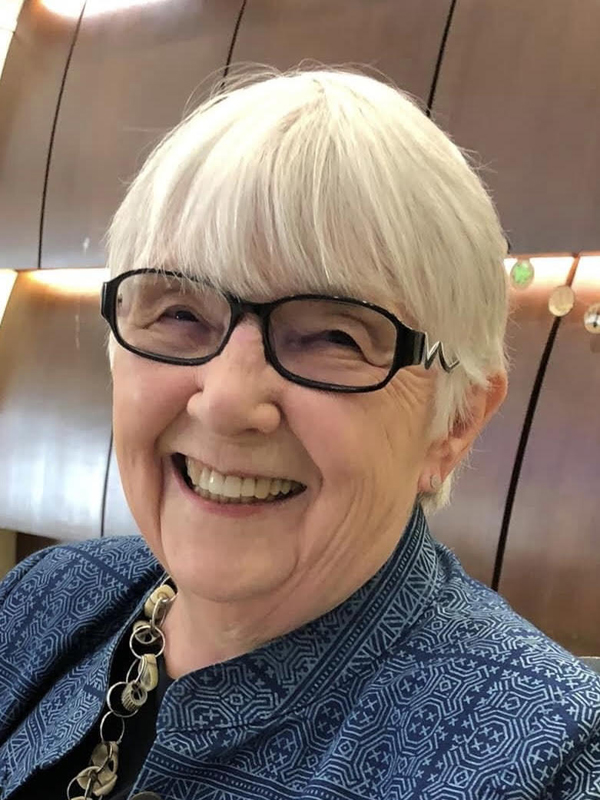
Women’s Rights: How Far Back in Time Will our Legal System Go? by Janet Maika’i Rudolph

Wikimedia Commons

I was in the process of writing this blogpost last week when the Arizona supreme court decided to turn abortion rights back to the civil war era (1864). This was a time when women had no rights at all and abortion from conception was illegal. But civil war era laws are downright quaint and modern compared the legal underpinnings of the supreme court’s Dobbs decision.  

In his decision, Mr. Alito cited four “great” and “eminent” legal authorities, Henry de Bracton, Edward Coke, Matthew Hale, and William Blackstone. For perspective here are their dates. 

Henry de Bracton  c. 1210 – c. 1268
Edward Coke 1552 – 1634
Mathew Hale 1609-1676
William Blackstone 1723 –1780

To help me understand Alito’s logic, I read up on some conservative commentary. Here is what I learned: When the founding fathers needed to create legal documents, they didn’t create them out of thin air. They relied on the logic of the four men (and others) listed above. Yes, they did pick some enlightened aspects of these thinkers of the time, esp. in regard to the rights of the common people in relation to royalty. The thought of commoners having rights was revolutionary in its day. But as we have learned so painfully, our founding fathers limited who those rights applied to. They did not take into consideration the rights of anyone other than landowners, which at the time meant white men.

Continue reading “Women’s Rights: How Far Back in Time Will our Legal System Go? by Janet Maika’i Rudolph”


Archives from the FAR Founders: A Time for Organized Rage by Gina Messina

This was originally posted on October 20, 2018. This is part of a project to highlight the work of the four women who founded FAR: Xochitl Alivizo, Caroline Kline, Gina Messina, and Cynthia Garrity-Bond

With the recent confirmation of Brett Kavanaugh and the torturous treatment of Christine Blasey Ford, we are reminded that we continue to live in a rape culture and very often, Christianity — and religion in general — is used as means to perpetrate misogyny and control the lives of women.

While there were many moments of the Kavanaugh hearing that made me gasp, one in particular was when Senator Kennedy asked the now Supreme Court Justice if he believes in God. Kennedy used Kavanaugh’s Catholic faith as the basis to vote in his favor. Rather than using his time to explore critical information revealed through testimony and investigative reports, Kennedy decided that God should be the focus of his questions and that Kavanaugh’s affirmative response meant that he did not assault Ford. 

Continue reading “Archives from the FAR Founders: A Time for Organized Rage by Gina Messina”

Who Gets to Define What it Means to be Pro-Life? by Janet Maika’i Rudolph

The sky and sun on June 7th in the afternoon on Long Island.

Today I am coughing and choking here on Long Island because of our unhealthy air quality.  The smoke from the wildfires of Canada have reached us. We, here in NY, are not alone in dealing with air so polluted that breathing is at risk. I think of the CA wildfires, the SpaceX rocket that exploded in April, the Ohio train derailment in Feb. No place is safe.

While coughing and thinking about this, two bits of news came into my consciousness, The first was the Supreme Court ruling narrowing the scope of the Clean Water Act.

My first thought was, do they and their children not have to live in this world too?  Do they think they can buy a clean environment for themselves and their families and the rest of us be damned? 

The next report I heard was from a prominent conservative commentator who explained how “prolife” he is and went on to describe his “deep concern” for life.

Continue reading “Who Gets to Define What it Means to be Pro-Life? by Janet Maika’i Rudolph”

Hear Me! Redux by Winifred Nathan

She Said; He Said 
And How 
She won! He lost!

On May 9, 2023, in New York Supreme Court, “she said,” won. E. Jean Carroll was awarded a judgment of five million dollars in compensatory damages in her defamation and sexual abuse case against former President Donald Trump. YES, she won! He lost!  

How did this happen?

The starting point is looking to a New York state change in its law regarding sexual assault. The assault took place in early 1969. Like many women, Ms. Carroll didn’t seek immediate legal help. She waited until 2019 to file a suit. Her explanation: at her trial, she opined, “I was born in 1943. Women like me were taught and trained to keep our chins up and not to complain.”

In November 2019, E. Jean Carroll did bring her first lawsuit against Donald Trump, which grew from his remarks when she accused him of sexual abuse. The suit was, however, limited to defamation. (Applicable statutes of limitation precluded any potential criminal action for sexual assault.) The Justice Department appealed the case. 

Continue reading “Hear Me! Redux by Winifred Nathan”

May Her Memory Be A Revolution by Anjeanette LeBoeuf

On the eve of the Jewish Sabbath and the start of Rosh Hashanah, Supreme Court Justice Ruth Bader Ginsburg breathed her last breath. She was 87. She fought so hard for so long. She is an American patriot, hero, champion for women’s rights, and for many she was the stalwart bastion of justice and ‘liberal’ rulings. She was a Supreme Court Justice for 27 years. Her life has been put into books, a movie, and the most notorious memes around. She became known for elaborate collars over her Justice robes. We mourn the lost of her, we celebrate her memory, and we must pull up our boots and continue the fight.

Continue reading “May Her Memory Be A Revolution by Anjeanette LeBoeuf”