Moderator’s Note: This post has been brought to you in cooperation with the NCRI women’s committee. NCRI stands for the National Council of Resistance of Iran. You can learn more information as well as see this original article by clicking this link. A description of their Council can be found at the end of this post.
Women Are Killed in Iran with Complete Impunity
November 2025 Report: Under the Clerical Regime, Nowhere Is Safe for Women in Iran
Under the rule of Iran’s misogynistic clerical regime, Iranian women, from childhood to old age, are unsafe in all spaces and circumstances. If they manage to escape the brutality of security forces in the streets, they may still fall victim in their homes to so-called “honor suspicions,” resisting forced marriage, requesting a divorce, or even attempting to defend their own rights. Many of these killings take place in front of children or other family members, feeding a cycle of violence across generations. Among the victims are pregnant women or mothers killed alongside their children.
Beatings and torture of women in prisons, firing pellets into the eyes of protesting women, sexual assault in detention centers, and the attacks by morality police patrols enforcing compulsory hijab in public all legitimize and encourage violence against women inside the home and within families.
The other day when Paula McGee asked on this blog how Penn State students could rally in support of Sandusky, I was also reading a student paper quoting Rianne Eisler’s opinion that peace and environmental justice cannot be achieved in dominator cultures. Xochitl Alvizo commented that we should not be surprised by the reactions of the students as we live in a “rape” culture. I would add that we must examine the culture of male domination through force that is “football,” one of the “sacred cows” of American patriarchy, just as we need to examine the culture of hierarchical male domination of the Vatican in the context of child-rape by priests.
When I was in my twenties and in therapy I had a recurrent dream in whicha strange man was chasing me and caught up with me and started to strangle me and I could not scream. I was asked to act this dream out by my therapist, who told me that this time I would scream. I could not. She got up and came over and put her hands around my neck and started to squeeze. I still could not scream.
Two decades later I had a dream in which I was a baby and suffocating in my crib. I asked my current therapist if she thought someone had tried to suffocate me when I was an infant. Her answer was simple: “There is no need to think about this happening when you were an infant. You have been silenced all your life.”
When I was a child, my father used to punish us by taking off his belt, sitting down, asking us to pull down our pants and lie across his lap, and then lashing our bare bottoms with his belt. This was typical child-rearing practice in the 1950s and 1960s. Rita Nakashima Brock was the first to name it for me as child abuse. Nonetheless, when we got older, my brother and I preferred to be spanked, rather than to have our 25 cents a week allowance taken away from us. At least, we thought, being spanked was over in a minute, while losing your allowance was something you would suffer for a long time.
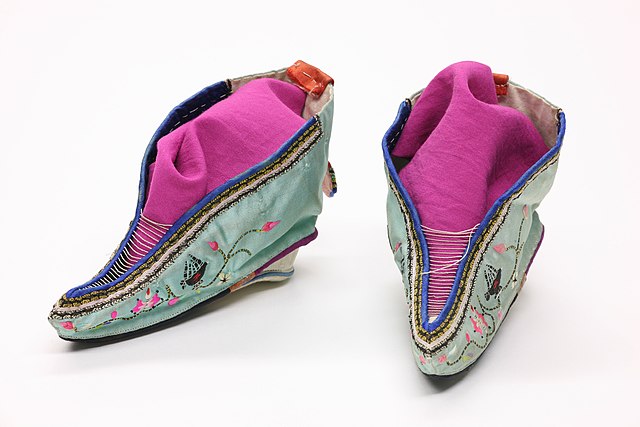
My husband, Marty, is a retired podiatrist. He worked in pockets of New York City that were poor and largely immigrant. When he first started his practice, he treated women from China whose feet had been bound. Despite being officially outlawed 1912, footbinding was still being practiced well into modern times. He saw these patients in the 1970s and 80s.
For those who don’t know what it is, young girls, as young as 3-5 would have the bones in their feet broken and then the feet bound with cloth strips. Every few years, the feet would be broken again until the desired result was created. To create that affect, the toes would be flattened against the bottom of the foot and arch would be so broken and damaged that the heel would curl back to the front of the foot. At each of the breakings the girl would need to learn to walk again. One can only imagine that pain of walking on foot bones that had been repeatedly broken. And here is an especially chilling part. The mothers would do it to their own daughters. I won’t go into further gruesome details because they can be easily looked up on the internet. It left the girls crippled for life.
This blog was originally posted on November 6. 2017. You can read the original comments here.
Trigger warning: this post describes sexual abuse
Last week while responding to a comment on my blog, I suddenly remembered a series of incidents in which men I did not know exposed themselves to me in public places. The first time occurred at a park around dusk during an outing with a group of girls. I was about 11, I may have wandered away from the group, or I may have been with others. What I remember is seeing a man with his pants down sitting on a park bench, possibly the first time I ever saw an adult man’s penis. I told or we told, but the man was not reported by the adults. Fast forward to the beautiful gardens of the Palace Schoenbrunn in Vienna where I was confronted by a penis while lost in thought when I was 19. I ran, but said nothing. In my 20s at the early showing of movies in New York City men would sit next to me and jerk off into paper bags. I learned to move whenever a man was near me in the theater, but I never told the ticket seller. A few years later, I crossed paths with a man who had his penis out on my favorite walk in the hills of Alum Rock Park in San Jose. I never walked carefree in that park again. When I was looking for the cave of the Furies on the Acropolis Hill in Athens, a man followed me waving his penis. I told the guard, but when the police came, he was gone. I arrived home in distress. My boyfriend said I was over-reacting. I learned to stay clear of men in cars on the streets of Athens at night after seeing things I did not want to see more than once in their hands. I coded this behavior as part of the background of my life. There was a man who from the basement apartment a few doors up from the Cycladic Museum pressed his erect penis against the window. I told the guard at the museum who said, “We have called the police more than once, but he always cries, and they let him go.” On a trail I had walked many times with my dogs near Lafionas in Lesbos, coming around a bend, I encountered a young farmer, who as soon as he saw me, pulled out his penis and urinated against a fence. That was the last time I walked the trail. We are supposed to learn to consider this behavior as well, if not normal, anyway, not such a big deal. After all, I wasn’t hurt, or was I?
I have been so angry about the Texas law that functionally bans abortion, I have not even been able to find the words to write about it. But alas . . . being angry without taking action is too often what we women do. So, I am forcing myself to focus and write this blogpost. I think the worst part of this law (although there are so many it is truly hard to choose), is how it isolates a vulnerable, pregnant woman. Can you imagine having an unwanted pregnancy and not being able to talk to anyone about it? This law puts a whole women’s support system into legal and financial jeopardy; a mother, sister, friend, doctor, staff at the doctor’s office, therapist, random neighbor and on and on. A woman’s only “legal” option is to talk to a crisis pregnancy center which comes with a hefty dose of political agenda. This is manipulation at this most virulent, cruel, and controlling.
We protect ourselves by saying it wasn’t that bad.
It only happened once, twice, when I was little, when I was older, when I was drunk, when I was the only one not drinking, when I was alone, when I was out with friends, when I was in the break room at work, when I was in the military, when I was unemployed, when I asked for a raise, when I was silent, when I…
When you can’t change it, you change yourself. Because it’s better than thinking you can’t change anything. It’s epidemic, people say. So it’s better than thinking it’s epidemic—the abuse of women.
So, you think, if I blame myself, maybe there’s hope.
It’s been a very tough month for women. The “Me Too” movement started in 2006, when Tarana Burke coined the phrase “Me Too” as a way to help women who had survived sexual violence.Then on October 15, 2017 it was turned into a huge movement with a tweet by Alyssa Milano, “If you’ve been sexually harassed or assaulted write ‘me too’ as a reply to this tweet.” The tweets and the speaking out have not stopped – they continue to grow –but the Patriarchy’s defense of a man’s right to sexually assault and abuse women continues.
Aasiya Zubair Hassan was an architect and business woman of Pakistani origin, resident in the United States, motivated to contribute to the end of cultural stereotypes about Muslims and to a better coexistence in post-9-11 American society. For this reason, together with her husband Muzzamil Hassan, she decided to found Bridges TV in 2004, a satellite channel to connect the life of Muslim communities with American society.
The couple had been married for 9 years and had two children. But the reality between Aasiya and Muzzamil was not exactly that of an ideal marriage, as of those in novels and TV series. Aasiya Zubair lived between her career, community activism, the TV channel and the spiral of domestic violence. On February 12, 2009 her body was found beheaded in New York State, after his own husband informed the police where to find it.
Prosecutors argued that Hassan was abusing his wife and planned to attack her in a Bridges TV hallway. He was arrested in 2009 after he entered a police station in the city of Buffalo, in the state of New York, and told officers that his wife was dead. Muzzamil was found guilty and sentenced on February 7, 2011 to 25 years to life in prison.
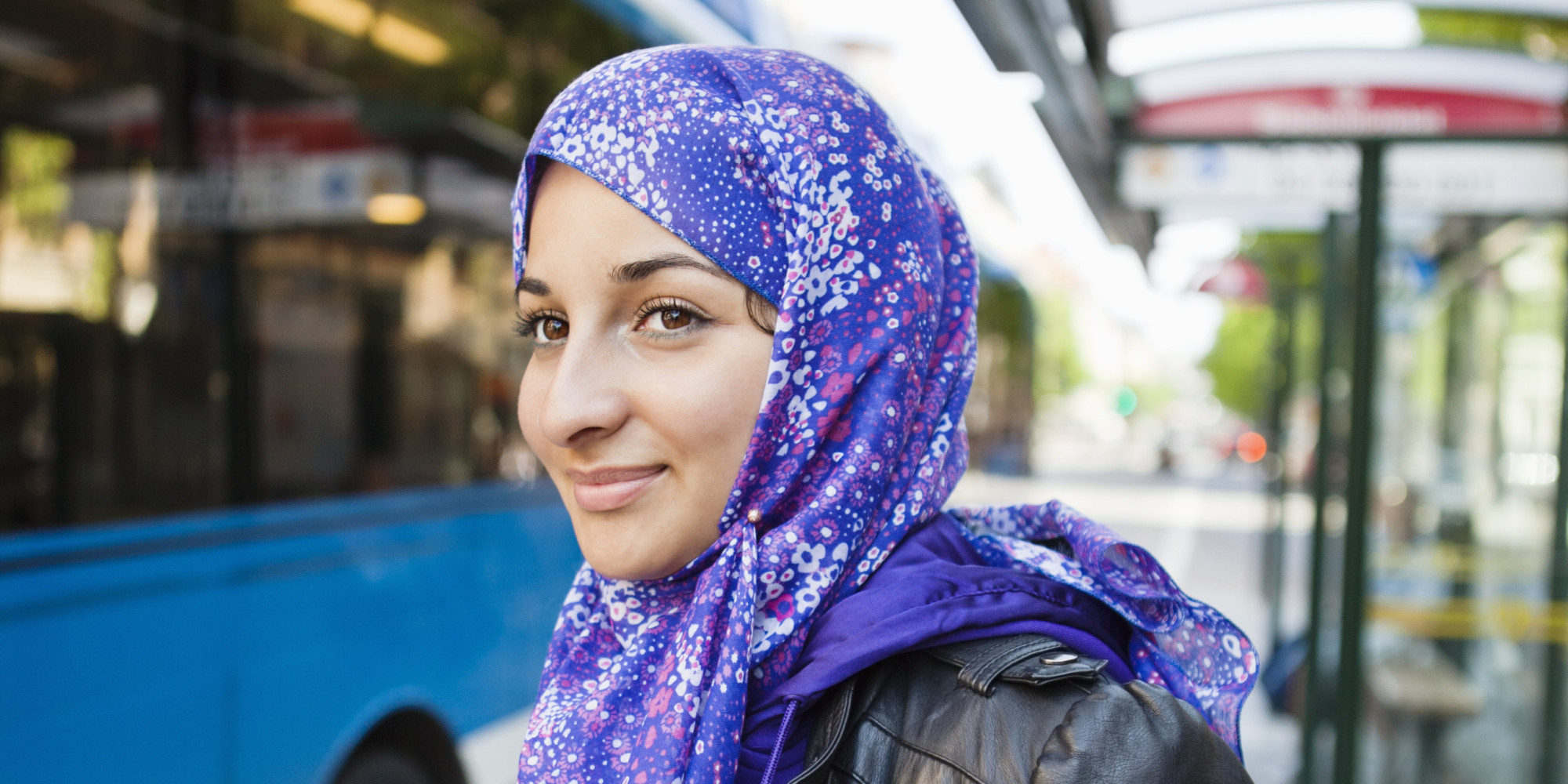
In February 2010, and while Hassan was waiting to be sentenced, American Muslim women began the Purple Hijab Day, that since 2011 has become international, commemorated in Canada, England and Libya. It is a day of remembrance and support for victims of domestic violence and femicide, but it is more than that: it is a struggle to eradicate violence against women in Muslim communities and to challenge the patriarchal religious narratives that support it.
The date is commemorated each year between the 12th and the 16th of the month with different activities such as prevention talks, vigils, community education days, and cyberactivism through social networks such as Facebook or Twitter. It is a tradition to wear the hijab or Islamic headscarf in purple, but it is also possible to wear any purple garment.
Prevention of domestic violence is just as important as denouncing misogynistic narratives that enable it, because as Amina Wadud says:“To define religion is to have power in it.” One of the most widespread and disastrous stereotypes that exists about Islam is that which holds that religion legitimizes violence against women and authorizes husbands to punish their wives and dispose of the lives of the women in their households.
While these prejudices are held by voices outside of Islam and part of the narrative of Islamophobia, it is no less true that there are some currents within Islam that encourage men to punish their wives and for many Muslim men these interpretations are believed to be an almost un-appealable form of justification for the abuses they commit against women.
Memory is important when it comes to counting women. Not only because our presence has been historically invisible, but also because language that erases our lives still exists. Every act of violence that has a woman as a target is treated as an isolated event and the victim as anonymous. “A woman was found dead” is the recurring headlines in the news of the world. The reality is that we women do not appear dead, we are murdered. And, although society treats us as serialized and replaceable elements, our unique subjectivity is summed up in our names. Speaking our names is to make visible our struggles, hopes, and pains.
“Aasiya Zubair, a career woman, community’s value and mother was murdered by Muzzamil Hassan” and almost 10 years later there is still outrage and sadness because every day somewhere in the world, another Aaziya adds her name to the list.
The International Purple Hijab Day is an initiative started by Muslim women, but it does not belong only to them. It belongs to all women and everyone who is in the side of women rights. It is a day of activism and memory, an opportunity to find new ways to end gender violence in a context of its acceleration and increase in all parts of the world, because no civilization has the exclusive privilege of misogyny.
Vanessa Rivera de la Fuente is a specialist in training and community outreach in Gender, Communication and Interculturality. She’s also a learning and social projects designer and a qualitative researcher; an awarded activist for women’s rights who too does independent scholarship in Religion, Gender and Social Discourses. Nomadic writer. A woman with stories and geographies, lover of books, cats and spicy Chai.



 We protect ourselves by saying it wasn’t that bad.

 Feminism and Religion