
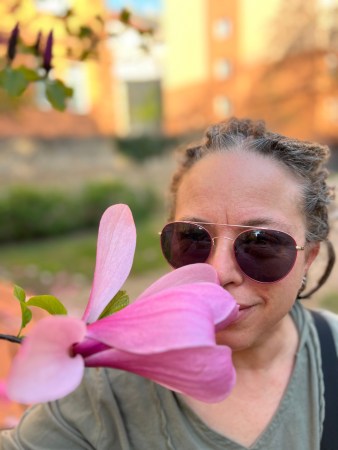
On Active Waiting, Counting the Omer, and Our Connection to Nature.

We wait.  We wait for the bus.  We wait for the spring to return. We wait for our first cup of coffee (or tea?  Do people actually wait for tea?) in the morning.  We wait at traffic lights.  We wait for test results.  We spend a lot of our lives waiting.

We also can’t wait.  To be 5 and a half.  To be an adult.  To start the school year.  To spend time with our friends.  To go on vacation.  To find a (new) (better) job.  We wait for a better world.  Waiting can be fraught with anything from nervous energy to debilitating anxiety.

This waiting happens for both seemingly insignificant but also profound reasons.  However, waiting does not mean inaction.  It does not mean that we sit around hoping something will happen for us or to us.  Yes, there are some aspects of life we cannot change or hurry the results.  Yet, there are many parts of waiting that require our active participation.

Author’s photograph of a rose.
Continue reading “On Active Waiting, Counting the Omer, and Our Connection to Nature.”

Persephone by Barbara Ardinger

Here we are, creeping up on the vernal equinox (March 21), which astronomers and weathermen on TV tell us is the start of spring. I see Imbolc (as described by Deanne Quarrie) as the true beginning of spring, however. It’s when we see the first little crocuses popping up through the snow…..oh, yeah…..well, maybe not this year, when more than half the U.S. is buried under mountains of snow. Let’s just agree that in ordinary years crocuses pop up and bloom and trees start showing us their tiny green leaves in February. The equinox is really the turning point of spring, the hinge of time when the rising energy tips over into falling energy that is flowing toward summertime, which will arrive at Beltane (May 1 or 2).

Persephone
Demeter and Persephone

We’re probably all familiar with the story of Persephone, who under her childhood name, Kore, was out picking flowers in the meadow one day when her Uncle Hades roared up out of the earth in his mighty chariot and kidnapped her. This led her mother, Demeter, the grain goddess, to search for her and finally go on strike and let the world turn back into winter. This went on until Aunt Hecate told Demeter where her daughter was. When Persephone, now queen of the underworld, came back up with her mother—voilà! It was springtime. That’s how the vegetation myth goes. Continue reading “Persephone by Barbara Ardinger”