

This was originally posted 10/22/18

There is a very big elephant in the room. Apparently it is invisible because even the left is not discussing it. This elephant is the civil war in Yemen to which Saudi Arabia has contributed 19,000 (19,000!) deadly (deadly!) air strikes that have been alleged to have caused 60,000 (60,000!) civilian (civilian!) deaths (deaths!). These air strikes have been carried out with arms purchased from the US and its allies. The UN estimates that 22.2 million Yemeni civilians are in need of immediate humanitarian aid and that 13 million are at the risk of starvation. Yet a Saudi-led blockade is preventing food and other supplies from entering the country.
In the wake of the disappearance of legal American resident and Saudi journalist Jamal Khashoggi, the left castigates Saudi Arabia for a vicious murder. The US President warns congress not to cut off arms deals with Saudia Arabia because to do so would threaten more than half a million US jobs in the military industrial complex.
In January 1961, another US President, former general Dwight D. Eisenhower spoke of the threat to US democracy posed by what he named “the military industrial complex”:
Until the latest of our world conflicts, the United States had no armaments industry. American makers of plowshares could, with time and as required, make swords as well. But now we can no longer risk emergency improvisation of national defense; we have been compelled to create a permanent armaments industry of vast proportions. Added to this, three and a half million men and women are directly engaged in the defense establishment. We annually spend on military security more than the net income of all United States corporations.
This conjunction of an immense military establishment and a large arms industry is new in the American experience. The total influence — economic, political, even spiritual — is felt in every city, every State house, every office of the Federal government. We recognize the imperative need for this development. Yet we must not fail to comprehend its grave implications. Our toil, resources and livelihood are all involved; so is the very structure of our society.
He continued:
In the councils of government, we must guard against the acquisition of unwarranted influence, whether sought or unsought, by the military industrial complex. The potential for the disastrous rise of misplaced power exists and will persist.
We must never let the weight of this combination endanger our liberties or democratic processes. We should take nothing for granted. Only an alert and knowledgeable citizenry can compel the proper meshing of the huge industrial and military machinery of defense with our peaceful methods and goals, so that security and liberty may prosper together.
He concluded:
Disarmament, with mutual honor and confidence, is a continuing imperative. Together we must learn how to compose differences, not with arms, but with intellect and decent purpose. Because this need is so sharp and apparent I confess that I lay down my official responsibilities in this field with a definite sense of disappointment. As one who has witnessed the horror and the lingering sadness of war — as one who knows that another war could utterly destroy this civilization which has been so slowly and painfully built over thousands of years — I wish I could say tonight that a lasting peace is in sight.
Dwight D. Eisenhower, my father, and others who fought in World War II believed that it was “the war to end all wars.” Dwight D. Eisenhower’s disappointment as he left office was based not only on his recognition that this widely-shared hope not been fulfilled, but also in his fear that the military industrial complex would come to dominate American politics in the future—dashing all hopes for achieving peace on earth.
Sadly, this warning has gone largely unheeded.
I am appalled that my favorite commentators on MSNBC are failing to discuss 60,000 deaths caused by weapons purchased primarily from the US as they lament the loss of their colleague Jamal Khashoggi. I am outraged that they fail to discuss the domination of the military industrial complex in American politics as they lament the loss of their colleague.
In the lead-up to the 2018 midterm elections, I received numerous questionnaires asking which progressive issues I viewed as most important. It seemed ridiculous to ask me if I ranked women’s rights above or below climate change or the minimum wage. But what really upset me was that I was not even being asked even to rank my commitment to cutting the military budget and ending endless war.
That these questions cannot even be asked on the left—except by my congresswoman Barbara Lee—is searing and saddening testimony to the very powers that President Eisenhower warned us about.
Eisenhower said that the threat posed by military industrial complex is “economic, political, and even spiritual.” He spoke about “disarmament” as “imperative.” He spoke of the “horror and lingering sadness of war.” The fact that these words are not at the forefront of national conversations today is a measure of the spiritual (yes spiritual!) crisis we face as a nation. This spiritual crisis is not caused by Trump or the Republicans but has been contributed to by Republicans and Democrats alike, in thrall to war and the miltary industrial complex on an equal opportunity basis.
If one Saudi journalist murdered by the Saudi government matters, should not 60,000 (60,000!) civilians (civilians!) murdered by Saudi weapons procured primarily from the US military industrial complex matter even more?
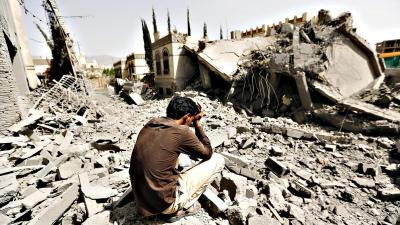
Women and children are the primary victims of war. Rape is an ordinary weapon of war. As women cry out against the violation of our bodies and souls, let us remember this: War is a feminist issue!
Discover more from Feminism and Religion
Subscribe to get the latest posts sent to your email.

 Feminism and Religion
Thank you so much, what an important piece. I have always trusted Col. McGregor and Chris Hedges to tell me what is really going on when it comes to Iran, the middle east. Trump just walked the US into a war with Iran and never mind what you heard, as far as Iran goes they are saying game on. Reason being that they no longer trust Trump, who can not tell the truth can not keep his word and has just killed a leader that contrary to what we are being told was respected within his country. I am listening to Col McGregor who are talking truth to, so called power with a band with of experience behind them. The department of defense was turned into the department of war. War is against all of life, we are life. Mother’s are not for war, we create life, we are life. I am praying for this to end now though I do believe that Trump and the puppets pushing him on will regret the very foolish miscalculation they have made about Iran, Persia will not disappear and we know this, thank God.
LikeLike
I am appalled that my favorite commentators on MSNBC are failing to discuss 60,000 deaths caused by weapons purchased primarily from the US……. I cannot even imagine what Carol would think now….War is above all a feminist issue …Carol is so right – but when this military walks down our streets, shooting innocent people, well, war is knocking on everyone’s door.
LikeLike