

 I don’t do well being cooped up (staying at home) all day and every day. Thankfully the state of Virginia, where I currently live, has kept their parks open during the COVID-19 pandemic. For two months, I intentionally scheduled a “green space” time into my daily routine. Usually I’d hike. Sometimes I’d just sit in the car and look at the natural scenery in front of me.
The James River at Pony Pasture Rapids was my “go-to” place during the pandemic lockdown. In addition to refreshing themselves by the river, people use Pony Pasture as their launching point for a variety of floatation devices, but mostly kayaks, to paddle around the river.

Pleasant Creek Trail is one among many paths along the James River at Pony Pasture. After meandering a half mile or so, I came upon this view. I call this scene “Entering the Emerald Forest.”

Showcasing Richmond, Virginia, in an attractive cityscape. I walked along the floodwall to capture this Richmond skyline.

One day, I went to a local park (Maymont) and stared up at this tree like infants do with their mobiles hanging over their cribs.
Straight, sturdy tree trunk
Spreading its leafy branches
Green shelter in place

Richmond has had a goodly amount of rain this spring. This is the James River after several inches of rain throughout the state.

Even when the rain came, I made it a point to get out of the house, sit in my car, dream a bit, and read from my Kindle for two or three hours.

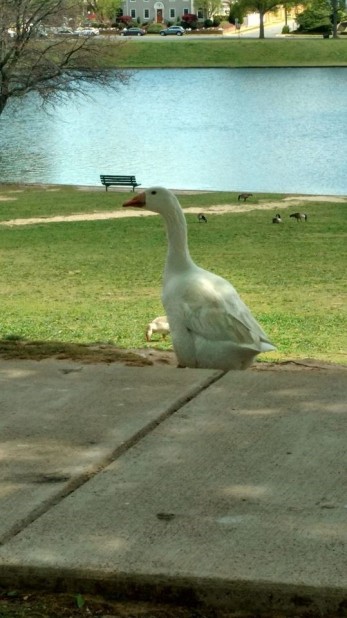
Had a visitor one day while enjoying the sunshine and breathing in fresh air at Byrd park.
Bench-sitting alone
Cold winds blowing through the trees
Mother Goose visits
Earlier in the spring, I watched the dogwood tree bloom in my front yard.
Amidst clouds and chill
Nature still blooms pink and white
In my damp front yard

One of my favorite days at Pony Pasture Rapids put me in touch with this family.


Blessed be!
In sunnier weather, I’d visit beautiful, old Hollywood Cemetery in Richmond. From the web: “Hollywood Cemetery was designed in 1847 as a “rural” style garden cemetery to escape the grid-like monotony of city cemeteries. Landscape architect, John Notman, specifically left trees and other plants untouched when designing the cemetery’s landscape in order to create a peaceful haven for Richmonders. Today, our 135 acres of valleys and hills are covered with heritage roses, stately trees, and other blooms that live up to the name of a garden cemetery. In 2017, Hollywood Cemetery was named a recognized arboretum with the ArbNet Arboretum Accreditation Program.”
One day I went hunting (and I did have to hunt!) for inscriptions that made me take notice. There’s such a paucity of creative, interesting text on tombstones. Of those I’ve seen so far, Andrea Smith Kauder’s is my favorite. “Neal, Adam and Bryan–I love you very much. I thank everyone for visiting. Now go and be happy.” Andrea died as a relatively young woman—44 years old. I think I would have enjoyed knowing her.

And, I’m moving again! Going to a condominium just three miles down the road from my current address in Richmond, Virginia. Wonder where in the world I will eventually land. I can’t seem to settle down in any one spot. Here I am scrubbing the floor of my new condo in preparation for move-in. My only green space on this day was the green gloves I used to protect my hands during the onerous chore.

My grandmother, Jessie, often told me, “Only way to clean a floor, honey, is to get on your hands and knees and scrub.” Jessie was right. Perhaps a fitting text on my tombstone might reflect the necessity of women’s domestic labor to keep the wheels of society moving.
She cleaned like a fiend
Hoping…yes, always hoping
For a little dirt.
Esther Nelson is an adjunct professor at Virginia Commonwealth University, Richmond, Va. She has taught courses on Human Spirituality, Global Ethics, Christian-Muslim Relations, and Religions of the World, but focuses on her favorite course, Women in Islam. She is the co-author (with Nasr Abu Zaid) of Voice of an Exile: Reflections on Islam and the co-author (with Kristen Swenson) of What is Religious Studies? : A Journey of Inquiry.
 The meaning we derive from stories—especially religious stories we’ve heard and become familiar with since infancy—shape how we perceive and understand the world. Our beliefs are an amalgam of “my story” (my individual life experience in a specific context) shaped by another story. Who I am is heavily informed by particular narratives and their (often) codified interpretation.
 Tyler Foggatt, associate editor of The New Yorker magazine’s, “The Talk of the Town series,” recently contributed (March 23) an essay titled “Cooped Up.” She notes that China, the first country to shut down due to COVID-19, is now in the process of opening up. More than ten million people in Xi’an, the capital of Shaanxi Province, were under lockdown. She writes, “When restrictions were eased, earlier this month, the city’s [Xi’an] divorce rate spiked.” Marital conflicts, often existing underneath the radar, bubble to the surface and sometimes explode during periods of quarantine (forced togetherness).
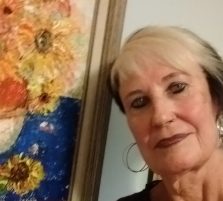 A couple of weekends ago, Nancy, one of my classmates from nursing school, organized what she called a “mini-reunion” at her home in New Jersey. Seven of us gathered together to well, reunite. Our graduating class (Muhlenberg Hospital School of Nursing, Plainfield, N.J.) was small. We started out with forty students—all women. Only twenty of us made it to the finish line. One of our fellow graduates, Marcia, died a few years ago. Two or three of the initial forty students dropped out due to health problems, but were able to graduate a year later with the following year’s class. Some students were asked to leave the program because they could not cut it academically or clinically. Others decided they didn’t “belong” in nursing and quit.
