Exploring the F-word in religion at the intersection of scholarship, activism, and community.
Author: Beth Bartlett
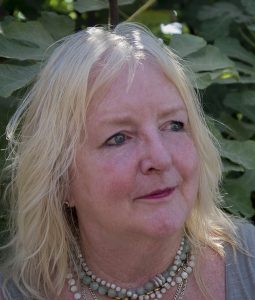
Elizabeth Ann Bartlett, Ph.D., is an educator, author, activist, and spiritual companion. She is Professor Emerita of Women, Gender, and Sexuality Studies at the University of Minnesota-Duluth, where she helped co-found the Women’s Studies program in the early 80s. She taught courses ranging from feminist and political thought to religion and spirituality; ecofeminism; nonviolence, war and peace; and women and law. She is the author of numerous books and articles, including "Journey of the Heart: Spiritual Insights on the Road to a Transplant"; "Rebellious Feminism: Camus’s Ethic of Rebellion and Feminist Thought"; and "Making Waves: Grassroots Feminism in Duluth and Superior." She is trained in both Somatic Experiencing® and Indigenous Focusing-Oriented trauma therapy, and offers these healing modalities through her spiritual direction practice. She has been active in feminist, peace and justice, indigenous rights, and climate justice movements and has been a committed advocate for the water protectors. You can find more about her work and writing at https://www.bethbartlettduluth.com/
Author’s Note: This piece was inspired by Janet Maika’i Rudolph’s wonderful FAR post of December 15th, 2022, “Ode to Seeds.”
“. . . I know, yes, there is renewal, /because this is what the seeds ask of us/ with their own songs/ when we listen to their small bundle of creation,/ of a future rising from the ground . . .” – Linda Hogan
The first seed catalogs started arriving in the mail even before the turn of the new year. In an annual ritual of hope, in the depths of winter we turn our thoughts and dreams to growing things – seeds of heirloom tomatoes, cucumbers, squash, carrots, and beans that will feed us and grace our tables in the summer and fall, and colorful marigolds, nasturtiums, and zinnias that will delight all summer long with their beauty. Is this the invincible summer of which Camus wrote?[i]
On Christmas mornings my brother, sister, and I had to wait patiently upstairs until we heard the music playing. Then, at last, the trumpets and voices singing “Joy to the world!” beckoned us down to the living room, with presents piled high under the brightly lit Christmas tree and stockings filled to the brim hung by the roaring fire. As a child, I experienced Christmas as a most magical and wonderful time of year, but it wasn’t just about getting presents. Strangers greeted each other with good cheer, wishing each other a “Merry Christmas.” Children visited the homes of the elderly and housebound, brought them cookies and sang carols. People were different – kinder, friendlier, more open-hearted, more forgiving. These are the true gifts invoked by the Christmas season, and I often wondered why we couldn’t continue these all year. I still do.
Author’s Note: Today’s post is the 4000th FAR blog post! I first became aware of the Feminism and Religion blog when participating in a symposium honoring the life and work of Carol P. Christ in October 2021. I was inspired to write a piece on Christ’s contribution to ecofeminism, that was posted in the FAR blog a year ago today. I wanted to post another piece on Christ on the anniversary of that first post. I’m delighted that it is the 4000th, and so fitting that it is written in honor of Carol Christ, who was such an important part of the FAR blog.
A while ago, a friend asked me what spiritual reading I’d been doing lately. I told him that I’d been revisiting classics from the past. When he asked me who specifically, the first name I mentioned was Carol Christ. Even though he was a minister, he had never heard of her. Sadly, I suspect the same would be true for the vast majority of ministers, priests, rabbis, theologians, and other religious leaders. Yet, I can think of no one who has had a greater influence on my religious and spiritual thought and beliefs.
The effects of “the burning times” are still with us. I can feel this in my own body. As Starhawk put it so vividly, “the smoke of the burned witches still hangs in our nostrils, . . . remind[ing] us to see ourselves as separated. . . in competition with each other, alienated, powerless and alone.”[i] However, she continues, “the struggle also continues.” That struggle is the impulse toward wholeness, healing. That journey toward healing begins with remembering and acknowledging past harms, so that we may better understand who we are and the ways these continue to live in our bodies, psyches, and culture in order to address them.
In South American indigenous cultures, trauma is recognized as susto, or “soul wound,” and it is on that level that healing needs to happen.[ii] To quote Shirley Turcotte, “Healing from trauma is a spiritual matter, a relationship matter, and there are places in recovery that require a precious spiritual response.”[iii] The women’s spirituality movement continues to be one such precious response. The work of Starhawk and others to reclaim the word “witch” and to revive and reimagine a tradition of valuing immanence, the sacredness of the earth, and the ability to change the world for the good has been invaluable in this.[iv] In her examination of the reasons for the persecution of witches, Starhawk names the “war on immanence” as one of three factors.[v] If the spirit was not present in the earth itself, then people had to rely on priests and the Church for access to a transcendent god.
I first saw it when looking at their faces while showing The Burning Times in class — the blank stares, the pained expressions, the tears, the looking away. The scenes and sounds of women tortured and burned alive touched something deep and ancient in them. Here it was — the historical trauma of women.[i] The lasting impact of historical trauma is experienced by subsequent generations for hundreds of years, manifesting in such things as depression, PTSD, self-destructive behaviors, anger, violence, suicide, and more. As Native LGBTQ activist and writer Chris Stark so eloquently put it: “The experiences of our grandparents and great-grandparents are written into the library of our bodies . . . . My ancestors’ loss and screams are written in me – their pain and murder and rape merged with my own as a child. . . We carry them through time. We remember.”
The leaves have finally begun to turn. I’ve been longing for the trees to reveal their true beauty in all their colorful array, and am glad for this beginning. Soon the woods will be filled with the golden, amber, scarlet, and orange glow of the maples, aspen, birch, and oaks of the northern forest.
Hawk Ridge
It is the time of year I would take my Women and Spirituality students to a sacred spot on a ridge high above Lake Superior to explore their spiritual connections with the earth. They would share a particular way they felt a connection to the natural world – often a lake, or a place from their childhood, a tree they loved to climb, their dog, or a stone they carried. We would circle the large pine and invoke Starhawk’s “Open-Eyed Grounding” practice.[i] They would read and comment on their favorite passages from the readings – selections from Susan Griffin’s Woman and Nature and Carol Christ’s “Rethinking Theology and Nature.”[ii] Then they would disperse across the ridge for their solo encounters with nature, before gathering together again, each returning with something they had discovered during that time. Then we would talk about the changing colors of the leaves surrounding us and talk about how these were the true colors of the leaves, finally emerging now that the chlorophyll that had disguised them in green was beginning to wane. Taking our cue from the leaves, we would talk about authenticity – about their coming into their own true colors. For that is the work of spiritual growth and transformation — to emerge as our own true selves. Yet, how often our unique and precious beings are taught to mask our true color, blend in — be “green” like everyone else. What a vivid and beautiful world when we come into our own and share our unique gifts and being with the world.
Along the roadside, broad swaths of Queen Anne’s lace and chicory grace the landscape as far as I can see. They take my breath away with their exquisite beauty. The delicate white petals of the Queen Anne’s lace paired with extraordinary blue of the chicory evoke not only awe, but tenderness, gratitude, and memories of my mother pointing out these favorite flowers every year as they came into their full flowering in the heart of summer in northern Michigan. How she loved the blue and white, made even more beautiful by their contrast with each other.
In a recent FAR post, Sara quoted Janet quoting Teresa of Avila: “If we learn to love the earth, we will find labyrinths, gardens, fountains and precious jewels! A whole new world will open itself to us. We will discover what it means to be truly alive.” My mother opened that world to us, teaching us to love and appreciate each wildflower as it came into its season. She taught us to love them as friends who came to live among us at different times of year, each with its special gifts.
Author’s Note: I write this in honor and celebration of my sister, Jeannie, who is turning 80 today, this third day of September, 2022. My thanks to the editors of FAR for letting me post this on her day.
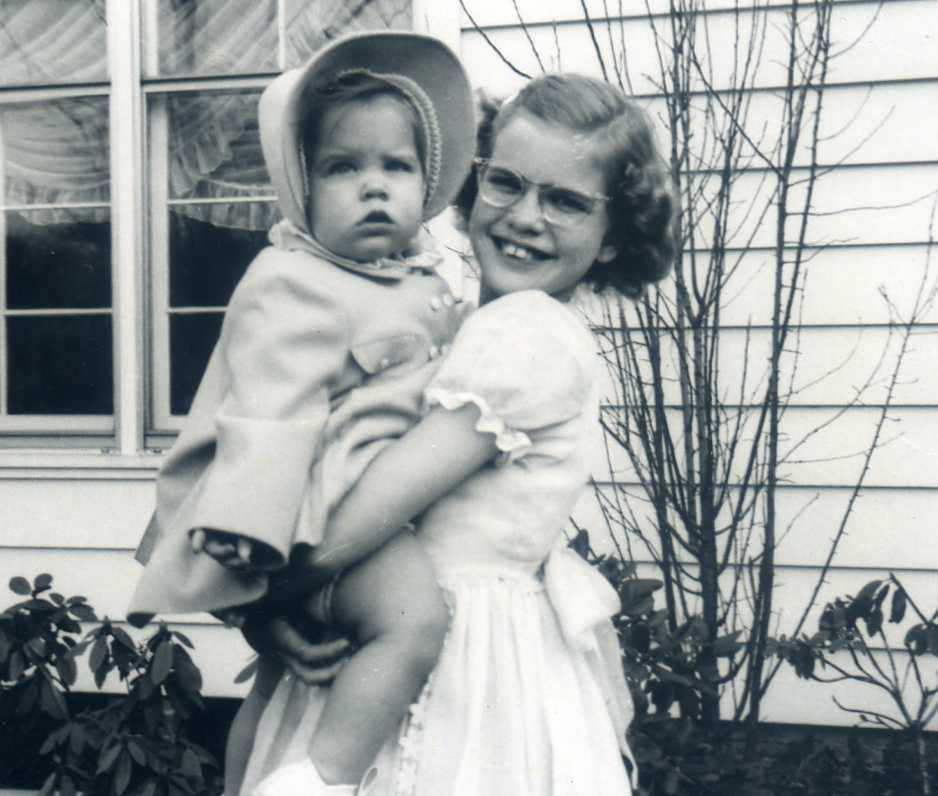
I was born into sisterhood. My sister, Jeannie, who is ten years older than I am, loves to tell the story of how, in the days before prenatal testing, she told her 4th grade teacher that she was going to have a sister. She already had two brothers, and was convinced that the baby our mother was carrying – me – would be a girl. She welcomed my presence on this earth even before I was born. Jeannie has shown me the best of sisterhood – affirming and supporting me in all of my endeavors, giving me a trusted confidante with whom I could share the truths of my life, showing up when I have needed her emotional and physical care and support, celebrating the moments of triumph and joy, and understanding me in a way that few have. So, when I came into feminism in my twenties, I was deeply drawn to the feminist ideal of sisterhood.
I first found nascent notions of the feminist concept of sisterhood when studying early nineteenth century feminists. For Sarah Grimké[i], who closed each of her “Letters on the Equality of the Sexes” with, “Thine in the bonds of sisterhood,” those bonds were primarily of shared oppression. She regarded men’s oppression of women to be universal, knowing no boundaries of race, class, or culture, and wrote at length of the oppressed condition of women in the U.S., Asia, Africa, and Europe. In her abolitionist work she condemned the sexual, physical, and emotional abuse of enslaved females and called on white women to act in solidarity with their enslaved sisters, and refuse their complicity in such abuse.




 Feminism and Religion