The Pain and Struggle of Gender by Michele Bodle

In the April 2024 issue of Christianity Today, Fellipe Do Vale wrote, “Gender on Earth as in Heaven: Will Our Gender be Removed or Renewed in the Resurrection?”

            The entire issue was dedicated to a conversation between egalitarian and complementarian beliefs regarding gender, which I am not here to argue. However, I will wholeheartedly and fully engage with a quote in the article where Do Vale states the following.

                        There is a long and impressive lineage in Christian history and
contemporary theology that says the best way to envision the
redemption of our gender is to picture its removal….
They say that gender was an attribute given to us only
because God knew humanity would sin. It was meant
to sustain us only until the restoration of creation. Therefore, 
attributes like gender, race, and disability, which they believe
cause the most pain and struggle in this life, will not remain
in the resurrection. 
(Do Vale, “Gender on Earth as in Heaven,” Christianity Today (Aril 2024), p. 24-25.)
Continue reading “The Pain and Struggle of Gender by Michele Bodle”

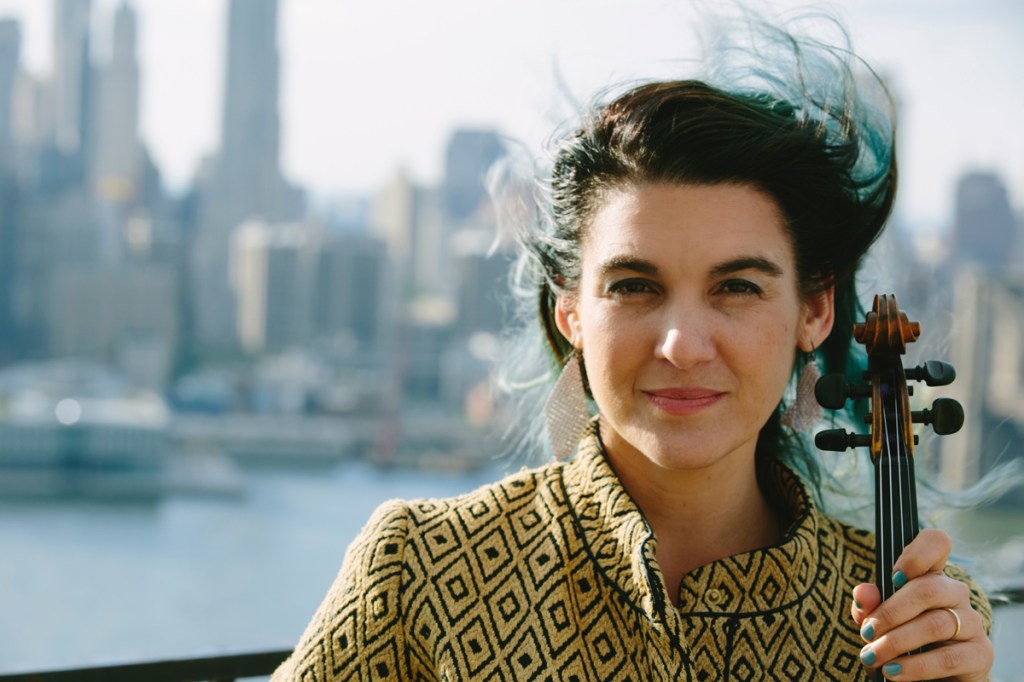
What an Outdoor Movie Taught me about Biblical Women By Alicia Jo Rabins

Once I went to a free outdoor movie in Miami Beach. The film was projected on the side of the giant concert hall. There was a grassy park with palm trees stretching out from the wall; families brought picnic dinners and cans of beer and stretched out to watch the movie once the sky darkened.

The movie was Star Wars, but as Princess Leah appeared, I was thinking about a different mythic canon. For over twenty years I’ve been studying and teaching stories of Biblical women from a feminist Jewish perspective, and after all this time, I was surprised to find that the way I feel while interacting with these stories was oddly, powerfully similar to the feeling of watching Star Wars projected on the side of a building on this Miami night.

Continue reading “What an Outdoor Movie Taught me about Biblical Women By Alicia Jo Rabins”

I Don’t Want Jesus by Katherine Rose Wort

Pietá – Anónimo

Well, you may ask, who said I should?

My grandparents, mother, father, sisters, aunts, uncles, cousins, nieces, nephews, godparents, a good many teachers, childhood friends, a former therapist, myriad internet strangers who felt compelled to try to divert the flames approaching my immortal soul, an astrologer I met once, innumerable people encountered on public transportation and sidewalks, all of my exes’ parents, and, of course, the Roman Catholic Church — an institution of such enormous weight as to have crushed frames far sturdier than my own.

Continue reading “I Don’t Want Jesus by Katherine Rose Wort”

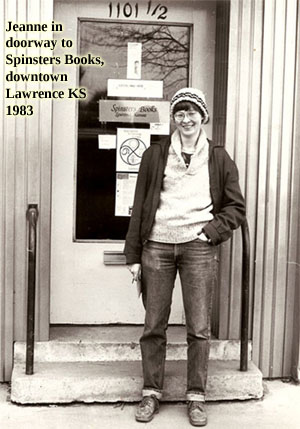
Mountain Mother: Earth, Woman, Goddess (Part 2) by Jeanne F. Neath

Part 1 was posted yesterday.

In Part 2 we’ll complete our travels into Mountain Mother’s realms, as we explore female-centered economics and spiritualities as a means toward creating earth- and female-centered communities and small-scale societies.

Imagine living on Turtle Island prior to 1492. At that time Indigenous peoples had been living in respectful relationship to nature, tending her for thousands of years. European invaders and colonists were amazed by the abundance, but assumed they were seeing wild nature. These were subsistence societies! People’s needs were met by the Earth, her plants, animals, waters, and human efforts. No one charged a fee. Everything was a gift.

Continue reading “Mountain Mother: Earth, Woman, Goddess (Part 2) by Jeanne F. Neath”

Mountain Mother: Earth, Woman, Goddess (Part 1) by Jeanne F. Neath

Growing up in the 1950s in the U.S. I was deeply immersed, trapped like so many girls and women, in capitalist, colonizing, patriarchy. I rescued myself in the 1970s when I jumped head first into the Women’s Liberation movement. I found that the currents pushing communities of women were wild at times, yet taking me where I wanted to go.  At that time, it was possible to live one’s life, as I did, largely within this subculture and its women’s dances, bookstores, battered women’s shelters, women of color organizations, festivals, land groups and more. These female-centered and female-only spaces gave women a gut level knowledge of what a world without patriarchy could be like. We could imagine a female-centered world because we were, in many respects, living in one.

Thanks to a decades long assault by the right wing and other anti-feminist forces, women’s spaces became difficult to access. Now the grassroots women’s movement is making a comeback. Over 50 years of second wave feminist thought, research and organizing inform our work. Women’s communities are on the rise. These communities have the potential to become the base for an earth- and female-centered future, as I’ll discuss below.

Continue reading “Mountain Mother: Earth, Woman, Goddess (Part 1) by Jeanne F. Neath”

Ariadne and Me – Stumbling Toward the Divine by Arianne MacBean

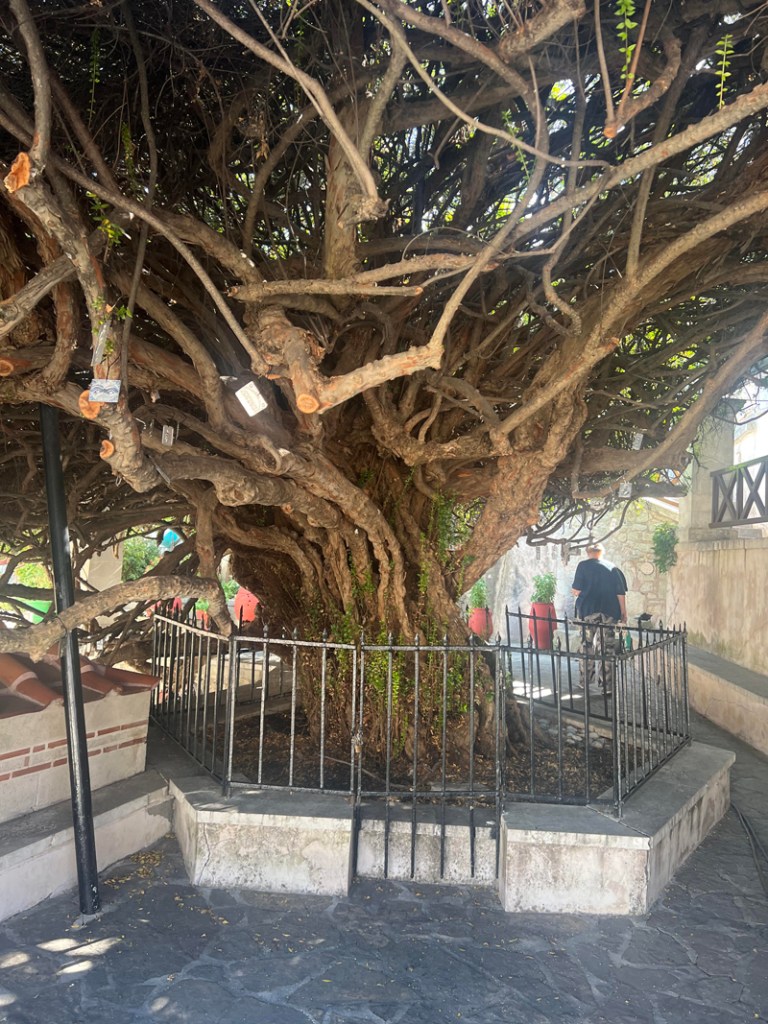
The Sacred Myrtle Tree with its protective fence at Paliani Monastery

I went to Crete because I longed for some kind of communion with Ariadne. Each time I gathered in ritual with the women on my trip, I hoped She would speak to me, or that I would feel something and know that She was in me, or I within Her. At Paliani, I had these same wishes as I walked toward the over-1000-year-old sacred myrtle tree. Set back in the corner of the quiet convent, I was struck by the contrast between the tree’s black bark and surrounding black fence set against the hopeful flickering of silver ex-votos that filled each branch. I walked around the back of the tree on a slight upper landing and searched for a branch within reach. Finding a spot where I could rest my forearm, albeit awkwardly, I leaned in and waited for Her.

Continue reading “Ariadne and Me – Stumbling Toward the Divine by Arianne MacBean”

Life-Giving Blood by Michelle Bodle

“What did you think?” This question was posed to me by a young woman I am mentoring in ministry. After receiving The Book of Womanhood by Amy Davis Abdallah as a gift, she asked me to walk through the book and discuss it with her, as suggested in the introduction. 

            I inhaled deeply before replying that I thought Davis Abdallah was writing from a posture of privilege that she was completely unaware of – and that deeply troubled me.

            Davis Abdallah’s premise is that Christian women need a rite of passage accompanying the journey of getting to know themselves. Piloted at the former Nyack College where Davis Abdallah taught, Woman was a program that sought to develop a Christian right of passage for women focused on relationships with God, self, others, and creation. 

Continue reading “Life-Giving Blood by Michelle Bodle”

RACHEL KADISH:  TRANSCENDENCE AND TEXT, part 2 by Theresa C. Dintino

THE SYMBOL OF THE GENIZAH

Being a non-Jew, the first word I had to look up while reading The Weight of Ink was  genizah—a hiding place or the act of hiding sacred texts until they can receive proper burial in the earth. In Jewish tradition this is a required honoring of the written word, especially if it is writing about God. It can also mean depository or treasure; something hidden away in time with hope for more welcome in the future that finds it.

Genizah was the perfect word for me to have etched into my mind with regard to The Weight of Ink as it set the stage and opened a space in my heart for a novel which concerns itself with the power of writing and words through time. The story is centered around human lives engaged in passionate intellectual pursuits, the love of books and learning, and imaginations set afire by the academic.

Continue reading “RACHEL KADISH:  TRANSCENDENCE AND TEXT, part 2 by Theresa C. Dintino”

RACHEL KADISH:  TRANSCENDENCE AND TEXT, part 1 by Theresa C. Dintino

Moderator’s Note: This post is presented as part of FAR’s co-operation with The Nasty Women Writers Project, a site dedicated to highlighting and amplifying the voices and visions of powerful women. The site was founded by sisters Theresa and Maria Dintino. This was posted on their site on November 7, 2023

I love recognizing Toni Morrison’s influence on a writer as I am reading a book. Reading Rachel Kadish’s novel, The Weight of Ink, immediately sunk into Jewish reality, life, and experience without any explanation or apology, I sniffed a familiar point of view, a ghost of novels prior, detected the faint fingerprints of a giant. I liked it and when I recognized it for what it was, I thought to myself, Good for her.

Kadish had taken Toni Morrison’s advice to black writers that says you don’t have to explain yourself to white readers and applied it to not explaining herself to non-Jewish readers.

Why not?

Continue reading “RACHEL KADISH:  TRANSCENDENCE AND TEXT, part 1 by Theresa C. Dintino”

Powerful Women in Pre-History by Rachel Thomas

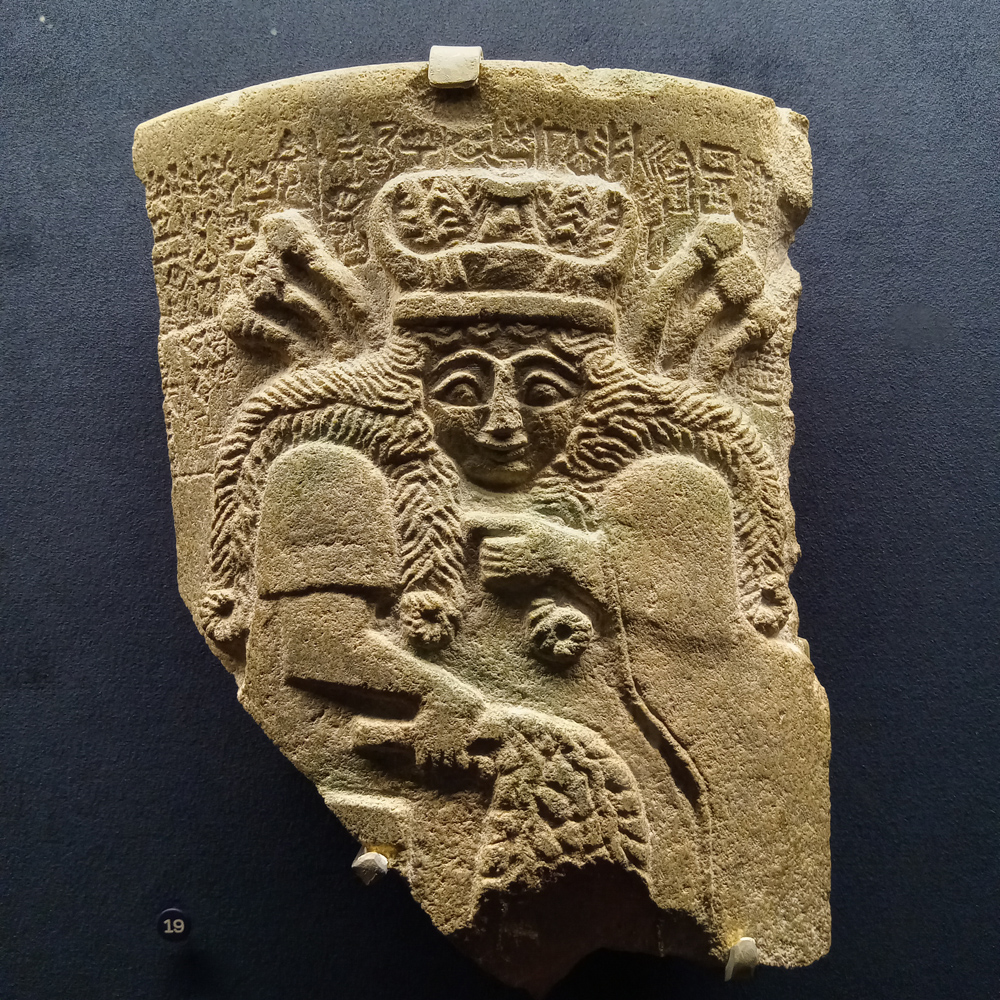
Image of a Goddess, maybe Inanna. Could she also be a Shaman and/or Queen? From 2400 BC, Sumeria. Photo by Rachel Thomas at the Morgan Library, on loan from the Vorderasiatisches Museum of Berlin.

Women’s History Month brings our attention to women of the present and the recent past. What about those women from our distant past? Those whose great stories go back thousands of years?

Scholars are discovering more and more evidence of powerful women in pre-history.  Here is a snippet of the true herstory of my ancestral grandmothers.

Every day there is more research showing that women played leadership roles in the earliest large-scale civilizations of Western Asia, North Africa and Europe. We know that these areas had international trade and exchange of ideas going back at least 5,000 years. Maybe more.

Continue reading “Powerful Women in Pre-History by Rachel Thomas”