“‘A’ is for Adjunct:” National Adjunct Walkout Day #NAWD

"Scooped" by Vanessa Vaile onto A is for Adjunct
“Scooped” by Vanessa Vaile onto A is for Adjunct

On Wednesday February 25th, adjunct faculty across the United States walked out of their classrooms, and hosted teach-ins, lectures, film screenings and rallies, to protest the employment conditions faced by adjunct and all contingent faculty members of colleges and universities. I am adjunct faculty; and encouraged by what I learned in my own participation in the protest, I would like to share my experiences with you in this blog.

While many Universities last week held massive protests and walkouts on campus, I realized when planning my own protest that if I walked out, I would probably be standing outside on the lawn with very few other protesters. There are plenty of adjunct faculty on my campus—75% to be exact, the national average for all college and university campuses— but I know very few of my adjunct peers and we have no organized voice at the school. Weighing my options (admittedly last minute), I found a great power point presentation on the National Adjunct Walkout Day Facebook page prepared by a Texas adjunct professor, Dr. Jenny Smith, and made available for use by all through Slideshare. Instead of walking out, I taught-in; and I was surprised by how little my students knew about this issue, though I was incredibly heartened by their responses.

Continue reading ““‘A’ is for Adjunct:” National Adjunct Walkout Day #NAWD”
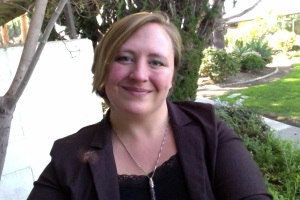
Reconsidering Faith in the New Semester by Sara Frykenberg

Ironically—though if I’d really thought about it I should have expected this—I have found that my own experiences feeling lost, in-between and more despairingly, halfway, have proved my most useful tools for teaching a class about faith.

Sara FrykenbergLast October I wrote a blog about feeling halfway: halfway between faith and identity, halfway present in the day to day of my life, halfway full, and afraid to lose the “half as much as I really needed” to which I clung. Of possible experiences that might feed my soul and lighten my heart last year, I didn’t expect it to be my visit the AAR National Conference, but it was. I came home from San Diego feeling excited, capable and cared about, after visiting friends with whom I share passion, meeting new people and listening to scholarship that woke up my brain.

A necessary respite, this short trip reminded me that really I like what I do. Scholarship and genuine camaraderie feed my soul and the work that I do. And while I am glad to be holding onto these facts of my life, I find that the question of faith and identity has surfaced again this semester. Continue reading “Reconsidering Faith in the New Semester by Sara Frykenberg”

On Believability, Oppression and Ferguson by Sara Frykenberg

Sara FrykenbergLast week, Amina Wadud wrote an important post,Justice for Mike Brown,” discussing Mike Brown’s death in light of Brown vs. The Board of Education, Plessy vs. Ferguson and the injustice faced by African American Communities, particularly in the US legal/ criminal justice system. She highlights the dehumanizing practices that lead us to criminalize black bodies, beginning in childhood.

Considering her post and many, many other articles and news reports over the past several months, and particularly this last week, since the Grand Jury failed to indict Darren Wilson, I felt compelled to speak about a certain quality of kyriarchal oppression: that of rendering the oppressed “unbelievable.” I will not recount the details of the case here (please see the link above for links to court documents through NPR), nor will I try to “speak for” African American communities– nor can I. However, I think it is important that we bloggers and readers at feminismandreligion.com continue to consider the recent verdict and the critical justice issues it raises, as well as remember the tragedy of Mike Brown’s death, and so many men and women like him.

Actor and activist Jessie Williams, who many know from the popular TV show Grey’s Anatomy, gave a passionate and salient interview on CNN’s “State of the Union,” back in August after Michael Brown was killed. You can watch most of the interview with Williams, LZ Granderson and Tara Wall here; you can watch here for the clip I mention below.  Like Wadud, he too discusses the criminalization of black bodies, drawing from the everyday experience of Black men in the United States to make his case. At the end of the interview, Williams powerfully asserts, “We’re not making this up.” Continue reading “On Believability, Oppression and Ferguson by Sara Frykenberg”

Voting Day by Sara Frykenberg

Sara FrykenbergCan we think of the voting place as an altar where we hole-punch a prayer to the honored dead?

This past Sunday, Barbara Adinger wrote a beautiful blog entitled “November, a Silent Month?” While welcoming the November darkness and a “delicious melancholy composed of silence and rest” settling over her home, Adinger reminds us that: no, we are not silent.

As human beings protesting invisibility and the erasure of the history of the marginalized, we are not silent. Given special command(ment)s to be silent in far too many patriarchal and kyriarchal religions, we cannot silently accept the violence, abuse and invisibility forced upon us or upon those whose struggle is different than our own.

At times, silence is a survival strategy. But this year and last, I am striving to thrive instead.

At times, silence is an important place of meditation: a spiritual necessity, an oasis and praxis in the creation of peace. But, today, my meditations lead me to speak.

When first reading “a silent month,” in the title above, I thought to myself: “I hope not.” I am glad that Barbara agrees. Today—November 4th, aka, “voting day”—those of us living with the privilege of citizenship in the United States have a responsibility to speak. As a woman, I also have a responsibility to my feminist sisters and brothers who won me this right—an inheritance that has become increasingly important to me. Continue reading “Voting Day by Sara Frykenberg”

Halfway… by Sara Frykenberg

Sara FrykenbergThe title of this post is meant to reflect where I am in the semester, temporally speaking: halfway. Actually, the idea that I am halfway is a bit of a shock to me, considering I feel like I just started! I have a goddess oracle card sitting on my desk that reads: “Blossoming: You are just getting started,” reminding me to be patient with myself as my work takes shape this semester. But seven of fifteen weeks in, I think its time to pull a new card.Aeracura

When the word “halfway” popped into my head, though, I realized this is also a struggle I am having right now. I feel halfway—I answer “yes and no” to every emotional question. I sleep halfway, working even in my dreams. I am halfway okay: one week I am very down and the next, I feel just fine. And sitting on my patio this weekend, unable to sleep, I thought to myself: you are less than halfway full; and realized I that didn’t know what to do to fill myself up.

Continue reading “Halfway… by Sara Frykenberg”

“The White Privilege Media Bucket Challenge” @blackgirldang

Sara FrykenbergRecently Michele Stopera Freyhauf posted an important blog about the ALS Ice Bucket Challenge and parallel challenges that are making use of this medium; including Orlando Jones’ reimagining of this challenge, in which he dumped a bucket of bullet shell casings over his head to “bring attention to the disease of apathy.” In her blog, Michele asks us to critically consider the way a person’s privilege may impact one’s response to such campaigns. She proposes that we use good stewardship in our enacting of a given challenge, highlighting ways in which charitable giving must be a product of deliberate, liberative praxis.

I agree with Michele: deliberate praxis (action + reflection!) is essential to justice making. And justice-making, solidarity and allyship are all kinds of work that take continual action and reevaluation. In light of such discussions of privilege and solidarity, I would like to use this blog to lift up another important reimagining of the ice bucket challenge: Mia McKenzie’s BGD White Privilege Media Bucket Challenge!

Mia McKenzie is the creator of Black Girl Dangerous (BGD), a reader supported, “grassroots arts and media project,” designed to “amplify the voices of queer and trans* people of color.” Articles on the website, www.blackgirldangerous.org, discuss a wide range of topics related to justice-making in the face of particular oppressions (and their intersections), practical strategies for breaking down privilege and standing in solidarity, queer and trans identity, and a great deal more. Some recent titles include: “All Grown Up Under Hip Hop,” “Four Person-to-Person Things I Do to Address Anti-Blackness con Mi Gente,” and “What HIV Testing is Like When You Are Queer, Black and Undocumented.”  Continue reading ““The White Privilege Media Bucket Challenge” @blackgirldang”

Postcolonial Feminist Theology and… Deep Space Nine by Sara Frykenberg

Sara FrykenbergIt’s no secret here that I am a big fan of science-fiction and fantasy. Discussing the NASA Space Program, the shuttle Curiosityvideo gaming and cosplay is fun for me, and I assert that there is transformative and hopeful potential in these kinds of imaginative fictions. I also find that when done well, science fiction offers soci-political critique and encourages us to critically engage our own world without (no pun intended) alienating some part of its audience completely, as many political debates are apt to do. For example, I use a clip from Star Trek: Deep Space Nine (DS9) in my ethics classes to discuss issues of motivation, intention and end result–as these concepts relate to war and violence. (The clip is from the episode In the Pale Moonlight, and you can see it here.) Episodes like this one can be used to refigure issues we struggle with today, projecting them into a future struggle from which we can draw comparisons to our own time.

Recently I have been reading Kwok Pui-lan’s book Postcolonial Imagination & Feminist Theology; at the same time, I have been re-watching some episodes of DS9. Powerfully addressing the ways in which Western theology helps to reinscribe colonial ideology and practice, Pui-lan argues for (and exemplifies) the creation of new, emancipatory, postcolonial feminist theological discourses. Reading these “texts” together, I was struck with how powerfully DS9 illustrates many of the postcolonial politics and tensions Kwok Pui-lan considers in her book. She describes a “contact zone” as “the space of colonial encounters where people of different geographical and historical backgrounds are brought into contact with each other, usually shaped by inequality and conflictual relations.”[i] DS9 explores this place of contact, imagining how the different parties involved are changed by the encounter. Continue reading “Postcolonial Feminist Theology and… Deep Space Nine by Sara Frykenberg”

Gaming Empathy: The Spiritual Community of Journey by Sara Frykenberg

Sara FrykenbergThis past weekend I went to the annual meeting of the College Theological Society with my friends and colleagues from Mount Saint Mary’s College.   I gave a paper on the kind of spiritual community that is created within thatgamecompany’s 2012 video game release, Journey. Actually, I have mentioned the game before on this blog—but only in comments, usually when trying to defend particular genres. Today, I would like to correct this. Journey is not an apologetic; as I argued this weekend: it is an opportunity to form a kind of spiritual community within a unique and beautiful cyber-digital world. Continue reading “Gaming Empathy: The Spiritual Community of Journey by Sara Frykenberg”

Grading in Purgatory? How about a Change of Scenery? (A Little Levity and Thought for the End of the School Year) by Sara Frykenberg

Sara FrykenbergI am sitting on the patio in front of my apartment as I write this blog. It’s hot-ish and windy. Ventura is always windy. The jasmine vine in my garden (also known as my strip of dirt, or ‘the facilities’ for all neighborhood cats) is in full bloom and my potato bush is covered in purple flowers. When I planted this bush, that is now taller than my head, it was just a stick—a stick that can apparently become a tree-size monster; but, it is my favorite plant monster and it hosts the loudly buzzing, giant black bees that visit my home. No bees today though, just a badly needed change of scenery…

Many of the teachers and professors who read this blog can probably empathize with me when I say that I have been trapped in my office for weeks grading. The last day of classes this semester was Friday of the past week. I’m not quite sure how I managed to so fully and completely overestimate my ability to read, comment on and score hundreds of pages, but I did, and so, I am sentenced to ‘hard time’ at my desk. As the Arcade Fire song The Well and the Lighthouse goes, “I’m serving time all for a crime I did commit.”

My twin sister rubbed this in a bit. She called me as I sat in my office Monday morning after a long weekend of grading and asked me what I was doing. I told her, “grading,” and she promptly started laughing at me and bellowed, “You’re in purgatory!!” She continued to laugh for some time; and then proceeded to post references to purgatory on my Facebook page throughout the day. (Consequently, she later noted my lack of response to her posts. Of course, I had been too busy to reply—see above comments on overestimating, end of semester and grading.) Continue reading “Grading in Purgatory? How about a Change of Scenery? (A Little Levity and Thought for the End of the School Year) by Sara Frykenberg”

Musings on Reification by Sara Frykenberg

Sara FrykenbergThe following is a bit of a messy and meandering blog: a kind of a ‘brain train,’ that starts with a question of reification and eating disorders, and moves into a sense of the literal ‘consuming’ nature of oppression.   So I will start with a ‘thank you’ to readers who will meander with me and with gratitude to the teachers whose thoughts I am wandering with along the way.

Reification is the process by which those created ideas that we externalize into institutions, concrete objects, or social principles then become so real to us that we tend to think of them as a separate reality or a thing/ life in and of itself.[1] I teach this concept in my ethics classes when we discuss the way in which actions and choices are connected to what we often consider to be external forces like “the government,” or “the economy,” when in fact, we are in relationship to and often, actively play a role in maintaining these realities (even when only playing a small role). Reification can subversively undermine our understanding of response-ability because it is a way of making the structures that form our society “other” than ourselves.

My students definitely struggle with this concept and often express the fear that they are too small as individuals to see any real change happen. (I too, often struggle with this fear when thinking about the reified ‘monsters’ of oppression and hate.) Dealing with this discouragement in class, I (and we) switch gears by emphasizing praxis and recognizing its successes. I ask my students to consider what can be done and what choices/changes I, they, or we are capable of making while re-membering changes already being made. As Gustavo Guiterrez says: “Pessimism comes from reality because reality is tragic, while optimism comes from action because action can change reality.”[2] Continue reading “Musings on Reification by Sara Frykenberg”