Ancient Spirit Wisdom by Jassy Watson

For the Love of Gaia Jassy WatsonOn a recent journey within, guided by drumming and visualisation I encountered my Muse. Her Native American Indian appearance surprised, even bewildered me, as I know so little about North America’s indigenous cultures.

As I painted her into being I listened closely to what she told me, stating clearly “I am Ancient Spirit Wisdom,” the wisdom of our ancestors passed on through story, image, sculpture, word, song, dance, ritual, prayer and ceremony. The closer I listened, the more my Mysterious Muse reminded me that I had a story within, one of my very own, yet one shared by women everywhere. I too am a container of Ancient Spirit Wisdom, more precisely, Ancient Women’s Wisdom.

Ancient Women’s Wisdom, Jassy Watson,  ‘Ancient Spirit Wisdom’
Closeup, ‘Ancient Spirit Wisdom’ Jassy Watson 2013

Continue reading “Ancient Spirit Wisdom by Jassy Watson”

Coming out as a Cosmic Cowgirl by Jassy Watson

For the Love of Gaia Jassy WatsonFor the past two months I have been participating in a teacher training called the Colour of Woman (COW) method, an intensive healing and transformational program of sacred painting and intentional creativity founded by visionary artist, teacher, author, and publisher, Shiloh Sophia McCloud. The course is designed for women who want to infuse their lives and work with the mysterious and ancient powers of the creative principles of the Sacred Feminine; she who is known by many names and forms; She who is the mysterious source of life that births both the feminine and masculine; She who has been honoured and deified by many ancient cultures as the bringer of life, growth, decline, death and re-birth; She who is the wellspring of creativity. Continue reading “Coming out as a Cosmic Cowgirl by Jassy Watson”

Blessed By Gratitude and Sharing by Xochitl Alvizo

Incarnation, Goddess spirituality, Xochitl Alvizo,  god became fleshCarol Christ’s post yesterday has gotten me thinking about the differences between Christianity and earth-based spiritualities. Of course, there are many differences, that goes without saying. However, being someone who comfortably stands at the intersection of them both I am usually more aware of the ways in which they seem to intersect in life-changing and inspiring ways for me. Nonetheless, Carol has me thinking…

Over the course of the last year here on Feminism and Religion, Carol has written a lot about the importance of ancestors – how when speaking about embodiment and interdependence it is crucial we acknowledge all the ways in which ancestors make us who we are. Mothers literally give us our bodies and our ancestors’ genes, connecting us to a long line of people both materially/biologically as well as historically. Ancestors give us a sense of connection to places and ground us to lands that were meaningful to them and thus become meaningful to us. And Carol also reminds us that our family and ancestors transmit to us memories that impact us psychically and in powerful ways. These emphases on connection, interdependence, rootedness, and embodiment flow from her earth-based Goddess practice and thealogy. Her spirituality leads her to a greater sense of appreciation and gratitude for the Source of Life and for all the sources of life, and she affirms that because of this deep awareness of interdependence and relationality people who practice earth-based spiritualities are “moved to share what has been given to [them] with others.” Continue reading “Blessed By Gratitude and Sharing by Xochitl Alvizo”

And Thus God made a Covenant with Hagar in the Wilderness by Michele Stopera Freyhauf

Freyhauf, Feminism, Religion, Durham, Old Testament, Blogger, BibleWe are familiar with the covenant God made with Abraham and Moses, but are you aware that God also made a covenant with Hagar?

In the wilderness Hagar encounters a deity at the well named Beer-lahai-roi (Genesis 16). Water and wells are important because they symbolize fertility and life. Wells for women are common places where they met their future spouses. Because wanderers in the desert need water to survive, water itself becomes a symbolic of life-giving or life.

In the seemingly barren dessert, the fertile Hagar finds out that she is pregnant and going to be the mother of many children. Hagar is promised progeny in a motherless state.  According to Pamela Tamarkin Reis, this is called the “after-me” descendants, which guarantees Hagar that her children will live for “immeasurable generations;” a pattern that fits within the scope of this promise. This same promise of progeny is also given to Eve in Genesis 3:20, providing and interesting parallelism between Eve and Hagar.

It is worth pointing out the irony exists in this promise.  Sarai uses Hagar to “build her up.” According to Nahum Sarna, to be built up in terms of the number of children that you have, implies that you are mother to a dynasty.  In this pericope, however, it is Hagar, not Sarai that is built up through this divine promise.

This patterns of promise exists within the birth narrative through the annunciation of Ishmael and the promise of progeny.  It is through this narrative that Hagar enters into a covenantal relationship with the deity.  According to J. H. Jarrell, birth narratives have six common elements that establish this relationship:  mother’s status, protest, offer, son’s future forecast, Yahweh naming, and acceptance of the contract. Hagar’s story contain these elements:

  1. Mother’s Status:  Hagar is without child because she is a virgin (16:1).
  2. Protest:  Hagar flees from her mistress (16:8).
  3. Offer:  Return to your mistress and submit to her authority (16:9).
  4. Son’s Future Forecast:  He will live at the east of all his brothers (16:12).
  5. Yahweh Naming:  You will bear a son Ishmael because the Lord has given heed to your affliction (16:11).
  6. Acceptance of the Contract:  She called the name of the Lord (16:13).

Continue reading “And Thus God made a Covenant with Hagar in the Wilderness by Michele Stopera Freyhauf”

Connection to Ancestors in Earth-based Theology by Carol P. Christ

carol p. christ 2002 color“I am Carol Patrice Christ, daughter of Jane Claire Bergman, daughter of Lena Marie Searing, daughter of Dora Sofia Bahlke, daughter of Mary Hundt who came to Michigan from Mecklenburg, Germany in 1854.  I come from a long line of women, known and unknown, stretching back to Africa.”

Like many Americans, my ancestral history was lost and fragmented due to emigration, religious and ethnic intermarriage, and movement within the United States.  Though one of my grandmothers spoke proudly of her Irish Catholic heritage and one of my grandfathers acknowledged his Swedish ancestry, I was raised to think of myself simply as “American,” “Christian” and “middle class.”  Ethnic and religious differences were erased, and few stories were told. 

Over the past two years, I have begun to discover details of my ancestral journey, which began in Africa, continued in the clan of Tara, and was marked by the Indo-European invasions.  In more recent times, my roots are in France, Holland, England, Germany, Ireland, Scotland, and Sweden.  In the United States, my family has lived in tenements in New York City and Brooklyn, in poverty in Kansas City, and on farms in Long Island, Connecticut, upstate New York, Michigan, and Pennsylvania.  My parents and grandparents settled in northern and southern California during the 1930s.  I have lived in southern and northern California, Italy, Connecticut, New York, Boston, and now Greece.

Learning details about family journeys has created a shift in my sense of who I am.  Continue reading “Connection to Ancestors in Earth-based Theology by Carol P. Christ”

Touching Roots: An Incredible Lightness Of Being by Carol P. Christ

carol p. christ 2002 colorA few days ago, a German-speaking friend spoke with an Eiloff relative of mine who lives in St. Nikolaus, Saarland.  My relative remembered hearing the story that Heinrich Eiloff, my 2x great-grandfather, emigrated to the United States in the mid-1800s.  Since we connected, I am experiencing an incredible lightness of being.

This is the first time my two years of genealogical research have led to a “Kunta Kinte” moment, a connection with a relative in “the old country.”  I have been unable to trace most of my ancestors back to the places of their birth. 

My relative in St. Nikolaus was perplexed by a call from Greece from a woman claiming to represent his American relative. But when she explained that I only want to find my roots and perhaps visit relatives in St. Nikolaus, he said, “that would be very nice.”  He promised to speak with other living relatives and said we should call in a month or two and he would tell us what he found.

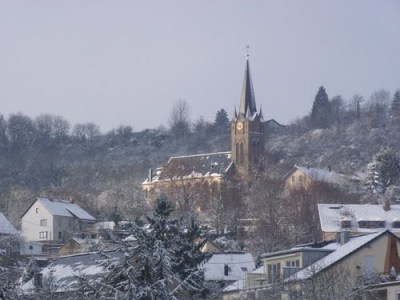
According to my research, my 2x great-grandfather Heinrich Eiloff was born in 1820 in St. Nikolas, Saarland, in Prussia (now in Germany).

st nikolaus saarland

Continue reading “Touching Roots: An Incredible Lightness Of Being by Carol P. Christ”

Does Belief Matter? by Carol P. Christ

carol p. christ 2002 colorIn recent days I have been pondering the fact that some people and some feminists seem to see the issues of religious faith and belonging to be rooted in birth, family, and community, while for others the question of belonging to a religious community hinges on belief and judgments about the power exerted by religious institutions.  What accounts for this difference in the way we view religious belonging?

Recently I watched The Secret History of Sex, Choice and Catholics, a film featuring Roman Catholic feminists and ethicists who dissent from the Roman Catholic hierarchy’s views on contraception, abortion, and homosexuality.  At the beginning of the film those interviewed state almost univocally that for them being Catholic stems from having been born Catholic. These Catholic dissidents continue as Catholics, even though they disagree with major portions of Roman Catholic teaching.  It may have been because they were not asked, but most of them did not name reasons of belief for remaining Catholic.

Thus the viewer did not learn the theological reasons these progressive Catholics stay in the church.  I wondered: Do they believe that salvation occurs only through Jesus as the Christ? Do they believe in original sin? How do they feel about the God of Exodus and the prophets who achieves his will through violence or the Christian doctrine of hell?  I also wanted to know how they justify being part of an institution that, as June Courage stated on these blog pages, is responsible for the deaths of women and children through its contraception and abortion policies just as surely as if it were bombing their homes in an unjust war. Continue reading “Does Belief Matter? by Carol P. Christ”

Thinking About Thanksgiving by Carol P. Christ


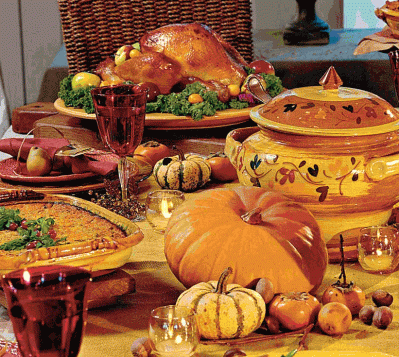
carol p. christ 2002 colorThanksgiving evokes deep memory and raises questions about what we are celebrating, now that we know the stories we were told about the Pilgrims and the Indians are not the whole truth about America’s early history.  I thought about all of this as I prepared for Thanksgiving this year and cleaned up for days afterwards.

Although I do not live in America, I have celebrated Thanksgiving with a group of friends in my home in Greece many times during the past twenty years.

For me, Thanksgiving brings up happy memories of family gatherings in a time when my extended family, including Mom and Dad, brothers, great-aunts and great-uncles, aunts and uncles, cousins and second cousins, gathered at Grandma’s to eat turkey with all the trimmings.  Grandma Lena Marie Searing Bergman was not only a great cook but also an excellent hostess.  Her tables were laden with turkey, stuffing, mashed potatoes, gravy, sweet potatoes, biscuits with butter and homemade jam, corn and green peas, pumpkin and mince pies, and also with crystal, china, and silver, and flowers from her garden.

Uncle Emery, my grandmother’s older brother, told stories about life on the farm in Michigan, where they had a pony and he lost parts of his fingers in a threshing machine. We children played croquet in the garden and ran races all around it while our mothers, aunts, and grandmother laid out the feast and cleaned up afterwards.  These were the blessed days before television and televised football games came to dominate holidays in the United States. My memories are laced with the sadness of knowing that those days are in the past. Continue reading “Thinking About Thanksgiving by Carol P. Christ”