Recently I traveled to Texas to receive the Kore Award from the Association of Women in Mythology for my dissertation in Women’s Spirituality at the California Institute of Integral Studies, “The Everyday Spirituality of Women in the Italian Alps: A Trentino American Woman’s Search for Spiritual Agency, Folk Wisdom, and Ancestral Values.”
Shortly after I had arrived in San Antonio, and met my younger sister and her daughter who were in town, we received word that my Mother was not well. Although Mom had been in precarious health throughout the last year, she had pulled through several times. That night in the hotel room, we hoped for the best. The next morning as I lay in my dream state, I felt someone come and lay beside me in bed, compressing the covers, which I have come to understand as a visitation from my Mother. Then the phone rang with the news that Mom had died peacefully that morning. It was comforting for me to be with my sister and niece, especially since we were away from home. Together, we made it through that long, rainy day.
Later that morning, my other siblings, who were gathered around my Mother’s kitchen table, called the hotel room where I was staying. They passed the phone around to each person, voicing their consensus that I should stay in Texas to attend the conference, give my presentation, and receive the award. There was nothing I could do in the next few days if I flew to Denver, they said. All the arrangements had already been made; the funeral wasn’t until the next week. So, reluctantly, I surrendered to their decision. My heart wanted to be with them. However, I stayed, unsure. . . . Continue reading “A Message From My Mother by Mary Beth Mosèr”
This piece titled, ‘Love Facing’ is a meditation on the intergenerational dynamics of family violence and our need to move beyond labels in order to understand the complexities of American violence. It begins with a narrative critic of spanking as a corrective measure and its propensity to escalate into other forms of violence. The poem continues with reflection on how male privilege and power impact the disempowerment of women and girls. It signals forgiveness as a possible means of understanding intergenerational trauma and stress, however. The piece advocates an understanding of male privilege and dynamics of power and control, as a means of empowering women and children, affected by family violence. Furthermore, it examines our societies failure to raise healthy men and boys, who are comfortable openly expressing their emotions. In the end, the poem signals our human need for unconditional love, respect, and honor and need for religious and spiritual practice imbued with compassion, mercy, and kindness, or feminine attributes of the Divine.
“When the power of love overcomes the love of power, the world will know peace.” ― Jimi Hendrix
My recent discovery of Marija Gimbutas on Youtube rekindled my admiration for her work. In her slide-lecture “The World of the Goddess” Marija Gimbutas allows us to follow the line of reasoning she used to decipher the “language of the Goddess” in Old Europe.
Careful attention to her lecture shows that Gimbutas did not close her eyes, dream, and then attach her own ideas and intuitions to the artifacts she later discussed. Rather, she catalogued groups of images with similar symbolism and used her knowledge of nature (what does a water bird or an owl look like?) and folklore (she collected thousands of songs connected to the agricultural and life cycles in her native Lithuania in the 1930s) to unlock the meaning of ancient symbols.
I suspect that most of the critics of Gimbutas lack the knowledge she gained through her wide curiosity about life. Do other archeologists as a group know what specific species of water birds or owls really look like? Do they have the same kind of knowledge of folklore and folk traditions that Gimbutas had? Continue reading “Curiosity About Everything and the Language of the Goddess by Carol P. Christ”
In September past I travelled to Zanzibar with a long time friend from Singapore. I intentionally planned to visit the places where other Africans, like my ancestors, were bought, sold, and held in waiting like fish in the fish market. The slave trade in east Africa is linked to this historical island, which was like a Fed Ex hub: a central location to facilitate the transfer of slaves—stolen, captured in war, kidnapped, or bought elsewhere to be traded, from there to parts of Persia and Arabia.
I explained to my friend, EVERY African-American identifies intimately with slavery. We talk as if it were only yesterday. We say “we,” as though speaking of relatives in another city or town. We also say “they” about slave masters and traders, about the over seers who beat us, the men who raped our foremothers and sold off their children, the few who taught us to read in secret, or turned a blind eye at our efforts to escape. Yet, I know of NO WHITE person who identifies with their history as slave masters.
My intention was to perform some simple ritual interface at the markets and holding cells. I had not planned any details, I had only reflected on the value of sacred expiation and the reality of living blood still flowing because my ancestors gave their blood, sweat, and tears. Perhaps my blood would mingle with the spirit of the blood of my ancestors. At least I hoped I could, through some selected prayers or liturgy, release anger, pain, and humiliation in exchange for a life of freedom. I owe my life to them and I wanted to consciously renew the bond and then, like Nelson Mandela’s walk to freedom, to LET it go. To honor my ancestors I must live fully and in freedom. Continue reading “Freedom and Faith by amina wadud”
Echoes of Mesopotamia small figures from ancient places ancient times and ancient faces ancient words and ancient wisdom still flowing in my veins
Clay in my hands clay in her hands running on the rivers of time spiraling in the mysteries of being spinning in the eddies and ripples of eternity…
I have a strong emotional connection to ancient Paleolithic and Neolithic goddess sculptures. I do not find that I feel as personally connected to later goddess imagery, but very ancient figures call to something deep and powerful within me. I have a sculpture of the Goddess of Willendorf at a central point on my altar. Sometimes I hold her and wonder and muse about who carved the original. I almost feel a thread that reaches out and continues to connect us to that nearly lost past—all the culture and society and how very much we don’t know about early human history. There is such a solid power to these early figures and to me they speak of the numinous, non-personified, Great Goddess weaving her way throughout time and space. Continue reading “Echoes of Mesopotamia by Molly”
Mary, Mary, quite contrary, how does your garden grow? With silver bells and cockle shells, and pretty little maids all in a row.
From the beginning of horticulture about 8000 BCE or earlier to the present day, weeding has been women’s work. Women, who were the gatherers and preparers of food in traditional nomadic societies, no doubt were the first to discover that seeds dropped at a campsite one year sometimes sprung up as plants the next year. When this discovery was systematized, agriculture was invented, and human beings began to settle down in the first villages and towns.
In the early days of horticulture (the name for the earliest stage of agriculture before the plow was developed), the cycles of planting and harvest and all the stages in between were understood to have been given to mothers by the Great Mother, the Source of Life. The secrets of planting, seed collection, harvest, and food preparation and preservation were all perceived to be “mysteries” connected to the ongoing cycles of birth, death, and regeneration in the universe.
My grandmother Lena Marie Searing who was born on a farm in Michigan must have learned agricultural secrets from her mother, for she not only created a beautiful garden, she also farmed an orchard and preserved its fruits in glass jars that lined her pantry. It was she who taught me and my brothers and cousins to love nature. My mother learned to garden from her mother, but she did not harvest food crops. I think of both of them whenever I work in my garden.
The past few days I have been weeding my garden after heavy rains that left the soil clumpy and moist. I have weeded before, but I have never enjoyed it so much. My garden has matured over the past seven years, and now the weeds are more “under control.” There aren’t so many of them, and as I have now been weeding them out over the years, their roots are shallow.
As I slide a trowel into the earth the weeds lift up and with my fingers I gently pull the plants with their roots from the soil. The weeds are familiar, though I don’t know all of their names. The “sticky weed” has many tough roots, the clover has many fine ones—both are hard to eradicate. Other weeds are easy to pull up and do not reappear again until the next year.
wild chamomile blooming among “weeds”
I am discovering that weeding is a delicate process. Sometimes the roots of plants I want in the garden are entangled with those of the weeds. I work carefully choosing the ones to save and the ones to discard.** I leave poppies, chamomile, yellow daisies, and marigolds where I find them, as I consider them to be wildflowers that will provide beauty in my garden when they bloom in spring. I also take care to “keep the soil in good heart” by not discarding too much of it along with the weeds.
As I weed, I think of the women in my village who harvest greens from the fields, feeling certain that some of the weeds I discard are edible. I marvel at all of the knowledge women have shared and passed down over the past 10,000 years and more, as I realize how little of it I know. My suspicion that some of my weeds could be food is validated when a friend and I order boiled “greens from the mountains” for lunch at a local taverna and are served one of the plants I had thrown into the garbage can.
As I weed, I am reminded of an essay called “Keeping the Soil in Good Heart: Women Weeders, the Environment, and Ecofeminism” by Candice Bradley which was published in Karen J. Warren’s Ecofeminism. Bradley writes that weeding is women’s work in almost all cultures. As I work, I understand that this is so because weeding is delicate work that requires concentration and patience and that must be repeated. Bradley says that in many cultures men disparage weeding as they disparage housework—not considering either to be “real” work.
Horticulture is the most environmentally friendly form of farming, according to Bradley, because it does the least harm to the soil, and because the weeds that are not eaten are burned or composted and turned back into the earth to replenish it.
While weeding by hand has been considered work for women and children, men have generally controlled the plow and its recent successor, the tractor. However, as Bradly states, the plow and the tractor do not eliminate the need for hand-weeding. In many cases they encourage the weeds to regenerate. Women and children still weed.
The chemical gardening and farming industry (“round it up”) is based on the premise that weeds can and must be eradicated. Rachel Carson warned us of the danger this approach to agriculture presents to human and all other forms of life. A by-product of chemical agriculture is that the careful work of women weeders is further discounted.
I do not use chemicals or pesticides in my garden, and I will be out there weeding on a regular basis in the next months. As I put my hands in the earth, I will think of all the women before me who have weeded and planted, weeded and harvested, and weeded again. Blessed be.
*The title of this essay is an homage to Elizabeth Wayland Barber’s Women’s Work: The First 20,000 Years which discusses and celebrates women and weaving.
**I am aware that no plant was born a “weed” and that the designation of some plants as weeds is a by-product of human digestive systems, human taste, agriculture, and the creation of gardens for the celebration of beauty.
Lady Death is knocking on my dear old Poppy’s door. His health has been getting progressively worse with each day and it is a sad and trying time for all of the family. Naturally, with death, comes reflection, unresolved issues are stirred up and we are inevitably confronted with our own mortality. I have been reflecting and reminiscing about times spent with my Pop as a child. So many wonderful memories are warmly held in my heart.
Visiting Pop and Nanna’s house as a child was always very exciting, namely because of all the lollies Pop had hidden in his cupboards – XXXX mints and licorice all sorts his favourites. I remember him Irish jigging in his blue tartan dressing gown around the campfire, and the times he would stick out his false teeth, roar and scare us silly. Slim Dusty, an Australian country music icon was one of his favourite singers, he would play his records on the old player as loud as can be, I knew the words to “I’d love to have a beer with Duncan” back to front. Every weekend the horse races would blare out of his little radio in the kitchen, I would listen along and try to pick a winner for him.
My sister and I would stay at Nanna and Pops house most school holidays and we would both wait at the front gate for him to come home from work, we were always so happy to see him coming down the path, covered in concrete and dirt, his skin so tanned from being in the sun all day. He always greeted us with a big smile and a pat on the head. We would have dinner early and no matter what was on the menu, much to Nanna’s disappointment, he would cover his food in a river of ‘black horse,’ slang for Worceteshire sauce. We would then watch the goings on in the neighbourhood from the back verandah; Pop could, and still can, tell you what everyone else was up to! He was, and still is a cheeky old thing, as stubborn as an ox, and I love him so very much.
Death of one of my family members is not something I have any experience with. Knowing that the time will soon be nigh however, has me naturally thinking about the cycle of life and death. As an avid gardener I witness this cycle daily. I plant seeds, watch them grow, set seed, decay then watch their progeny pop up all over the place. I find cocoons where caterpillars will eventually emerge as beautiful butterflies, only to flutter for two days and pass on. On my early morning bug hunts I find all sorts of larvae waiting to hatch, the strongest survivors grow; have a grand feast on my veggies, only to become a meal or compost themselves. Leaves and branches fall to the ground, animals perish and decay, feeding the earth and maintaining the fertility of the soil in the process.
This Life/Death/Life cycle is no new concept. Since time beginning human life was directly linked to the cycle of the seasons and the cycle of life and death. Humans were inextricably linked and connected with their natural environments. They imitated animals and worshipped the sun, moon, trees, rivers and mountains, elaborate rituals and ceremonies were created concerning these cycles and transitions. It was understood by careful observation of nature, that death was a natural part of the life cycle.
But why, in much of our Western culture is there so much fear and denial over death when religions and philosophies the world over have endeavoured to offer solace to humans in the face of our mortality by promising eternal life? Dr. Estes says that, “In much of Western culture, the original character of the death nature has been covered over by various dogmas and doctrines until it is split off from its other half, Life”. This is not how it is, for “death is always in the process of incubating new life”. This is life’s greatest paradox; even in our state of living, we are in fact dying and it is this dance between the two and the nature of the Life/Death/Life cycle that has been contaminated by a fear of death. This splitting in two of life and death, I feel, is largely a result of our disconnection from nurture and nature. This disconnection has impacted on every aspect of society, our ability to flow with these cycles is often weak and as a result impacts all kinds of relationships and structures, particularly that of family and community.
I am not sure what my pop believes about the nature of death as he is not religious, nor does he have any faith in an after life. He doesn’t even want a funeral of any kind. I do remember him though, saying to me as a child rather emphatically, “when you’re dead, you’re dead: food for the worms!” This has stayed with me for life and in it’s simplicity shows an understanding of the cycle. He was an avid gardener too, growing plenty of vegies for the household, and if I look deeper into his comment, which he made on more than one occasion, he was really saying that we become compost, teeming with new life, we feed the earth (the worms) and so the cycle continues.
I am certain though, that Pop fears death, and I know that he fears leaving the living, and while we can talk about, have faith in, and come to accept the Life/Death/Life cycle, it doesn’t mean that it is ever going to be easy. Surrendering to death, not just the physical death of our bodies, but any kind of death, I think, is life’s greatest lesson.
Lady Death is waiting for pop to answer the door, she has come to embrace him and comfort him in his pain and ease his transition. He is not quite ready, but the time will come soon and I feel strong in my knowing that despite how much suffering can accompany the dying, this is the way it is meant to be. From his death new life will emerge.
He will forever live in my heart and memories.
Returning, by Jassy Watson
Jassy Watson, who lives on the sub-tropical coast of Queensland Australia, is a mother of four, a passionate organic gardener, an artist, teacher of the Colour of Woman Method, and a student of ancient history and religion at Macquarie University, Sydney. She runs a small business Goddesses Garden and Studio to keep women’s sacred circles, art, music and gardening practices alive. Jassy teaches regular painting workshops based around themes exploring the feminine.
These days I can’t get my 2x great-grandmother Anna Maria Christ off my mind. She may be the independent female ancestor I have been looking for all these years.
My father’s father was transferred from New York to San Francisco during the depression. When I moved to New York City, I felt powerfully connected to its diverse immigrant culture, but I never thought of trying to figure out where and when my ancestors lived there.
Recently I found my Scottish and Irish 2x great-grandparents, James Inglis, the seaman, and Annie Corliss, mother of 9, living in the tenements on Cherry Street near the port of New York. These were my father’s ancestors on his mother’s side. I felt inspired by a photograph of Annie to take her Irish spirit of triumph over adversity into my soul.
Because it has become fashionable to be interested in things Irish, I began my ancestor research there. In fact, I am more German (3/8) than I am Irish (3/16). As I have delved into my German ancestry, I realized that being German became a cause for shame in both the First and Second World Wars. German language newspapers were banned, Germans were interned, people hated Germans, and many Germans changed their names.
Yesterday, I visited the Capuchin catacombs in Palermo, Sicily. In a grotto about a mile or so from the center of the modern city are found the preserved remains of about 2,000 people who paid the monks to preserve their bodies after death, dress them in their finest clothing, and put them on display. Each of them is placed in its own niche along the wall, held up by iron bands, and has a tag around its neck with its name and date of death. The bodies are not displayed in random order: they are sorted (to some extent) by sex, profession, and familial status. In one large recess, a number of children’s skeletons are on display, many of them in heartbreakingly tiny coffins. In another corridor, friar after friar hangs in his robes, some with cords around their necks signifying their adherence to a Franciscan order. Almost indistinguishable from the cords are the braids still hanging from the heads of some of the women’s bodies. Some families are arranged together; in another corridor doctors and lawyers are segregated and in yet another female virgins are gathered together. The oldest body I saw dated from 1599 – high on a wall hangs the body of a monk whose name was almost illegible but who hailed from the Umbrian hill town of Gubbio.
Some of the skeletons presented death’s heads; others had skin dried to a leathery tightness over remaining bony protuberances. Some of their outfits are well preserved; others have disintegrated under the relentless assault of the years. The practice became illegal around 1880, but until then, people chose – or perhaps their relatives chose for them – to be preserved in this seemingly macabre manner. Continue reading “Seeing Death and Resurrection by Linn Marie Tonstad”
There were some things about my grandmother that I didn’t find out until after she died. For example, in 1974, she co-organized a “Women’s Exchange” in Fresno, California with the theme: Stop the World…We Want to Get On. How much I would have liked to talk to her about that! While I didn’t know about the fair, I do know that she was successful with her vision of getting on this brightly spinning world. My grandma was a woman who was hiking in the Channel Islands one month before receiving a diagnosis of aggressive pancreatic cancer. She was incredible.
After reading Grace Yia-Hei Kao’srecent post about giving a eulogy at her grandmother’s funeral, my thoughts turned to my grandmother’s memorial services this past spring. What, if any, are the components of a feminist eulogy? Grace wonders. In reading this, I reflected on the components of the services I prepared and participated in for my grandmother and I believe they fit the bill. In a pleasingly feminist move in itself, I was asked by my extended family to serve as the priestess at my grandmother’s “committal” service (in which her ashes were interred in the above-ground burial chamber that received my grandfather’s body in 1989).
It was deeply important to me to have multiple voices represented during the small, family-only, service and I enlisted all the grandchildren present, as well as her step-grandchildren, in an adapted responsive reading based on Walt Whitman’s “Song of the Open Road”. I chose it precisely because it spoke to the irrepressible, adventuresome spirit of my grandmother. It was a lot of pressure to be responsible for the family ceremony for the interment of her ashes. I wanted it to be perfect. I wanted it to be what she deserved. I wanted it to “speak” to every person there. I wanted it to be worthy of her. I hope it was enough. Continue reading “An Epic Woman: A Feminist Eulogy by Molly”


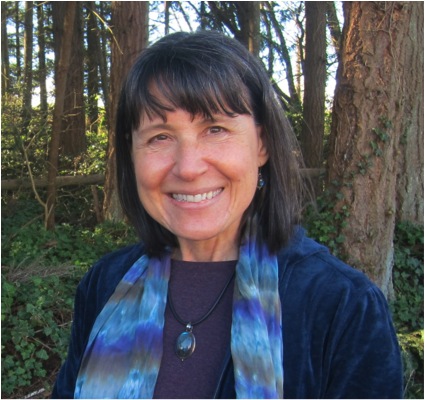 Recently I traveled to Texas to receive the Kore Award from the Association of Women in Mythology for my dissertation in Women’s Spirituality at the California Institute of Integral Studies, “The Everyday Spirituality of Women in the Italian Alps: A Trentino American Woman’s Search for Spiritual Agency, Folk Wisdom, and Ancestral Values.”


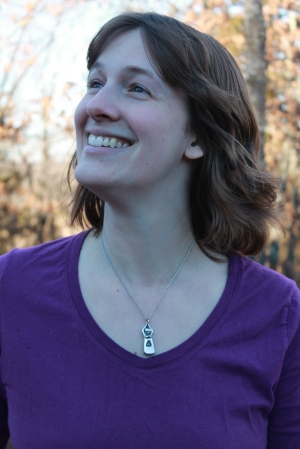




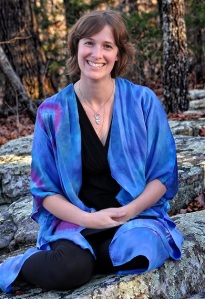 There were some things about my grandmother that I didn’t find out until after she died. For example, in 1974, she co-organized a “Women’s Exchange” in Fresno, California with the theme: Stop the World…We Want to Get On. How much I would have liked to talk to her about that! While I didn’t know about the fair, I do know that she was successful with her vision of getting on this brightly spinning world. My grandma was a woman who was hiking in the Channel Islands one month before receiving a diagnosis of aggressive pancreatic cancer. She was incredible.
