Interfaith Womanism and Healing Psychology Embodied Through Art by Chaz J.

A thoughtful gesture from a coworker—complimentary tickets to the Isabella Stewart Gardner Museum—stirred a quiet excitement within me. It’s curious, isn’t it, to reside in Boston, a city so steeped in history and intellectual vigor, yet find oneself so often distanced from its beautiful, intricate past? Time, energy, and finances often conspire to keep such access at arm’s length, even for a history buff like myself. It was a welcome reminder of the stories waiting to be discovered, right here in my own backyard.

I arrived at the museum expecting to immerse myself in the European art showcased on its website. Yet, to my profound surprise, the featured exhibit immediately drew me into a powerful narrative: one that centered the Black struggle for freedom, dignity, and the reclaiming of ancestral roots, in this case Haitian Vodou. These roots, I believe, have always grounded, protected, inspired, and empowered the African diaspora across the globe.

Continue reading “Interfaith Womanism and Healing Psychology Embodied Through Art by Chaz J.”
Reflections On Bone Black: Memories Of GirlHood by Zoe Carlin

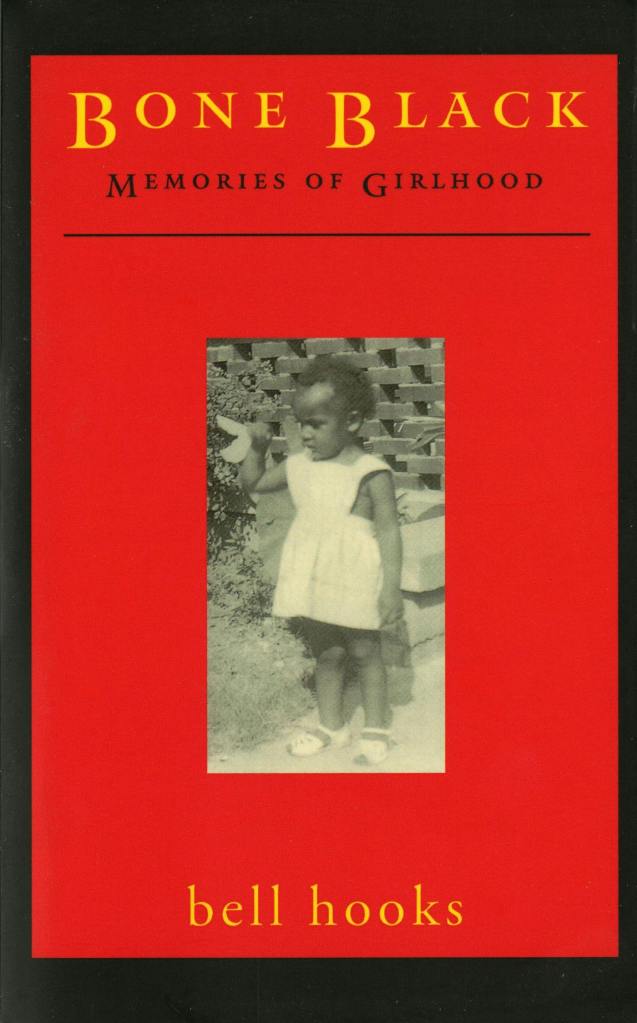
Bell Hooks explores in the memoir Bone Black: Memories of Girlhood the extreme effects of race, gender, and class on her identity and self esteem as a Black woman. Each chapter of Bone Black showcases stories of Bell Hooks’ childhood experiences growing up in a racially segregated environment. Through these experiences, she shares how the mainstream beauty standard, the racism towards Black people, and the limitations imposed by class and gender have shaped her perceptions of herself and her worth. Hooks also discusses how white supremacy, the patriarchy, and societal neglect intertwine.

What particularly stood out to me is how her story and the themes mentioned connect to spirituality and are offering further ideas on resistance and empowerment. It also touches on connections with identity formation and our sense of self. For example, the memoir shared insight of how the beauty standards at the time were typically associated with being white. As a Black woman, Hooks shared how she had felt undesirable due to not being included in these standards that were set in place. She does not just reflect on the pain of being marginalized but she also delves into the complexity of being a Black woman in a masculine dominated world. Hooks had to navigate both the oppression of racist behavior by others around her and the misogyny of a patriarchal system that was determined to define her worth based on her appearance.

Continue reading “Reflections On Bone Black: Memories Of GirlHood by Zoe Carlin”

Deconstructing and Reconstructing Love by Chasity Jones

Note: This is based on a podcast which can be heard here.

“Black love exists and Black women deserve love that does not require pain.”

What is love? What’s love got to do with pain and suffering? Are they related? Pain and love? Must one always be present with the other? In this blogpost I explore pain and suffering through a womanist perspective (centering the perspectives and lived experiences of Black women) and discuss how to live into wholeness and wellness. This is especially important because the Black community/women in particular’s experience in the US (and globally) has been and continues to be defined by pain and suffering. What are the theological implications?

How have Christian frameworks at associating love with sacrifice and pain justified the pain and suffering of Black women? How can we decolonize love so that liberated Black women are empowered to embrace a love that does not hurt first with false promises of rewards later in life or afterlife? Black women, pain does not equal love.

Continue reading “Deconstructing and Reconstructing Love by Chasity Jones”

white femininity: whitemalegod’s secret weapon By Christena Cleveland, PhD

For the first several weeks of my walking pilgrimage, I debated whether to visit the famous Black Madonna of Orcival. It wasn’t the walking distance that deterred me; She lived in a gorgeous Romanesque cathedral nestled in a charming medieval mountain town only fifteen miles away. Rather, I was hesitant to visit Her because I knew that, after a thousand years of being Black, She had undergone a mid-twentieth-century “renovation and restoration” process that whitened Her skin. I knew from photos that Her once gorgeous melanated skin was now a ghastly beige-ish pink. The incredible Black Madonna of Orcival now appears to be a white woman.

Continue reading “white femininity: whitemalegod’s secret weapon By Christena Cleveland, PhD”

Strength by Chasity Jones Selenga

To be transparent, these last four weeks have unintentionally flown by and have been filled with great pain, sorrow, depression, loss, and grief to be honest. I can feel my own spirit at the beginning of a long healing process and have a feeling that these words kept between you and I will be a tremendous part of my healing. Healing in itself is an essential aspect of Womanism and how I found my way to it. I have been privileged to develop spiritual practices that encourage and assist with healing in emotional, physical, mental, and wisdom ways!

Today, I acknowledge the Africana Womanism (Clenora Hudson-Weems) characteristic of strength. I must admit I have a strained relationship with the word as a Black woman. I was raised by strong women to be strong in an environment in which we will always have to strong. As a result, being soft is interpreted as weak. I mourn that Black women rarely find spaces in which they can turn off their survival mode- fight or flight nervous system responses and relax while being soft. It is so foreign. At this point in my life softness is so inconvenient and also something that I don’t even know how to maintain consistently.

Continue reading “Strength by Chasity Jones Selenga”

We Are Not Oppressed Because We Remember pt. 3: Sowing Seeds and Braiding Hair by Chasity Jones

Today, once again, I got to touch the earth!

While planting and constructing my indoor container garden, I thought about how my ancestors put seeds into their children’s hair so that in case they were taken away to live and die in chains, they would at least be able to sustain themselves with a piece of the motherland. Rice, okra, yams, watermelon, and so MANY more crops that would go on to make white slaveholding Americans so rich (passing their wealth to their descendants and zero reparations for the descendants of enslaved Africans), that they were willing to fight a war to sustain their evil practices of owning human beings as chattel (Check out High on the Hog Netflix documentary which was adapted from a book by Dr. Jessica B. Harris). Enslaved Africans brought these foods to the new world, a direct result of slavery.

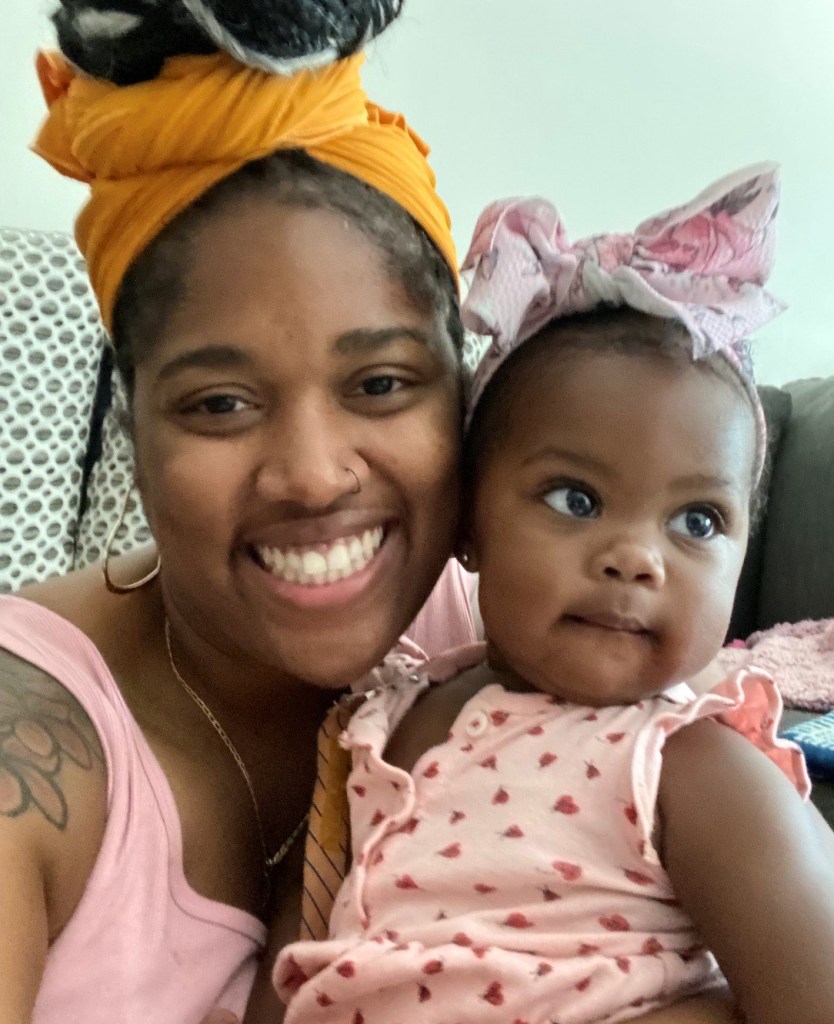
As I wash my daughter’s hair (which for Black women and girls is a PROCESS!!), as I moisturize her hair, and as I braid my hair, I am thankful that no one has a right to my child and that I do not need to fear her enslavement. Instead, I manifest her revolutionary future to carry the torch of our ancestors. A Torch and a commitment to elevate our community and move the community forward. I leave it up to her to choose how she will carry that torch forward!

Continue reading “We Are Not Oppressed Because We Remember pt. 3: Sowing Seeds and Braiding Hair by Chasity Jones”

We are Not Oppressed Because We Remember Part 2 – Diaries of a young black woman by Chasity Jones

Read Part 1 here.

One of the 18 characteristics of Africana Womanism is being a self-definer. This piece is a sliver of my process to do and be exactly that.

I am striving to be a whole Black woman. I have an awareness that I am a whole person and transcend the role that Amerikkkan* society has given black women. Wholeness is justice and justice/liberation is wholeness. We are unaware of the full extent that racism has impacted Black women psychologically and emotionally. I’m saying racism constricts us in exhausting ways- the results have been wearing on our mental and sexual health, senses, nerves, physical health for years. And it still is.

Continue reading “We are Not Oppressed Because We Remember Part 2 – Diaries of a young black woman by Chasity Jones”

Grown Little Girl, Grow Little Girl by Chasity Jones Selenga


I have newly found myself a wife and in the throes of motherhood. In many feminist circles, I have encountered anti-family and anti-wifehood sentiments. The understanding is that to be a wife, and, to be a wife that chooses to start a family, is an oppressive position to occupy as well as the antithesis of the feminist movement. Though I am not typically a fan of tough physical, emotional, soulful labor, these two positions have been the highlights of my life so far.

My daughter embodies both my husband and me, physically. However, she is and will become her own person-soul. She is so young, but her soul is eternal, and has experienced eternity. I am here to help her navigate remembering who she is. She inhabits the intersection of Blackness, divinity, femininity, and infinity. Motherhood has greatly increased my capacity of appreciation for women and what women are capable of doing. Especially from the intersection of Blackness and woman-ness. From the capacity to create, labor, and deliver life to the task of raising Black children in a country that would have them annihilated, emotionally traumatized, and made to accept they are inferior.

Continue reading “Grown Little Girl, Grow Little Girl by Chasity Jones Selenga”

Hagar and Intersectionality by Marilyn Batchelor

I began to follow Kimberlé Crenshaw a little more than five years ago when I first learned of her theory of intersectionality as a more concise description of oppressions stemming from race, age, gender, sex/sexual orientation, religion and socio-economic status. 
In Delores Williams’ book, Sisters in the Wilderness, there is a closer look at womanist theology as it relates to Intersectionality. The focus on traditions of biblical appropriation that emphasize liberation of the oppressed “showed God relating to men in the liberation struggles,” Williams says in the introduction. “In some African American spiritual songs, in slave narratives and in sermons by black preachers, reference was made to biblical stories and personalities who were involved in liberation struggle.”  Continue reading “Hagar and Intersectionality by Marilyn Batchelor”

This is for colored girls who are movin to the ends of their own rainbows: Ntozake Shange’s Choreopoem of Spiritual Healing by Carol P. Christ

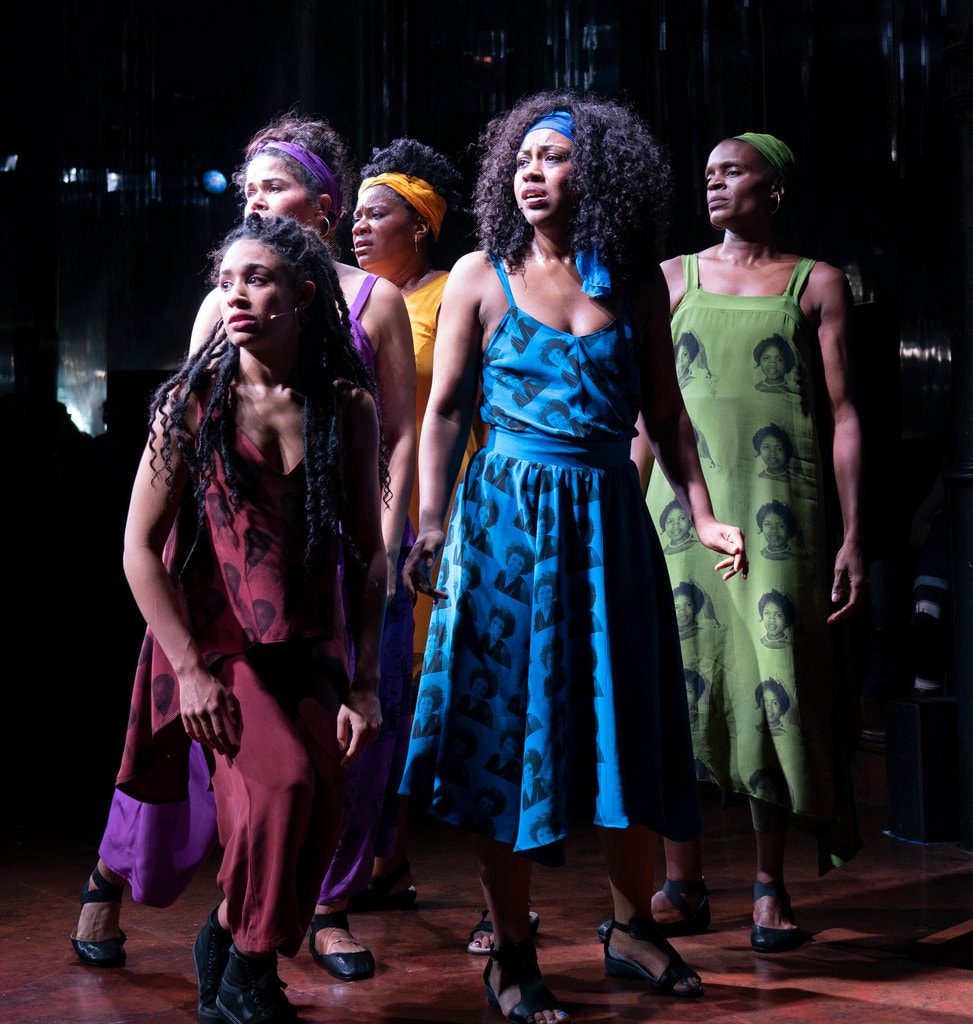
Ntozake Shange’s choreopoem for colored girls who have considered suicide/when the rainbow is enuf has reopened at the Public Theater in New York City to rave reviews.

A scene from the new production of for colored girls

I first saw for colored girls in 1976 after my friend Carolyn Broadaway, who was visiting me in the city, insisted that we must see it.

Here is what I wrote about that experience:

Each of the three times I saw for colored girls performed on Broadway and each of the many times I read it or heard it performed [on the original cast album] on my stereo, I have felt chills of recognition up and down my white woman’s spine—shocks of recognition that tell me that something deep within me has been unlocked as I hear my experience voiced. (103)

Continue reading “This is for colored girls who are movin to the ends of their own rainbows: Ntozake Shange’s Choreopoem of Spiritual Healing by Carol P. Christ”