At the end of this month, the Leadership Conference of Women Religious will meet to formulate a response to a Vatican trap whose cunning is best appreciated within the long tradition of religious authorities who craft impossible dilemmas for those they perceive as threats.
Two millennia ago, the chief priests sent someone to ask Jesus, “Should we pay taxes?” If Jesus said yes, he would pit himself against Jewish resistance to Roman occupation and therefore, in Jewish eyes, against God. If he said no, the Romans could execute him for sedition. Instead, Jesus famously replied, “Render to Ceaser what is Ceaser’s and to God what is God’s.”
In the fifteenth century, Joan of Arc’s ecclesiastical inquisitors asked her, “Do you know yourself to be in God’s grace?” If Joan answered yes, she would commit heresy because the Church had long taught that no one could be certain of being in God’s grace; if no, they could interpret her answer as an admission of guilt. Joan looked them in the eyes and replied, “If I am not in God’s grace, may God put me there; if I am, may God so keep me.” Continue reading “Vatican Lays a Cunning Trap for American Nuns by Mary Johnson”
While I celebrate the rise in status of Hildegard to official saint and soon to be Doctor of the Church, I cannot help but be suspicious of the Vatican’s motivations. One only has to take in the last two months behavior of the CDF, sanctioned by Pope Benedict, to see the real intentions of this papacy—the continued subjugation of all women to clerical authority.
The past month or so has been a very busy time for the Congregation for the Doctrine of Faith or CDF and their examination of women. First they (and this includes Pope Benedict XVI) decided American nuns are guilty of the sin of silence by not speaking out on abortion & homosexuality. Their “radical feminist” ideology of standing with the poor and disenfranchised, while good, is not good enough for the CDF. The firestorm of solidarity coming from both laity and religious surely caught the Vatican off guard. Right? Well, not quite. This past week the CDF began its investigation of the Girl Scouts for their purported association with the likes of Planned Parenthood and Oxfam. While both address the needs of the poor, it is the latter and its troubling advocacy for safe sex via condom use that initiated the inquiry. Keep in mine that in 2010 Pope Benedict retracted from his earlier position and bane on condoms, seeing instead their use as a “lesser evil” in the fight against HIV/AIDS. The CDF angst is that the message of condom use might be too much sex-talk for impressionable young women. Continue reading “The Sainthood of Hildegard von Bingen by a Feminist-Friendly Pope? by Cynthia Garrity-Bond”
“Yo soy mujer en busca de igualdad, no aguantar abuso ni maldad. Yo soy mujer y tengo dignidad, y pronto la justicia serd una realidad. Mujer, tù eres mujer, porque supiste ver, la realidad de tu poder. Hoy canto al Dios del Pueblo en mi guitarra, un canto de mujer que se libera” – From “Mujeristas: A Name of Our Own!” – Ada María Isasi-Díaz [i]
Translation: I am woman searching for equality; I will not put up with abuse and wickedness. I am a woman and I have dignity, and justice will soon be a reality. Woman, you are woman, because you have known how to recognize the fact that you are powerful. Today I sing to the God of my people with my guitar, I sing a song of a woman who liberates herself.
Labels, names, and categories can evoke prejudice and oppression. Ada Maria Isasi-Díaz, the founder of Mujerista Theology, wrote:
To be able to name oneself is one of the most powerful abilities a person can have. A name is not just a word by which one is identified. A name provides the conceptual framework and the mental constructs that are used in thinking, understanding and relating to a person.[ii]
These words relate to U. S. Hispanic women, who, according to Isasi-Díaz, struggle against ethnic prejudice, sexism, and in many cases classism [and who] have been at a loss as to what they should be called.[iii]In finding that common name, lyrics from three different songs inspired Isasi-Díaz who developed the term “Mujerista Theology,” replacing Hispanic women’s liberation theology:
“Yo soy mujer en busca de igualdad, no aguantar abuso ni maldad. Yo soy mujer y tengo dignidad, y pronto la justicia serd una realidad. Mujer, tù eres mujer, porque supiste ver, la realidad de tu poder. Hoy canto al Dios del Pueblo en mi guitarra, un canto de mujer que se libera”[iv]
For Isasi-Díaz, mujerista unifies Hispanic women and embodies strength. Mujeristas are those:
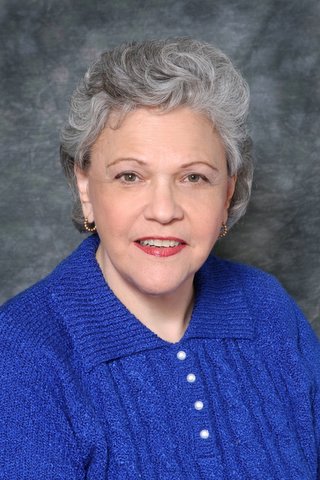
Ada Maria Isasi-Díaz Picture From Drew University’s website
Who desire a society and a world where there is no oppression.
Who struggle for a society in which differences and diversity are valued.
Who know that our world has limits and that we have to live simply so others can simply live.
Who understand that material richness is not a limitless right but it carries a “social mortgage” that we have to pay to the poor of the world.
Who savor the struggle for justice, which, after all, is one of the main reasons for living.
Who try no matter what to know, maintain, and promote our Latina culture.
Who know that a “glorified” self-abnegation is many times the source of our oppression.
Who know women are made in the image of God and, as such, value ourselves.
Who know we are called to birth new women and men, a strong Latino people.
Who recognize that we have to be source of hope and of a reconciling love.
Who love ourselves so we can love God and our neighbor.[v]
For Isasi-Díaz, Mujerista Theology is defined as:
“a process of enablement for Latina Women, insisting on the development of a strong sense of moral agency, and clarifying the importance and value of who they are, what they think, and what they do….mujerista theology [also] seems to impact mainline theologies, the theologies which support what is normative in church, and, to a large degree, in society.”[vi]
“Now the Vatican says that nuns are too interested in “the social Gospel” (which is the Gospel), when they should be more interested in Gospel teachings about abortion and contraception (which do not exist). Nuns were quick to respond to the AIDS crisis, and to the spiritual needs of gay people—which earned them an earlier rebuke from Rome. They were active in the civil rights movement. They ran soup kitchens.” — Roman Catholic Women Priests (via Facebook)
I once had a conversation with my New Testament Professor about the issue of women ordination. He was optimistic and thought there might be a possibility that change was in the air – that was six years ago. The basis for his statement had to do with language. Of the journals and articles read, he felt the language used was more inclusive and that once people adjust to this discrete change in gender inclusive language, change for women in the Church can come.
Statement from Ivone Gebara, writer, philosopher and theologian from Brazil on the Vatican action against U.S. religious women.
Translated from Portuguese. Reprinted with permission.
Once again, we watch dumbfounded as the Congregation for the Doctrine of the Faith directs a “doctrinal assessment of” or a “calling attention to” or the “punishment of” those who, according to the CDF, break away from the proper observance of Catholic doctrine. Only this time, the CDF is not pointing an accusatory finger at a person, but rather at an institution that brings together and represents more than 55,000 women religious in the United States- namely, the Leadership Conference of Women Religious, known by its acronym LCWR.
Throughout their long history, these women religious developed and continue to develop a broad educational mission which advances the dignity of many people and groups both within and beyond the United States. Most of these women belong to diverse national and international congregations.
In addition to their Christian and humanistic formation, they are intellectuals and professionals in various fields of knowledge. They are writers, philosophers, biologists, sociologists, lawyers and theologians. They have broad backgrounds and their expertise is recognized nationally and internationally. They also are educators, catechists and human rights activists. In many situations, they set their lives at the service of those affected by injustice or set themselves in opposition to the grave actions taken by the government of the United States. Continue reading “The Inquisition of Today and U.S. Women Religious by Ivone Gebara”
In 1965, the Council document Perfectae Caritatis, Decree on the Adaptation and Renewal of Religious Life, encouraged women religious to situate themselves and their vocations in the social milieu to which they belonged. Each religious community adjusted rules and customs to accommodate the needs and demands of particular ministerial vocations. For those communities that embraced Perfectae Caritatis entered into a complete paradigm shift in thinking that changed forever how they understood themselves and their chosen vocations. I recall vividly the morning, when, in 1968, Sister Mary DePatzie entered our classroom clad in a shorter habit and dress revealing the startling fact she 1) indeed had brilliant, beautiful red hair; and 2) rather shapely legs even in her sensible shoes. Continue reading “Presumed Guilty by the Sin of Silence: U.S. Nuns, Network, and The Congregation for the Doctrine of the Faith by Cynthia Garrity-Bond”
Following the testimony of Sandra Fluke on the lack of availability of contraception and the appalling remarks by Rush Limbaugh that took place in early March, 2012, much discussion around issues of reproductive justice has emerged. Among these conversations, Mary Hunt recently shared her thoughts in “Contraceptive Controversies” on the issue on FSR-Inc., and graduate students Katie German and Linda Claros organized an event at Loyola Marymount University to invite faculty members, students, and interested persons to engage in dialogue on reproductive justice. I was honored to have the opportunity to participate in that discussion and would like to share my thoughts here in an effort to continue that dialogue.
To begin, I understand reproductive justice as the call for the social, political and economic ability to make responsible and healthy decisions about gender, sexuality, and procreation for ourselves and our communities with the goal of transforming power inequities and bringing about systemic change. The denial of reproductive justice in the Catholic Church is a symptom of the larger rape culture. When I use this phrase I am referring to a culture that not only perpetrates rape, but all forms of sexualized violence against women and girls. Continue reading “Reproductive Justice by Gina Messina-Dysert”
This letter was written to to Rev. Edward Dougherty, M.M., Superior General and the Maryknoll Community on August 8, 2011 in response to the call for Fr. Roy Bourgeois to recant his stance on women’s ordination in the Catholic Church.
My Brothers,
I have been a Catholic priest for 39 years and Maryknoll has been my faith community, my family. So it was with great sadness that I received your letter of July 27, 2011 (Second Canonical Warning), stating I must recant my belief and public statements that support the ordination of women, or I will be dismissed from Maryknoll.
In my ministry over the years I have met many devout women in our Church who believe God is calling them to be priests. Why wouldn’t they be called? God created men and women of equal dignity and, as we all know, the call to be a priest comes from God.
My brothers, who are we to reject God’s call of women to the priesthood? The Holy Scriptures remind us in Galatians 3:28, “There is neither male nor female. In Christ Jesus you are one.” How is it possible for us to say that our call from God, as men, is authentic, but God’s call of women is not? Continue reading “A Response to the Maryknoll Community on Women’s Ordination by Fr. Roy Bourgeois”
While I have always intuitively seen Mary as more than Theotokos, my training in orthodoxy came to overshadow my orthopraxis of Mary. But today I hold a different stance because I have come to view my Marian practice as indeed worship of the Divine Godd/ess.
At a surprisingly early age, perhaps ten or eleven years old, I became the author of my own religious narrative, meaning, I took it upon myself to initiate and pursue the deep mysteries of my Catholic faith. Weekly Mass became an event, not an obligation, and something to which I attended independent of my large, Irish-American Catholic family. The singleness of my worship at such a young age drew stares and whispers from those families that arrived intact. And while I was not unaware of their curiosity, I found it easier to lose myself in the absolute wonder of my environment. This environment of the tangible and non-tangible is what Andrew Greeley has since come to identify as “the Catholic Imagination,” where a Catholic sensibility is manifested in cathedrals and high art, but is also awash in the mundane of our daily lives. Additionally, our family’s dependence on Saint Jude, the patron saint of lost causes, was a close second to a strong devotion to the Blessed Virgin Mary. By this I mean to suggest that she was our go-to heavenly figure when in need, and I, the appointed family petitioner. Continue reading “Mary, Mother of God or Godd/ess?”
Maundy Thursday – the imitation of Jesus’ act of service and submission is re-created. Controversy surrounds the “disciples” – must they be all men? Are women allowed? Who steps into Jesus’ role? Men, women, or both? Why, when it comes to imitating the act of humility and priestly service (rooted in our baptismal call), does a distinction of gender need to made at all?
As I progressed towards the intersection, I looked up to witness a grand procession of men dressed in white albs with stoles that often contained subtle hints of gold, worn in a manner to distinguish their role as priests and deacons. They moved slowly down the sidewalk entering the Cathedral to begin their celebration of the Chrism Mass – a celebration of priesthood and priestly service within the Diocese where all priests and deacons gather to celebrate and re-affirm their commitment to ministry and service to the Church. It is also during this Mass that the oils used in sacramental celebrations, used by each church, are blessed by the Bishop.
As I continued to watch, I could not help but search the processional line for those with a hair color other than gray. I wanted to see how many young priests were in that processional line. What I found was no surprise – an aging group of men with the sporadic appearance of younger priests. The numbers stood as a staunch reminder that we, as a Church, may be faced with a severe shortage of priests in the future. Something already known and planned for by the Diocese in its campaign to consolidate and close parishes.


 At the end of this month, the Leadership Conference of Women Religious will meet to formulate a response to a Vatican trap whose cunning is best appreciated within the long tradition of religious authorities who craft impossible dilemmas for those they perceive as threats.






 Feminism and Religion