Ireland’s Same-Sex Referendum & The Necessity for Reconstructing Sexual Ethics in the Catholic Church by Cynthia Garrity-Bond

IMG_5296 - catAt this writing, Ireland successfully passed the same-sex marriage referendum which reads, “Marriage may be contracted in accordance with law by two persons without distinction as to their sex.”  It has been 22 years since homosexual acts were decriminalized in Ireland.  Even more astounding is the rapid two-year process from inception to constitutional law for same-sex marriage in Ireland.  This coming from a country where 84% identify as Roman Catholic but less than one-third attend weekly Mass.

While the US Catholic Bishops are vocal about their opposition to same-sex marriage, the Irish magisterium’s strategy, in this case, was less pronounced.  Which is not to say there was no movement by the Irish hierarchy to oppose same-sex marriage. In a pastoral letter to be read at Sunday Mass, Bishop Denis Brennan urged a no-vote on the same-sex referendum saying it would forever change how the institution of marriage is understood.  A number of those in attendance walked out during the reading in protest of the official church teaching.   Archbishop Diarmuid Martin took a more pragmatic stance on the outcome. With the success of the referendum, Martin stated the church is in need of a “reality check” in response to what he identifies as a “social revolution” at least in Catholic Ireland.  Argues Martin: Continue reading “Ireland’s Same-Sex Referendum & The Necessity for Reconstructing Sexual Ethics in the Catholic Church by Cynthia Garrity-Bond”

Has the Vatican Discovered that Women Should Be Running the World? by Carol P. Christ

So it is a [female] generativity that .. is … giving life to social, cultural and economic structures that are inspired by values, ideas, principles and practices oriented to the common good …

carol p. christ photo michael bakasThe above statement from the Pontifical Council’s document on “Women’s Cultures: Equality and Diffference” is a response to Pope Francis’s call for a discussion of “feminine genius” and its role in the Church. If in fact women are  “oriented to the common good,” then this is the best reason I can think of to elect a woman pope. And if a women are in fact hard-wired to think about the good of all, wouldn’t a woman pope’s first act be to dissolve the hierarchy that elected her? Is this why the Vatican is so afraid of the power of women?

From February 4-7, 2015 the Pontifical Council on Culture made up of 32 voting members (29 male clerics and 3 laymen) with the advice of non-voting Consultors (28 men and 7 women), discussed the role and place of women in the church and the world in relation to the preliminary document said to have been prepared by a group of unnamed women cherry-picked by the Vatican. Continue reading “Has the Vatican Discovered that Women Should Be Running the World? by Carol P. Christ”

The Nuns Jumped Over the Wall by Dawn Morais Webster

Dawn Morais Webster, the Pope off to his summer palace, Castel Gandolfo. He tells the world he will now become just a “humble pilgrim.”

One of the most prized dishes in Chinese cuisine is called “The Monk Jumped Over the Wall.” The name comes from the folk belief that the monk was unable to resist the aroma of this delicious dish and jumped the wall in search of it.

Reading Jo Piazza’s If Nuns Ruled The World: Ten Sisters on a Mission, it is clear that these nuns, and others like them, have been drawn by people’s needs, to jump the walls of patriarchy and prejudice.

And there’s no putting them back behind those walls.

Just ask media maven, Sr. Maureen Fiedler: “After all, Jesus was a feminist, and we claim to follow him.”

One nun, though, has accepted being put behind bars for literally breaking through the fences around the nuclear facility in Oak Ridge,Tennessee. Sr. Megan Rice is unfazed by clerical disapproval.

“I don’t believe in excommunication,” she says, “because I don’t see the institutional Church as the real Church.” Continue reading “The Nuns Jumped Over the Wall by Dawn Morais Webster”

Right to Life vs Right to A Life: Abortion & The Death Penalty by Marie Cartier

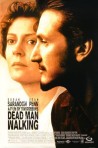
MarieCartierforKCETa-thumb-300x448-72405Earlier this week I went to hear Sr. Helen Prejean speak about the death penalty. You will remember, if the name does not immediately ring a bell, that the amazing movie Dead Man Walking (dir. Tim Robbins, 1995) was about her and her ministry to provide solace and closure with God to those inmates on Death Row. In the film, Sr. Prejean was played by Susan Sarandon. Dead Man Walking, a phenomenal hit, chronicled her first attempt at this ministry—her trials and limited success—in helping Matthew Poncelet come to grips with what he had done, ask forgiveness of the victims’ parents (because he was complicit in the murder of two teenagers) and face his death with dignity.

dead man walkingIn addition to teaching Gender and Women’s Studies, I have also been the screenwriting professor at University of California Irvine since 1992. I have used the screenplay for this movie (adapted from Prejean’s book and direct interviews) almost since it was published. It’s a great example of how research, interview, and authenticity can make a movie work—rather than “making it up.” Even the title was new to most of America- “Dead man walking!” refers to the last walk an inmate makes as he (or she) walks to his (or her) death.

So, I was enthusiastic when I heard that Sr. Helen was speaking at a local church very close to my house. Although I’ve used the screenplay for well over a decade, I had never met her or read the actual memoir she wrote. It seemed the perfect opportunity to meet her and get a signed copy—and also something my students would love to hear about when we discuss the film in the winter. Continue reading “Right to Life vs Right to A Life: Abortion & The Death Penalty by Marie Cartier”

Movement Within the Catholic Church – Time for Receptive Ecumenism? by Michele Stopera Freyhauf

Michele Stopera When I originally learned about the concept of receptive ecumenism and the movement to more fully reach across lines of faith traditions as a means of ecclesiastical growth, my first reaction was to ask the question – what about women in the pews?  

Dr. Paul Murray from Durham University conceived of the idea of receptive ecumenism, which had three international conferences of church leaders and theologians working together in a way that looks to learn from each other. The focus is not that our religion is better than yours, rather what can we learn from your faith tradition that could enrich ours without compromising our tradition. With this final conference and after years of lectures, meetings, and publications, Dr. Murray sent this concept out into the world to see if it had legs – and it really does. Pope Francis embraced this concept, so has the Anglican Church. The movement is also thriving in Australia to the point that eighteen delegates were present at June’s meeting in Fairfield, Connecticut. For my part, I raised the question whether or not the Catholic Church was postured to engage fully in this dialogue. Essentially, it boils down to this, how can we have an inter-faith dialogue when we are unwilling, as a church, to have an intra-faith dialogue that includes all voices. The teachings of the Second Vatican Council laid the groundwork for ecumenical dialogue to occur at a multilateral levels. The council mandated us to look inward as well. Continue reading “Movement Within the Catholic Church – Time for Receptive Ecumenism? by Michele Stopera Freyhauf”

Exhaustion and Inspiration by Ivy Helman

photo4
Wading in the waters of Prince Edward Island.

Change takes time.  If society takes years to change, religious institutions seem to take decades, maybe centuries.  That ubiquitous intersection of religion and feminism seems neck high in mud and muck.  Some religious institutions claim divine inspiration for keeping their chins down, jaws clenched and footings strongly moored in damaging sexist ideologies.  This is wrong.  But I’m tired.  I feel as if the feminist movement is draining too much out of me for not enough change.

Perhaps an example will clarify.  This Tuesday I taught the first session of a six-week long summer course entitled, “Theology through Women’s Eyes.”  An odd title that could mean many things, right?  It does not even imply a feminist approach to religion and the college’s course description did not either.  I learned from my department’s chair that the last professor to have taught the class shied away from the course having any specific reference to feminism as she was a practicing Catholic theologian and she worried about the effects of that association for her professional career at Catholic universities.

Are you kidding? We are stuck there?  Still?  I personally know a great number of Catholics in academia and outside of it who wear their feminism proudly like Margaret Farley, Lisa Sowle Cahill, and Rosemary Radford Ruether to name just a few.  Obviously, not everyone does.  Yet, when religious institutions threaten to and actually excommunicate those who dissent from their teachings, I can see genuine issues with being an “out,” so to speak, feminist.  At the same time, I’ve always thought that the minute someone censures me I’m finally doing something right.  I’m being heard by my intended audience.  Thank G-d, right?  Those are the people who need to listen anyway.  That is my measure of success. Continue reading “Exhaustion and Inspiration by Ivy Helman”

Supporting Gender Equality in the Church Results in Excommunication by Gina Messina-Dysert

Gina Messina-Dysert profileIt is unnerving to think that excommunication is still a real threat in the 21st century. Within both the Catholic and Mormon Churches members continue to be bullied into submission with such threats. Today, speaking out against gender injustice seems to be a sure way for one to end up expelled from her or his community. Kate Kelly, a human rights attorney and Mormon feminist, has become the most recent in a long line to be rebuked for speaking out about gender discrimination and is waiting to learn her fate following a trial by LDS Church leaders. Continue reading “Supporting Gender Equality in the Church Results in Excommunication by Gina Messina-Dysert”

Book Review: Hild & The Patron Saint of Ugly by Mary Sharratt

OLYMPUS DIGITAL CAMERA

Literature touches our spirit in a way that film, television, and even art cannot. Instead of presenting the passive viewer with a visual image, good writing demands our participation and co-creation. The words become the springboard for our own imagined vision of other worlds and other lives. In this imagined space, we can experience profound insights and revelations–soul-growing experiences we carry with us forever.

Books that try too hard to be spiritual can have the opposite effect. Discerning women demand books that respect us instead of preaching to us. Too often religion has been interpreted by and for men, but when women writers reveal their spiritual truths, a whole other landscape emerges, one we haven’t seen enough of.

Marie Manilla’s The Patron Saint of Ugly (Houghton Mifflin Harcourt, June 17, 2014) and Nicola Griffith’s Hild (Farrar, Straus and Giroux 2013) are two such transporting novels. They both draw on the lives of female saints in fresh and evocative ways.

Continue reading “Book Review: Hild & The Patron Saint of Ugly by Mary Sharratt”

Mother’s Day Wish: “Don’t take me backwards or on a detour” by Dawn Morais Webster

Dawn Morais Webster, the Pope off to his summer palace, Castel Gandolfo. He tells the world he will now become just a “humble pilgrim.”

Mother’s Day schmaltz in the media and in our malls makes me wonder if others struggle with some of the mixture of deep gratitude—and impatience I feel.

So I asked a few friends if they would tell me what they wished for most as mothers.   Not surprisingly, all wanted their children to know how much they would always be loved, no matter how their lives unfolded. A few went a little further.

Mika K. is the mother of four beautiful children. Over the last couple of years, in addition to caring for her older children, she has nursed the youngest through a near catastrophic health crisis. That crisis left him with multiple disabilities. She continues to keep abreast of the latest in neuroplasticity and neuromuscular therapies that might help further her child’s potential to lead an independent life.

Mika and kids
Mika and kids

Mika says: “My wish, these past few Mother’s Days, has been to NOT be Mom for a day. Don’t get me wrong – I LOVE my kids, LOVE my family, but some days, I am so wrapped up in being Mom that I lose sight of the woman I was before I was Mom. And I don’t just want a “day off.” Here’s how I feel: I feel like I’m running a race and I don’t know how long it is – 5K? 10K? Or is the finish line around the corner?  So I don’t know how to pace myself. And I’m carrying a backpack filled with rocks. I appreciate the people on the sidelines cheering me on, and I appreciate the people who tell me to stop and rest. But what I don’t have – and would like – is for someone to carry that backpack for a couple of miles. Or carry ME for a couple miles! Right now, I can take a day off, but that just means I have more to do tomorrow.  And I have to be confident that if someone does carry my backpack (or me) that they stay on the course. If they show me a better path – awesome! But don’t take me backwards or on a detour. Does that make sense?” Continue reading “Mother’s Day Wish: “Don’t take me backwards or on a detour” by Dawn Morais Webster”