Priestess as Shamanic Path – Part 2 by Molly Remer

This is a continuation of Molly’s piece from Wednesday, 10 August 2016. You can read Part 1 here.

After explaining that the homebirth of her second son was her, “first initiation into the Goddess…even though at that time I didn’t consciously know of Her,” Monica Sjoo writing in an anthology of priestess essays called Voices of the 567bGoddess, explains:

The Birthing Woman is the original shaman. She brings the ancestral spirit being into this realm while risking her life doing so. No wonder that the most ancient temples were the sacred birth places and that the priestesses of the Mother were also midwives, healers, astrologers and guides to the souls of the dying. Women bridge the borderline realms between life and death and in the past have therefore always been the oracles, sibyls, mediums and wise women…

…the power of original creation thinking is connected to the power of mothering. Motherhood is ritually powerful and of great spiritual and occult competence because bearing, like bleeding, is a transformative magical act. It is the power of ritual magic, the power of thought or mind, that gives rise to biological organisms as well as to social organizations, cultures and transformations of all kinds… (page unknown).

I have been a childbirth educator since 2006 and I have given birth five times. Each birth brought me the gift of a profound sense of my own inherent worth and value. It was the shamanic journey through the death-birth of my tiny third child, however, that ushered in a new sense of my own spirituality and that involved a profound almost near-death experience for me. After passing through this intense, initiatory crisis, the direction and focus of my life and work changed and deepened. Shortly after the death-birth of my third son, I wrote: Continue reading “Priestess as Shamanic Path – Part 2 by Molly Remer”

Priestess as Shamanic Path – Part 1 by Molly Remer

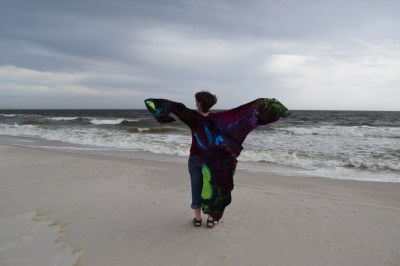
It is late autumn, 2009. I am 30 years old and pregnant with my third baby. He dies during the early Mollyblessingway 045part of my second trimester and I give birth to him in my bathroom, on my own with only my husband as witness. The blood comes, welling up over my fingers and spilling from my body in clots the size of grapefruits. I feel myself losing consciousness and am unable to distinguish whether I am fainting or dying. As my mom drives me to the emergency room, I lie on the back seat, humming: “Woman am I. spirit am I. I am the infinite within my soul. I have no beginning and I have no end. All this I am,” so that my husband and mother will know I am still alive.
I do not die.

This crisis in my life and the complicated and dark walk through grief is a spiritual catalyst for me. A turning point in my understanding of myself, my purpose, my identity, and my spirituality.

It is my 31st birthday. May 3rd. My baby’s due date. I go to the labyrinth in my front yard alone and walk through my labor with him, remembering, releasing, letting go of the stored up body memory of his pregnancy. I am not pregnant with him anymore. I have given birth. This pregnancy is over. I walk the labyrinth singing and when I emerge, I make a formal pledge, a dedication of service and commitment to the Goddess. I do not yet identify myself verbally as a priestess, but this is where the vow of my heart begins.

I do not know at the time, but less than two weeks later, I discover I am in fact pregnant with my daughter, my precious treasure of a rainbow baby girl who is born into my own hands on my living room floor the next winter. As I greet her, I cry, “you’re alive! You’re alive! There’s nothing wrong with me!” and feel a wild, sweet relief and painful joy like I have never experienced before.

Continue reading “Priestess as Shamanic Path – Part 1 by Molly Remer”

Women’s Ritual Dances: Secret Language of the Goddess by Laura Shannon

Laura Shannon square crop

My life’s work with traditional women’s circle dances of Eastern Europe and the Near East has been a natural interweaving of feminism, activism and Goddess spirituality. I would like to share how I came to discover these dances and their potential as tools for healing and transformation.

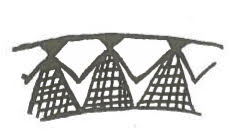
Circles of women dancing with joined hands appear in rock art, pottery shards, vases and frescoes going back thousands of years1, showing that ritual dance was a primary means of women’s worship. I believe that existing women’s circle dance traditions of the Balkans are direct descendants of these rituals. In their expression of values of partnership, sustainability, and peace, they are living links to the matrifocal Goddess culture of Old Europe as articulated by Marija Gimbutas.2

garfinkle2
Tell Halaf, Iraq, ca, 5000-4000 BCE (Garfinkel)

Incorporating symbols of the Goddess in her many guises, these women’s ritual dances are deeply spiritual. They are feminist in the way they provide women with a place of power, not ‘power-over’ but ‘power-from-within.’3 They are an activist practice because the qualities they embody – connection, inclusiveness, balance, empathy, and mutuality – are the principles of a Partnership society, as proposed by Riane Eisler;4 or in Carol Lee Flinders’ term, a society of Belonging.5  Each dance circle is an opportunity to practice being in community in a respectful and cooperative way, which can offer a profound source of healing.6

How did I come to these women’s dances? As a child I was convinced of certain truths: that nature is holy, that God is also female, and that instead of hurting one another, people should celebrate together with music and dance. These longings led me to the rich folk dance traditions of the American melting pot, women’s Middle Eastern Dance circles, and the women’s spirituality network. Around the same time, in the early 1980s, I encountered the meditative communal dance practice known as Sacred Dance. Together with my university training in Intercultural Studies and Dance Movement Therapy, these different streams helped shape the path of my life. Continue reading “Women’s Ritual Dances: Secret Language of the Goddess by Laura Shannon”

Who’s In That Clock? by Barbara Ardinger

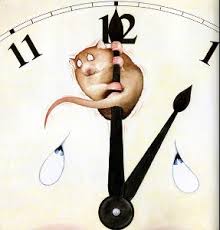
Hickory, dickory, dock,
The mouse ran up the clock;
The clock struck one,
And down he run,
Hickory, dickory, dock.

Someone’s been watching that mouse with the suction-cup feet. From her mouth to our ears.

Hickory dickory image2You all know my story, at least the popular version of it. I was an only daughter, the princess (so to speak) of the house until Mama died. Then Papa, who couldn’t seem to manage anything, much less a busy household, went out and got married again and brought Stepmother and her two ugly daughters into the house…and the princess was promptly reduced to servitude.
One of the things Mama brought to Papa when they married was her longcase clock, which she had inherited from (yes) her grandfather. That clock is ten feet tall, and it stood in our grand parlor until Stepmother moved it into the hall beside the stairs. Now it stands outside my bedroom under the stairs. (It’s my own little corner and I have my own little chair there.) I’ve been looking at that clock all my life. Although it, and our household, ran smooth as the day is long while Mama was alive, it doesn’t always go bong on the regular hours anymore. And when it strikes, something weird often happens. Like, one time when it struck eight, I heard this invisible chorus start singing about going into the woods and being happy ever after. Like, one time when it struck two, three mice came dancing out of it, and when it struck three, they went blind and I had to lead them to their hole in the wall. And one time when it struck twelve, the front door flew open and this beam of light came shooting down from the sky and shone down the hall the lit up the clock’s face. But it was twelve midnight, not twelve noon! The face changes, too. Sometimes it’s smiling, sometimes it has eyes that follow the hands around, and sometimes frowns. And on Sundays, when Stepmother gets her lazy daughters out of bed and I have to help them get dressed (forget about bathing!) and then they all go to the new church, well, that big old clock looks like it’s shaking its head. Continue reading “Who’s In That Clock? by Barbara Ardinger”

Our Ladies of Sea, Earth, and Sky by Joyce Zonana

Sara and the Marys
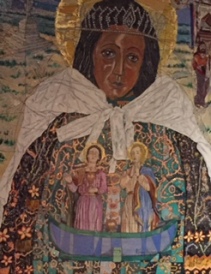
Sainte Sara encompassing Sainte Marie-Salome and Sainte Marie-Jacobe

O Sainte Marie-Jacobe, priez pour nous.

O Sainte Marie-Salome, priez pour nous.

O gardeures de la Provence, priez pour nous.

The priest intoned the words in deep, liquid accents, his voice echoing from the ancient stone church in the remote village of Les Saintes-Maries-de-la-Mer, in the Camargue region of Southern France, where the waters of the Rhone River meet the Mediterranean Sea in a wild, wide, flat expanse populated by black bulls, pink flamingos, and white horses.

“O, Saint Mary-Jacobe, pray for us.”
“O, Saint Mary-Salome, pray for us.”
“O, guardians of the gates of Provence, pray for us.”

I could feel the words resonating through me, bringing sudden, hot tears. The people gathered in the small village square repeated the priest’s chant, their voices rising above the low, white-washed houses into the sunlit sky, out towards the shimmering sea where legend tells us the two Marys had drifted two thousand years ago in a boat without rudder or sail.

Continue reading “Our Ladies of Sea, Earth, and Sky by Joyce Zonana”

Facing the Moon Alone by Molly Remer

February 2016 030

“When all is said and done I think every Witch should, at some time, face the moon alone, feet planted on the ground, with only his or her voice chanting in the starry night.”

–Laurie Cabot, Power of the Witch

I will never forget the first time I heard someone recite the Charge of the Goddess from memory. Bare-breasted, she strode around the fire in sacred circle at a large goddess festival in Kansas, delivering the words with power, grace, and confident resonance. I thought: I will do that someday.

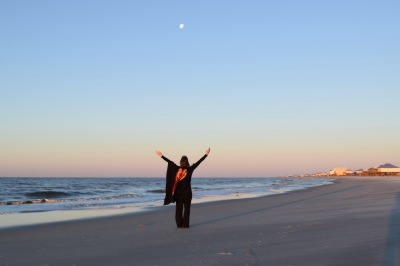
In February of this year, we took a family trip to Dauphin Island. While there, the afternoon of the full moon, I February 2016 148
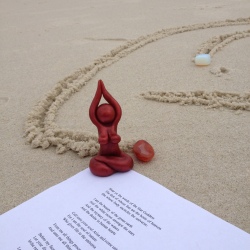
decided that the time had come. I was going to memorize the Charge of the Goddess. First, I thought I would only memorize it a piece at a time. It seemed “too big” to do in a single sitting. I had it printed out on a piece of paper that rapidly became damp with the salty sea air. I drew a labyrinth in the sand with my toes, set one of my goddess sculptures at its entrance, and drew a Womanrunes card.

One stanza at a time, slowly I began to repeat the poem* aloud:

hear ye, the words of the star goddess
the dust of whose feet are the hosts of heaven..
.

Over and over, I said the words, letting them twine around my tongue and in the air, experimenting with cadence and rhythm. After I could reliably repeat one section, I’d move to the next, letting it build in my memory until I could put the two together confidently and then moving to the next.

I am the beauty of the green earth
the white moon amongst the stars..

I stared into the waves, listening to them rise and fall along with my words. My three older children dug in the sand. February 2016 073
My husband fished. My toddler toddled around and then came to sit on my lap and nursed to sleep for nap time:

before my face
beloved of all…

I whispered into his damp hair. I felt in an altered state of consciousness. The words began to wind their way through me, becoming a part of me, embedded in me. I danced with them as I have never danced with another piece of writing. I felt them merging with me. I sang them aloud. I stated them fast and slow and I built, adding the next line and then the next…

for behold, all acts of love and pleasure
all my rituals.

I turned over hard thealogical questions as the words spun their magic through the air. What does it really mean that “all your learning and seeking shall avail you not, lest your know the mystery.” Do I really feel the goddess within? Do I find her within myself or is she only outside and if she is only outside, does she really exist at all? Tears came to my eyes: do I even like myself?

Two hours passed. My baby awoke and returned to digging in the sand. My husband packed up his fishing gear. The sky began to darken and spit rain. I stood and danced the words into the sand with my feet.

let your divine innermost self
be enfolded
in the rapture
of the infinite

I felt rapturous. I felt triumphant. I had done it. Faster and faster my feet stamped the sand as I called the words into the waves. I spun in circles with my toddler chanting and laughing and offering my devotion before the sea, beneath the moon.

the mystery of the waters
the desire in human hearts…

February 2016 179

*I used Shekhinah Mountainwater’s adaptation of the Charge, originally by Doreen Valiente, as included in the book Ariadne’s ThreadMolly 180

Molly has been “gathering the women” to circle, sing, celebrate, and share since 2008. She plans and facilitates women’s circles, seasonal retreats and rituals, mother-daughter circles, family ceremonies, and red tent circles in rural Missouri and teaches online courses in Red Tent facilitation and Practical Priestessing. She is a priestess who holds MSW and M.Div degrees and recently finished her dissertation about contemporary priestessing in the U.S. Molly and her husband Mark co-create original goddess sculptures, ceremony kits, and jewelry at Brigid’s Grove. Molly is the author of Womanrunes, Earthprayer, and The Red Tent Resource Kit. She writes about thealogy, nature, practical priestessing, and the goddess at her Woodspriestess blog. 

Dance of Persephone: The Trata of Megara by Laura Shannon 

Laura Shannon square cropIn a previous post on FAR I explored Greek Easter customs which interweave Christian and pre-Christian beliefs.  Today I would like to take a closer look at one of these customs, the women’s ritual dance known as Tráta, ceremonially performed on ‘Bright Tuesday,’ the Tuesday after Easter. Versions of Tráta survive in the towns of Mégara and Elefsina just west of Athens, on the island of Salamína directly across from them, and in the surrounding area as far as Thebes.

Elefsina, of course, is Eleusis, where for over 2,000 years the Eleusinian Mysteries enacted the story of Demeter and her daughter Persephone’s descent to the Underworld. Choral dance was a central part of the ceremonies at Eleusis – as at other sacred sites including Delphi, Knossos, Athens, and Vravrona – and the ‘Well of the Beautiful Dances’ can still be seen at the archaeological site. It is a a visible reminder of the circle dancing which was a part of the initiatory experience, bringing cosmic order – symbolised by the circle – into the human world. This is still one of the functions of the Tráta as performed today.

Eleusis
Eleusis
Eleusis – ‘Well of the Beautiful Dances’

Continue reading “Dance of Persephone: The Trata of Megara by Laura Shannon “

Niamh of the Golden Hair by Judith Shaw

judith Shaw photoNiamh (meaning ‘bright’ or ‘radiant’) of the Golden Hair, one of the Tuatha de Danann and daughter of Mannanan mac Lir, Celtic God of the Sea, was Queen in the land of Tír na nÓg (pronounced Tear na Noge), the most famous of the Celtic Otherworlds.
Continue reading “Niamh of the Golden Hair by Judith Shaw”

Women First, Rivals Later by Vibha Shetiya

VibahSita, as many know, is the tragic heroine of the Ramayana who gets discarded by her husband Rama because he doubted she had remained chaste while in his arch enemy Ravana’s captivity. Moreover, she is the “ideal Indian woman” in popular imagination because she remains loyal to Rama no matter how unfair his treatment of her. But there is another female character in the epic who meets perhaps a far more violent fate.

Unlike Sita, however, Shurpanakha gets little sympathy from the readers because she does not stick to her socially assigned roles. I would like to talk about Shurpanakha and how she comes to symbolize all women who transgress societal boundaries, while also stressing the fact that although she is often presented as Sita’s opposite, the two share far more in common as women; both Sita and Shurpanakha deserve our compassion and empathy.

In the traditional Sanskrit text, Valmiki describes Shurpanakha as “maddened with desire” when she first beholds Rama’s beauty. The poet then goes into a rather lengthy description of what she is not by comparing her “unsightly” presence with Rama’s exemplary beauty, thereby affirming the fact that she does not deserve to be visible because of the physicality of her body. Upon his enquiring, Shurpanakha tells Rama that she, who roams the forest alone and according to her own will, is the sister of Ravana (who later kidnaps Sita), and she makes it a point to add that she is more powerful than all her brothers. She then declares her undying love for Rama and asks him to be her husband, after which the two of them could seek adventure amid the forest together. Continue reading “Women First, Rivals Later by Vibha Shetiya”

How the Outdoors Got on Us by Barbara Ardinger

Barbara ArdingerI read some wonderful posts last spring and summer about the beauties of the outdoors. One that especially inspired me was by Molly MeadeIf you missed Molly’s description of how she goes out to the “priestess rocks,” read it now.

But as much as I admire people who like to spend time outdoors in gardens or the wilderness or national parks or anywhere else without kitchens and bathrooms…well, I just don’t like to get the outdoors on me. Most Pagans I know like to camp and hold grand outdoor rituals. Not me. I get lost. I trip over tree roots and get allergic in some large gardens. I don’t like to climb or hike and I stay away from the beach because it’s got all that icky, dirty sand all over it. Although I send money to the Wilderness Society and Friends of the Earth, the wilderness does not need my footprints in it.

So here’s another of my weird little stories. This one’s a fable I wrote several years ago for a friend who was holding regular ceremonies at Joshua Tree National Park in the SoCal desert. (I went to some of those ceremonies. My friends were very proud of me.)

Continue reading “How the Outdoors Got on Us by Barbara Ardinger”