This past Saturday, I had an opportunity to sweat in a traditional Lakota sweat lodge for the first time. It was, above all, an interestingcognitive experience for me. I found myself sort of shaking hands with the ritual, the heat, the stones, the songs, and so on, saying, “Hi, I’m Natalie. I have an open mind. I am excited to know about you. Thanks for letting me see what you are all about.” I didn’t know whether I would pass out, have visions, or learn something new and wonderful about myself or the others. I was curious, still, and grateful for the opportunity. I was gifted by generous people, good fellowship, and new ideas. I will go back, even though I didn’t exactly find some thing… or maybe I did. Maybe, I found someone, or, better, maybe someone found me.
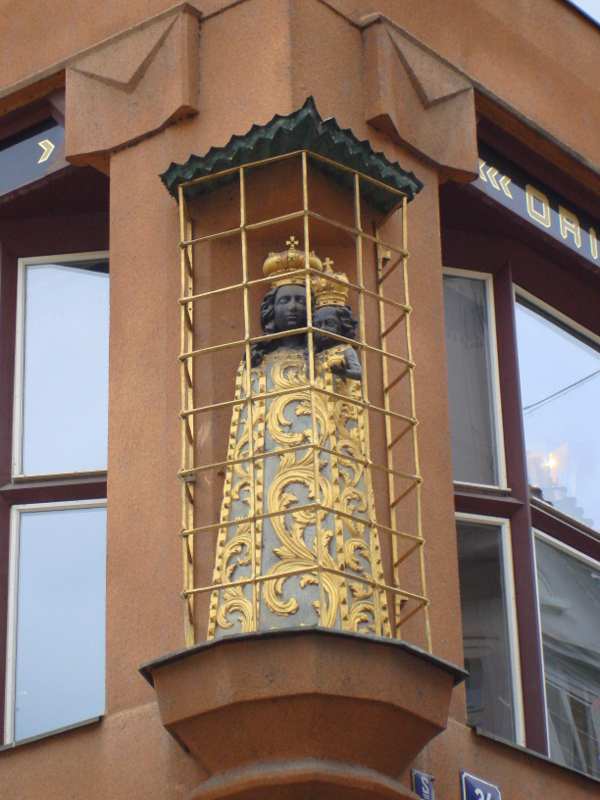
Two days before the sweat, I received an email from one of my companions on the journey, saying something I still do not understand about the Constellation Sagittarius, the Galactic Center, and the Rising of the Black Madonna. Although I did not understand the astronomy, I was intrigued by the call to recognize and confirm the Black Madonna. For, without particular reason or impetus that I could identify in myself, I had been dreaming of a Black Madonna statue for some time. After trying to find out what it was, I was able to identify it as the Black Madonna of Prague. I have never been to Prague and was basically unaware of the rich tradition of Black Madonnas in Europe, despite four semesters of art history in college. So, I made note of my dreams, with a promise to myself to seek them out whenever and wherever I travel. I also purchased little trinket at a Canadian gift shop, which sits on my desk as a guide and companion. Continue reading “Prayers to Black Madonna and Kali Rising by Natalie Weaver”
This continues the story I began last week. Catherina is my 2x great-grandmother; Agnes is my 2x great-aunt; Johanetta is my first cousin, 3x removed, and my step-2x great-grandmother; Henry is my 2x great-grandfather. It is true that Henry had eighteen children with two wives. It is also true that Henry and Johanetta married and had a child soon after Catherina’s death. Some of the other details came in waking trance as I allowed the ancestors to tell their stories through me.
Agnes Lattauer Sweitzer: I thought the day Catherina left for America would be the worst day of my life. I did not know I would see Catherina again. I did not know I would outlive my two little sisters and both of my brothers. I did not know what my daughter would do. I read Catherina’s letters from America through my tears. How I wanted to be with her on her wedding day. How I wished she had been with us when we buried our sister Johanetta. My heart nearly burst when Catherina wrote that she longed to take my hand when she gave birth to her first child. My mind contorted itself trying to envision her living in a big city, in a big building, climbing up and down stairs, her feet never touching the earth, her hands never working the soil. What kind of life was that?
Catherina Lattauer Iloff
Catherina Lattauer Iloff: I left home a girl. Because I was not yet engaged, Mother and Agnes never told me about married life. What to expect. What to do. I loved Heinrich, or Henry, as he wanted to be called after he became a citizen of the United States. I was not prepared. Henry was so insistent. I was soon pregnant. First Henry, named for Henry’s father Heinrich, then Elisabeth, named for Mother. I had to care for them on my own. Henry was busy with his work during the days. In the evenings he went to the German beer garden to meet his friends. Growing up with my mother and sisters, I had never been alone. There were other women around, but they were busy with their own lives. Some of them were kind, some of them were not, but nobody cared about me the way Mother and Agnes did. One night Henry came home and told me he had been talking with his friends. There was land available in a place called Cherry Ridge, Pennsylvania, a day’s journey from New York City. He said it was his dream come true. We would build our own house. There was plenty of land to farm—not like back home where there were never enough fields to go around. I held my tongue. I did not tell him that I suspected I was pregnant again.
The Iloff farm house
Agnes Lattauer Sweitzer: Catherina and Henry have been to Cherry Ridge. Catherina says there is land for us there too. I don’t know what my Heinrich will say. Life is difficult for us here, but we have two young daughters, Elisabeth and Johanetta, and the baby, Peter. There is Mother to consider. Well, you could have blown me over with a feather. Heinrich said we should grab the opportunity before it is too late. Mother said she would come with us, because she wants to see Catherina and Rudolph again before she dies. She is an old lady. I wonder how she will manage the journey. But I couldn’t say no. The two of us cannot contain our joy. We will see our beloved Catherina again.
Catherina Lattauer Iloff: My life is complete. Mother and Agnes and the dear little children arrived. Mother immediately took Henry and Elisabeth in her arms. Agnes comforted me about the loss of Baby John. I could finally allow myself to cry, knowing that Mother and Agnes would be there to wipe away my tears.
Agnes Lattauer Sweitzer: Our first years in Cherry Ridge were difficult. There were houses to be built, fields to be plowed, cows to be bought and milked. I had two more children, Henry, who died as a boy, and John. My little sister outdid me. She had nine children in all: Henry, Elisabeth, John who died, John who lived, George, Catherine, Mary, Frank, and Barbara. Giving birth to so many children took its toll on her. After the last one, she was never well. I think she may have been pregnant again several times, but she never spoke about it, not even to me. Finally, she took to her bed.
Catherina Lattauer Iloff: I had nine children. I never told anyone about the babies I lost before I began to show. Mother and Agnes worried that I was having too many children. But what could I do? I loved Henry, and I loved every one of my children. Mother died a few years after she came to Cherry Ridge. She always said she was so happy she had undertaken such a great adventure. She was pleased to know that Agnes and I were settled and happy. I miss her every day. Agnes is always by my side. I was forty-two when Barbara, my last baby was born. I bled a lot. After that, I never carried another child to term. I was never myself again. Agnes is my rock. Johanetta helps with the little ones. Henry is still strong as an ox, busy in the fields or with the cattle. I see that Johanetta hangs on his every word. I dismiss such thoughts from my mind. I do not know how much longer I have.
Agnes Lattauer Sweitzer: Catherina died yesterday. She was only forty-six (I am now fifty-six), and she had not been well for several years. I told her to stay away from Henry, but she was powerless to do so. Sometimes I blame him for her death. I worry about Johanetta now. Wild horses will not keep her away from Henry. I see the way she looks at him, and I see the old goat looking right back at her. She is twenty-six, a full grown woman.
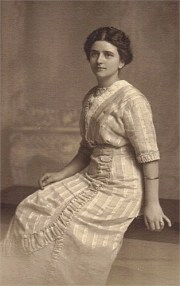
Johanetta displaying her engagement ring
Johanetta Sweitzer: I can’t believe it! Henry asked me to marry him. Mother is furious. Father says he should have whipped me a long time ago. But they can’t say no. I told them I am pregnant with Henry’s child. The older children are shocked that their cousin is marrying their father. The younger ones are thrilled. They have always viewed me as a second mother as well as an aunt. I have been looking after all of them these last years what with Aunt Catherina being so ill. I love those children.
Agnes Lattauer Sweitzer: I had to forgive Johanetta, but I will never forgive Henry. I smile when I see him to keep the peace, but my heart is cold. Peter was her first-born. After that she had Agnes and Emma, who died of some of those diseases children get. I could not help wondering if that was God’s punishment.
Johanetta Sweitzer Iloff: Henry and I were married for twenty years. Except for losing Agnes and Emma, those were the happiest years of my life. In all, we had nine children: first Peter, Agnes, and Emma, and then, Anna, Lawrence, Charles, Robert, Otto, and Phillip. Henry was a good man. He worked hard all of his life to support his family. We lost the second John a few years ago, but there were fourteen living children to mourn Henry’s death. The little ones are still with me, some of the others are scattered to the winds, and quite a few are settled around here, raising families of their own. While he was still strong and able, Henry was elected Commissioner of Wayne County. He served his fellow countrymen proudly for years. I wish Mother had been alive to see that. Maybe then she would have understood what a wonderful man he was.
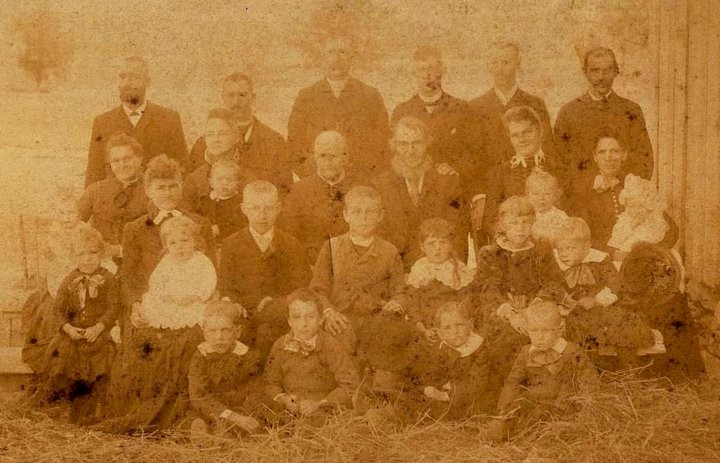
Henry and Johanetta, second row, center right with some of Henry’s children and grandchildren
You will be reading this Feminism and Religion the day before I turn sixty. For the past two decades I have had parties the night before I leave a decade—and “crossed over” at midnight, with the requisite amount of candles—forty, fifty and now sixty. I have everyone under the decade (in this case 60) on one side and those 60 and over on the other side and I will cross from my 50s to my 60s. And so…I will also be doing that this year, the evening on which you read this. I will be crossing from one decade to the next.
I want to own all of the years of my life as deeply as possible.
And yet…there is and continues to grow now –“a bucket list.”
A bucket list seems to be analogous to the idea of heaven or “the end times.”
The last few days I have been living in dreamtime with my Swedish ancestors, most especially with my great-great-grandmother Ingrid, about whom I have learned a great deal over the past year. Through a distant cousin Thomas Sievertsson, who has been researching the part of Sweden from which she came, I have discovered details about the kind of life she lived in the old country that few descendants of immigrants are lucky enough to know. Here are a few of them. Continue reading “In Dreamtime with the Ancestors by Carol P. Christ”
In my last post, I discussed the uses of dreamwork for Jewish women who are uncovering their own spiritual language. The protagonists of recorded Jewish dreams, from Joseph to the dream interpreters of the Talmud to the kabbalists, tend to be male. Yet there is a legacy of Jewish women dreaming, occasionally documented, and painstakingly uncovered by researchers. This hidden history offers us resources for understanding the women of the past, and for connecting to women in the present.
The Roman poet Juvenal (2nd. cent. CE) mocks a poor Jewish woman of his time for sitting under a tree and telling the meaning of dreams, calling her “high priestess with a tree as temple.” Much later in history, Hayyim Vital, the disciple of master kabbalist Isaac Luria, records in his diary that Jewish women in the city of Sfat (Jewish holy city in Galilee known as a center for Kabbalah) in the early 17th century were actively engaged (along with men) in recording, sharing, and interpreting dreams. Vital mainly records women’s dreams when the women dream about him! He saves these dreams from the dustbin of history, ironically, because he sees the dreams as prophecies of his greatness.
For example, Vital records the dream of a friend and patron, Rachel Aberlin. In the dream, Aberlin watches Vital eat a feast of vegetables at a table full of sacred books. Behind Vital, a fire rages, yet does not consume the pile of straw in which it burns. When Aberlin shares the dream, Vital understands this dream to be a manifestation of a biblical verse: “The house of Jacob shall be fire, and the house of Joseph flame, but the house of Esau shall be straw” (Obadiah 1:18). Aberlin, however, responds to Vital’s interpretation: “You quote me the words as they are written, but I see them as a reality.” (Between Worlds: Dybbuks, Exorcists, and Early Modern Judaism, p. 106ff).
Vital sees the dream’s fire as his own spiritual fire, witnessed by Aberlin. Yet we might read the dream differently. In our dream of Aberlin’s dream, we might imagine that Aberlin’s dream encodes her experience of watching Vital consume the nourishment of sacred books, which she, as a woman, is denied. Yet, the dream suggests, the fire of revelation is behind Vital, eluding him. Within the dream and in waking life, Vital is focused on text, but Aberlin, like Moses, perceives the fire that does not consume. Aberlin, not Vital, is the prophet in the dream— and the waking Aberlin says so. Vital records the dream, without recognizing Aberlin’s implicit criticism of his way of knowing.
The Year 2015 is coming to a close. It is a time of endings and a time of beginnings. That is the wonderful thing about our cycles. We all have the opportunity to end and begin – over and over. Each day, each month and each year. We all scurry about making resolutions for the new year only to see them fail almost immediately.
This is where a good basic magical practice can lend a hand with our resolutions. In every magical act we must first know what it is we wish to manifest. I am not talking some empty wish here but a real look at what we want – really want – for the new year to bring.
Dreams are my window on my wildest self. They are also a way to observe the conflicts within, and therefore they are a feminist practice, teaching me about my relationship to power, gentleness, love, and brokenness. Claiming my dreams is a way of claiming all the parts of myself. I am inspired in my dream practice by my own Jewish tradition, which has many dream practices, as well as by contemporary knowledge about dreams. Frequently in my dreams, I am able to observe my own longing for the company of women and for the presence of Goddess—deity in a female mode—in my life. Frequently, I learn about my experience as a woman by watching my dreams.
In one recent dream, I found myself in a town called Ursula, visiting a cave. Inside the cave were statues of holy women. After my visit, I expressed a desire to move to this town, Ursula. When I woke up, I remembered a painting I had seen in London when I was young: a depiction of St. Ursula, a fourth-century Catholic saint said to have led eleven thousand women on pilgrimage. Ursula is also the she-bear, an archetype of the sacred feminine. The desire to live in the town of Ursula could be read as a desire to live in the realm of the she-bear: in the company of women. The town of Ursula is also a town of the ancestors: the priestesses, prophetesses and wise women of old, represented by the statues in the cave. Though the imagery in my dream comes from a variety of cultures, the dream reminds me of my desire to connect to the women my tradition through dreams.
I teach Jewish dreamwork (based on biblical, Talmudic, kabbalistic and contemporary texts) to rabbinical and cantorial students at the Academy for Jewish Religion. I have seen how deeply it adds to my students’ spiritual lives. And, as one of the co-founders of the Kohenet Hebrew Priestess Institute, I have seen dreamwork transform the lives of women who are becoming ritual leaders and healers. Kohenet’s dream practice includes dream circles in which each participant offers a different reading of each dream, beginning with “In my dream of this dream.” We begin this way because each of us has a different understanding, influenced by who we are.
At Kohenet retreats, we often find that the dream of one person provides powerful healing for the whole community. For example, one woman dreamed of finding a bearded father-figure in a house. When she went into the basement, she found her mother working and writing next to a goddess shrine (Jill Hammer and Taya Shere, The Hebrew Priestess: Ancient and New Visions of Jewish Women’s Spiritual Leadership, p. 70). The dream expressed an experience many of us shared: the process of unearthing the power of women and the mythic feminine in our own lives.
Society has created this vortex of fear surrounding women aging. Yet, as I turn 30, I am only feeling awe. Awe over everything I accomplished in my twenties and awe in all the things yet to be realized in my thirties. The interesting thing is how other people are experiencing me turning thirty. Some are reminiscent of their twenties or how their experienced their thirties. Others start to bring up certain things which are apparently still lacking in my life. The biggest ones are a husband and children. They look at my eve of thirty-hood as the clock ticking away on me finding love and most definitely on my biological clock.
For our full moon rites coming up on the first of July we will be honoring Aine, Goddess of Love, Light, and Fertility who is also Queen of the Faeries. Aine’s name means “Bright” and She is typically honored at the Summer Solstice when the sun is at its peak of power. The next full moon falls just after the Summer Solstice. The Solstice is associated with abundance, beauty and bounty. It is not necessarily about the harvest season, as that is yet to come. However, everywhere we look we can see the abundance of the Mother and so it is when we first acknowledge, with joy, what is before us.
In my Tradition, the Summer Solstice falls within the Oak Moon, the Moon in which we “court the lightning bolt.” What that means to us is that with our roots planted firmly in the ground, as does the Oak tree, now is the time to take all of our plans and put them into action. “Go for it” is what we are saying to ourselves and to the world. Continue reading “Aine and the Giant Leap by Deanne Quarrie”
“There can be no happiness if the things we believe in are different from the things we do.” –Freya Stark
Ok. I’ll admit it. We all have our secret indulgences, don’t we? It is Valentine’s Day, after all. Shouldn’t we indulge a moment? After years of having my mind mired in the esoteric quandaries of the academy and the heart-yearnings of ministry, I needed an outlet, an escape. And when I couldn’t literally escape to some beautiful far-flung land via travel, I found my freedom nestled up with a good travel memoir. Travel essays, memoirs of finding oneself in another land, became my way of wandering, wondering, and learning about the world. A shelf full of dusty travel essays became my secret indulgence.
Along the way I decided to support feminist and women writers, pouring through every edition of The Best Women’s Travel Writing, sometimes in one sitting. Over and over I found these thoughtful writers referring back to one person, the pioneer of women’s travel, the founder of this far-flung freedom. Her name was Freya Stark. Years ago I began researching her life, reading The Passionate Nomad, and some of her many writings based on her travels all over the world.
Born in Paris in 1893, she was one of the first European women to travel and write about the Middle East, adding Arabic and Persian to the English, French, Italian, and Latin she already knew. There are tales of her riding camels through rebel territory, taking refuge in Bedouin camps, diving into shark-infested waters off the coast of Turkey simply because the water called to her and was too beautiful to avoid immersion, or in her old age (she lived to age 100), driving wildly in her hand-crafted “camper” through the Italian countryside. She lived boldly, going where few women had gone. She lived wildly, caring little about the restraints of decorum. She claimed, “It is the beckoning that counts, not the clicking latch behind you.” It’s no wonder that she inspired and empowered the many women travel writers that have followed in her fearless footsteps. Continue reading “Feminist Freedom: Finding, Following, and Painting Freya Stark by Angela Yarber”


 This past Saturday, I had an opportunity to sweat in a traditional Lakota sweat lodge for the first time. It was, above all, an interesting cognitive experience for me. I found myself sort of shaking hands with the ritual, the heat, the stones, the songs, and so on, saying, “Hi, I’m Natalie. I have an open mind. I am excited to know about you. Thanks for letting me see what you are all about.” I didn’t know whether I would pass out, have visions, or learn something new and wonderful about myself or the others. I was curious, still, and grateful for the opportunity. I was gifted by generous people, good fellowship, and new ideas. I will go back, even though I didn’t exactly find some thing… or maybe I did. Maybe, I found someone, or, better, maybe someone found me.

 Carol P. Christ is author or editor of
  A Serpentine Path: Mysteries of the Goddess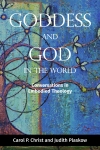
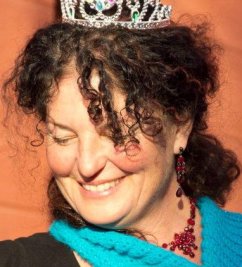
 The last few days I have been living in dreamtime with my Swedish ancestors, most especially with
 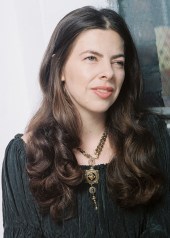 In my last post, I discussed the uses of
  The Year 2015 is coming to a close. It is a time of endings and a time of beginnings. That is the wonderful thing about our cycles. We all have the opportunity to end and begin – over and over. Each day, each month and each year. We all scurry about making resolutions for the new year only to see them fail almost immediately.
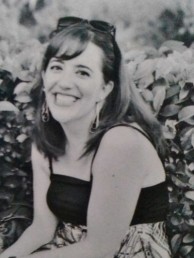 Society has created this vortex of fear surrounding women aging. Yet, as I turn 30, I am only feeling awe. Awe over everything I accomplished in my twenties and awe in all the things yet to be realized in my thirties. The interesting thing is how other people are experiencing me turning thirty. Some are reminiscent of their twenties or how their experienced their thirties. Others start to bring up certain things which are apparently still lacking in my life. The biggest ones are a husband and children. They look at my eve of thirty-hood as the clock ticking away on me finding love and most definitely on my biological clock.
 Ok. I’ll admit it. We all have our secret indulgences, don’t we? It is Valentine’s Day, after all. Shouldn’t we indulge a moment? After years of having my mind mired in the esoteric quandaries of the academy and the heart-yearnings of ministry, I needed an outlet, an escape. And when I couldn’t literally escape to some beautiful far-flung land via travel, I found my freedom nestled up with a good travel memoir. Travel essays, memoirs of finding oneself in another land, became my way of wandering, wondering, and learning about the world. A shelf full of dusty travel essays became my secret indulgence.
 Feminism and Religion