My sense of direction is, at best, poor. In spite of that, I love a road trip. With the advent of affordable GPS (Global Positioning System) devices, driving long distances has become easier. Unfortunately, that tool (GPS) is not always reliable. Sometimes I get lost. I have a hard time figuring out how to get back on track. Like Blanche DuBois in “A Streetcar Named Desire,” I’m forced at times to depend on the “kindness of strangers.” Getting lost, though, becomes part of my road trip adventure.
I recently drove (for the third time) from Richmond, Virginia, to Las Cruces, New Mexico. I’ve chosen a different route each time. On this trip, I kept the mileage under 400 miles/day. That gave me time to look around the places I stopped for the night. This trip wasn’t nearly as taxing as those where I pushed to cover as much ground as possible in a day. I also made it a point to stay out of Texas due to the state’s high COVID-19 numbers and that added a couple of hundred miles to the drive. Continue reading “Where Am I Going? by Esther Nelson”
Women’s relationship with plants stretches back to the beginning of humankind. Most of us know that women invented agriculture and became the first healers.
I come from a family of women who all had gardens, but no one grew herbs. It interests me in retrospect how I turned to these healing plants. I first used them for culinary purposes as a young mother; but as I approached midlife (mid –thirties) I began to gather herbs for medicinal purposes. I realize now that I made this shift just as I began to embrace the goddess and the Earth body as my mother and turned inward to healing myself. The two were definitely connected. It is the Body of the Earth that is capable of healing our broken souls and bodies; and some wise unconscious part of me knew that. Continue reading “Herb Talk: Bee Balm by Sara Wright”
I was deeply moved by Carol’s willingness to share deeply personal feelings about how her visit to the hospital , enough so that I decided to write about how the Covid virus has impacted my life and the lives of those around me.
Here in my corner of the world summer is a time to be outdoors, and so returning to Maine in the early spring has allowed me to be emotionally present in a joyful way for Nature’s turnings, first from winter to spring, and then from spring to summer. But I am a naturalist and only too aware that my love for the wild is not shared by everyone.
I spend a lot of time thinking about gardens. I think there might be something to them.
It seems strange to talk about gardens during such an intense time. The crucible of injustice, laid so bare during the pandemic, is overflowing all around us in a volcanic eruption of protests and retaliation. And more and more, we understand how it’s all connected – poverty, violence, choking black men, choking women, a choking planet. All connected in a huge, toxic river of greed, fear, destruction, and death.
“Learning entails more than the gathering of information. Learning changes the learner. Like dwarf pines whose form develop with winter’s design, the learner is shaped by what he learns.”
I recently returned to Maine after what can only be called a harrowing journey from the Southwest. Grateful to feel beloved earth under my feet, I walk along the pine strewn woodland paths to keep myself sane. My animals have been ill, my neighbor was hospitalized briefly, other neighbors deliberately destroyed my garden wall crushing a baby balsam, and used this property as their personal ski slope, the threat of the C/virus looms – there are no words to describe this kind of exhaustion. As a PTSD survivor all my senses are on permanent scream. The simplest task has become monumental. And I am only one of so many…
Each day I attempt to feel gratitude for what is good in my life.
Momentary peace is found in the Dark Green Religion of Hope that I experience walking under every balsam, lichen, wet leaf, deciduous tree, listening to chickadees, phoebes, juncos, and finches, meandering along the swollen brook – Just to see clear mountain waters rushing to the sea reminds me that Nature’s rhythms are my own, and that most of the time I am not breathing with her – unless I take these walks. Somewhere along the way over these last weeks I have lost access to my body (PTSD). Continue reading “La Llorona and the Dark Green Religion of Hope by Sara Wright”
I awakened this morning to frozen raindrops hanging from trees – jeweled beads, snow capped hills, and a cacophony of spring songs – I was serenaded by robins, chickadees, phoebes, goldfinches, and nuthatch tweets as I walked out the door into the early morning sun. I listened for the cardinals, who for the moment were absent. It was cold! 28 degrees at the end of April speaks to anomalies, or more realistically, Climate Change.
Yesterday we had rain, and working in the still damp air is literally a healing experience. The fragrance is a combination of chemicals released by soil-dwelling bacteria, oils released from plants during dry spells and ozone created when lightning splits oxygen and nitrogen molecules that then turn into nitric oxide.
I dug in baby trees that I had rescued from the side of the road the day before. Salt kills tender cedar seedlings if the road crew misses slaughtering them. Around Maine trees are worthless except as an economically viable product, a heartbreaking reality for someone like me. Continue reading “Earth Day Reflection by Sara Wright”
Every morning I walk to the river in the velveteen hour between the vanishing blue night and the coming of the first scarlet, pink, lavender, purple or golden ribbons that stretch across the horizon. Sometimes clouds with heavy gray eyelids mute first light. Either way all my senses except that of sight are on high alert; a deep peace embraces me in the dark. My body knows the way. I murmur to the willows as I pass through the veil and under their bowed bridge. Their response is muted, a song beneath words.
At first my footsteps are barely audible on the narrow serpentine dirt path but as I pass by the river I note that she too is singing; and my senses quicken. If the Crane spirits are with me I hear the first brrring of Sandhill cranes as they take flight. “Freezing” I am crane struck; the involuntary need to stand still is overpowering. Body -mind viscerally absorbs Oneness as I breathe in a multitude of crane songs or perhaps only that of a few. Now my eyes are suddenly open, straining to see the familiar brrring materialize into startling graceful heads, necks, and stream lined bodies…. I note the shimmering waters beginning to mirror blushing pastels or the gray smoke that stains the horizon. Sometimes these hues deepen into rose, blood orange, or scarlet. Continue reading “The Portal: How Do We Know What We Know? by Sara Wright”
The term “panpsychism” is made up of two Greek words: pan, meaning all, and psyche, often translated mind or soul. Panpsychism is the view that (forms of) soul or mind or consciousness are found throughout the web of life. This view is in contrast to the traditional western philosophical and theological consensus that having a soul or a mind is what sets human beings apart from other forms of life. In contrast, mystics, children, and many indigenous people assume that human beings are not the only form of life with consciousness.
Traditional western thinkers believed that God created the world out of nothing according to principles in his mind. Those principles included the idea that minerals, plants, and animals are “lower” unconscious forms of life, while humans, angels, and the deity are not only “higher” forms of life, but are the only forms with consciousness or mind.
This view was still widely held when I was in graduate school in the late 60s and early 70s. My professors mocked anyone who dared to suggest that animals—including family pets—had any form of consciousness or feeling. However, the notion that human beings are essentially different from other forms of life creates an unanswerable question for evolutionary theory: how did human beings with consciousness or mind evolve from forms of life that had no consciousness or mind?Continue reading “The Ability to Feel and to Feel the Feelings of Others by Carol P. Christ”
For almost 35 years nature has been my sacred place. As an 8-year old, I started to pray to Mother Earth even though the protestant tradition in which I grew up only recognised ‘God the Father’. I went outside in my inflatable rowing boat to seek solitude (as an only child in a quiet family!) on a small island in the lake of our local park. I practised rowing and walking quietly to not break the sacred silence. I collected herbs to brew infusions in my little thermos flask with boiled water brought from home. I sung to the moon, and danced my love for all creation back through my moving body. Over the last 15 or so years, I spent many days and nights at Neolithic monuments, dreaming in ancestral burial mounds, time traveling in stone circles in Cornwall, Wales, Scotland, England, Ireland and Brittany. This nature-based practice evolved naturally, and later incorporated my training with the Scandinavian Centre for Shamanic Studies and the School of Movement Medicine. Nature is where I reconnect most easily with the Sacred, and listen to the whispers on the great web of life in which all of nature is a great teacher. Nature, for me, is a strong place of prayer, solace, awe, reverence, gratitude, joy, guidance, reconnection, healing and transformation.
Rowing contemplation Image credits Henk Kieft
Yet I am confused. I am confused because although this way of connecting to the mystery feels the most natural and innocent thing in the world to me, my practice is criticised as “playing Indian” because I did not happen to be born into one of the indigenous traditions that kept nature-based (“shamanic”, for want of a better word) practices alive. Critique includes cultural appropriation in relation to colonialism and white privilege, as well as that any form of spirituality outside the five major religions is considered as empty, eclectic, post-modern consumerist product that lacks meaning and substance because of its diluted, selective ‘picking’ of traditions from other times and contemporary contexts. Continue reading “Who Owns the Sacred? A Personal Search beyond (European) Indigenous Knowledge by Eline Kieft”


 My sense of direction is, at best, poor. In spite of that, I love a road trip. With the advent of affordable GPS (Global Positioning System) devices, driving long distances has become easier. Unfortunately, that tool (GPS) is not always reliable. Sometimes I get lost. I have a hard time figuring out how to get back on track. Like Blanche DuBois in “A Streetcar Named Desire,” I’m forced at times to depend on the “kindness of strangers.” Getting lost, though, becomes part of my road trip adventure.
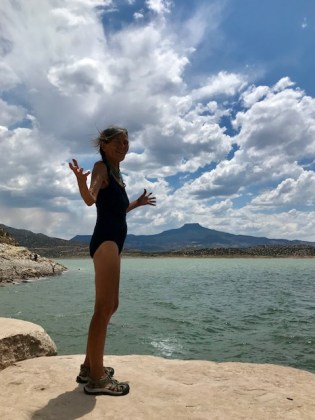 I was deeply moved by
  I spend a lot of time thinking about gardens. I think there might be something to them.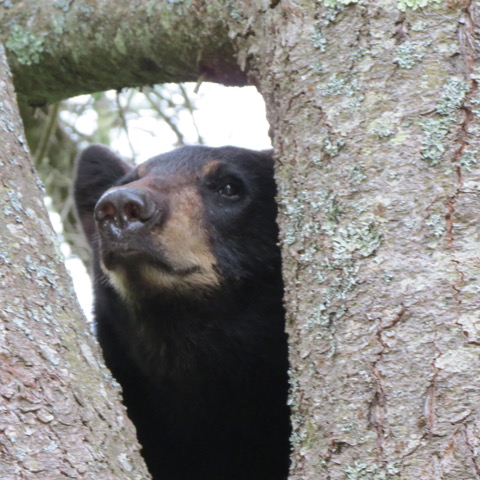
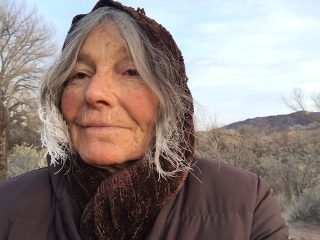 I recently returned to Maine after what can only be called a harrowing journey from the Southwest. Grateful to feel beloved earth under my feet, I walk along the pine strewn woodland paths to keep myself sane. My animals have been ill, my neighbor was hospitalized briefly, other neighbors deliberately destroyed my garden wall crushing a baby balsam, and used this property as their personal ski slope, the threat of the C/virus looms – there are no words to describe this kind of exhaustion. As a PTSD survivor all my senses are on permanent scream. The simplest task has become monumental. And I am only one of so many…
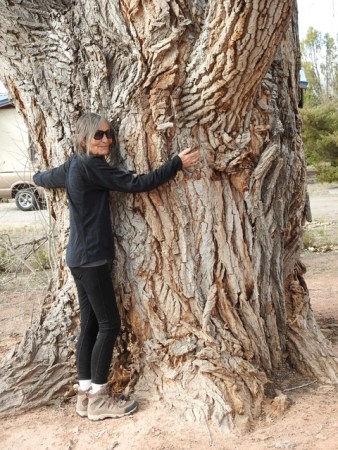 I awakened this morning to frozen raindrops hanging from trees – jeweled beads, snow capped hills, and a cacophony of spring songs – I was serenaded by robins, chickadees, phoebes, goldfinches, and nuthatch tweets as I walked out the door into the early morning sun. I listened for the cardinals, who for the moment were absent. It was cold! 28 degrees at the end of April speaks to anomalies, or more realistically, Climate Change.
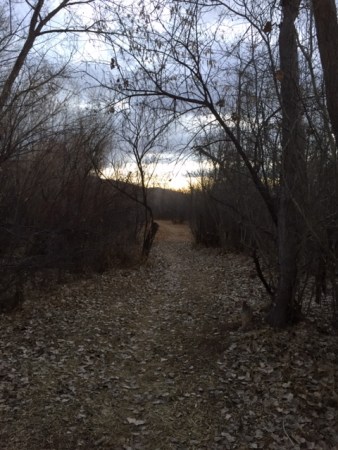 Every morning I walk to the river in the velveteen hour between the vanishing blue night and the coming of the first scarlet, pink, lavender, purple or golden ribbons that stretch across the horizon. Sometimes clouds with heavy gray eyelids mute first light. Either way all my senses except that of sight are on high alert; a deep peace embraces me in the dark. My body knows the way. I murmur to the willows as I pass through the veil and under their bowed bridge. Their response is muted, a song beneath words.
 The term “panpsychism” is made up of two Greek words: pan, meaning all, and psyche, often translated mind or soul. Panpsychism is the view that (forms of) soul or mind or consciousness are found throughout the web of life. This view is in contrast to the traditional western philosophical and theological consensus that having a soul or a mind is what sets human beings apart from other forms of life. In contrast, mystics, children, and many indigenous people assume that human beings are not the only form of life with consciousness.
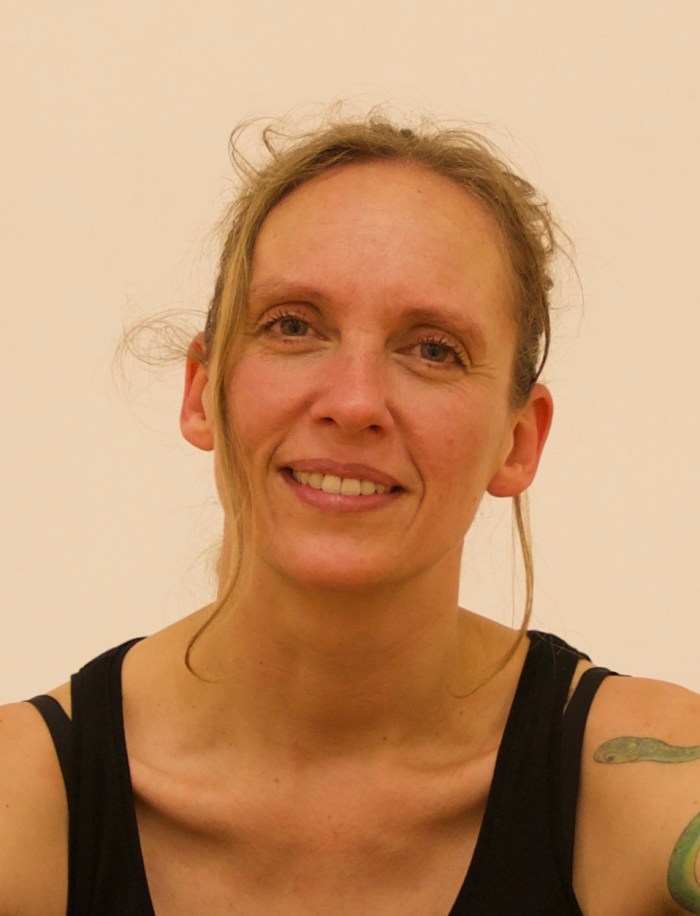 For almost 35 years nature has been my sacred place. As an 8-year old, I started to pray to Mother Earth even though the protestant tradition in which I grew up only recognised ‘God the Father’. I went outside in my inflatable rowing boat to seek solitude (as an only child in a quiet family!) on a small island in the lake of our local park. I practised rowing and walking quietly to not break the sacred silence. I collected herbs to brew infusions in my little thermos flask with boiled water brought from home. I sung to the moon, and danced my love for all creation back through my moving body. Over the last 15 or so years, I spent many days and nights at Neolithic monuments, dreaming in ancestral burial mounds, time traveling in stone circles in Cornwall, Wales, Scotland, England, Ireland and Brittany. This nature-based practice evolved naturally, and later incorporated my training with the Scandinavian Centre for Shamanic Studies and the School of Movement Medicine. Nature is where I reconnect most easily with the Sacred, and listen to the whispers on the great web of life in which all of nature is a great teacher. Nature, for me, is a strong place of prayer, solace, awe, reverence, gratitude, joy, guidance, reconnection, healing and transformation.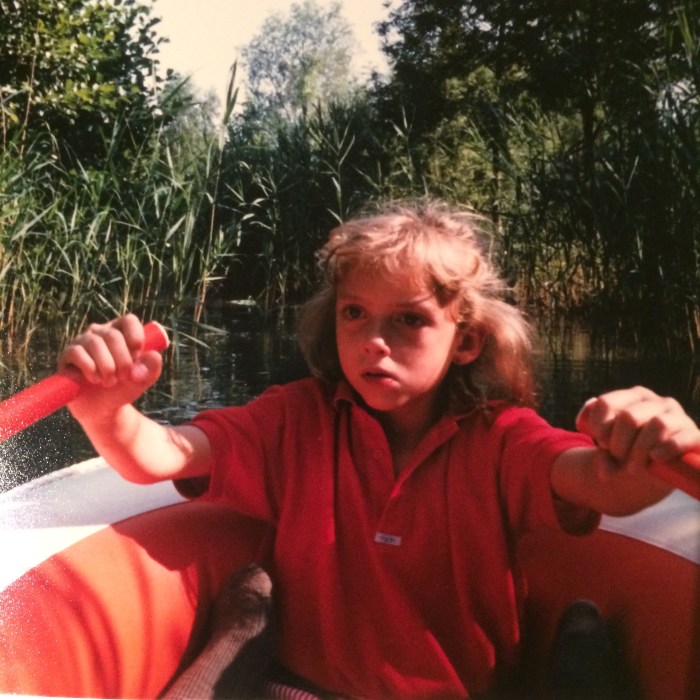
 Feminism and Religion