Last month, I wrote about a new project I have been playing with which is to re-write biblical verses as spiritual poetry rather than follow along with stricter translations (although truth be told, my translations have never been strict). My main goal is to strip away the layers of patriarchy that grew up around universal, earth-based, mystical lessons. In my last blogpost I wrote about why I translate El (god in English versions) as All-Potential Powers. You can read it here: https://feminismandreligion.com/2021/04/15/biblical-poetry-by-janet-maikai-rudolph/
YHVH, the sacred 4 letter tetragrammaton, is always translated as LORD in the bible. It is truly a wondrous name with many layers of meaning which the English one-word term LORD doesn’t capture. I find that the English translations of these two words – LORD and god – are dull and without sacred energetic aspects. In ancient times, the words used to depict divinity in general, and YHVH specifically, were meant to be intoned and chanted.
Today, May 1, we celebrate Beltane, the Celtic festival between the Spring Equinox and the Summer Solstice. Starting tonight, we also celebrate Greek Easter, with its ritual drama of life and death.
In the Western Church, Easter never falls as late as May, but in the Orthodox calendar, Easter and Beltane more or less co-incide every few years. It’s a reminder of connections between Christian and pre-Christian traditions, both in the archetypal cycle of life, death, and regeneration, and in links between the Christian Mary and the pre-Christian Goddess in her various names and forms.
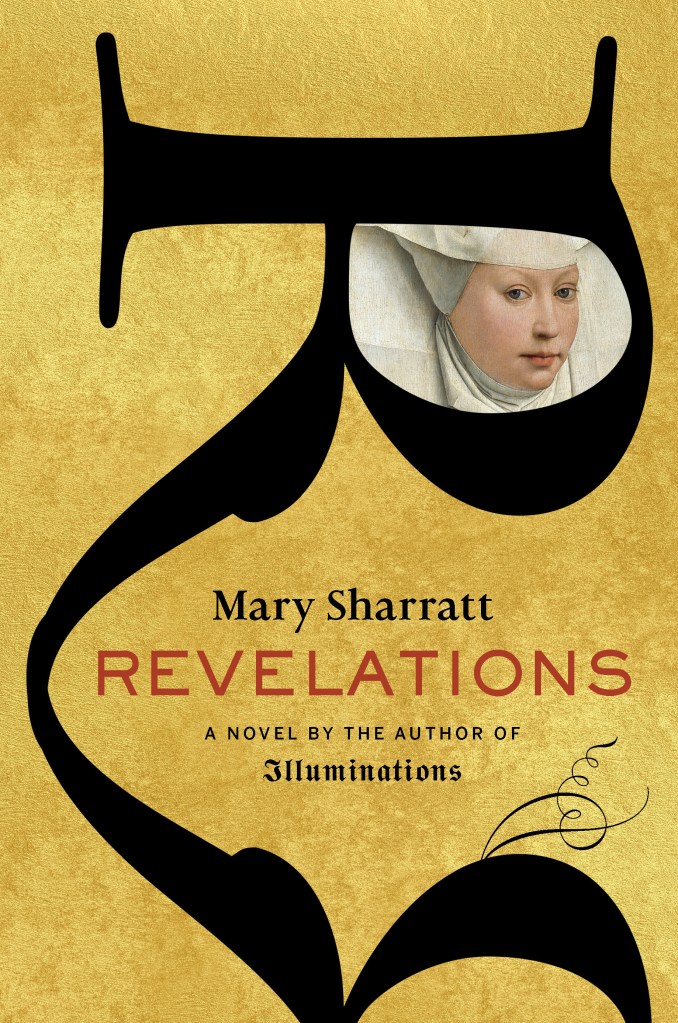
My new novel REVELATIONS is drawn from the lives of two medieval mystics who changed history—Julian of Norwich and Margery Kempe, two very different women whose paths converged and who, I believe, have much to teach us today.
Women’s spiritual experience is a theme that keeps coming up in my novels. Perhaps some of you have read my novel ILLUMINATIONS, about the visionary abbess, composer and polymath, Hildegard von Bingen.
As a spiritual person myself, I’ve always found it frustrating how women have been side-lined and marginalized in every established religion in the world. Yet from time out of mind, mystic and visionary women of all faith traditions have offered radical resistance. They have subverted institutional patriarchal religion from within and found their own direct path to the divine by plunging into the deep mysteries of the soul on a path of inner revelation. Julian of Norwich called God Mother and devoted her life to writing about the Motherhood of God. Similarly, Hildegard of Bingen wrote about her visions of the Feminine Divine. This isn’t a modern feminist interpretation. It’s right there in the original texts.
Like us today, Julian of Norwich and Margery Kempe lived in a time of pandemic and social upheaval, yet both women bore witness to the divine promise that ultimately all shall be well.
Like many of you, I was anxious and angry during most of the Trump administration years. I watched MSNBC avidly, hoping against hope that a) he could be stopped or b) he would be impeached. Now that he is gone, it would be nice to be able to take a “breather” (I wasn’t breathing regularly during the Trump years), a break from thinking about US politics all the time, but sadly, the political situation in the United States continues to require attention.
President Biden has pleasantly surprised me with his progressive domestic agenda and his decision to remove troops from the heretofore endless war in Afghanistan. Nonetheless, he has proposed an increase in the military budget. Dwight David Eisenhower, who warned of the increasing power of “the military-industrial complex” as he left office, must be turning over in his grave.
Most worrying of all is the fact that so many Americans voted for Donald Trump, believe that the election was stolen from him, and support white supremacy, while the Republican party refuses to deviate from the Trumpian worldview.
As if it could not be any worse, police killings of innocent black men by white officers and mass killings by young white men with easy access to automatic weapons are proliferating. Moreover, Republican-inspired voting restriction legislation is once again threatening the foundations of our democracy. Continue reading “Feeling Weary about US Politics by Carol P. Christ”
This blogpost is about biblical verses and uncovering the magic and spirit behind its words. Why, you might ask, is this a project that belongs on a blog dedicated to feminism?
I believe it does because it helps us to strip away the many layers of patriarchy with its attempts to hide and/or change original teachings. Remember; these stories were originally oral wisdom teachings of the “folk.” They weren’t written down until the Babylonian exile, hundreds if not thousands of years removed from their origins. And who was doing the writing? Priests, scribes, and prophets, all with their own agenda. Even the earliest writings we have, the Dead Sea Scrolls, were still written in patriarchal times.
Those of us in the Northern Hemisphere are coming out of a long pandemic winter and entering a new season of waxing light, hope, and growth. Yet these continue to be turbulent times. Even with the progress of the Covid vaccine, none of us truly knows when life will ever return to “normal.”
Like us today, the medieval mystics Julian of Norwich and Margery Kempe, the heroines of my new novel REVELATIONS, which will be published on April 27, lived in a time of pandemic and social upheaval, yet both women bore witness to the divine promise that ultimately all shall be well.
During a near-death experience, Julian received a series of divine visions and spent the next forty years unpacking them in her luminous theology of an unconditionally loving God who is both Mother and Father. Julian offered radical counsel to Margery Kempe, a failed businesswoman and mother of fourteen, who was haunted by her own visceral mystic experience. With Julian’s blessing, Margery walked away from a soul-destroying marriage and became a globe-trotting pilgrim-preacher and rabble rouser. Though these two women might seem like polar opposites—Julian, the enclosed anchoress, and free-roving Margery experiencing her visions in the full stream of worldly life—they complement each other. Together their lives and work form a Via Feminina, a distinctly female path to the divine.
The women mystics have always fascinated me. I identify very powerfully with Hildegard of Bingen, the heroine of my previous novel ILLUMINATIONS, as well as with Margery and Julian as spiritual women facing the roadblock of an institutional, male-dominated religion that side-lined them precisely because they were women. But instead of letting this beat them down, they found within their own hearts a vision of the divine that mirrored their female experience. I believe it’s no mere coincidence that both Hildegard and Julian dared to create a theology of the Feminine Divine, of God the Mother. All three women seized their power and their voice to write about their encounters with the sacred, preserving their revelations to inspire us today.
In our modern world, when many traditional religious institutions are crumbling, we can follow in these women’s footsteps and seek the divine—however we perceive the divine—within the sanctuary of our own hearts. This is the birthright no one can take from us, our eternal refuge. This is the Way of the Mystic.
Learn more about Margery and Julian as I discuss these mystics in a series of free virtual events.
My virtual tour kicks off with a very special Literature Lover’s event, sponsored by Valley Bookseller and Excelsior Bay Books in Minnesota. You can watch the video above. I am in conversation with acclaimed author, Elissa Elliot .
For a deep dive into Julian of Norwich’s spirituality, I am teaming up with Christine Valters Paintner of Abbey of the Arts to offer a Virtual Mini-Retreat on May 13, Julian’s Feast Day. You can learn more and register here.
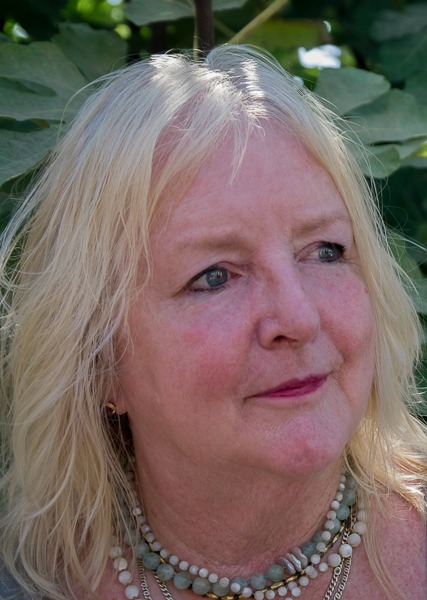
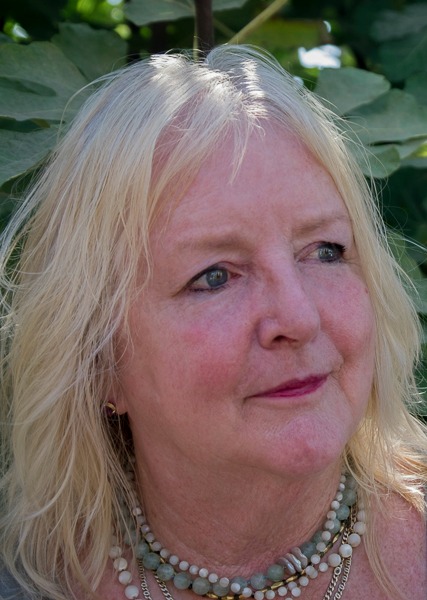
Mary Sharratt is on a mission to write women back into history. Her acclaimed novel Illuminations, drawn from the dramatic life of Hildegard von Bingen, is published by Mariner.Her new novelRevelations, about the globe-trotting mystic and rabble-rouser, Margery Kempe, will be published on April 27. Visit her website.
In Greece the liturgies of lent and especially of the week before Easter are known as the “divine drama,” in Greek theodrama. This may refer to the “drama” of the capture, crucifixion, and resurrection of Jesus and to the suffering of God the Father and Mary.
However, it is important to recall that the drama in ancient Greece referred to both the tragedies and comedies, most specifically, those that were performed in the theater of Dionysios in Athens. While we have been taught that the Greek tragedies celebrated “downfall of the hero” due to his “tragic flaw,” it is important to remember that Dionysios was the original protagonist of the Greek tragedy: it was his death and rebirth that was first celebrated.
Some have argued that the Greek tragedies should never be “read” alone, for they were always “performed” in tandem with the comedies, which were followed by the bawdy phallic humor of the satyr plays. The tragedies end in death and irreparable loss. But if the comedies and satyr plays are considered an integral part of the cycle, death is followed by the resurgence of life.
In Matthew 21, Jesus rides a mother donkey, her baby beside her, into Jerusalem in blatant condemnation and contrast to the militaristic entry of Roman military leaders and soldiers on war horses through a different gate. The point of Palm Sunday was activism: a political protest against war and the domination systems of oppression. The symbol Jesus chose for his protest was a mother and child. When the people shouted “Hosannah,” which means “save us,” they were asking to be liberated from the terrible economic and political oppression of imperial injustice. Jesus’ message of egalitarian Common Good and a kin-dom of JustPeace brought people hope and inspiration for a better future of mutual thriving and wellness.
Prayer:
Divine Source, You who Conceive and Birth and Nourish all Creation, open our hearts to the Way of Salvation that will bring liberation and mutual thriving to our Earth today. To honor Christ with Palm branches, may we protect Palm forest habitats for the orangutans who cry “Hosanna! Save us!” To honor the mother donkey and her baby, may we advocate for mothers everywhere, who are the most impoverished people in our society. May we always remember that You are Mother of All, ever ready to embrace us, cradle us, tend our wounds, nourish our spirits, and remind us that we, ourselves, are the Way of Salvation, growing over and over from your Dark Soil to your Light and back, nourished and nourishing, healed and healing, always giving away the Love we receive, and becoming our true, Divine selves through the power of healing Love.
A few days ago, a Greek friend told me she was going to bring holy water from a church so that we could bless my house. Ever since I moved to my new apartment in Heraklion, I have intended to do a house blessing, following rituals I learned from Z Budapest. But with unpacking and settling in interrupted by illness, I never got around to it. I did burn frankincense early on to clear out vibes left by the previous inhabitants of my space, but nothing more. I have slowly made the house a home, but I have been waiting for the renovations to be finished before doing a final blessing. As I still anticipate remodeling the kitchen island, I did not proceed.
Before my friend arrived, I incensed the house again, musing that now that I have finished my chemotherapy and am on the road to recovery, it is high time to clear out all the lingering feelings and memories of the time I was very ill. When my friend arrived bearing a small plastic bag filled with water from a church spring, she asked if she could water the plants on my balcony. I had watered them the day before, but I didn’t mention that.
Announcing that she loved to play with water, she doused the plants, then hosed the balcony tiles and sprayed the windows which were covered with dust following a recent dirty rain. As there are balconies surrounding all of my rooms, that completed the cleansing. Watering the plants signaled the renewal of life.
A high priestess became pregnant in a manner that was forbidden in her society. She gave birth to a baby boy. Fearing for her child’s life, she fashioned a basket of rushes and cast him into a river. He was retrieved by a man named Akki whose name means “the drawer of water.” Akki raised the boy.
A son was born to a young princess who had been forced to keep her pregnancy a secret because it was forbidden. When her son was born, she placed him in a basket and floated him down the river. He was found and raised by foster parents. He grew up to become a noted warrior, speaker and eventually a king.
A young boy accidentally ingested some drops of star-studded wisdom from the cauldron of a goddess and, in this manner, was suddenly awakened to divine knowledge. The goddess grew furious that her divine wisdom was stolen. Desperate to escape her life-threatening wrath, a wild chase ensued. The boy turned himself into a rabbit, but the goddess turned herself into a dog to chase him down. The boy turned himself into a fish to swim away but the goddess became an otter to continue the chase. The boy then turned himself into a bird, but the goddess became a hawk. Finally, the boy turned himself into a seed and hid in a large pile of grain. The goddess turned herself into a hen and ate up all the grain including the boy-as-seed. In this manner she found herself pregnant. She planned to kill the baby when he was born, but when she saw him, he was so beautiful that she fell in love and she could not bring herself to do so. The goddess sewed the baby into a leather sack and threw him into the river. He was retrieved by a man named Elphin who renamed and raised him.
A woman of the priestly caste of her tribe gave birth to a baby boy. At the time, all boys born to her tribe were under a decree of death. To save her son’s life, she created a basket of reeds and floated him down the river. He was found by a royal princess who retrieved him from the water, gave him a new name and raised him to adulthood.




 A few days ago, a Greek friend told me she was going to bring holy water from a church so that we could bless my house. Ever since I moved to my new apartment in Heraklion, I have intended to do a house blessing, following rituals I learned from Z Budapest. But with unpacking and settling in interrupted by illness, I never got around to it. I did burn frankincense early on to clear out vibes left by the previous inhabitants of my space, but nothing more. I have slowly made the house a home, but I have been waiting for the renovations to be finished before doing a final blessing. As I still anticipate remodeling the kitchen island, I did not proceed.
 Feminism and Religion