 The XVII Conference of Latin American Religious Alternatives is being held this week in Porto Alegre, Brazil. This event will bring together scholars and researchers from across the continent to talk together about religion, integration, and identity. I will be presenting three papers, all about Islamic feminism. I am pleased to have such a space to discuss new ways of understanding the phenomenon of religion in Latin America and the role of feminism in Latin American religion. I want to share some of my personal reflections regarding gender, feminism and religion with you today.
It is true that today all so-called ‘major’ religions—Islam, too—are patriarchal and male minded. It would be a fall into denial to say that abuses in the name of religion do not have a concrete impact on the lives of many women around the world. While it is possible to differentiate between what the Qur’an says and the discourse of patriarchy on Islam, the reality is that it is this patriarchy that dominates our understanding of religion
The revealed messages have been used to reinforce gender oppression in bans on “women’s issues” from therapeutic abortion to driving a car. But we know these bans do not come from the holy books themselves, as the revealed messages can support a reading of oppression or liberation. The problems are the historical authority of sexist readings as criteria of truth and the incorporation of androcentrism as the axis in relation to the divine. Sexist readings and androcentrism both give rise to oppression and violence in the name of God.
Feminists have denounced these abuses over and over again. Many feminists say religions are patriarchal, so let’s leave them without feminist intervention. I think this is not enough. We need to recognize that the religious world is patriarchal. We must name and draw attention to women and their contributions to the development of religion. We must also remove the legitimacy and authority of the androcentric understandings of the spiritual, which have caused much damage throughout history. Feminism in religion is essential.
It is often said that feminists want to undermine the foundations of the faith. Who says this? The same people who justify the exploitation of human beings, the degradation of women, and wars in the name of a God whose message is peace, mercy and social justice. But I ask—is it so dangerous that women and groups historically segregated from society want to own their spiritual experiences and live them autonomously?
What kind of God is adored by those who oppose our approaching the Divine from a feminist point of view? Just listening to their diatribes is to know that it is misogyny and not piety that motivates their messages. Misogyny also lies behind the violence against women. And behind the violence lurks the fear.
Beyond the Female Believer
Patriarchy has silenced its fear and built an “ideal believer” to legitimize the control of women in religion. But feminists no longer want to remain silent and obedient. We are seek to respond by creating our own theologies.
However, even in feminist theology, heteronormativity is still present. It is a bias that still sees gays, lesbians, trans and queer people as “abnormal” outsiders. This approach validates the patriarchal ideas of “minority” and “marginality” regarding the male-female heteronormative assumptions that dominate the religious world.
Dismantling the patriarchy in religion is not only about making the feminine more visible in the mystical, historical, and experiential approaches to religion. We must also demystify and dismantle the axis of androcentrism and heteronormativity and the hold it has in the academy and the “mainstream”.
For example, more than once, sisters who call themselves feminists, have called me “whore,” “deviant,” and “immoral” for my queer understanding of gender roles and my critique of marriage as “half the Deen” [the Islamic idea that for women marriage completes their faith, which in Arabic is ‘Deen’], a replica of the romantic patriarchal discourse of the “other half” that is so damaging to the autonomy and the self-esteem of women in the real world.
This is a problem. Feminism in religion is not landing in the everyday lives of women. Feminist theology still speaks to a woman who is cis-gendered and heterosexual, who wants to marry and have children. Feminist theology is still quoting patriarchy.
The master’s tools will never dismantle the master’s house
The reality is that not all women in religious communities are heterosexual, not all heterosexuals wish to get married, and not all married woman understand their position in marriage as subordinate and complementary to the male.
Along with eliminating the patriarchal “revelations,” feminists who theorize regarding faith must be decolonized from the need to build another “perfect believer.” We should not assume an archetype of woman, as this exercise gives authority to patriarchy’s model of the female believer that imprisons women in destructive and limited dimensions with labels like saint, mother, and whore.
I think we must remove from women the roles that are supposed to make them proper “believers.” In fact, I think we have to destroy once and for all both the concept of “believer” itself and the category of “woman” as we know it in religion. Assessing the degree of spiritual development and the agency of the religious woman according to the degree of her functionality as a “Model” is NOT emancipatory, but is both limited and sexist. If there are “role models,” someone will always be outside the norm.
Instead, let us take over the theologies and feminisms, regain power over ourselves, and raise awareness in communities that feminism is not only a field of study and analysis but also an outlook on life. We can legitimize the authority of the feminist perspectives of religion, and commit sacrilege against the exemplary women and models that are imposed on us. Let us not talk anymore about “Muslim women” or “Christian women” or “Jewish women,” but about ourselves as women.
Above all, and essentially, we must act on behalf of women of everyday, on behalf of those women who do not want to be “perfect believers,” but who want to be happy and fulfill their goals in a world that belittles them in many ways on a daily basis. Reasonable, imperfect, diverse and ‘under-construction’ women were created by God to be in this world as an expression of life and humanity.
Vanessa Rivera de la Fuente is a Writer, Mentor and Community Educator in Capacity Building for Grass Roots Female Leaders and Advocates. A Muslim Feminist who is an Independent Researcher of Gender and Islam in Latin America on Feminist Hermeneutics, Muslim Women Representations, Queer Identities and Movement Building. She blogs in Spanish at Mezquita de Mujeres, a site dedicated to explore the links between Gender, Religion and Feminism as well to Women from the Global South as Change Makers in their communities.


 Yesterday, I visited the Capuchin catacombs in Palermo, Sicily. In a grotto about a mile or so from the center of the modern city are found the preserved remains of about 2,000 people who paid the monks to preserve their bodies after death, dress them in their finest clothing, and put them on display. Each of them is placed in its own niche along the wall, held up by iron bands, and has a tag around its neck with its name and date of death. The bodies are not displayed in random order: they are sorted (to some extent) by sex, profession, and familial status. In one large recess, a number of children’s skeletons are on display, many of them in heartbreakingly tiny coffins. In another corridor, friar after friar hangs in his robes, some with cords around their necks signifying their adherence to a Franciscan order. Almost indistinguishable from the cords are the braids still hanging from the heads of some of the women’s bodies. Some families are arranged together; in another corridor doctors and lawyers are segregated and in yet another female virgins are gathered together. The oldest body I saw dated from 1599 – high on a wall hangs the body of a monk whose name was almost illegible but who hailed from the Umbrian hill town of Gubbio.
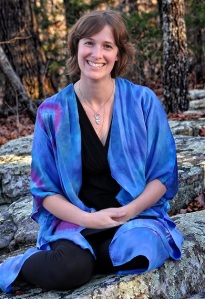 There were some things about my grandmother that I didn’t find out until after she died. For example, in 1974, she co-organized a “Women’s Exchange” in Fresno, California with the theme: Stop the World…We Want to Get On. How much I would have liked to talk to her about that! While I didn’t know about the fair, I do know that she was successful with her vision of getting on this brightly spinning world. My grandma was a woman who was hiking in the Channel Islands one month before receiving a diagnosis of aggressive pancreatic cancer. She was incredible.




 Feminism and Religion