

 Maintaining a Catholic identity as a feminist has been a challenge. There have certainly been times where I have walked away from my tradition frustrated by teachings that are oppressive to women and LGBTQ, but I have always come back. Change doesn’t happen from the outside, right? Continue reading “Struggles of a Catholic Feminist Mother by Gina Messina-Dysert”
Category: Feminism
Remember the Sabbath Day: The Cost of Difference by Linn Marie Tonstad
 I grew up Seventh-day Adventist and was educated at Seventh-day Adventist schools all the way through college. I can tell endless quirky stories about growing up – about the time my parents gave me The Lion, the Witch, and the Wardrobe to read at the age of seven and I was certain, certain, that they had no idea what devilish literature they had given me (all those horrible hags and werewolves), so I promised myself never to tell them because they would feel so bad for having led me astray. (I figured it out when I reread the story at the age of nine.) About my joy in meeting missionaries from the Church of Jesus Christ of Latter-day Saints, or Jehovah’s Witnesses, at the train station on my way to and from school, so that we could proof text against each other. I was always certain that my marked Bible (marked with Sabbath texts, carefully traced with different colored pens, based on a pamphlet I had picked up somewhere) would eventually lead someone to the truth. (Again, I was nine.) As I entered adolescence, I became increasingly worried about the early Adventist dictum that the degree of responsibility you have as a believer is proportional to the degree of light you have been given – after all, I had a lot of light! In fact, I knew the truth.
But no stories like this will tell the truth of my relationship with the church. Yes, I grew up in ways that seem strange to many people: keeping Saturday holy starting Friday at sundown, without TV or movies until about the age of eleven, as a life-long vegetarian (although I became a pescetarian in my twenties), believing that Jesus Christ will return soon, having read the Bible cover to cover by the age of nine (do you see a pattern emerging?), and so on. Having spent the last decade plus outside Adventist institutions, I know much more than I did then about the ways in which my upbringing and beliefs were unusual by mainstream standards. Yet unlike many people who become theologians, and unlike many women who become feminist theologians, I never experienced the church as a particularly repressive site, even though the external forms of my life look very different now. I loved the church, and despite some unfortunate experiences with authority during my high school and college years, the church gave me gifts that I have valued ever since. Continue reading “Remember the Sabbath Day: The Cost of Difference by Linn Marie Tonstad”
Is My Baha’i Faith Compatible with Feminism? by Saba Farbodkia
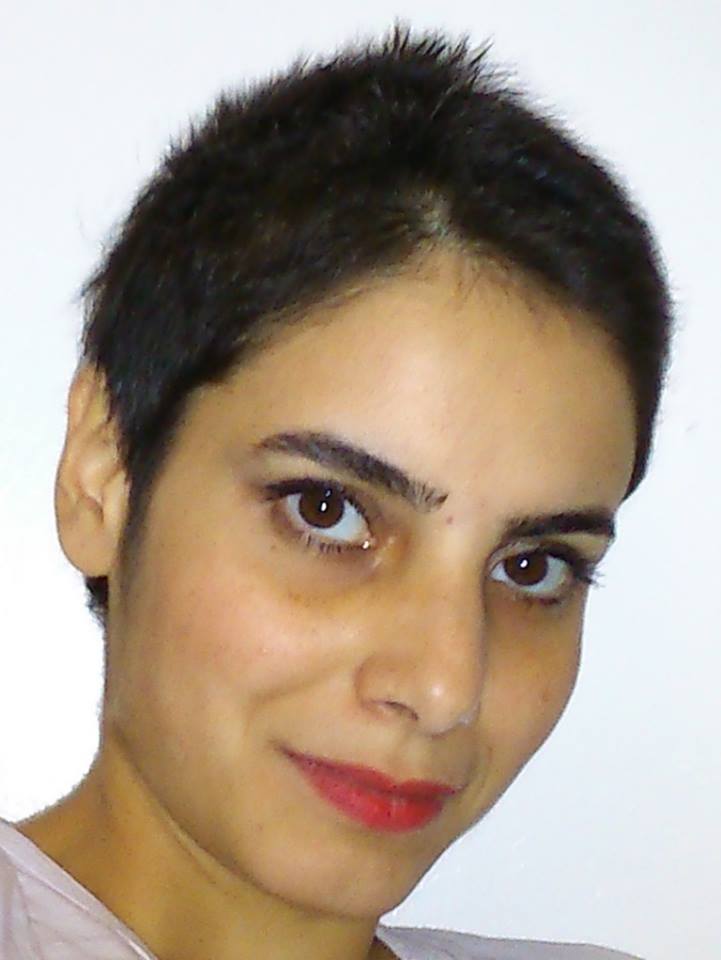 As a Baha’i woman, I often ask myself if feminism is compatible with religion. And most of the times, I tend to answer no. Feminism is defined as a movement to end sexism, which is further defined as prejudice, stereotyping, or discrimination, typically against women, on the basis of sex. Any such movement should attempt to eradicate the social norms and religious and cultural values that pressure people into adopting certain roles, attributes or duties, or limit their rights and responsibilities, based on their sex. Religions, on the other hand, very often do assign roles, duties and rights to people based on their sex. A religion can be compatible with feminism only if it is silent on the subject of people’s sex, unless it asserts that sex is not a factor in determining people’s roles or lifestyles.
The Baha’i Faith is definitely not so. Born around 170 years ago in Iran, the Baha’i faith is a somewhat new religion, supposedly meant for the current time. Still, there are particular cases of assignment of different roles to women and men at the level of individual life, family, and society. Men are, for example, required to do a pilgrimage if they are financially capable of it, and women have the right to choose it, though are not required. Women can choose between fasting or not, and saying obligatory prayers or an alternative prayer, during menstruation. Women are deprived the right to be elected as members of the Universal House of Justice. Mothers have a right for financial support from their husbands, but not the opposite, while they still retain their other rights. A dowry is required to be given from man to woman for a marriage. In cases where there is no ‘last will and testament’ of a deceased person (which is not supposed to happen very often, since Baha’is are required by Bahaullah to write a will to determine how to dispose their property as they wish), some of their female relatives receive an inheritance slightly less than the male relatives. Girls get the priority in education if the opportunities for educating all children are limited. Continue reading “Is My Baha’i Faith Compatible with Feminism? by Saba Farbodkia”
5 Interesting Facts about Religion and Modern Society by Kile Jones
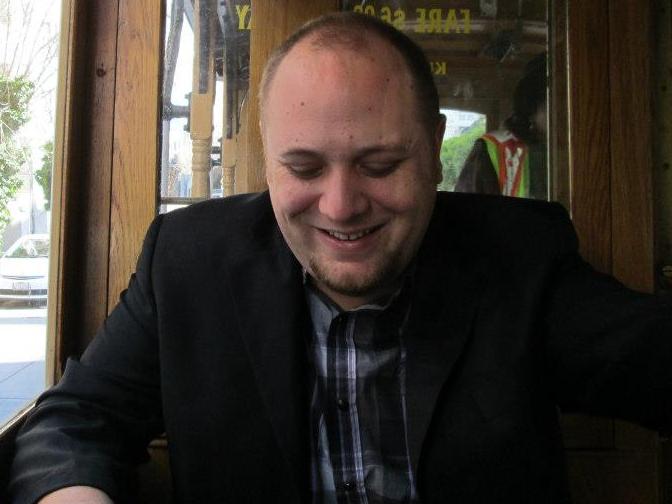
Following up on an older (and my most popular) post, 5 Interesting Facts about Women and Religion, I am going to draw your attention to 5 other telling facts.
1: Women clergy are blowing up in the Anglican Church!
In U.K. Church Statistics, 2005-2015, Dr. Peter Brierly shows that out of 9,615 Anglican ministers, 1,928 are women. This is a radical spike since 2005. That is 20.05% of all Anglican ministers. This is about double compared to lead pastoral roles in U.S. Protestant Churches (see here). The year of 2010 showed the first time women outnumbered men in Anglican ordination, and it continues to rise up to the present day. And although they are growing as ministers, they are still blocked from becoming Bishops. The vote for allowing female bishops at a General Synod in 2012 failed to get the 2/3 support BY 6 VOTES! Continue reading “5 Interesting Facts about Religion and Modern Society by Kile Jones”
Awakening to Life: Hildegard’s Cure for Seasonal Depression by Mary Sharratt

In midwinter 2002, I moved from the sun-drenched San Francisco Bay Area to Lancashire, in northern England, further north than I had ever lived. In bleak December, it was as though someone had switched off the lights. The sun barely managed to rise at 8:45 am. By 4:00 pm, it was pitch black. Even during the daylight hours, the sky remained muffled in oppressive clouds. There was no glittering white snow, either, just lashing, relentless rain. It was so oppressively dark, I felt as though I were trapped inside some claustrophobic gothic novel. For the first time in my life I began to suffer what they call winter depression. It didn’t help that it was Christmas and that I was new to the country and didn’t know anybody.
Every religious tradition that evolved in the northern reaches of the Northern Hemisphere honored the great mystery of the birth of the Divine Light from teeming midwinter darkness. As well as formal religious observances, countless folkways, carols, and mumming plays helped bring meaning and radiance to cold midwinter nights. Continue reading “Awakening to Life: Hildegard’s Cure for Seasonal Depression by Mary Sharratt”
Yes, You’re a Homophobe by John Erickson
Jesus loved sinners and Jesus would rather be dancing with me in West Hollywood on a Friday night than lugging through a swamp luring ducks into a trap with a duck caller made by a clan who think that my sexual actions are similar to that of an individual having sex with an animal.

To be able to walk down the street holding the hand of the one you love is a great feeling and an action that some of us aren’t able to perform without fear.
A line has been drawn in the sand between those who support gay rights and those who do not. While some call it being on the “right side of history,” I simply now refer to it as not sounding and looking like a bigot in the halls of history and in the various books, Facebook posts, and Tweets that our children will one day read. Continue reading “Yes, You’re a Homophobe by John Erickson”
Rosemary Radford Ruether’s Quests for Hope and Meaning by Gina Messina-Dysert
 Rosemary Radford Ruether is one of the most brilliant theologians of our time and her newly released autobiography, My Quest for Hope and Meaning, is a gift to those of us who have been so touched by her work. In this intimate and beautiful piece, Ruether shares her personal journey in feminist scholarship and activism. The autobiography opens with a profound forward by Renny Golden (that is also shared here on Feminism and Religion) and continues with an introduction and six chapters where Ruether guides us through an exploration of the influence of the matriarchs in her life, her interactions with Catholicism, her continued exploration of interfaith relations, her family’s struggle with mental illness, and her commitment to ecofeminist responses to the ecological crisis.
Ruether states that “Humans are hope and meaning creators” (xii), and her autobiography details her own quests for hope and meaning. She reflects on the incredible impact made by the female-centered patterns in family and community in her life. According to Ruether, these “matricentric enclaves” grounded and shaped her interest in feminist theory and women’s history. She also describes the spiritually and intellectually serious Catholicism that she received from her mother and articulates her continued frustration with Vatican leadership that has undermined the efforts of Vatican II. For Ruether, her ongoing affiliation with feminist theological circles is crucial as she continues to work toward shaping an ecumenical and interfaith Catholicism.
Continue reading “Rosemary Radford Ruether’s Quests for Hope and Meaning by Gina Messina-Dysert”
Waiting for Jesus… I mean, Superman by Melinda Bielas
 I grew up in a white-middleclass-fundamentalist-Protestant community. As a result I learned to think of God as my Father, and Jesus as my savior, similar to the fairytale prince in shinning armor or the ultimate boyfriend. As an undergraduate studying Religious Studies, I learned of other ways to relate to the Divine and discovered how to be a Feminist Christian. However, many women with backgrounds like mine do not have the opportunities that I did to discover different and liberating pictures of God. As a result they must choose between a religious life that enforces patriarchal norms, or life as a “secular” feminist. A recent song by a modern rock band, Daughtry, “Waiting for Superman,” reveals how the dependence on a male savior prevents Christian women from claiming their own personhood, independent of a patriarch. Continue reading “Waiting for Jesus… I mean, Superman by Melinda Bielas”
Buttons and Hooks by Oxana Poberejnaia
 I have a problem. Some women push my buttons. Some men anger me, but in the context of feminism it is different. I usually dismiss men’s offensive actions and words as expressions of patriarchy. I take action, when I can – for instance recently I complained about the BBC radio 2 broadcasting misogynist statement when discussing a proposed Paternity bill. Complaining about the BBC to the BBC is like trying to stop a tide single-handedly. However, if no one does anything, nothing changes, as we know. In addition, I hope that statements such as “women of child-bearing age should only be employed by striptease bars” broadcast completely unopposed on the national radio service (for which we the listeners pay annual subscription) will raise more than one objection.
But coming back to women. I have noticed recently that very often I end up in deadlocks with women over silly issues. Once I was engaged in a debate about capitalism with a woman to the point when I completely forgot that I was supposed to be doing something completely different for work. The mysterious aspect of these “quarrels” is that more often than not the women have more in common with me than not: they are intellectual, independent and strong-willed. I suppose it is slight differences that unnerve me.
Seeing Death and Resurrection by Linn Marie Tonstad
Yesterday, I visited the Capuchin catacombs in Palermo, Sicily. In a grotto about a mile or so from the center of the modern city are found the preserved remains of about 2,000 people who paid the monks to preserve their bodies after death, dress them in their finest clothing, and put them on display. Each of them is placed in its own niche along the wall, held up by iron bands, and has a tag around its neck with its name and date of death. The bodies are not displayed in random order: they are sorted (to some extent) by sex, profession, and familial status. In one large recess, a number of children’s skeletons are on display, many of them in heartbreakingly tiny coffins. In another corridor, friar after friar hangs in his robes, some with cords around their necks signifying their adherence to a Franciscan order. Almost indistinguishable from the cords are the braids still hanging from the heads of some of the women’s bodies. Some families are arranged together; in another corridor doctors and lawyers are segregated and in yet another female virgins are gathered together. The oldest body I saw dated from 1599 – high on a wall hangs the body of a monk whose name was almost illegible but who hailed from the Umbrian hill town of Gubbio.
Some of the skeletons presented death’s heads; others had skin dried to a leathery tightness over remaining bony protuberances. Some of their outfits are well preserved; others have disintegrated under the relentless assault of the years. The practice became illegal around 1880, but until then, people chose – or perhaps their relatives chose for them – to be preserved in this seemingly macabre manner. Continue reading “Seeing Death and Resurrection by Linn Marie Tonstad”

