 At the 2009 meeting of the Parliament of World Religions, former US President Jimmy Carter called the worldwide abuse of girls and women the greatest unaddressed human rights crisis of our time. In the book that followed the speech, he compared sexism to the racism he witnessed in the US South, stating:
There is a similar system of discrimination, extending far beyond a small geographical region to the entire globe; it touches every nation, perpetuating and expanding the trafficking in human slaves, body mutilation, and even legitimized murder on a massive scale. This system is based on the presumption that men and boys are superior to women and girls.
He stated further that this problem is:
largely caused by a false interpretation of carefully selected religious texts and a growing tolerance of violence and warfare, unfortunately following the example set during my lifetime by the United States.
Carter also said:
There’s one more basic cause that I need not mention, and that is that in general, men don’t give a damn.
As a feminist theologian I was thrilled to learn that Carter joined us in recognizing religion as one of the primary causes of the abuse of women and girls. I am grateful to him for using his position as former President and Elder statesman to call attention to the roles played by religions in justifying the oppression of one half of the human race. And I am very happy that he gives a damn. At the same time, I have questions about Carter’s understanding of the problem of sexism in religions.
I agree with Carter that warfare is one of the main causes of the abuse of women and girls. War plays an important part in the oppression of women and girls because rape and slavery have been and continue to be “an ordinary part of war.” As wars continue and increase, the rape of women and girls, in many cases the brutal gang rape of women until they die, continues. Moreover, the sexual slavery known as trafficking of women and girls, flourishes in the wake of war, as women fleeing war torn homelands are targeted, tricked, and sold into forced prostitution.
If the idea that rape and slavery have always been part of war sounds strange to you, I call your attention to the founding work of western culture, the Iliad: set during the Trojan War, its plot turns on the dispute between Agamemnon and Achilles about which of them has the right to hold a woman from Lesbos named Briseis as his “spear captive,” a scholarly euphemism for rape victim and sexual slave. In their conquests of Canaan, the Hebrew people reportedly killed the men and took the women and children as slaves, raping the women as the right of the victors to “the spoils of war.”
Some were astonished to learn a few decades ago that Serbian soldiers routinely raped Bosnian women, but they should not have been, because rape in war had already been widely reported in Africa. One of the little known crimes of the Second World War is the widespread rape of German women fleeing Russian armies occupying territories that became part of the Soviet Union. As horrible as it is, rape in war is not the only reason to call warfare one of the major causes of the abuse of women. Soldiers bring the violence of war with them when they return home and thus a climate is created in which men understand that is their right to dominate women, using violence if necessary.
Jimmy Carter’s view that religions justify the abuse of women by “false interpretation of carefully selected religious texts” requires further scrutiny. Carter appears to view the Bible as a primarily liberating text with a few unfortunate exceptions that are cited by religious leaders to support patriarchy. Regarding his decision to leave the Southern Baptist Convention, Carter wrote:
So my decision to sever my ties with the Southern Baptist Convention, after six decades, was painful and difficult. It was, however, an unavoidable decision when the convention’s leaders, quoting a few carefully selected Bible verses and claiming that Eve was created second to Adam and was responsible for original sin, ordained that women must be “subservient” to their husbands and prohibited from serving as deacons, pastors or chaplains in the military service.
I suspect Carter knew Phyllis Trible’s essay “Eve and Adam: Genesis 2-3 Reread,” in which she argues that Genesis 2 teaches the equality of Adam and Eve. Surely he also understands that original sin is a Christian doctrine that could not have been anticipated by the authors of Genesis 2, though it is often justified by interpretations of it. Carter and Trible believe that their interpretations of Genesis 2 are correct and that interpretations supporting patriarchy are incorrect.
I, on the other hand, would say that Merlin Stone’s interpretation of the text as a “tale with a point of view” intended to disparage the woman, the snake, and the tree, all of which were symbols of the sacred in earlier and competing religions, is the correct one. St. Augustine, if he could, would probably still argue for his view. So how do we resolve this dispute?
Judith Plaskow and I say that we cannot. Rather we must accept that all interpretations of scripture are based in the standpoints of individuals and communities. While some interpretations seem less plausible when we take account of the original language and context of Biblical texts, we can never be certain that our interpretation is the correct one. On these grounds, Carter’s assertion that only “false interpretations” of Genesis support male domination must be rejected.
In addition, Carter states that only “carefully selected” texts can be used to support male dominance. If he has read feminist theology at all, Carter must be aware that some feminists assert that the Bible as a whole supports male dominance through the pervasive and almost exclusive use of language that portrays God as a male, most often as a dominant male, as Lord, King, Warrior, and Father.
Counting texts that portray God as male as justifying the idea that the male is God and the female is something less than God and males, Mary Daly opined that the texts in the Bible that do not support male dominance might be collected in a small pamphlet. In Goddess and God in the World Judith Plaskow admitted that when she read the Jewish Bible from cover to cover, she was appalled at the number of times the texts justified violence. She asks Jews and Christians to wrestle with the images of God as a dominating other in the Bible, rather than trying to explain them away.
Once again we are faced with a question of interpretation. Is the use of male dominator language for God irrelevant or at the root of the problem? I say that it is one of the main justifications for the abuse of women and girls.
*This is an excerpt from the speech I delivered at the Parliament of World’s Religions on November 5, 2018. My interview with Mary Hynes on CBC’s Tapestry recorded during the conference will be airing soon.
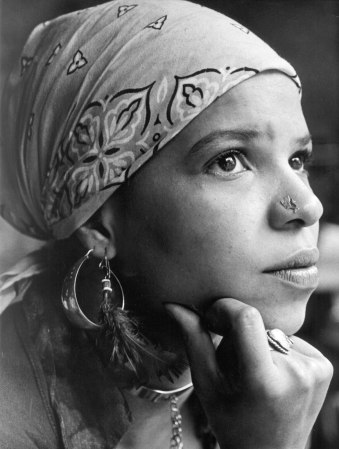
Carol P. Christ is an internationally known feminist writer, activist, and educator living in Greece. Carol’s recent book written with Judith Plaskow, Goddess and God in the World: Conversations in Embodied Theology, is on Amazon. A Serpentine Path: Mysteries of the Goddess is on sale for $9.99 on Amazon. Carol has been leading Goddess Pilgrimage to Crete for over twenty years: join her in Crete. Carol’s photo by Michael Honneger.



 This past week my daughter, Sarah and I had a conversation about God:


 This parshah contains the account of Jacob’s marriages to Leah and Rachel, (who happen to be his cousins) as well as the birth of his 11 sons and one daughter. It describes the long amounts of time Jacob worked for Laban in order to marry Laban’s daughters, and recounts the trickery of Laban giving first Leah, the older daughter to Jacob, before allowing Jacob to marry who he wanted to, Rachel.
