Legacy of Carol P. Christ: As It Might Have Been: Ancestor Stories in the Dreamtime

This was originally posted January 9, 2017

In the middle of the night in waking sleep, I asked my great-great grandmother Annie Corliss to tell me the story of how she met and married James Inglis. This story came through me in a place I have come to call the Dreamtime. The Aboriginal term feels right. As I understand it, this is not a place where the dead speak to the living but rather a space where boundaries blur as the ancestors speak in us.

Annie Corliss’s Story: As It Might Have Been

Continue reading “Legacy of Carol P. Christ: As It Might Have Been: Ancestor Stories in the Dreamtime”

To See Ourselves in Others: Part Two by Beth Bartlett

Part 1 was posted yesterday. You can read it here.

Patriarchy is a system of male dominance, rooted in the ethos of war which legitimates violence, sanctified by religious symbols, in which men dominate women through the control of female sexuality, with the intent of passing property to male heirs, and in which men who are heroes of war are told to kill men, and are permitted to rape women, to seize land and treasures, to exploit resources, and to own or otherwise dominate conquered people.[i]Carol Christ

In Part I, I urged against the distancing that intellectual analysis can bring to situations that require us to respond from the depths of our being, and yet, how can one be a reader of this blog and not examine the intertwining strands of patriarchy, religion, women, and war in this current conflict.

Continue reading “To See Ourselves in Others: Part Two by Beth Bartlett”

To See Ourselves In Others: Part One by Beth Bartlett

I have felt both a responsibility and a reluctance to write about the escalating conflict in the Middle East.  The situation is so complex and such an unspeakable tragedy – acts of such terror and violence on the part of Hamas toward civilian populations met with even greater violence and repressive measures on the part of Israel toward the people of Gaza. It is a perplexity of the human condition that a people with such a deep history of being displaced and oppressed rather than refusing to oppress in turn, instead engage in the displacement and oppression of others that then erupts into more violence. Both are traumatized peoples acting out of deep pain and woundedness. Thousands have died, more are wounded and displaced, all will carry more trauma into generations to come. The very earth bears the scars of war. In the face of such unspeakable suffering, any kind of analysis feels distancing at a time when what we most need is to let the suffering move us to our depths.

Continue reading “To See Ourselves In Others: Part One by Beth Bartlett”

My Life as a Prayer by Elizabeth Cunningham, book review by Janet Maika’i Rudolph

Our own FAR sister, Elizabeth Cunningham has written her marvelous memoir which came out yesterday. It is titled My Life as a Prayer with the subtitle, A Multifaith Memoir. For those of you who may not know Elizabeth, she wrote regularly for FAR for many years. She is the author the The Wild Mother and the award-winning Maeve Chronicles. Her Chronicles envision the Celtic Mary Magdalen named Maeve. Throughout the four books of the Chronicles, Maeve is filled with vivacious energy and her own life of spirit. The books are Magdalen Rising, The Passion of Mary Magdalen, Bright Dark Madonna and Red-Robed Priestess (which in full disclosure is one of my favorite series of all time.)

In My Life as a Prayer, Elizabeth’s writing is lush and poetic, clever and clarifying, multilayered and depthful.  I hope I can convey all those elements in this short blogpost?

Continue reading “My Life as a Prayer by Elizabeth Cunningham, book review by Janet Maika’i Rudolph”

Legacy of Carol P. Christ: Life in the Tenements

This was originally posted on January 2, 2017

During my ancestor research, I have seen the word “tenement”—with the implication of poverty, filth, and disease–handwritten onto more than one death certificate. Last month, I visited the Lower East Side where my Irish 2x great-grandmother Annie Corliss lived in the tenements near the docks with her husband the Scottish seaman James Inglis and their nine children.

Though the tenements where they lived in the vicinity of Cherry Street a block from the East River have been torn down to build public housing, my newly discovered third cousin Hattie Murphy still lives in the area. She arranged for me to visit the “Irish Outsiders” house in the Tenement Museum on nearby Orchard Street in order to gain an understanding the conditions of life in the tenements in the middle of the nineteenth century.

Continue reading “Legacy of Carol P. Christ: Life in the Tenements”

Crete as the cradle of a culture of peace – Part Two by Laura Shannon

Part One of this article spoke of our collective yearning for peace, and the difficulty of imagining a peaceful world when we are taught to believe that “patriarchy and with it war and domination are universal and inevitable.” (Carol Christ, 2015)

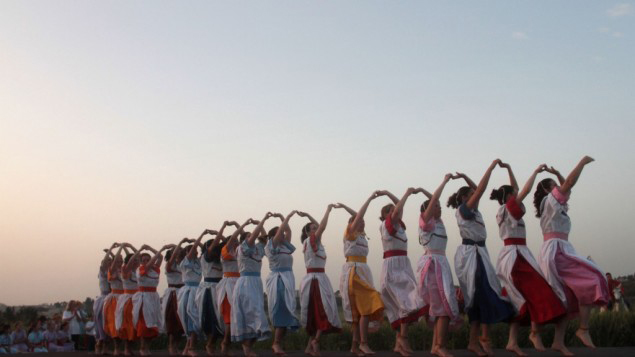
But this is a myth. The peaceful civilisation of Bronze Age Crete lasted two thousand years with no sign of violence, slavery, or war. Most likely matriarchal, matrifocal, and matrilineal, ancient Crete embodied the final flowering of Old Europe. Art and archaeology reveal a life-loving people who honoured the earth, the Goddess, and nature, particularly mountains, caves, and trees. Key values and symbols of this culture of peace survive today in Cretan women’s dances and folk arts including pottery, textiles, baskets, and bread.

Continue reading “Crete as the cradle of a culture of peace – Part Two by Laura Shannon”

“I Don’t Want to Be “More Feminine”: Deconstructing Gender Together by Elizabeth Jenkins

Long, long ago, back before I met my husband, I met another young man at (my former) church.

I thought he was cute, fun, and funny. We spent a few months meeting up regularly for lunch, dinner, or boba. Always talking, always laughing.

Never doing anything that clearly wasn’t just friendship. Never defining the relationship.

Eventually, I noticed that he wasn’t initiating as much as he used to. I figured he was probably losing interest in anything potentially romantic, but I wanted to make sure I wasn’t misunderstanding. So, over bubble tea drinks, I asked if he could clarify how he understood what we’d been doing these last few months—did he see it as a friendship or as dating?

Continue reading ““I Don’t Want to Be “More Feminine”: Deconstructing Gender Together by Elizabeth Jenkins”

Archives from the FAR Founders: The Sainthood of Hildegard von Bingen by a Feminist-Friendly Pope? by Cynthia Garrity-Bond

This was originally posted May 18, 2012

While I celebrate the rise in status of Hildegard to official saint and soon to be Doctor of the Church, I cannot help but be suspicious of the Vatican’s motivations.  One only has to take in the last two months behavior of the CDF, sanctioned by Pope Benedict, to see the real intentions of this papacy—the continued subjugation of all women to clerical authority.

The past month or so has been a very busy time for the Congregation for the Doctrine of Faith or CDF and their examination of women. First they (and this includes Pope Benedict XVI) decided American nuns are guilty of the sin of silence by not speaking out on abortion & homosexuality.  Their “radical feminist” ideology of standing with the poor and disenfranchised, while good, is not good enough for the CDF.  The firestorm of solidarity coming from both laity and religious surely caught the Vatican off guard.  Right?  Well, not quite.  This past week the CDF began its investigation of the Girl Scouts for their purported association with the likes of Planned Parenthood and Oxfam.  While both address the needs of the poor, it is the latter and its troubling advocacy for safe sex via condom use that initiated the inquiry. Keep in mine that in 2010 Pope Benedict retracted from his earlier position and bane on condoms, seeing instead their use as a “lesser evil” in the fight against HIV/AIDS.  The CDF angst is that the message of condom use might be too much sex-talk for impressionable young women. And now the real conundrum, Pope Benedict officially declared Hildegard von Bingen a saint and will soon declare her the fourth female Doctor of the Church along with Catherine of Sienna, Theresa of Avila & Teresa of Lisieux.  News articles credited the pope as feminist-friendly and minded by his endorsement of Hildegard.  It is stated that Pope Benedict turned to the writings of the 12th century visionary with her sharp critique of clergy and the church during her own 12th century milieu as a contemporary diagnosis for the sins of its priest in the global sex scandal.  So what is it that attracts Pope Benedict to Hildegard? 

Continue reading “Archives from the FAR Founders: The Sainthood of Hildegard von Bingen by a Feminist-Friendly Pope? by Cynthia Garrity-Bond”

I Am Kaleidoscope by Janet Maika’i Rudolph

Art work designed by Jaysen Waller – http://www.jaysenwaller.com/

FAR was founded in June 2011 by four women, Xochitl Alvizo, Cynthia Garrity-Bond, Caroline Kline, and Gina Messina.  They are and have been revolutionary thinkers in the world of feminism. Below is a portion of what they write on our “About” page

There is no single definition of feminism and this is a place of many voices. Important work in women’s studies in religion continues as more attention is paid to the intersection between gender, race, culture, and sexual identity, within feminism and religion.” They go on to say: “We establish this blog in the hope that feminist scholars of religion — and all who are interested in these issues — will use this forum to share their ideas, insights, and experiences, so that this community of thinkers will be nurtured as we explore diverse and new directions.”

Continue reading “I Am Kaleidoscope by Janet Maika’i Rudolph”

Moon Worshippers by Beth Bartlett

You’d have thought it was the 4th of July the way people were gathering on the shore of the great lake, Gitchee Gumee – some with coolers and lawn chairs, kids and dogs in tow, each claiming their spot — waiting for the viewing as if waiting for the fireworks.  But what we awaited was far more spectacular – the “once in a very blue moon,”[i]  the second full moon in a calendar month, but also a “super moon” – so named because at this time when it is closest to the earth in its orbit it appears larger than usual. Super moons happen a few times a year and blue moons happen every two to three years, but super blue moons are rare. This one was probably the last in my lifetime since the next one will occur fourteen years from now in 2037.

My husband, dog, and our son’s dog, aptly named Luna, made our way to the lake, finding our spot on the ancient rocks, joining the other moon gazers. A feeling of community celebration arose with the moon as we strangers to each other together watched the first light of rising moon with shared anticipation and appreciation. The “blue moon” in fact appeared red as it came up through the hazy atmosphere, but as it rose higher in the sky, just as in the lyrics to the song, “Blue Moon,” the moon turned to gold, casting its golden glow across the waters.  As it rose, it seemed to grow even larger, rounder, brighter.

Continue reading “Moon Worshippers by Beth Bartlett”