Rita Trumps the Donald by Esther Nelson

esther-nelsonThe phrase “politically correct,” words we hear over and over again these days, has a history. Some of that history, far from definitive, is captured here.

The following quote, taken from this blog, resonates with me:  “…maybe we should drop the phrase [politically correct] from our lexicon. Not because it doesn’t describe anything, but because it describes so many things that you can’t use it without worrying that people won’t understand what you’re talking about.” (I see it similarly to the word, God. I often find that in conversations about God, each participant has their own idea(s) about what God is or isn’t.)

Today, though, I’m interested in how Donald Trump uses the phrase “politically correct.”  When he says, “I’m so tired of this politically correct crap,” what is he saying?  What do we hear?  I agree with Colby Itkowitz (“The Washington Post,” 12/09/15) that the phrase “politically correct” is often “used as a put-down, a way to brush off the offended person as being overly sensitive. So while Trump is asserting his right to free speech, he is at the same time calling into question the listener’s right to complain about what he’s saying.” Continue reading “Rita Trumps the Donald by Esther Nelson”

To Work and to Pray in Remembrance by Elise M. Edwards

Elise EdwardsOne hundred years ago, Jesse Washington was lynched downtown in Waco, Texas. Next week, on March 20th, some of my colleagues and I are organizing a memorial service to remember this horrific event and pray for a better future for our city.

We invited submissions of original prayers, poems, spoken-word pieces, music, drama, and other pieces of liturgy for this ecumenical memorial event.  We received a number of thoughtful, heartfelt submissions, but we also a question:

“Why in the world do we need a memorial for one person who was lynched?!?! In the reality of things, Jesse Washington was one of thousands of Blacks that were lynched in America during the time period.”

I thought the answer was so obvious that I initially brushed off the question. But as our group proceeded with the plans, I thought about the question and wondered whether our university community would understand why we are doing this. And honestly, in moments of exhaustion when I put off responding to emails, I wondered, too. Why am I doing this?

To remember. We memorialize one person who was lynched to remind us that every single one of the thousands who were lynched was a human being who was killed unjustly.

In the speech “Lynch Law in America,” from 1900, Ida B. Wells-Barnett describes the injustice: “Our country’s national crime is lynching. It is not the creature of an hour, the sudden outburst of uncontrolled fury, or the unspeakable brutality of an insane mob. It represents the cool, calculating deliberation of intelligent people who openly avow that there is an “unwritten law” that justifies them in putting human beings to death without complaint under oath, without trial by jury, without opportunity to make defense, and without right of appeal.”

Wells-Barnett was an African-American journalist and activist for civil rights and women’s suffrage. Her writings and activism advanced anti-lynching campaigns adopted by Black women’s clubs and the NAACP. Unsurprisingly, her work was controversial, even among women’s groups. Wells-Barnett argued that lynching began after the emancipation of slaves to repress “race riots.” When a constitutional amendment permitted black men to vote, lynching was used to violently prevent their participation in state and national elections. When fraud, intimidation, and local policy succeeded in suppressing the black vote, the brutality continued in the name of avenging or preventing rape and assault of white women.[1] For this argument, lawmakers, ministers, and women’s groups accused Wells-Barnett of defending rapists and subverting “justice” for their alleged victims.

She did not defend rapists. (Neither do I.) She condemned a system that used allegations of rape of white women to legitimate hanging, burning alive, shooting, drowning, dismembering, dragging, and displaying black men’s bodies. Some allegations may have been true. Many were false. Despite the veracity of the allegations, the vigilantes tortured and killed men, women, and children in brutal, public ways, and we must not mistake that for any form of justice. Lynching apologists explicitly valued white lives over others. Lynching was, and remains a crime against humanity.

In our own age of campaigns against the impartiality of law and law enforcement, we should remember the lynching victims and the tensions within earlier waves of feminism and the temperance movement over anti-lynching campaigns. We do not have to condone criminal behavior to call for humane law enforcement or prison reform. We can affirm the humanity of accused and convicted criminals in the pursuit of justice. So we remember Jesse Washington and the other lynching victims to engage more consciously in the activism of our time. We remember so that we don’t lose sight of the complexities of our work. We work in remembrance of the many victims of injustice.

We also gather to pray. For some people, prayer is about making requests to the divine. But in a more expansive sense, prayer is communication with the divine. In prayer, we set time aside to connect to something greater than ourselves. It’s our hope that gathering as a community to pray for the future of our city prompts us to see beyond individual concerns. In a liberation ethics framework, as explained by Miguel De La Torre[2], prayer is not limited to individual, private conversations with God in hopes of gaining wisdom and guidance. De La Torre presents prayer as a communal activity that brings together different members of the spiritual body. It involves the critical application of the biblical text to the situation at hand. This involves critical analysis of the social context that gave rise to the text or its common interpretation. So we pray to give us time to come together, to read scripture, to seek God and hear God through other members of our community.

So why are we gathering? Why do we memorialize one person when there are so many others who have been harmed, not just in my local community but all of our communities?

To remember past wrongs.

To commemorate.

To honor.

To inspire.

To call attention to persisting injustices.

To make us mindful in our work.

To provoke us to pray.

[1] This argument about the reasons for lynching is found in several of Wells-Barnett’s essays, but is quite developed in The Red Record: Tabulated Statistics and Alleged Causes of Lynching in the United States (1895).

[2] See Miguel A. De La Torre’s Doing Christian Ethics from the Margins (2nd Edition, 2014).

Elise M. Edwards, PhD is a Lecturer in Christian Ethics at Baylor University and a graduate of Claremont Graduate University. She is also a registered architect in the State of Florida. Her interdisciplinary work examines issues of civic engagement and how beliefs and commitments are expressed publicly. As a black feminist, she primarily focuses on cultural expressions by, for, and about women and marginalized communities. Follow her on twitter, google+ or academia.edu.

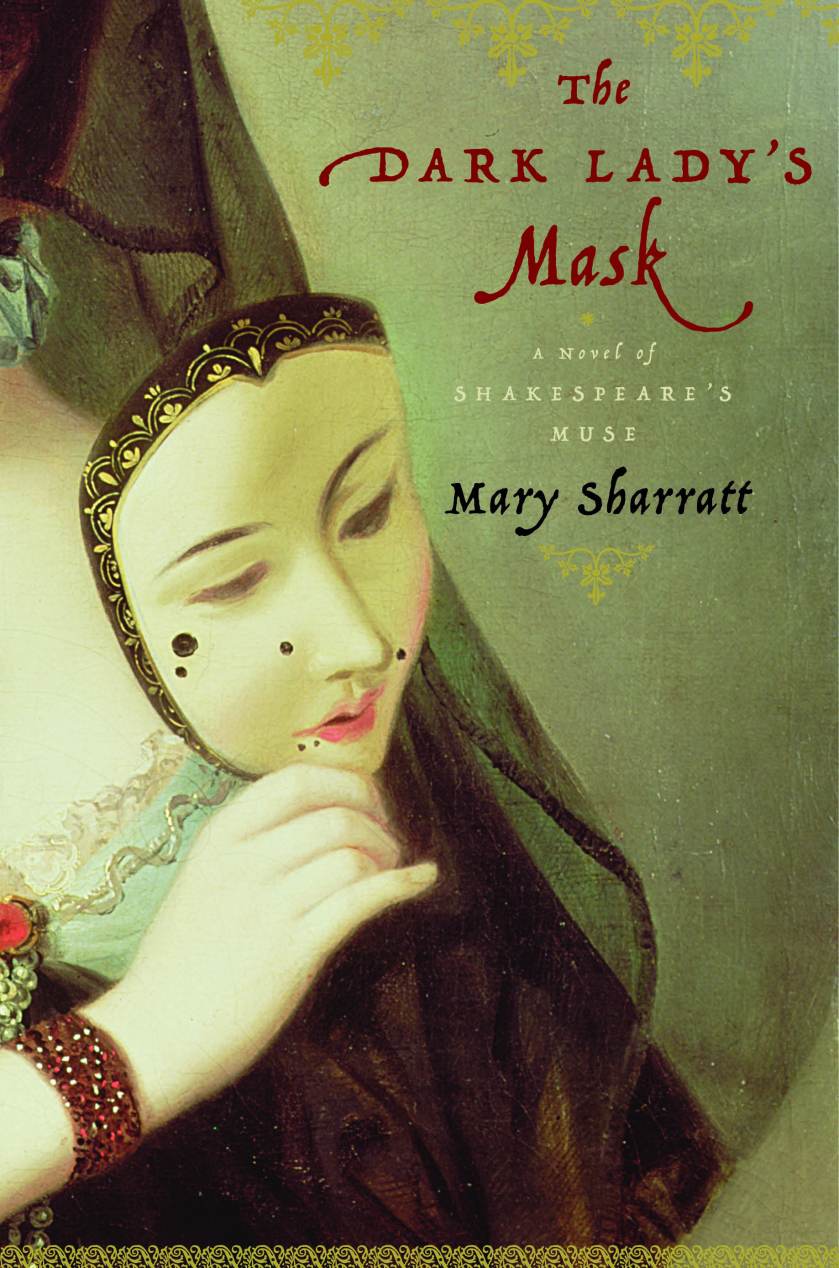
Rewriting Religion: the radical poetry of Aemilia Bassano Lanier by Mary Sharratt

Sharratt_DarkLady-hi


Aemilia Bassano Lanier (also spelled Lanyer) is the heroine of my new novel The Dark Lady’s Mask.  Born in 1569, she was the highly educated daughter of an Italian court musician—a man thought to have been a Marrano, a secret Jew living under the guise of a Christian convert. She may have also been the mysterious, musical Dark Lady of Shakespeare’s sonnets, although most academic scholars dispute this. What we do know for a fact and what really matters is that she was the first woman in England to pursue a career as a published poet.

In Italy women such as Isabella Andreini published plays and poetry on a wide variety of secular subjects, but in England Lanier effectively had only one option—to write devotional Protestant verse. Her English literary predecessors, Anne Locke and Mary Sidney, wrote poetic meditations on the Psalms.

But Lanier turned this tradition of women’s religious poetry on its head. Published in 1611, her Salve Deus Rex Judaeorum (Hail God, King of the Jews) is a radical, ground-breaking tour de force, a searing vindication of the rights of women—and of herself as a woman writer.

In this epic narrative poem, Lanier describes the passion of Christ from the viewpoint of the women in the Gospels. In comparing the sufferings of women in male-dominated culture to the sufferings of Christ, she upholds women as Christ’s true imitators.

Most significantly Salve Deus is dedicated and addressed exclusively to women, and is prefaced by nine praise poems dedicated to the royal and aristocratic women whose patronage Lanier sought. She also included a dedication in praise of all women.

Having thus established her female audience, Lanier attacks the theological roots of male domination, namely the blame attached to Eve—and by extension all women—for humanity’s fall from grace. In “Eve’s Apology in Defence of Women,” Lanier argues that the original sin was actually Adam’s for accepting the forbidden fruit. For he, unlike Eve, was fully aware of the consequences. Out of selfishness and desire for power, Adam let Eve take the fall.


If Eve did err, it was for knowledge sake,

The fruit being fair persuaded him to fall:

No subtle serpent’s falsehood did betray him,

If he would eat it, who had the power to stay him?


Not Eve, whose fault was only too much love.


Lanier contends that male culpability in crucifying Christ far exceeds Eve’s tragic misunderstanding. Therefore there is no moral or divine cause to justify women’s subjugation. Here Lanier explicitly champions women’s rights and freedoms:


Let us have our Liberty again,

And challenge to yourselves no Sovereignty,

You came not into the world without our pain,

Make that a bar against your cruelty;

Your fault being greater, why should you disdain

Our being your equals, free from tyranny?

If one weak woman simply did offend,

This sin of yours hath no excuse, nor end.  


Lanier’s poetry lays claim to women’s God-given call to rise up against male arrogance, just as the strong women of the Old Testament rose up against their oppressors. While wooing her highborn female patrons, Lanier uses the scriptures to assert a sense of social egalitarianism that foreshadows the Levellers and the Quaker religious movement that emerged a few decades after her poetry’s publication. “God makes both even, the cottage with the throne,” Lanier writes in her dedicatory poem to her former pupil, Lady Anne Clifford. (Clifford was herself a feminist firebrand who fought long and hard to regain her properties after her father disinherited her because of her sex. Anne Clifford was an ancestor of Vita Sackville West and the historical inspiration for Virginia Woolf’s novel, Orlando.)

Lanier’s book ends with “A Description of Cookham,” an elegiac ode to the country house where she lived for a time with Anne Clifford and her mother Margaret, who was Lanier’s greatest patron. Cookham was the blessed refuge where Lanier received both her spiritual epiphany and the confirmation of her vocation as a poet.


Farewell (sweet Cookham) where I first obtained

Grace from the Grace where perfect Grace remained,

And where the Muses gave their full consent,

I should have the power the virtuous to content.


Salve Deus Rex Judaeorum is a corpus of poetry celebrating female and divine goodness, penned by a poet who found her own sense of salvation in a community of women who supported her and believed in her.


Mary Sharratt’s book Illuminations: A Novel of Hildegard von Bingen, won the 2013 Nautilus Gold Award, Better Books for a Better World. Her forthcoming novel, The Dark Lady’s Maskwill be published by Houghton Mifflin Harcourt in April 2016. Visit Mary’s website.


Social Transformation in the Urban Context (a.k.a. PANAAWTM 2016) By Grace Yia-Hei Kao

In a few days I’ll be heading to Chicago to attend another conference—PANAAWTM to be exact. PANAAAWTM stands for “Pacific, Asian, and North American Asian Women in Theology and Ministry.”  As I’ve explained in a previous blog, PANAAWTM’s deepest roots can be traced back to two groups of women: Continue reading “Social Transformation in the Urban Context (a.k.a. PANAAWTM 2016) By Grace Yia-Hei Kao”

Caroline Schelling’s 4th Letter by Stuart Dean

Caroline Schelling

Caroline Schelling (‘Caroline’) wrote the fourth letter of hers that survives (the ‘4th Letter’) on October 7, 1778, shortly after she had turned 15, to a girl she met at boarding school who was to become her lifelong friend (Luise).  The intensity of her friendship with Luise is evident already in the 4th Letter, for she tells Luise that in writing to her she “portrays her entire soul.”  What prompted such depth of feeling for this letter relates not just to a significant moment in Caroline’s life but in every person’s life.  In the second paragraph she refers to what was most likely her first sexual relationship.  Given that context, Caroline demonstrates remarkable emotional maturity and intellectual sophistication in how she expresses herself.

She begins by referring to the “sensations of my heart,” telling Luise how she struggles to find “adequate words” to express them.  She is not, she proudly insists, an “enthusiast” who simply gives into feelings, insisting instead on the importance of “going over” (Überlegung) them herself.  Though Caroline was not taught Latin, it seems as if she had been taught the relevance to German of a Latin treatise from the 4th century CE on the method for defining words.  Caroline’s ‘going over’ her feelings before writing Luise is consistent with its methodology: first, to confront the question of whether something even exists (an sit, Existenz) and then determining, to the extent possible, what it is (quid sit, Wesen) and what its qualities are (quale sit, Eigenschaften)–i.e., its relationship to other words (grammar) and hence how it can be communicated.  

This methodology, which is applicable to a wide range of disciplines (e.g., legal argumentation, psychiatric diagnosis), is also analogous to a language theory Charles Segal argued is implicit in what remains of the writings of the 5th century BCE Sicilian Gorgias, a theory Segal related to Sappho’s poetry.  That is relevant, because given the failed sexual relationship about which Caroline writes to Luise, the 4th Letter bears comparison to two poems by Sappho (S. 31 and S. 1) that Caroline surely then knew in translation.  Caroline’s “sensations of my heart” is directly comparable to the palpitations of the heart Sappho refers to in the second stanza of S. 31.  The immediate effects are comparable; Sappho cannot speak and Caroline cannot find “adequate words.”  Though S. 31 appears to break off, S. 1 can be read as a continuation of it.  There Sappho prays for divine intervention (Aphrodite) to deal with a failed sexual relationship; the closing prayer of its final stanza is analogous to the last sentence of the 4th Letter’s first paragraph: “Lord, you who know my heart . . . fulfill no wishes that are not pleasing to you, I am depending on you!” 

In each case it would seem the answer is anticipated to be one that is not heard or read but rather felt in the heart, intuitively understood as the center point of all bodily feelings.  That would be not an abstraction from the senses but an inward intensification of them.  Such intensification becomes the basis for its outward expression not just in words, but in all forms of art.  

Caroline grew up during a time of renewed interest in ancient Greek art and particularly nude sculpture, which rightly can be taken to symbolize the belief in the sacredness of the entire human body (a belief that correlates with heart centeredness).  It is notable that the floruit of such sculpture predates Plato by almost a century and quite literally embodies principles utterly antithetical to his philosophy.  It is also analogous to another art form that predates him and that he disparaged: reciting poetry (whether or not incorporated into a theatrical production).  Poetic recitation requires fully identifying with the poet and poem to such a degree that it can be thought of as internalized sculpting.

The principles underlying sculpture and recitation are thus similar and of general applicability.  Caroline, who enjoyed (and was appreciated for) reciting poetry, makes the point in a review she wrote of a book of essays on artistic appreciation (the “Review”).  To judge art, she says, it is necessary to penetrate “deeply into the meaning and sensibility of both it and its initiator . . . surrendering oneself in quiet reflection to a disposition of loving, receptive observation . . . [to be] transpose[d] . . . into the world of the poet or artist.”  She defends the book’s use of a fictional friar to voice religious reverence for art, effectively equating artistic appreciation with religious devotion, since it is only from feeling the divine within (i.e., internalizing god as the artist) that the divine outside is to be understood.   

This was not something new for Caroline, as is evident from the 4th Letter that was written nearly twenty years before the Review.  Not only does she seem to have internalized Sappho, but the opening line of S. 31 (a man, “equal to the gods”) and the closing line of S. 1 (“my comrade,” the goddess) arguably encouraged her transition in the 4th Letter’s first paragraph from describing her feelings to Luise (psychology) to praying to God (theology).  That transition anticipates the identification of psychology with theology Caroline articulates in the Review.  

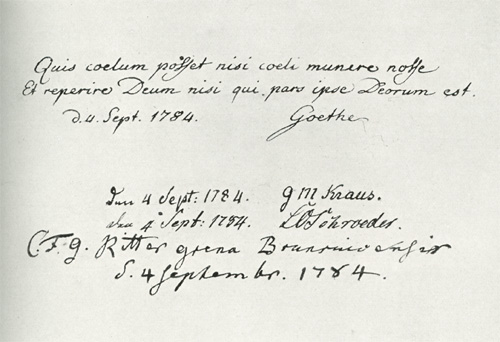
The remote antiquity of this identification and its association with goddess worship to which Sappho attests, as well as the recognition of it by Caroline at such a young age deserve attention, for it has quite a history, especially in German culture.  Goethe quoted two lines of a 1st century CE Latin poem on astrology that essentially echo it in the guestbook atop Mount Brocken on September 4, 1784: who is able to know heaven except by a gift from heaven, who finds god unless a part of the gods is within them.  It is not known when Caroline met Goethe; it has been speculated that he was the father of her first daughter, Auguste, born April 28, 1785.  In August 1784 Caroline was living in a mining town not far from Brocken.

The opening paragraph of an essay published by Caroline’s third husband in 1809, only months before her death, contains a reference to the principle of knowing the god outside from the god within, correctly noting that its connection with Empedocles proves it predates Plato.  In 1936 Heidegger characterized that essay as “one of the most profound works” of Western philosophy.  In my next post(s) I hope to show that its profundity relates to a critique of Plato (and other philosophers) that derives from Caroline and her appreciation of ancient Greek female spirituality, and not to glorifying supermen.

Stuart WordPress photoStuart Dean has a B.A. (Tulane, 1976) and J.D. (Cornell, 1995) and is currently an independent researcher and writer living in New York City.  He has studied, practiced and taught Tai Chi, Yoga and related disciplines for over forty years.  Stuart has a blog on Sappho and the implications of her poetry for understanding the past, present and future: http://studysappho.blogspot.com/
On Turning 60, My Bucket List and Eschatology by Marie Cartier

Photo by Kimberly Esslinger

You will be reading this Feminism and Religion the day before I turn sixty.  For the past two decades I have had parties the night before I leave a decade—and “crossed over” at midnight, with the requisite amount of candles—forty, fifty and now sixty. I have everyone under the decade (in this case 60) on one side and those 60 and over on the other side and I will cross from my 50s to my 60s.   And so…I will also be doing that this year, the evening on which you read this. I will be crossing from one decade to the next.

I want to own all of the years of my life as deeply as possible.

And yet…there is and continues to grow now –“a bucket list.”

A bucket list seems to be analogous to the idea of heaven or “the end times.”

Eschatology is that part of theology concerned with the final events of history, or the ultimate destiny of humanity. Some of us who practice theology might call eschatology an examination of heaven—or rather, what we get if we do what we believe is right in God’s eyes.   Continue reading “On Turning 60, My Bucket List and Eschatology by Marie Cartier”

Fear, Guilt, Duplicity, and Cover-up in the Roman Catholic Church by Carol P. Christ

Carol Molivos by Andrea Sarris 2Last week I watched Spotlight, the film about the Boston Globe‘s exposure of priests’ sexual abuse of children, and then I watched it again. There are many reasons for my fascination with this film. I almost always root for the underdog, and in this story the underdog wins. Moreover as a former Catholic (for a period of time) and as part-Irish, I relish an inside glimpse of the machinations of the all-male Church hierarchy and the all-male Irish power structure that supported it in Boston.

Having dealt with child sexual abuse on an almost daily basis while I was teaching women’s studies, I also have a very personal and emotionally-charged relationship to the subject. I was pleased that victims of child sexual abuse were able—after great struggle—to get a hearing. But this I already knew. Continue reading “Fear, Guilt, Duplicity, and Cover-up in the Roman Catholic Church by Carol P. Christ”

What Happens when Wonder Woman “Leans In” and Winds up in Traction? by Michele Stopera Freyhauf

FreyhaufThey always say in writing – use a title and the first few sentences to grab attention and the reader will want to see what you have to say. By my title, you have probably ascertained that I have made reference to a couple things:  Wonder Woman, Sheryl Sandberg’s “Lean In,” and traction.  While lately, I have suffered from writer’s block and lack of time to work on my writing, I have also found myself in another place of suffering that has me in traction at least thrice weekly.

It is in that spirit that I reflect on my former status as the infallible wonder woman – the mom of 4, who works full time, teaches, writes, supports her family, is in the middle of writing a dissertation and who started this new year as my year to “Lean In” and really excel in my career  – to the current status of fallible woman, mom of 4 trying to stay afloat in all of her obligations, dealing with difficult sibling and teenage bantering as well as (thanks to a begging daughter spouting promises of responsibility) a Siberian Husky puppy and a resident 10 year-old Boston Terrier who now demonstrates the IMG_3984epitome of love-hate relationships, to prioritizing projects in order to keep everyone happy while I try to heal, attend physical therapy, and manage newfound pain and limitations.

In this post,  I offer my [brief] thoughts about aging and struggles when a body, probably abused through pushing too hard, but also enduring the normal wear and tear of aging, begins to betray you while trying to come to terms with to a new normal of limitation within your own being  –  “adapting” if you will – a skill that I believe women have come to master well.

Throughout life, we all face our shares of limitations and encounters with mortality.  Lately, it seems like I have encountered one thing after another.  However, as these events arise, life must inevitably move on – but, moving on does not mean ignoring what just occurred.  Rather, time needs to be taken to understand and appreciate each of these things – even if things do not go our way. Continue reading “What Happens when Wonder Woman “Leans In” and Winds up in Traction? by Michele Stopera Freyhauf”

Queering Kenosis: A Review of “God and Difference” by Caryn D. Riswold

caryn2I still think that Valerie Saving was right.

It’s been 56 years since she published her article on “The Human Situation” in The Journal of Religion, and her most basic groundbreaking insight holds true: Under patriarchy, the fundamental sin and danger for women is not too great a sense of self, too much pride as Reinhold Niebuhr would argue; rather, the problem is too small and diffuse a sense of self. Prioritizing others ahead of herself, the woman under patriarchy accepts second-class citizenship and submission to male headship as her rightful place.

Wrong.

Yet, in recent years, when reminding colleagues of this fundamental feminist insight from the second wave, I have received replies that begin “But Sarah Coakley says ….” What they lift up is Coakley’s supposed reclamation of kenosis as feminist, of self-emptying as a revolutionary Christian act in relationship to God. To them, this corrects Valerie Saiving. I have heard variations on this defense from senior male scholars who believe themselves to be quite advanced in their thinking, as well as from female scholars who believe this is the kind of feminist theology they want.

Wrong. Continue reading “Queering Kenosis: A Review of “God and Difference” by Caryn D. Riswold”

Dear Gloria: The Feminist Candidate I Can Believe In Must Be Unbossed and Unbought by Carol P. Christ

Carol Molivos by Andrea Sarris 2In the past week, founder of Ms. Magazine Gloria Steinem, whom I have always greatly admired, stated that young women are supporting Bernie Sanders because his campaign is where the boys are. She has since recanted the comment, but I suspect she still believes that feminists ought to be supporting Hillary. I have written Gloria an open letter.

Dear Gloria,

Like you, I am no longer a young woman. Like you, I am a lifelong feminist activist. But, unlike you, I am not supporting Hillary Clinton. I am supporting Bernie Sanders because of–not in spite of–my feminist principles. I came into the feminist movement through the antiwar, antipoverty, and civil rights movements. My feminism cannot be reduced to the single issue of women’s rights. I believe that feminism can and must be intersectional and inclusive of issues of class and race. For me it must also include an analysis of the relationship between patriarchy and war, which I have discussed in a series of blogs on Feminism and Religion that I hope you will read.

I believe the future of the United States (and the world) requires us to dismantle the system in which the 1% owns more of the world’s resources than the rest of us combined. As you and I both know, poor women of color are at the bottom of this system, both in the United States and worldwide. As you and I both know, there are reasons to seriously doubt if democracy can function in a political system in which the 1% can buy candidates and fund voter suppression. Continue reading “Dear Gloria: The Feminist Candidate I Can Believe In Must Be Unbossed and Unbought by Carol P. Christ”