Go, Dodger Blue? by Xochitl Alvizo  

Attending a Dodger game as a four- or five-year-old with my uncle, the biggest Dodger fan I ever met, was my first professional sporting events experience. To this day, I’m not a sports fan by any means, but if you ever do catch me watching or rooting for a sports team, it will be for the Dodgers, as it got wired into me at a very young age. 

So, I was one of the 51 million people across the U.S., Canada, and Japan tuning-in to watch the 7th game of the 2025 World Series between the Dodgers and the Blue Jays. I cheered, clapped, and whoo-hoo’d as the Dodgers made the final winning double-play in yet another extra-innings game in the series. But it was not without mixed feelings that I cheered on the team that has been part of my life and family upbringing.  

Continue reading “Go, Dodger Blue? by Xochitl Alvizo  “
From the Archives: Careful Criticism: Resisting Hetero-Patriarchy while Resisting Trump by Sara Frykenberg

This was originally posted on May 2, 2017

My students are taking their final exams this week, which means I will be spending the week frantically, but attentively grading in order to make our grade submission deadline next week. End of semester grading is a mountain of careful criticism we educators scale one step at a time, with deliberateness, towards an ultimate goal of student success (if not in our classes, then in the next, or in life, relationships, etc.). Thus, I often find myself returning to the question: what am I hoping to create in what I say and write, and in how I critique?
One of the goals of feminist pedagogies is to help us prevent recreating the domination of kyrio-patriarchy in classroom spaces. While activism is not the same thing as education, and strategies of resistance are different than pedagogy in important ways, the concern for careful critique is warranted in both praxes. What do we create in how we critique, resist, and protest? What do we recreate, wittingly or no? I have found myself concerned with this since the election of Trump, DT (cause I can only write that name so many times), to the presidency. Continue reading “From the Archives: Careful Criticism: Resisting Hetero-Patriarchy while Resisting Trump by Sara Frykenberg”

Feminism – the small and the large of it by Xochitl Alvizo

Feminism’s critical principle is the affirmation and promotion of the full humanity of women; an assertion that must be made in light of a world that diminishes women’s dignity and autonomy thereby authorizing their subjugation. Sexism is the word we use to name the attitudes, prejudices, and actions that work to diminish women’s dignity and autonomy for their subjugation. Patriarchy is the resultant ossified system of those attitudes, prejudices, and actions as they become the norm. 

Continue reading “Feminism – the small and the large of it by Xochitl Alvizo”

THIS IS  HOW WE DO IT: In These United States, September 2025 by Marie Cartier

Poem:

Photo of author at banner drop action, August 2025, “Be Brave With Us.”

Part I

We didn’t want to believe we had lost so much, so fast-

Our dignity perhaps and certainly our ability to speak entirely freely

We didn’t want to believe that we had lost so much so fast—

          Our ability to be connected to each other, to form a more perfect union

We didn’t want to believe that we had lost so much so fast—

But when they took away the comediennes whose job it was to help us make fun of ourselves…when they took away the gatekeepers of clean water and renewable energy and when they took away the scientists working to cure children’s cancer…

when they took away took away took away

You see we didn’t want to believe that we had lost so much so fast

Our flag for instance didn’t make sense and our statue of liberty and justice for all,

her torch reaching into a sky littered with planes of those being deported to cages without due process

It happens so fast –the loss it happens so fast
We learned that it takes a long time to build good
We realized it doesn’t take long to tear it down meaning the failure to keep the good
The holes in the flag were gaping and we could see through them
we saw images of the sick, the old and …women and children always go first.
We didn’t realize we had lost so much… until it was gone

Continue reading “THIS IS  HOW WE DO IT: In These United States, September 2025 by Marie Cartier”

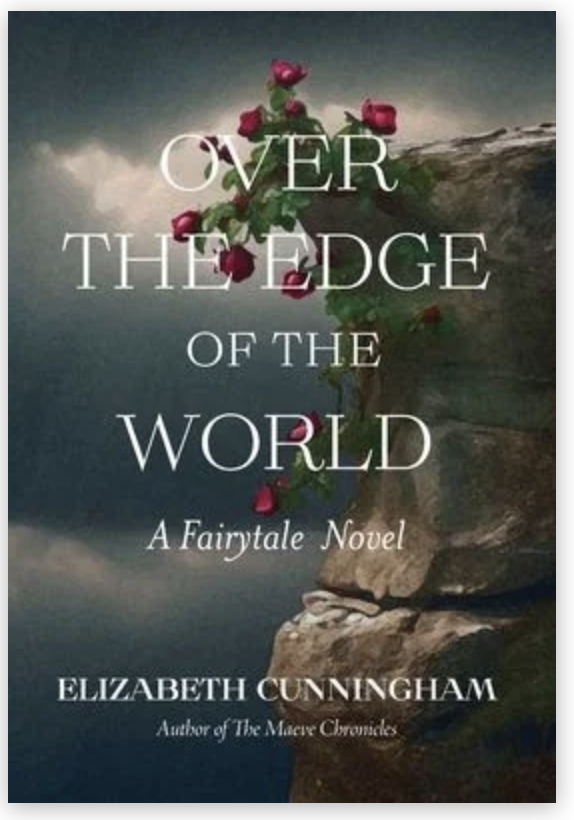
“Over the Edge of the World” by Elizabeth Cunningham: A Book Review by Judith Shaw

Elizabeth Cunningham’s new book is a marvel you won’t want to miss. It’s subtitled, “A Fairytale Novel” which lets you know you are in for a magical experience. Fairytales have meaning and contain wonder, beauty and truth.  Fairytales awaken new insights for the reader, inspiring us all to think more deeply about our world.  “Over the Edge of the World” certainly does all that. It will leave you pondering the difficult reality of our world today and the sacrifice and grit needed to create it anew. 

Continue reading ““Over the Edge of the World” by Elizabeth Cunningham: A Book Review by Judith Shaw”

From the Archives: America, The Beautiful by Marie Cartier

This was originally posted August, 2018


There is a very white woman in a Lexus.
I could say her license plate number, but does it matter?
She’s that woman you’ve heard about—yelling at a brown woman
holding a sign, “I’ve lost my job. I have two kids. Help.”

The white woman leans out of her Lexus, “Go away! Go away!”
She will not move as other cars pile up behind her and the brown woman
does not “go away.” Where could she go at this point?
She’s surrounded. I watch from my car as I’m about to leave. I
take the yelling white woman’s picture. I get her license plate number. Continue reading “From the Archives: America, The Beautiful by Marie Cartier”

Legacy of Carol P. Christ: Kamala Harris! “I Feel Heard”

This was originally posted on August 17, 2020

Shortly after Kamala Harris was announced as Joe Biden’s choice for his Vice Presidential running mate, a panel of black women were asked, “How do you feel right now?” “I feel heard” was the simple yet profound response of one of them. As is well-known to those who follow the polls, black women voters are the backbone of the Democratic party. In the primary election, black women in South Carolina delivered the Presidential nomination to Joe Biden. Yet all too often black women have felt that their votes were taken for granted.

Instead of focusing on the needs and priorities of black women and their communities, all too often the Democratic Party’s strategy has been to reach out to other groups—for example working class white men or white suburban women. To feel heard at this moment means to be taken seriously as a political actor and as a person. Right now, the fact that a black woman was selected is what matters most. There were other qualified women and out of all of them. a black woman, Kamala Harris was chosen. And because of this, black women feel heard. It’s about time. Period.

Continue reading “Legacy of Carol P. Christ: Kamala Harris! “I Feel Heard””

The Imagination that Shapes Us by Xochitl Alvizo

In my previous post, The Stories We Tell, I drew out the connecting thread that runs through the different books I was reading, the importance of imagination, and the fact that stories capture and shape our imagination, regardless of whether the stories are factually true or not. We inherit them, disparately, and carry them with us as we engage with one another, for better or for worse. And although they are distinct, they also overlap—all our imaginaries overlap and impact one another.

Continue reading “The Imagination that Shapes Us by Xochitl Alvizo”

Archives from the FAR Founders: Privileged Feminist By Xochitl Alvizo

This was originally posted on November 23, 2011. This is part of a project to highlight the work of the four women who founded FAR: Xochitl Alvizo, Caroline Kline, Gina Messina, and Cynthia Garrity-Bond. The author has added a note at the end.

I have the privilege of having radical lesbian feminism ‘work’ for me. I can’t explain why it does – but it does – it just works for me. I am not of the same generation as most feminists who experienced and awakened to radical feminism during the women’s movement of the 70s and 80s in the United States. I am not white nor was I middle-class when I encountered it (though I probably am middle class now). Nonetheless, as I encountered radical lesbian feminist writing, and eventually some of the women who wrote them, it spoke to me in the depths of my being and rattled my very core. Radical lesbian feminism liberated me and birthed me into a whole new way of Be-ing…and that is a privilege I must not take for granted and must hold loosely.

Continue reading “Archives from the FAR Founders: Privileged Feminist By Xochitl Alvizo”

Legacy of Carol P. Christ: The Beauty Way

This was originally posted on January 22, 2018

When I learned about the Navajo Beauty Way, I understood it to be a path in which human beings respect all beings in the web of life and live in harmony with them. But I didn’t understand why this path was called the “Beauty Way.” As a young woman, I knew that my worth was defined by many in terms of my ability to conform to ideals of female beauty promulgated in movies, tv, and advertising. I didn’t believe the Navajos were talking about beauty in that sense, but because of my conditioning, I was not yet able to fully grasp what they might mean by beauty. I would have called the way they were describing a “Way of Harmony” or a “Way of Respect for Life.”

Still, I wondered: why the Beauty Way?

Continue reading “Legacy of Carol P. Christ: The Beauty Way”