What It’s Like To Be A Woman In The Academy: Mentoring Edition by Linn Marie Tonstad

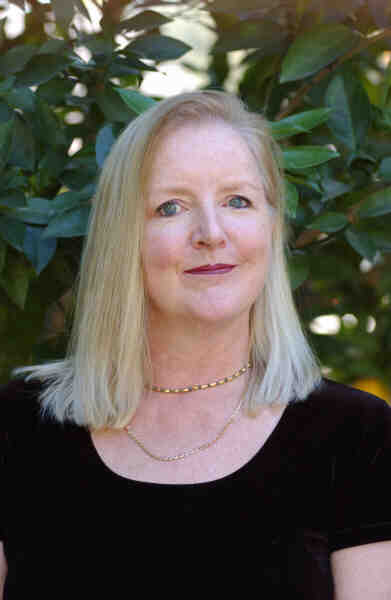
Linn Marie TonstadIn my first post, I promised to return to the topic of mentoring. Mentoring is a survival strategy for feminists inside hostile or difficult-to-navigate environments; in its best possibilities, mentoring is a strategy for flourishing, not just surviving. But when a mentoring relationship goes wrong, it is so destructive an experience that it may even be characterized as traumatic. Mentoring is also a practice rife with possibilities for abuse: the recent Yale study of gender bias in the sciences shows the extent to which gender alone serves as a significant variable for scientists assessing the possible rewards of mentoring a student.

I have given a lot of thought to mentoring in recent months – as I transition into new mentoring roles in a new institution, as I negotiate changing relationships with current and former mentors, as I reflect on successful and unsuccessful mentoring relationships I’ve been involved in, and as I seek to develop policies and practices that will serve me (and more importantly, my mentees) well.  Continue reading “What It’s Like To Be A Woman In The Academy: Mentoring Edition by Linn Marie Tonstad”

Imagine a Catholic Church that Loved as only a “Woman” Loves by Michele Stopera Freyhauf

Freyhauf, Feminism, Religion, Catholic Church I came across an abhorrent display of ignorance Saturday when reading an article quoting the Pope’s theologian, Dominican priest Wojciech Giertych, on why women cannot be ordained.  This man is in charge of reviewing speeches and texts submitted to the Pope to ensure that they are free of doctrinal error.  Once you read this, I am sure that many of you will have the same thoughts that I do ranging from – that explains a lot — to —  we are in serious trouble!

Giertych touted the common arguments made against ordaining women – Jesus was a man, Jesus chose only male disciples, etc.  However, then he put forth statements about, (1) the theologian’s task, (2) why maleness is essential to the priesthood, and (3) what the vocation of women is and is not.

What is the Theologian’s Task?

According to Giertych, the theologian’s task in determining the definition of priesthood:

 “In theology, we base ourselves not on human expectations, but we base ourselves on the revealed word of God” without the freedom “to invent the priesthood according to our own customs, according to our own expectations.”

According to CTSA (Catholic Theological Society of America), the theological task is described as follows:

Theologians throughout history have promulgated the riches of the Catholic tradition by venturing new ways to imagine and express the mystery of God and the economy of salvation revealed in Scripture and Tradition. This is a Catholic style of theological reflection that very many Catholic theologians continue to practice today. The teaching of the Second Vatican Council in its Pastoral Constitution on the Church in the Modern World (Gaudium et Spes) is especially eloquent on this responsibility” (See Gaudium et Spes #44).

Continue reading “Imagine a Catholic Church that Loved as only a “Woman” Loves by Michele Stopera Freyhauf”

Blessed By Gratitude and Sharing by Xochitl Alvizo

Incarnation, Goddess spirituality, Xochitl Alvizo,  god became fleshCarol Christ’s post yesterday has gotten me thinking about the differences between Christianity and earth-based spiritualities. Of course, there are many differences, that goes without saying. However, being someone who comfortably stands at the intersection of them both I am usually more aware of the ways in which they seem to intersect in life-changing and inspiring ways for me. Nonetheless, Carol has me thinking…

Over the course of the last year here on Feminism and Religion, Carol has written a lot about the importance of ancestors – how when speaking about embodiment and interdependence it is crucial we acknowledge all the ways in which ancestors make us who we are. Mothers literally give us our bodies and our ancestors’ genes, connecting us to a long line of people both materially/biologically as well as historically. Ancestors give us a sense of connection to places and ground us to lands that were meaningful to them and thus become meaningful to us. And Carol also reminds us that our family and ancestors transmit to us memories that impact us psychically and in powerful ways. These emphases on connection, interdependence, rootedness, and embodiment flow from her earth-based Goddess practice and thealogy. Her spirituality leads her to a greater sense of appreciation and gratitude for the Source of Life and for all the sources of life, and she affirms that because of this deep awareness of interdependence and relationality people who practice earth-based spiritualities are “moved to share what has been given to [them] with others.” Continue reading “Blessed By Gratitude and Sharing by Xochitl Alvizo”

The Joy of Honoring Rosemary Radford Ruether by Dirk von der Horst

DirkA cutting-edge voice in many theological conversations, Rosemary Radford Ruether has been an inspiration to many of us over the last few decades.  The tremendous joy of my last couple of years was co-editing a volume of essays in her honor.  Even discovering just how dreary indexing is was a labor of love for a true pioneer in feminist theology.  The result: Voices of Feminist Liberation: Writings in Celebration of Rosemary Radford Ruether, a collection of fourteen essays by Ruether’s doctoral students, put together by Emily Leah Silverman and Whitney Bauman, along with myself.

Voices of Feminist Liberation documents the current state of her impact and legacy.  The richness of her thought is manifest here in the variety of directions her students have taken her insights.  While most of the essays are scholarly works that engage her ideas above all else, some essays have more personal recollections.  Rosemary’s preface recounts her personal experiences of and with us, with descriptions of incidents from her relationships ranging from hearing a live-in student coming down the hall to slip a paper under the door, to seeing a student’s dissertation prospectus enrage a committee member, to switching from same-sex hand-holding in Palestine to male-female hand-holding in Israel as a small gesture of recognizing cultural difference. Continue reading “The Joy of Honoring Rosemary Radford Ruether by Dirk von der Horst”

And Thus God made a Covenant with Hagar in the Wilderness by Michele Stopera Freyhauf

Freyhauf, Feminism, Religion, Durham, Old Testament, Blogger, BibleWe are familiar with the covenant God made with Abraham and Moses, but are you aware that God also made a covenant with Hagar?

In the wilderness Hagar encounters a deity at the well named Beer-lahai-roi (Genesis 16). Water and wells are important because they symbolize fertility and life. Wells for women are common places where they met their future spouses. Because wanderers in the desert need water to survive, water itself becomes a symbolic of life-giving or life.

In the seemingly barren dessert, the fertile Hagar finds out that she is pregnant and going to be the mother of many children. Hagar is promised progeny in a motherless state.  According to Pamela Tamarkin Reis, this is called the “after-me” descendants, which guarantees Hagar that her children will live for “immeasurable generations;” a pattern that fits within the scope of this promise. This same promise of progeny is also given to Eve in Genesis 3:20, providing and interesting parallelism between Eve and Hagar.

It is worth pointing out the irony exists in this promise.  Sarai uses Hagar to “build her up.” According to Nahum Sarna, to be built up in terms of the number of children that you have, implies that you are mother to a dynasty.  In this pericope, however, it is Hagar, not Sarai that is built up through this divine promise.

This patterns of promise exists within the birth narrative through the annunciation of Ishmael and the promise of progeny.  It is through this narrative that Hagar enters into a covenantal relationship with the deity.  According to J. H. Jarrell, birth narratives have six common elements that establish this relationship:  mother’s status, protest, offer, son’s future forecast, Yahweh naming, and acceptance of the contract. Hagar’s story contain these elements:

  1. Mother’s Status:  Hagar is without child because she is a virgin (16:1).
  2. Protest:  Hagar flees from her mistress (16:8).
  3. Offer:  Return to your mistress and submit to her authority (16:9).
  4. Son’s Future Forecast:  He will live at the east of all his brothers (16:12).
  5. Yahweh Naming:  You will bear a son Ishmael because the Lord has given heed to your affliction (16:11).
  6. Acceptance of the Contract:  She called the name of the Lord (16:13).

Continue reading “And Thus God made a Covenant with Hagar in the Wilderness by Michele Stopera Freyhauf”

Connection to Ancestors in Earth-based Theology by Carol P. Christ

carol p. christ 2002 color“I am Carol Patrice Christ, daughter of Jane Claire Bergman, daughter of Lena Marie Searing, daughter of Dora Sofia Bahlke, daughter of Mary Hundt who came to Michigan from Mecklenburg, Germany in 1854.  I come from a long line of women, known and unknown, stretching back to Africa.”

Like many Americans, my ancestral history was lost and fragmented due to emigration, religious and ethnic intermarriage, and movement within the United States.  Though one of my grandmothers spoke proudly of her Irish Catholic heritage and one of my grandfathers acknowledged his Swedish ancestry, I was raised to think of myself simply as “American,” “Christian” and “middle class.”  Ethnic and religious differences were erased, and few stories were told. 

Over the past two years, I have begun to discover details of my ancestral journey, which began in Africa, continued in the clan of Tara, and was marked by the Indo-European invasions.  In more recent times, my roots are in France, Holland, England, Germany, Ireland, Scotland, and Sweden.  In the United States, my family has lived in tenements in New York City and Brooklyn, in poverty in Kansas City, and on farms in Long Island, Connecticut, upstate New York, Michigan, and Pennsylvania.  My parents and grandparents settled in northern and southern California during the 1930s.  I have lived in southern and northern California, Italy, Connecticut, New York, Boston, and now Greece.

Learning details about family journeys has created a shift in my sense of who I am.  Continue reading “Connection to Ancestors in Earth-based Theology by Carol P. Christ”

Monthly Highlight: Emilie M. Townes


Emilie M. Townes

“In my teaching I want to get students excited about that notion of, you know, you’re not just here to get a Yale degree and have it on your diploma and be able to hang it on your wall…You should be here thinking about what kind of contributions can I make to society….What are you doing that helps enhance the lives of all of us, as opposed to (our) own little idiosyncratic research interests.”  – – Emilie M. Townes

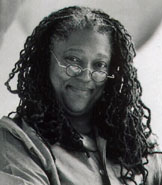
Emilie Townes is a pivotal person in the field of Womanist and Christian ethics as well as a foremother and pioneer in Womanist theology. Cornel West of Princeton University said:

“Emilie Townes is the towering womanist ethicist of our time….In this ice age of indifference and evasion, her powerful voice and viewpoint summon us. And we thank her for her vision and courage.”

At an opening address at the Convocation in 2005, Townes stated that there is a need to live in a “deep walking hope” that shapes lives “in ways that are not always predictable, not always safe, rarely conventional” and protests “with prophetic fury the sins of a world, and sometimes theological world views, that encourage us to separate our bodies from our spirits, our minds from our hearts, our beliefs from our actions.” Continue reading “Monthly Highlight: Emilie M. Townes”

Winds of Change in the Roman Catholic Church by Michele Stopera Freyhauf

Michele FreyhaufIn 2007, I had a conversation with a professor who felt that change was in the air for the Roman Catholic Church. The basis of this opinion was based on language. The words and the context used in writings that emerged from the Vatican were changing and somehow different – a difference that went beyond personal writing styles of Pope John Paul II and Pope Benedict XVI. This professor was hopeful that positive change for women could be coming. He was right about change in the Church, however, the changes surrounding women that emerged have not been positive.

As I continue to reflect on these words, I ponder the issue of language; specifically the impact words have and the way they are used to facilitate subtle changes in thinking, opinion, and beliefs. The method of persuasion that seems to be employed is the Aristotelian Rhetorical Theory that utilizes the five canons of rhetoric: invention, organization, style, delivery, and memory.

An example of this can be seen clearly in the changes in the liturgy that occurred last year. First, the teaching comes out with the rationale as to why the liturgy needs to change. From there a discussion, especially through the media, addressing the upcoming modifications are followed by subtle changes in the liturgy beginning with the call – response and the language in the creed. Next, the language of the celebrant began to change. Finally, the full implementation of changes is made with the addition of new gestures or movements. When I discussed the mass changes with a family member, there was an admittance that the changes no longer affect them – the changes were no longer noticeable. Their memory was impacted because the routine is now second nature.

In order to come to grips with the issue of language and the observation of my professor, I wanted to do a cursory review of the writings issued by the Vatican during this period. Admittedly, with a blog post, there is a limitation as to the depth and breadth of information that can be disseminated. It is my hope to eventually complete a thorough review of the modification of language used during Pope Benedict XVI’s papacy. For now, I want to address a few observations.

Continue reading “Winds of Change in the Roman Catholic Church by Michele Stopera Freyhauf”

We Are All Earthings: Speciesism and Feminist Responsibility Toward Animals by Amy Levin

Amy2“earth’ling: n. One who inhabits the earth.” – Earthlings, 2006

“We need another and a wiser and perhaps a more mystical concept of animals. Remote from universal nature, and living by complicated artifice, man in civilization surveys the creatures through the glass of his knowledge and sees thereby a feather magnified and the whole image in distortion.” -Henry Beston, The Outermost House

I was passing out leaflets at Columbia University a couple weeks back, when a passerby who took a pamphlet on veganism and the cruel uses of animals turned back around to approach me. He said, “I am a vegetarian, so I understand not eating meat. But what is wrong with some of the uses of these animals? What is wrong with seeing eye dogs?”  A valid question indeed, and one I had to pause for a moment to answer. I mustered up something along the lines of the ways that many of the seeing eye dogs in the industry are unfairly treated or neglected. “Oh, he said.” He seemed content with an answer he could relate to – suffering. In my experience leafleting and participating in animal rights advocacy, I receive a number of questions, many of them wanting to know the same thing, what is WRONG with the horse-drawn carriages at Central Park? And each time I (and I presume many other activists) offer similar answers, the suffering answer. But there is another layer, beyond the quick, violent spark of imagination that connects physical pain with empathy. And it has to do with power and structural inequality, and the use of one group for the benefit of another. And it has everything to do with feminism. Continue reading “We Are All Earthings: Speciesism and Feminist Responsibility Toward Animals by Amy Levin”

SPECIAL AAR SERIES Part 2: Gamer-Player/ Gamer-Avatar: The Potential of a Video-Gaming Body by Sara Frykenberg with introduction and response by Mary Hunt

Sara Frykenberg Mary HuntIntroduction:

This is one of four papers presented in Chicago at the Annual Meeting of the American Academy of Religion, November 17, 2012, in a session entitled  “Feminism, Religion and Social Media: Expanding Borders in the Twenty-First Century,” organized by Gina Messina-Dysert and chaired by Rosemary Radford Ruether with Mary E. Hunt as the respondent. What follows is the general response followed by, after each of the contributions, Hunt’s appreciative analysis. The first paper was posted here on Feminism and Religion, and the other two papers are posted here and here on the Feminism in Religion Forum

General Remarks by Mary Hunt:

The stated purpose of the panel is to discuss “how digital projects are remapping the feminist theological terrain and creating opportunities for a wide range of voices to participate in ongoing and new conversations related to feminist issues in religion.” These writers have done that and more. Continue reading “SPECIAL AAR SERIES Part 2: Gamer-Player/ Gamer-Avatar: The Potential of a Video-Gaming Body by Sara Frykenberg with introduction and response by Mary Hunt”