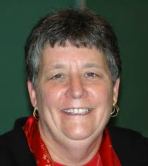
Does Belief Matter? by Carol P. Christ

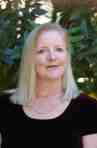
carol p. christ 2002 colorIn recent days I have been pondering the fact that some people and some feminists seem to see the issues of religious faith and belonging to be rooted in birth, family, and community, while for others the question of belonging to a religious community hinges on belief and judgments about the power exerted by religious institutions.  What accounts for this difference in the way we view religious belonging?

Recently I watched The Secret History of Sex, Choice and Catholics, a film featuring Roman Catholic feminists and ethicists who dissent from the Roman Catholic hierarchy’s views on contraception, abortion, and homosexuality.  At the beginning of the film those interviewed state almost univocally that for them being Catholic stems from having been born Catholic. These Catholic dissidents continue as Catholics, even though they disagree with major portions of Roman Catholic teaching.  It may have been because they were not asked, but most of them did not name reasons of belief for remaining Catholic.

Thus the viewer did not learn the theological reasons these progressive Catholics stay in the church.  I wondered: Do they believe that salvation occurs only through Jesus as the Christ? Do they believe in original sin? How do they feel about the God of Exodus and the prophets who achieves his will through violence or the Christian doctrine of hell?  I also wanted to know how they justify being part of an institution that, as June Courage stated on these blog pages, is responsible for the deaths of women and children through its contraception and abortion policies just as surely as if it were bombing their homes in an unjust war. Continue reading “Does Belief Matter? by Carol P. Christ”

Sappho Chose Love Not War, What Will You Choose? by Carol P. Christ

*

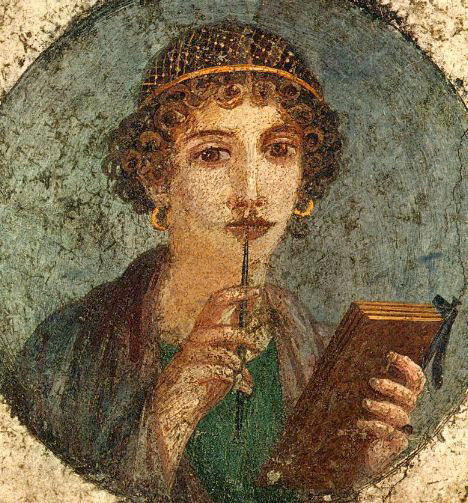
We have been taught to speak of war and the heroes of war in hushed tones. We have been told that evil Helen’s choice was the cause of the Trojan war.  2600 years ago Sappho, known as the greatest lyric poet of ancient Greece, spoke truth to power and unmasked the lies told at the beginning of western tradition.

*

In a poem addressed to Anactoria, Sappho writes:

            Some say a cavalry corps

            some say infantry, some, again,

            will maintain that the swift oars

            of our fleet are the finest

            sight on dark earth …

Here, Sappho invokes the heroic tradition celebrated in the epic poems of Homer that shaped the values of ancient Greek culture and all the cultures that followed it, including our own.  This tradition tells us that to serve in a war and to be remembered as a hero is the highest goal to which a man can aspire.  Sappho does not agree:

             …but I say

             that whatever one loves, is.

Continue reading “Sappho Chose Love Not War, What Will You Choose? by Carol P. Christ”

Reading Plato’s Allegory of the Cave as Matricide and Theacide by Carol P. Christ

When I read Plato’s allegory of the cave as an undergraduate, I was told it had something to do with the idea that the “form” of a table is more “real” than the table itself. I must confess that I had no idea what this could possibly mean.

As a graduate student, I struggled with philosophical and theological ideas rooted in Platonism.  Rosemary Radford Ruether named the flawed worldview created by a “classical dualism” that separates mind from body, spirit from the world, rationality from emotion, and male from female.  Her ground-breaking essay “Mother Earth and the Megamachine” clarified the difficulties I was having.

Western philosophy, described by Alfred North Whitehead as a series of footnotes to Plato, had gotten off on the wrong foot. At its very beginnings, western philosophy had attempted to sever mind from the body and nature, alleging that “man’s true home” was not life in the body on planet earth. Continue reading “Reading Plato’s Allegory of the Cave as Matricide and Theacide by Carol P. Christ”

Validating the Gospel of “Jesus’ Wife” is not Necessary to Prove Female Discipleship by Michele Stopera Freyhauf

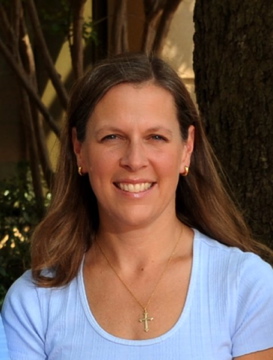
The Gospel of “Jesus’ Wife” is certainly at the center of a battle that was last seen when questions of authenticity were raised about the James (Jesus’ brother) ossuary.  In a New York Times article, September 30th, Judith Levitt states that this document adds weight to theological and historical flaws surrounding the issue of the ordination of women.  The Vatican believes that their theology is still sound, calling the document a forgery.

The Gospel of “Jesus’ Wife.” [www.boston.com]
Frankly we do not need this document to validate the existence of female deacons and disciples – we have the biblical text and writings of the early church to validate this position.

Nor do we need this document to show that the standing from the Vatican’s point of view of ordaining women is theologically and historically flawed.

“In 1976, experts of the Pontifical Biblical Commission determined that there were no scriptural reasons preventing women’s ordination. The Congregation for the Doctrine of Faith overturned the commission’s judgment and instead wrote its own statement (Inter Insigniores, 1976) stating that women do not image Jesus who was a man; and therefore only male priests can adequately represent Christ.” – Women’s Ordination Conference

John Ortberg, in the Huffington Post, addressed a bigger issue surrounding female leadership in the Church brilliantly:

“perhaps what matters most in this discussion is the impact Jesus had — not on one woman — but on the status of women as a whole.”

Continue reading “Validating the Gospel of “Jesus’ Wife” is not Necessary to Prove Female Discipleship by Michele Stopera Freyhauf”

Theapoetics by Molly

I think there is a poet in me

she’s been hiding

I didn’t know she was there

I didn’t see her
I didn’t hear her

I didn’t watch for her
wait for her
listen to her
or know her

and yet, when I come to this place in the woods
and I sit down
and I open my mouth

poetry comes out

and I really think
she’s been here all along.

In the woods behind my house rest a collection of nine large flat rocks. Daily, I walk down to these “priestess rocks” for some sacred time alone to pray, meditate, consider, and be. Often, while in this space, I open my mouth and poetry comes out. I’ve come to see this experience as theapoetics—experiencing the Goddess through direct “revelation,” framed in language. As Stanley Hopper originally described in the 1970’s, it is possible to “…replace theology, the rationalistic interpretation of belief, with theopoetics, finding God[dess] through poetry and fiction, which neither wither before modern science nor conflict with the complexity of what we know now to be the self.” Theapoetics might also be described, “as a means of engaging language and perception in such a way that one enters into a radical relation with the divine, the other, and the creation in which all occurs.” Continue reading “Theapoetics by Molly”

Being Renewed at the Hispanic Theological Initiative by Xochitl Alvizo

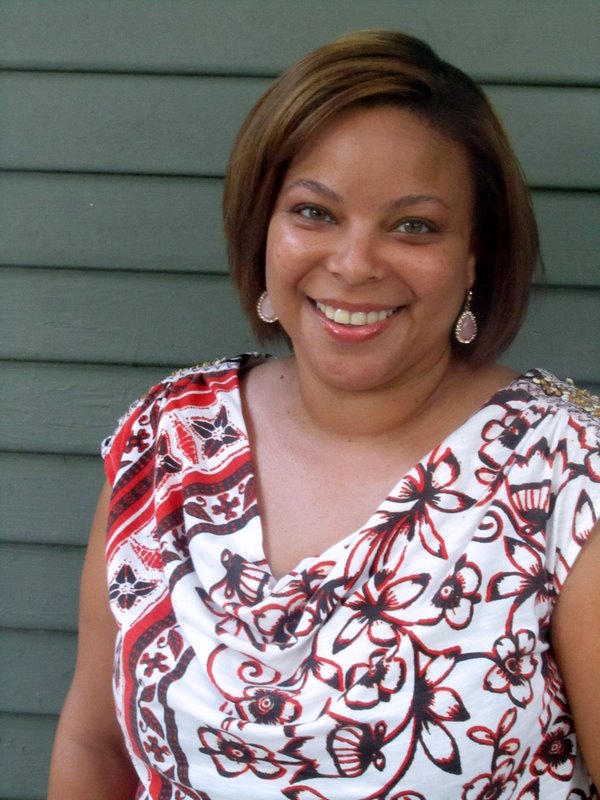
Feminist theologians have long affirmed the fact that who we are and where we stand, as human communities and as individuals, affects what we see and how we see it, and in turn affects the theology we produce.

Sometimes I think I am being birthed to myself over and over again. That somehow in the process and action of living I become fragmented and compartmentalized into disparate pieces without even knowing it. Then comes that moment when one of the pieces comes back to full view and realization, and I feel the unexpected and overwhelming joy of being birthed anew all over again – and it is a beautiful thing. This is what happened to me recently as I participated in the summer dissertation workshop of the Hispanic Theological Initiative. The Latina part of me came back to full view and was integrated into the whole.

The Hispanic Theological Initiative, or HTI, is a project that exists to nurture and support Ph.D. Latina and Latino students (‘Latino/a’, as is now commonly said) through their doctoral program. As HTI scholars these students are assigned a senior Latino/a scholar as a mentor, are provided with networking funds to support their professional development, are assigned a dissertation editor, and attend the annual gathering to participate in a variety of workshops, lectures, and seminars. This past June I was able to participate in their summer dissertation workshop. It was a one-time opportunity for me, but getting the chance to participate even for just those three days was an amazing gift. The gift  came in the form of a journey back to myself that included the overcoming of fears along the way. Continue reading “Being Renewed at the Hispanic Theological Initiative by Xochitl Alvizo”

Living Liminality: Of Thresholds and Dwelling Places by Marcia W. Mount Shoop

Sometimes I think it happened gradually.  Other times it feels like sudden change.  Either way I find myself in an in-between space that is my life.

With apologies to Victor Turner and his cultural anthropological appropriation of liminality as a threshold space, I have come to view my liminal living as a more permanent dwelling place these days.  Turner’s category of liminality locates subjects in the betwixt and between as they move from one manifestation of identity in community to a new kind of integration or role in community.   I am starting to wonder, however, if the thresholds are actually dwelling places for some of us in this world.

I don’t know if that means I am actually more marginal than I am liminal.  The margins are margins because they remain on the outskirts and they help define the boundaries.  Margins are permanent.  Am I marginalized if I live at the edges of the communities and identities I use to occupy, perhaps never to return to the bosom of the center? I hesitate to make such a claim mostly because I still occupy privileged spaces not the least of which are those constructed from how whiteness grants access and authority in this world. Continue reading “Living Liminality: Of Thresholds and Dwelling Places by Marcia W. Mount Shoop”

Catholic Feminists Meet, Strategize by Rosemary Radford Ruether and Theresa Yugar

During July 8-11, 2012 twenty Catholic feminist leaders met in a retreat center near Baltimore to discuss their concerns and hopes in the light of the recent and ongoing attacks of Catholic bishops on women and especially on feminist work in the church. The group consisted of representatives from many sectors of Catholic institutions and movements.  There were the founders of a peace and justice movement of the Sisters of Charity and the Institute for Communal Contemplation and Action. There was a pastor and leadership trainer from an alternative parish and a writer for the National Catholic Reporter.

Many in the group were professors of theology or ethics at Catholic, Protestant or state schools. Among them were teachers at Whittier College, Claremont School of Theology, Santa Clara University and San Jose University in California, Loyola University in Chicago, St. Catherine in Minnesota, Drew University in New Jersey and Boston College. Catholic reform movements were well represented, with leaders from Dignity, the Women’s Ordination Conference, Call to Action and RomanCatholicWomenPriests. There was a teacher at Marymount School in New York City, the President of Marymount School in Los Angeles and a doctoral student in theology. Continue reading “Catholic Feminists Meet, Strategize by Rosemary Radford Ruether and Theresa Yugar”

Re-creating the World by Elise Edwards

All of us have the same creative power as artists to contribute to the world in our own domains. When we do so, we re-create the world and participate in its ongoing creation.

For years, my friend Lisa Cole Smith has been working with artists and thinking about their important role in the world.  She has been building a community to support artists and other creative people through a Christian church in the Northern Virginia/Washington DC area and at times, I’ve been fortunate enough to participate in that effort.  My conversations with Lisa are always rewarding, whether we are simply catching up as friends, giving each other encouragement for our work, or discussing theological concepts.  Although she works in a church and I work in an academic setting, we have similar pursuits. Continue reading “Re-creating the World by Elise Edwards”

Process Thought: Feminist Friendly Metaphysics by Xochitl Alvizo

To be is necessarily to be in process and engagement with the lure of creative advance (that is, with God). In this sense, God is the poet of the world continually luring the world toward its full be-coming.

“It all goes back to one’s metaphysics.” That is what my TA said in the first theology class I took during my masters program. We were discussing our theological statements in class – a statement that outlines our individual understanding of God, humanity, sin, etc. – presenting them to one another for feedback and discussion.  As we argued  and discussed (“How can you possibly believe that?”) our TA made the case that our theological statements and the varying differences among them were largely determined by our particular metaphysics – that is, they are determined by whatever we hold to be the nature of existence.  That is to say, if science studies the physical world, metaphysics is the result of asking questions about the underlying reality of that physical world – about the nature of the physical world and by extension all of existence. As one can imagine, not all metaphysics are created equal, but all of them are theories with enormous implications. Continue reading “Process Thought: Feminist Friendly Metaphysics by Xochitl Alvizo”