The Joy of Honoring Rosemary Radford Ruether by Dirk von der Horst

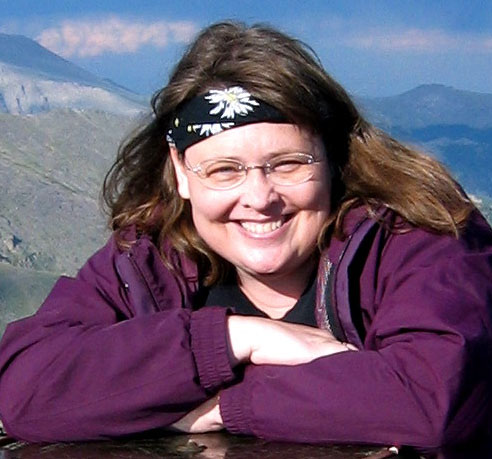
DirkA cutting-edge voice in many theological conversations, Rosemary Radford Ruether has been an inspiration to many of us over the last few decades.  The tremendous joy of my last couple of years was co-editing a volume of essays in her honor.  Even discovering just how dreary indexing is was a labor of love for a true pioneer in feminist theology.  The result: Voices of Feminist Liberation: Writings in Celebration of Rosemary Radford Ruether, a collection of fourteen essays by Ruether’s doctoral students, put together by Emily Leah Silverman and Whitney Bauman, along with myself.

Voices of Feminist Liberation documents the current state of her impact and legacy.  The richness of her thought is manifest here in the variety of directions her students have taken her insights.  While most of the essays are scholarly works that engage her ideas above all else, some essays have more personal recollections.  Rosemary’s preface recounts her personal experiences of and with us, with descriptions of incidents from her relationships ranging from hearing a live-in student coming down the hall to slip a paper under the door, to seeing a student’s dissertation prospectus enrage a committee member, to switching from same-sex hand-holding in Palestine to male-female hand-holding in Israel as a small gesture of recognizing cultural difference. Continue reading “The Joy of Honoring Rosemary Radford Ruether by Dirk von der Horst”

Monthly Highlight: Emilie M. Townes


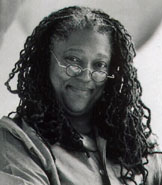
Emilie M. Townes

“In my teaching I want to get students excited about that notion of, you know, you’re not just here to get a Yale degree and have it on your diploma and be able to hang it on your wall…You should be here thinking about what kind of contributions can I make to society….What are you doing that helps enhance the lives of all of us, as opposed to (our) own little idiosyncratic research interests.”  – – Emilie M. Townes

Emilie Townes is a pivotal person in the field of Womanist and Christian ethics as well as a foremother and pioneer in Womanist theology. Cornel West of Princeton University said:

“Emilie Townes is the towering womanist ethicist of our time….In this ice age of indifference and evasion, her powerful voice and viewpoint summon us. And we thank her for her vision and courage.”

At an opening address at the Convocation in 2005, Townes stated that there is a need to live in a “deep walking hope” that shapes lives “in ways that are not always predictable, not always safe, rarely conventional” and protests “with prophetic fury the sins of a world, and sometimes theological world views, that encourage us to separate our bodies from our spirits, our minds from our hearts, our beliefs from our actions.” Continue reading “Monthly Highlight: Emilie M. Townes”

Honoring the Older Women of December’s Darkness by Carolyn Lee Boyd

carolyn portrait

Winter’s hungry hand has taken another powerful and precious older woman. No one knew Ellen beyond her family and friends, her church and her neighbors. She was 90, a nurse, faithful to her church and of service to her community, and quiet in manner and tone. In my work in elder services over 25 years, I have come to know many Ellens, older women who have labored relentlessly in their homes or in the outside world for little recognition or financial recompense but who have made a tremendous difference in the lives of other.  For reasons that may have to do with the harshness of New England winters, or maybe just coincidence, or maybe only perception, winter  seems to be the time when they leave the Earth and we are bereft.

Ellen and the many older women I have known like her do not fit into any standard or feminist image of a powerful woman.  They do not generally challenge the status quo, except with occasional complaints about unfairness to women in comments to friends.  They may not feel comfortable labeling themselves as “feminist.”

Continue reading “Honoring the Older Women of December’s Darkness by Carolyn Lee Boyd”

A Gift I hope I can give: A Thank you to Ada Maria Isasi-Diaz by Sara Frykenberg

At some point, I finally asked the mentor what her name was and with a smile and joy that I do remember, she said, “I’m Ada Maria Isasi-Diaz.”  OH MY GOD/DESS.  I was completely taken aback.  I really couldn’t believe that I was sitting at a table and casually talking with this woman whose work I had read and loved: a woman I considered famous.  More than this, however, I couldn’t believe that she was talking to me.

I attended a memorial panel for Mujerista theologian, teacher and activist Ada Maria Isasi-Diaz at the American Academy of Religion National Conference this year.  After panelists shared their memories of their friend and mentor, audience members were also invited to speak.  Sitting in the audience, listening to story after beautiful story of this woman’s life, I was amazed not only by how many people Isasi-Diaz affected in that one room, but also by the similarities of the stories I heard.  Ada Maria Isasi-Diaz was a woman who shared her gift with many people: empowerment and access to their own power.  She generated confidence, both by creating opportunities directly and indirectly for others, and by rewarding the faith of those who believe in her work by living her ideals in an obvious, open and caring way.

I was lucky enough to meet Prof. Isasi-Diaz once in my life.  I was attending a women’s mentor luncheon as a graduate student, hoping to meet a more senior scholar who could tell me something I needed to know in order to get a job some day.  I sat down at a table with another student and a woman older than both of us who seemed to be our mentor representative.  I do not remember the entire conversation.   However, I do remember that we, the students at the table, did most of the talking and the mentor asked us questions.  Continue reading “A Gift I hope I can give: A Thank you to Ada Maria Isasi-Diaz by Sara Frykenberg”

Thinking About Thanksgiving by Carol P. Christ


carol p. christ 2002 colorThanksgiving evokes deep memory and raises questions about what we are celebrating, now that we know the stories we were told about the Pilgrims and the Indians are not the whole truth about America’s early history.  I thought about all of this as I prepared for Thanksgiving this year and cleaned up for days afterwards.

Although I do not live in America, I have celebrated Thanksgiving with a group of friends in my home in Greece many times during the past twenty years.

For me, Thanksgiving brings up happy memories of family gatherings in a time when my extended family, including Mom and Dad, brothers, great-aunts and great-uncles, aunts and uncles, cousins and second cousins, gathered at Grandma’s to eat turkey with all the trimmings.  Grandma Lena Marie Searing Bergman was not only a great cook but also an excellent hostess.  Her tables were laden with turkey, stuffing, mashed potatoes, gravy, sweet potatoes, biscuits with butter and homemade jam, corn and green peas, pumpkin and mince pies, and also with crystal, china, and silver, and flowers from her garden.

Uncle Emery, my grandmother’s older brother, told stories about life on the farm in Michigan, where they had a pony and he lost parts of his fingers in a threshing machine. We children played croquet in the garden and ran races all around it while our mothers, aunts, and grandmother laid out the feast and cleaned up afterwards.  These were the blessed days before television and televised football games came to dominate holidays in the United States. My memories are laced with the sadness of knowing that those days are in the past. Continue reading “Thinking About Thanksgiving by Carol P. Christ”

In Memoriam Patricia Monaghan: The Goddess Community Remembers and Mourns by Dawn Work-MaKinne

Patricia Monaghan, scholar, author, poet, activist, artist, visionary and vice-president of the Association for the Study of Women and Mythology died early on November 11, 2012 after a two year journey with cancer. Patricia was one of the Founding Mothers of the Goddess Spirituality community in the United States, and her loss is a profound one for our spiritual and scholarly communities.

I was a very junior scholar when I first met Patricia in the 1990s. I had long admired her work, especially O Mother Sun!, her comprehensive study on sun goddesses. We were at a regional gathering, and Patricia had been deputed to lead a table of discussion devoted to Goddess scholarship. When we introduced ourselves, she simply said that she was Pat, from Chicago. Our discussion was rolling along when recognition hit. As I remember, I broke into the conversation. “You’re Patricia! From Chicago! “ I enthused. “Your work has been so important to me!” One of Patricia’s key characteristics was her generosity, especially with young and emerging scholars. I left that gathering with her email address, and I thought I was the richest young woman in the world. In the ensuing years, she encouraged me all the way through my doctorate. We had a long and joyous journey together. Continue reading “In Memoriam Patricia Monaghan: The Goddess Community Remembers and Mourns by Dawn Work-MaKinne”

Sappho Chose Love Not War, What Will You Choose? by Carol P. Christ

*

We have been taught to speak of war and the heroes of war in hushed tones. We have been told that evil Helen’s choice was the cause of the Trojan war.  2600 years ago Sappho, known as the greatest lyric poet of ancient Greece, spoke truth to power and unmasked the lies told at the beginning of western tradition.

*

In a poem addressed to Anactoria, Sappho writes:

            Some say a cavalry corps

            some say infantry, some, again,

            will maintain that the swift oars

            of our fleet are the finest

            sight on dark earth …

Here, Sappho invokes the heroic tradition celebrated in the epic poems of Homer that shaped the values of ancient Greek culture and all the cultures that followed it, including our own.  This tradition tells us that to serve in a war and to be remembered as a hero is the highest goal to which a man can aspire.  Sappho does not agree:

             …but I say

             that whatever one loves, is.

Continue reading “Sappho Chose Love Not War, What Will You Choose? by Carol P. Christ”

Social Engagement as Feminist Praxis in the lives of Patricia A. Reif & Rita Nakashima Brock By Teresa A. Yugar

Today our country and global community need religious leaders to utilize their theological education and feminist principles to model the formation of ally ships across ecumenical and interfaith perspectives, laying the foundation for a more just and peaceful society. While Reif and Nakashima Brock did not know each other, their feminist stance of commitment to social justice and praxis should give us pause.

In 2002, Claremont Graduate University and the Immaculate Heart Community collaborated and created an endowment to sponsor a Lectureship in honor of the memory of feminist teacher, scholar and activist, Dr. Patricia A. Reif. Each year the Dr. Patricia A. Reif committee invites cutting edge feminist scholars in religion to discuss the intersection of their research interests and its influence on their scholarship, activist work and teaching in the broader sense of the term, both inside and outside of the classroom. This year the Reverend Dr. Nakashima Brock is the select guest Lecturer to honor Reif’s life, memory, and legacy. Tammi Schneider, committee member and Dean of the School of Religion stated Nakashima Brock’s visit is timely because in three weeks the national U.S. presidential elections will define the trajectory of our country for, minimally, the next four years. Nakashima Brock’s involvement in the Occupy Movement on a local and national level extends from her feminist commitment and advocacy for the rights of the 99% of our country who are being squelched by U.S. policies that favor the elite 1% of our nation. For Nakashima Brock it is a moral imperative for persons of faith and goodwill to educate individuals and take a stand on policies, on a state and nation-wide level that safeguard the livelihoods of the majority poor of our country. For Nakashima Brock this means quality health care for all, living wages and decent jobs, free high quality public education through college, and an end to the prison-military-industrial complex. Continue reading “Social Engagement as Feminist Praxis in the lives of Patricia A. Reif & Rita Nakashima Brock By Teresa A. Yugar”

Visions of My Grandmother by John Erickson

“I never told my grandmother I was gay. I’ve often wanted to visit her grave, clench my hands together, and pray that she forgive me for betraying the trust she instilled upon me long ago. However, even today, I cannot bring myself to make that trek, up the hill into the countryside where her ashes lay below the ground.”

I haven’t dreamt of my grandmother since her passing one hot summer July evening.

The night, and the days that followed, continue to be a blur.  However, as my family members continue to see her in their nightly visions, I, go on unabatedly longing to see and hear the voice of a woman who made me feel the presence of the divine with each passing story.

My sister saw her in a dream when she was buying shoes, my mother has seen her multiple times when she would be undergoing a particularly stressful situation, and I, left alone and oftentimes wondering through an abyss of loneliness and disarray, wake up each morning wondering why, I am left all alone. Continue reading “Visions of My Grandmother by John Erickson”

Lucy Burns, A Look at a Catholic American Suffragette by Michele Stopera Freyhauf

As we approach the election period infused with controversy, saturated by television commercials, as well as endless advertisements on the radio, Internet, and yes, even Facebook, we must remember the sacrifices made by our foremothers during the suffrage movement, which gave women the right to vote.  While all elections are important, this one has targeted issues involving women in a way that could negatively impact our rights – to the point of rewinding the clock on progress made in women’s equality during the last 40+ years.  This election needs the voice of all informed voters.  However,  it is imperative for all women to make their voices heard this year by casting a vote.  To turn a blind eye to these issues diminishes the sacrifices our foremothers made for us. To not cast a vote takes away your voice, makes you a silent bystander – something that was tried by the government and patriarchal system during the suffrage movement.

To illustrate this, I would like to highlight Lucy Burns and the Night of Terror endured at the Occoquan Workhouse by her and many of her friends.   Of all Suffragettes, Lucy Burns spent more time in jail then any other protesters.  Born 1879 in Brooklyn, Lucy was raised in the Roman Catholic tradition by a father who believed that his sons and daughters should be educated equally.  Burns gradated from Vassar College in 1902, then attended Yale Graduate School studying linguistics.  She eventually went to Oxford University in England to resume her studies.  It was at Oxford that she became involved with activism and the suffrage movement. Continue reading “Lucy Burns, A Look at a Catholic American Suffragette by Michele Stopera Freyhauf”