FAR is on Hiatus for the Month of March.

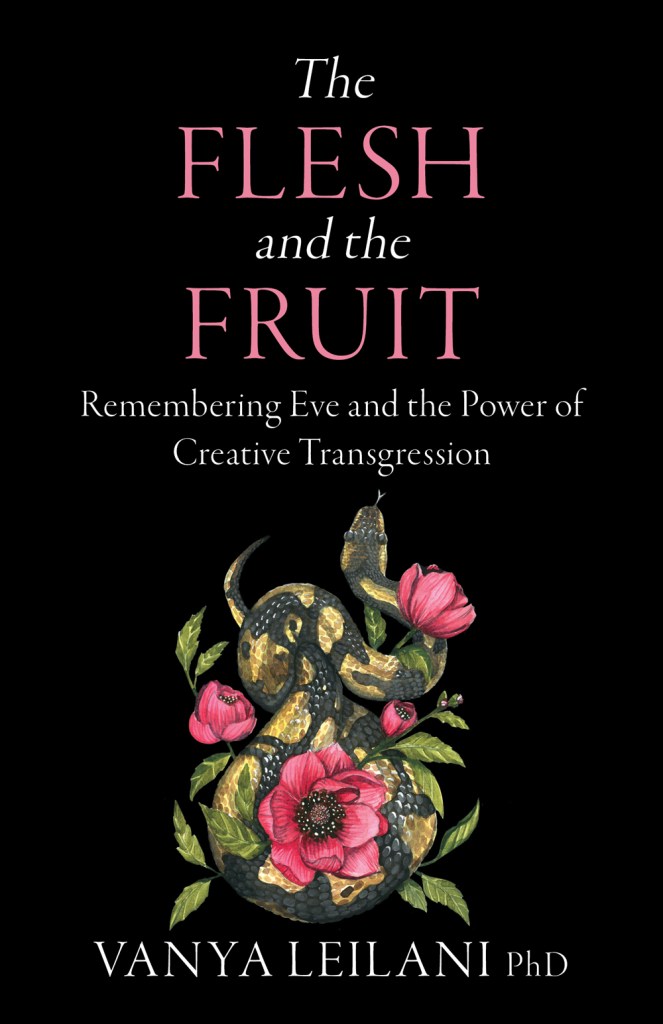
The Flesh and the Fruit by Vanya Leilani, PhD: Book Review by Janet Maika’i Rudolph

Subtitle: Remembering Eve and the Power of Creative Transgression

I have learned that every good story of spirit has many layers of meaning and pathways of understanding. Dr Leilani has found particularly relevant and even beautiful aspects of the biblical story of Eve. She uses Eve’s actions as a template of her own spiritual journey. Her pathway begins in obedience (listening to the voice of authority), travels through transgressive acts (eating of the fruit), and finally results in a self-knowing that had not been possible at the beginning of her journey.  In this book we follow along on her quest to learn about herself with Eve as her inspiration.

This is a luscious book. Vanya Leilani’s insights are not only profound but are written with a poetic sensibility. I found myself speaking some of her passages out loud because the vibration of her words are powerful and feel so sensuous on the tongue. I wanted to take them into my body, as well as read them on the page.

Continue reading “The Flesh and the Fruit by Vanya Leilani, PhD: Book Review by Janet Maika’i Rudolph”

The John Howard Society: Poetic Justness & Hope by Margot Van Sluytman

COMMUNITY

Unexpected comfort
Permeated raw, cold ache.
Warmth melted sorrow.
Embraced we are.
Once again
Knowing we are loved.
And loving too.

©Margot Van Sluytman

~~~
“Supporting neighbours. Protecting communities. Providing supports. Rebuilding lives.”
Donna De Jong, Executive Director of The John Howard Society, Hamilton-Burlington, Ontario, Canada.
~~~

I think often about why and how community matters. About joy and justice and hope and healing. And indeed, the importance of spaces such as our own here on FAR, this community of poets, writers, artists, activists, advocates, allies, academics. Each whose choice to put pen to page, affords light and life to throb and to thrive.

Continue reading “The John Howard Society: Poetic Justness & Hope by Margot Van Sluytman”

Beyond Words by Judith Shaw

The world has become unrecognizable.

I am at a loss for words.

I take refuge in brush, to color, to canvas, to paper

peering through the veil; seeking beauty; revealing connections.

The world has become unrecognizable.

I am beyond words.

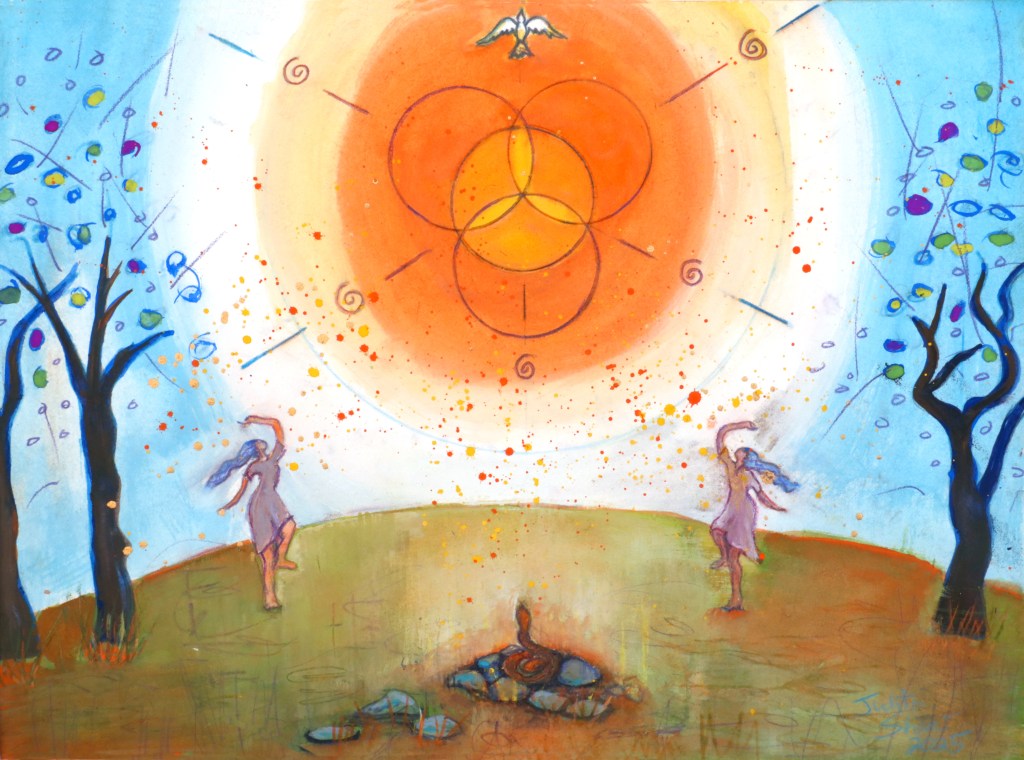
“Awakening to the Light” by Judith Shaw, gouache on paper, 12″x9″
Continue reading “Beyond Words by Judith Shaw”

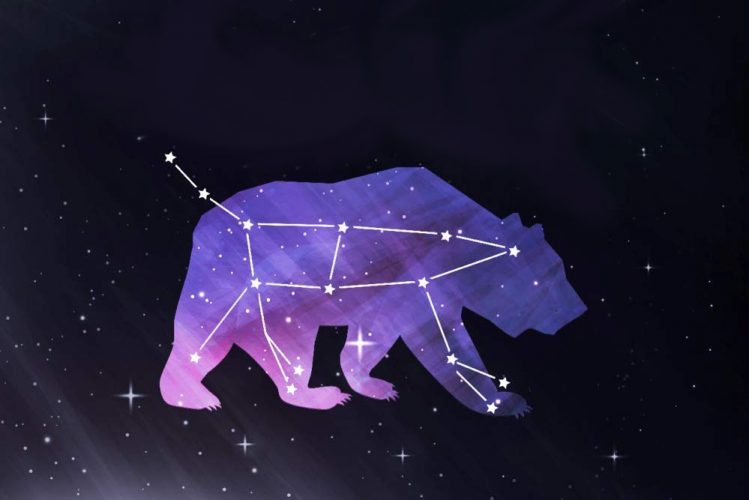
Navajo  Mountain Way Chant :  Bear as Healer – He Who Frightens Away Illness, part 2 by Sara Wright

Part 1 was posted last week. You can read it here.

The second sand painting used on the sixth night of the Mountain Way Chant is supposed to be a representation of the bears’ home in the Carrizo Mountains. In the center of this painting is a bowl of water covered with black powder. The edge of the bowl is adorned with sunbeams, and external to it are the four sunbeam rafts, on which the Nature Spirits, the Yei stand. There is a close relationship between the Yei and the bears. In the Mountain Way Chant, Talking God, Water Sprinkler (often pictured as a rainbow) Growling God (bear), and Black God are always present.

Bears and Light are related. In the first painting there is light that surrounds the bear and light is present in the form of sundogs that are positioned in each of the four directions. In the second, sunbeams are present in the center and also in each of the four directions providing places for the Yei to stand. It’s very difficult not to draw the conclusion that the light that we are speaking of is also an inner light, and this is consistent with the qualities of healing, insight, and introspection that the Navajos associate with the bear.

Continue reading “Navajo  Mountain Way Chant :  Bear as Healer – He Who Frightens Away Illness, part 2 by Sara Wright”

Legacy of Carol P. Christ: Women For Peace–Take To The Streets

This post was originally published on Nov. 19th, 2012

Sometimes we are told that domination and violence and war are innate in human nature; therefore, it is futile to protest war.  But this is not true.

I oppose war because I oppose all forms of power-over, domination, and violence.  As a radical feminist and ecofeminist I believe that power can and should always be power-with, the power that nurtures the growth and development of self and others.  The power of Goddess/God is always and everywhere power-with and not ever power-over. 

Are violence and domination innate in human nature?  We have been told that we are the “naked ape” descended from “apes” who, like the chimpanzees with whom we share 98% of our DNA, were male dominant and violent. Do we, then, have any hope not to be violent and dominant?

Franz de Waal’s studies of the other “ape” species that shares 98% of our DNA, the bonobo, debunks this popular myth.  The bonobo live in peaceful matriarchal clans, and their response to conflict is to rub each others’ genitals until the desire to fight goes away.  They are living proof that species very much like us can choose to “make love not war.” De Waal says that the most we can conclude from studies of our ape relatives is that ancestors of human beings, chimpanzees, and bonobos had the capacity to evolve toward dominance enforced by violence, or toward more peaceful ways of resolving conflict.

Continue reading “Legacy of Carol P. Christ: Women For Peace–Take To The Streets”

Womanist Sapphic Reflections on Sex, Desire, and Power by Chaz J.

**This post is based on my personal experience, research, survivor of the purity movement, and professional experience as a therapist and spiritual advisor of 5 years.

**Sapphic = women loving women <3

Everything is sex, except sex- which is power. Now ask yourself who is screwing you. – Janelle Monae

Desire, a flame that flickers, not always fanned to embers of the flesh, but today, let’s speak of its carnal heat, its dance with power, its intimate embrace with sex. 

A tempest roils within, desire’s current a raging, untamed beast. A lifetime shrouded in the gloom of putrified dread, where yearning was condemned, branded a scarlet path to eternal fire, has left its indelible scar. The hollow pronouncements of warning, like the venomous whisper of James 1:14-15, still slither within, etched into the marrow of my bones: “Temptation comes from our own desires, which entice us and drag us away. These desires give birth to sinful actions. And when sin is allowed to grow, it gives birth to death.” These words, seared into my soul, a brand of shame, a constant, gnawing reminder of the perceived treachery of wanting, the supposed sin of simply feeling and wanting.

Continue reading “Womanist Sapphic Reflections on Sex, Desire, and Power by Chaz J.”

Love Without Want by Arianne MacBean

I have only felt love without want twice in my life. The first time was when I was invited to my therapist’s funeral. The summons arrived without surprise. Strangely, my therapist and I had talked about it, before dying any time soon was a thing either of us thought would occur. After my own mother had just received her second breast cancer diagnosis, I impulsively asked my therapist during our session, “How will I know if something happens to you? Will someone call?” Someone would call. I was on a list – a list of people to call if my therapist died.

In session, we talked through how her unexpected disappearance might go – playacting for therapeutical reasons, but not knowing we were setting the stage for a true and imminent exit. She asked me if I would like to come to her funeral. There was no hesitation. Yes. I had been seeing her for twelve years. She had gotten me through life, she had gotten me through me. Of course, I wanted to go to her funeral. Then, we talked about what would happen if I died. I asked her if she would come to my funeral. Yes. I asked her if she would give the eulogy. She laughed, “That might be a little weird.” Just two months later, she received her own gut-wrenchingly aggressive cancer diagnosis. We needed no list. She told me herself. The funeral was planned and when it arrived, I sat in the back row not knowing anyone there, listening to stories about a woman I didn’t know but knew. Because as much as I didn’t know anything about her, I knew her so fully through the way she loved me. The funeral invitation, her last selfless gift.

Continue reading “Love Without Want by Arianne MacBean”

WHEN I SAY THAT I MISS MY MOTHER (THIRTY YEARS AFTER HER DEATH), WHAT PRECISELY AM I MISSING? by Rebe Huntman

photo credit: Lac Hoang

On the eve of my 50th birthday, I found myself longing for my mother. She’d been dead thirty years—so long that I’d forgotten the sound of her voice or the temperature of her skin. And yet I missed her. Desperately. Shamefully.

The shape of that missing had something to do with the fact that I was nearing the age she’d been when she died. As a child, I’d watched my mother dress for a night of dancing with my father, lining her lips with red and stringing her neck with beads—sure signs she knew the secrets of being a woman: self-possessed; striding through the world with confidence and self-assurance; a real badass!

By now, I’d expected to feel that same sense of largesse. But the truth was that I still felt like the nineteen-year-old version of myself who had lost her mother, a child still waiting for someone to show me the way.

~*~

I wasn’t alone. My whole country seemed to have lost our way. We were surrounded by images of the feminine—pop icons and underwear models, feminists and porn stars, soccer moms and saints—all of them flashing large but pointing in different directions, unglued from whatever architecture might give them a coherent narrative: A blueprint that might hold us through the waters of our deepest anxieties. A guide who might answer our deepest questions: Who am I? Am I part of something larger than my own life? And if so, how do I fit within it?

~*~

Continue reading “WHEN I SAY THAT I MISS MY MOTHER (THIRTY YEARS AFTER HER DEATH), WHAT PRECISELY AM I MISSING? by Rebe Huntman”

Navajo  Mountain Way Chant :  Bear as Healer – He Who Frightens Away Illness, part 1 by Sara Wright

All Navajo ceremonial practices emphasize healing human illness, emotional, mental, and physical, while restoring balance and harmony between humans and the rest of Nature. The most sacred of these ceremonies occur during the winter months. All the winter ceremonies have at their center the healing power of animals. The best known of these is probably the Night Chant that lasts nine days and nine nights and is held sometime around the winter solstice – the timing of these ceremonies is fluid. Like the Night Chant, the Mountain Way Chant probably stretches back into prehistoric times from 60,000 – 4000 B.C.E.

The Mountain Way Chant, the second and equally sacred although less well-known ceremony is also a nine-day night chant that marks a transition between the seasons of winter and spring. The Mountain Way Chant takes place in late winter before thunderstorms strike and the spring winds arrive ( any time after First Light which occurs in the beginning of February until the Spring Equinox). It’s important to know that these ceremonies are not only fluid but can occur as many times as are needed. One purpose is to call up the rains. The ceremony is led by a medicine man that addresses, in particular, the mental uneasiness and nervousness associated with transitions, helping to bring individuals and their extended families back into balance and harmony with the rest of nature (my italics).

Continue reading “Navajo  Mountain Way Chant :  Bear as Healer – He Who Frightens Away Illness, part 1 by Sara Wright”